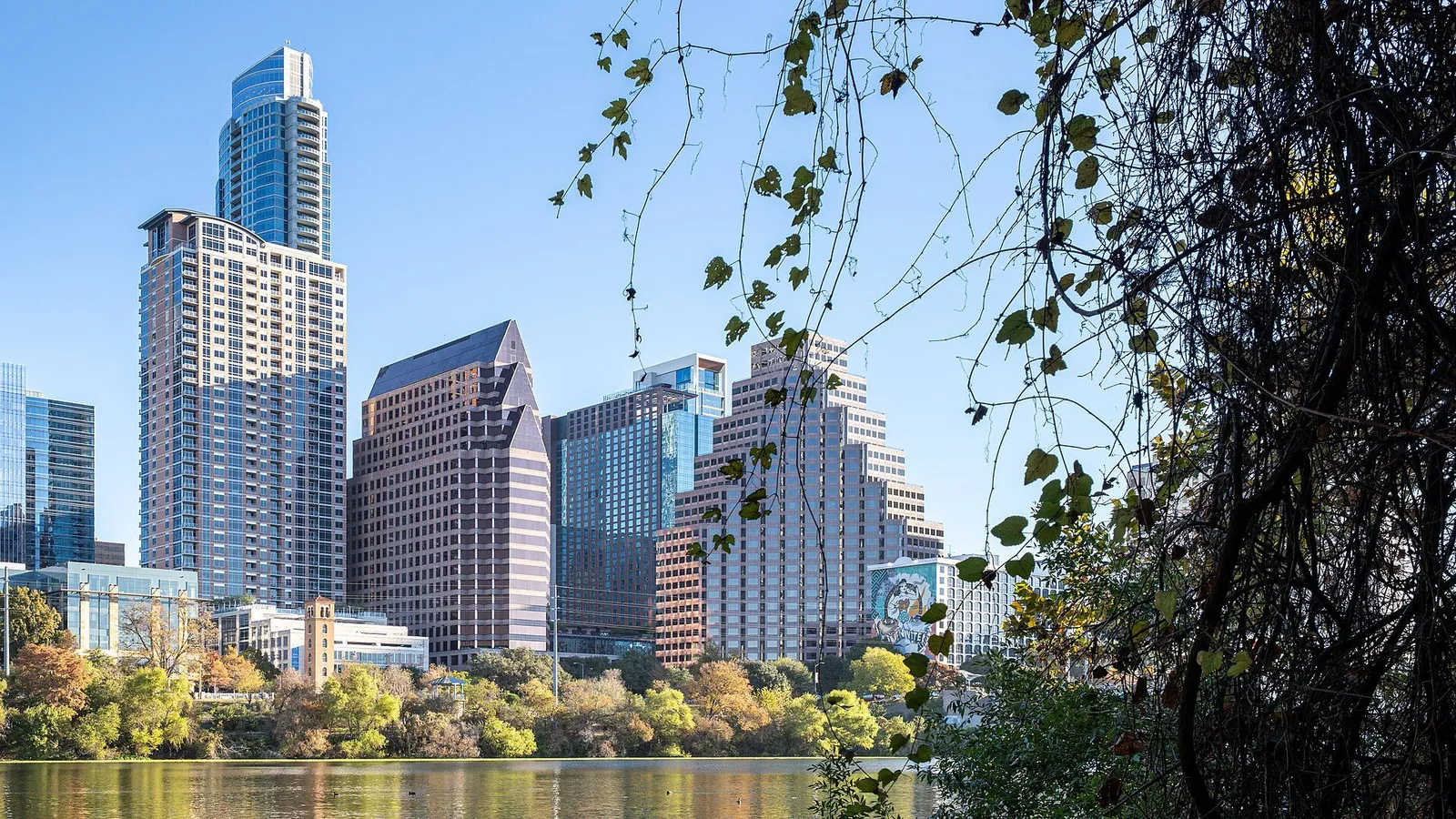
Austin is the odd one out in Texas: a live-music, breakfast-taco, swimming-hole college town wrapped around a green river in the middle of a very big state. The experiences that define it cost almost nothing. Watch Mexican free-tailed bats spill out from under the Congress Avenue Bridge at dusk in their hundreds of thousands. Tour the pink granite Capitol, the largest statehouse in the United States, for free. Swim in a 70-degree natural spring pool, paddle Lady Bird Lake under the skyline, and eat your way down South Congress from food truck to food truck. It is hotter, sprawlier, and car-friendlier than the postcards admit, so plan mornings outdoors and evenings indoors. First-timers should give it two full days, avoid July and August if heat bothers them, and book around the March and October festival crunches. Austin suits travelers who like cities with an outside, music fans, swimmers, and anyone road-tripping the Texas hill country.
Top sights at a glance
Texas State Capitol
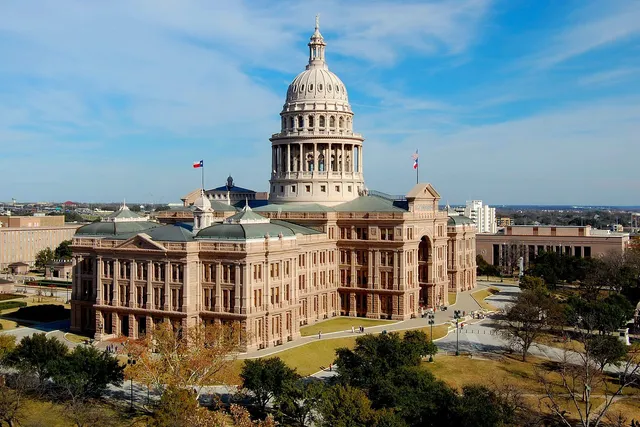
The Texas State Capitol is the largest state capitol in the United States, a sunset-red granite giant completed in 1888 and deliberately built taller than the US Capitol in Washington. Free guided tours run daily from the South Foyer, and the building rewards both the guided version and slow wandering: rotunda floors spelling out the six governments of Texas, portraits of every governor, and 22 acres of monument-dotted grounds.
Good to know · Free, including tours (about 40 minutes, departing from the South Foyer roughly every 15 to 30 minutes; Monday to Saturday from 9 a.m., Sunday from noon, last tour 4:15 p.m., per tspb.texas.gov). The building opens Monday to Friday 7 a.m. to 8 p.m., weekends 9 a.m. to 8 p.m. Budget 90 minutes including the grounds and the underground extension.
Congress Avenue Bridge Bats
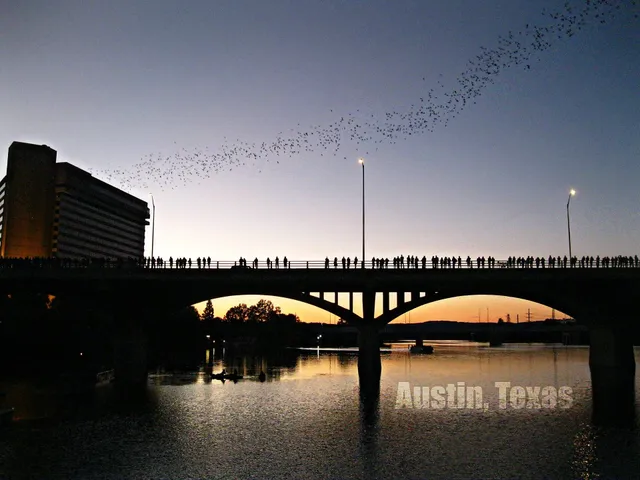
Under the Congress Avenue Bridge lives the largest urban bat colony on earth: up to 1.5 million Mexican free-tailed bats that migrate north for the summer and pour out in a living river at dusk from roughly March to November. Austin once feared them; a conservation campaign made them its mascot, and watching the emergence is now the single most Austin thing you can do. It is free, from the bridge sidewalk, the lawn below, or a kayak.
Good to know · Emergence happens at sunset, runs longest from July into September when the pups fly with their mothers; arrive 30 minutes early for a spot on the east sidewalk. No flash photography, keep noise down, and never touch a grounded bat (rabies risk; call 311). Bat Conservation International's site at batcon.org posts season updates.
Lady Bird Lake
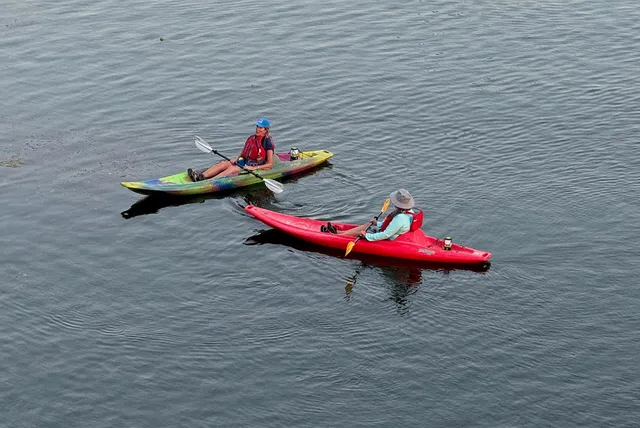
Lady Bird Lake is the dammed Colorado River slack-water that downtown Austin fronts, a motor-free ribbon of water lined by the 10-mile Ann and Roy Butler Trail, one of the best urban paths in America. Kayaks, canoes, and paddleboards rent by the hour at several docks on both banks; paddling under the Congress Avenue and Lamar bridges with the skyline behind you is the city's postcard, experienced rather than photographed.
Good to know · Rentals run about $15 to 25 an hour at the boathouse district near the 1st Street bridge; no experience needed, life jackets provided, and the water is calm. The trail is free and lit at night on the downtown stretches. Sunset paddles in bat season put you at the bridge exactly when the colony emerges.
Zilker Park
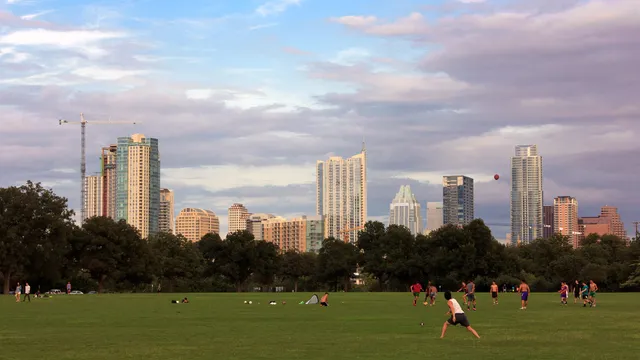
Zilker is Austin's 358-acre back yard, a huge lawn where the city comes to fly kites, argue over frisbee, and watch the skyline from a blanket. Its centerpiece is Barton Springs Pool, a three-acre natural swimming hole fed by underground springs that hold the water at 68 to 70 degrees year round, in continuous use as a public pool since the 1920s and home to an endangered salamander.
Good to know · The park is free; Barton Springs Pool charges admission (as of October 2026, $9 for non-resident adults, $5 for Austin residents; no coolers, food, or pets) via the online portal or the ATXSwims app. Off-peak hours and winter mornings belong to the lap-swimming faithful. Paid parking applies on weekends and holidays from spring break through Labor Day.
South Congress
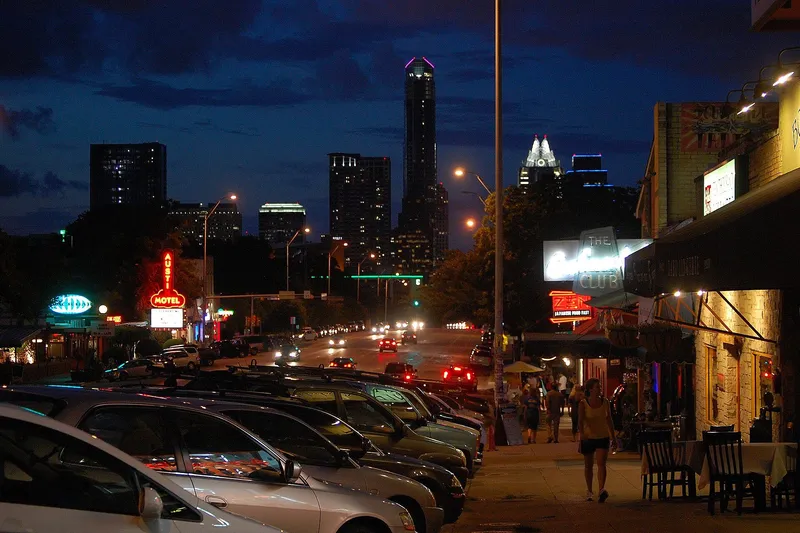
South Congress, the strip of SoCo running south from the bridge, is where Austin's shop-and-snack culture lives: vintage boots and vinyl, murals including the famous "I love you so much" wall, food trucks, and music halls whose neon signs have outlived several generations of trend cycles. The hill halfway down the strip, above the street's antique row, gives the best skyline-plus-Capitol view in the city.
Good to know · Best in late afternoon into evening, when the food trucks open and the heat drops; Saturday is the crowd peak. Parking is scarce, so walk across the bridge from downtown (20 minutes) and work the strip downhill and back. Bring cash for trucks; most take cards now, but the line moves faster if you do not fumble.
Austin is Texas as Texans like to imagine it when they are being honest: hot, weird, musical, and greener than its reputation. The capital of the second-largest state sits on the Balcones Escarpment where the flat coastal plain turns to limestone hill country, and the Colorado River runs through downtown as a slack-water ribbon called Lady Bird Lake, ringed by one of the best urban trails in America. The boom has made it expensive, traffic-choked, and self-conscious about the “Keep Austin Weird” slogan it invented. None of it has killed the essential transactions of the place: swimming in a natural spring in the middle of town, arguing over tacos, hearing live music every night of the week, and standing on a bridge at dusk to watch a river of bats pour into the sky. Give Austin two days: one for the Capitol, the lake, and the bats, one for Zilker, the spring, and South Congress, with both evenings left open for whatever music you stumble into.
A Bit of History
Austin was invented as a capital. In 1839, four years into the existence of the Republic of Texas, its congress picked a hamlet on the Colorado River named for Stephen F. Austin, the colony-founder later called the father of Texas, and built a government town on the frontier, and the site has been the capital ever since. The spot was deliberate: the Balcones Escarpment marks where hill country begins.
The city that grew around government stayed mid-sized and drowsy until two decisions remade it. The first was the 1888 completion of the present Capitol, a granite giant that advertised Texas’s ambition on the skyline and still anchors it. The second was the University of Texas, founded 1883, which seeded the music economy: in the 1960s and 1970s the counterculture welded country to rock and made Austin the live-music capital it still calls itself with a straight face. The 1971 creation of Town Lake (renamed Lady Bird Lake in 2007 for the former first lady who led its beautification) gave the city its green spine.
The modern boom came with tech. Microchips in the 1980s, software in the 1990s, and since the 2010s a wave of relocations and startups have pushed the metro past 2.4 million people, with the city itself approaching a million. Prices rose, old venues closed, traffic thickened; what survives is the outside-facing culture, the springs, the trail, the bats, and the food and music economy, which is what you came for.
Culture & Daily Life
Austin is a college town (the University of Texas, with its burnt-orange religion and the tower on the hill) that grew into a music town, a food town, and a tech town without ever quite deciding the order. The calendar is festival-driven: South by Southwest takes over downtown every March, the Austin City Limits Music Festival takes over Zilker Park for two weekends in October, and Formula 1 and other circuit events fill the autumn. During those weeks hotel prices multiply and the town fills with badges and wristbands; check the calendar before you book.
The city’s self-image is casual to the point of uniform: shorts, sandals, tattoos, dogs in taprooms. Live music is the shared civic assumption rather than an event; on any night there are hundreds of shows across clubs that range from honky-tonk to experimental. Politics lean blue in a very red state; the traveler’s takeaway is that Austin behaves like a large American college city.
Practical notes. Tipping is national standard: 18 to 22 percent at tables, $1 to 2 per bar drink, delivery 10 to 15 percent (the full arithmetic at /guides/tipping-and-sales-tax/). Texas sales tax is 6.25 percent and Austin’s local additions bring it to 8.25 percent, the state maximum. Central Austin is generally safe by big-city standards, with normal city sense applying east of I-35 and late at night downtown. On guns, the traveler’s reality is simple: Texas permits open carry in some contexts, but venues can and do ban weapons, and the odds are overwhelming that you will see none.
Nature & the Outdoors
The outdoors is the reason Austin exists where it does, and the reason to visit between October and May rather than in the furnace months. Lady Bird Lake is the spine: the Ann and Roy Butler Trail runs 10 miles around it, flat, separated from traffic for most of its length, and busy with runners from dawn. Above the lake the hill country begins, with cold rivers and swimming holes a dozen strong within an hour’s drive.
Barton Creek Greenbelt, a wooded limestone gorge on the south side, hides 12-plus miles of hiking and climbing trails with seasonal swimming holes that locals guard the way Parisians guard parks. Zilker Park’s lawns and Mount Bonnell’s staircase view round out the in-town list. The Edwards Aquifer that feeds the springs is a protected system, home to the endangered Barton Springs salamander, which is why the swimming holes have rules; follow them.
Practical notes for the outdoors: Austin summers regularly clear 100 degrees Fahrenheit (38 Celsius), and heat illness is the most likely way a visitor ends up needing medical care; carry more water than seems reasonable, and do the outdoor sights before 11 a.m. And the standard American health reminder applies: if something goes wrong physically, use an urgent care clinic rather than an emergency room unless it is a true emergency, because US medical bills without insurance are punishing; we cover the mechanics at /guides/health-insurance-safety/.
Food & Drink
Austin eats in its own dialect: Tex-Mex and barbecue are the two pillars, breakfast tacos are the daily bread, and food trucks, trailers clustered in lots, supply a third of the city’s kitchens. The barbecue argument is the local contact sport; the correct visitor strategy is to go on a weekday, order brisket by the half pound with beans and slaw, and skip the famous-line institutions for whichever neighborhood smoker has no wait. Tex-Mex here means migas, breakfast tacos, and margaritas on patios. The weird stuff (Korean-Mexican fusion, vegan comfort food) started here too.
Price reality, as of October 2026: breakfast tacos run $4 to 8, a barbecue plate $20 to 35, a food-truck dinner $12 to 20, a sit-down dinner without drinks $35 to 60, and bar cocktails $12 to 16. Sales tax is 8.25 percent and table tipping is 18 to 22 percent; the /tools/real-price-calculator/ does the conversion math for you.
Where to actually eat: South Congress and East Austin carry the truck lots and the newest kitchens; the stretch of South 1st Street is the taco corridor; and Rainey Street, a block of old houses turned bars and kitchens downtown, is the after-dark version. Vegetarians and vegans do unusually well, better than anywhere else in Texas. And drink water: Austin’s dry heat fools people until it does not.
Top Sights
Texas State Capitol
Everything about the Texas State Capitol is a boast, starting with the facts: it is the largest state capitol building in the United States, built of sunset-red granite hauled from Marble Falls, topped by a Goddess of Liberty, and finished in 1888. It was designed to stand taller than the national Capitol, and it does. Inside, the rotunda floor inlays the seals of the six governments that have ruled Texas, portraits of every governor line the corridors, and the underground extension spreads committee rooms and a visitors’ lot beneath the north lawn.
The visit is free and takes about 90 minutes done properly. Free guided tours leave from the South Foyer roughly every 15 to 30 minutes, lasting about 40 minutes (Monday to Saturday from 9 a.m., Sunday from noon, last tour 4:15 p.m., per tspb.texas.gov); self-guided brochures are free at the north entry. The building opens Monday to Friday 7 a.m. to 8 p.m. and weekends 9 a.m. to 8 p.m., and photography is permitted throughout. When the legislature sits (odd-numbered springs), security lines lengthen; arrive early. Finish on the south steps for the view down Congress Avenue to the river, the photo the postcards are actually of.
Congress Avenue Bridge Bats
In 1980 the city rebuilt its Congress Avenue bridge with deep expansion crevices under the deck, and Mexican free-tailed bats moving north for the summer found the best apartment building in North America. Today the colony numbers 750,000 to 1.5 million each summer, by Bat Conservation International’s count the largest urban bat colony on earth, and every evening from roughly March to November they exit in a spiral that can take an hour to pass. The city that once wanted to exterminate them now sells bat T-shirts to its own children.
The spectacle is free and repeats nightly: stand on the east sidewalk of the bridge, sit on the lawn at the Statesman Bat Observation Center below it, or (best of all) paddle out on Lady Bird Lake and watch from the water. Timing is sunset plus a bit; July and August are peak, when the year’s pups have learned to fly and the column runs thickest, and cool or rainy evenings can postpone or thin the show. The ethics matter and are simple: no flash photography, keep the sidewalk noise down, and never touch a bat on the ground, which is a genuine rabies risk (call 311 for a grounded animal). BCI keeps season updates at batcon.org.
Lady Bird Lake
Lady Bird Lake is what happens when a city dams its river and has the sense to ban motors: a glassy, canoe-friendly reservoir fronted on both banks by the Ann and Roy Butler Trail, 10 flat miles of the best urban path in the American South. The lake was renamed in 2007 for Lady Bird Johnson, whose beautification campaign planted its banks; it is the city’s front yard in every literal sense, with the skyline on one side and the hill country’s first hills on the other.
Paddle it if the weather allows. Kayak, canoe, and stand-up paddleboard rentals run about $15 to 25 an hour from the docks near the 1st Street bridge and along the south bank, no reservations or experience required, and the water is calm enough for first-timers. The bat-bridge run at sunset is the signature loop, and the Congress Avenue and Pfluger bridges frame the skyline photos. Walk or run the trail at any hour; the downtown stretches are lit at night. Swimming is not allowed in the lake itself (the springs next door are the swimming), and summer paddles are best before 10 a.m.
Zilker Park
Zilker is the lawn the whole city shares: 358 acres of open grass where the trail, the creek, and the skyline meet, and the site of nearly every civic ritual, kite festival, trail of lights, and each October the two weekends of the ACL festival. On an ordinary Sunday it is a sea of blankets and pickup frisbee with the skyline laid out behind, the correct place to understand why Austinites live here.
The centerpiece is Barton Springs Pool, a three-acre swimming hole where water from the Edwards Aquifer holds at 68 to 70 degrees Fahrenheit year round; people have swum here since the 1920s, Robert Redford learned at age five, and the pool draws visitors by the hundreds of thousands each year while also hosting the endangered Barton Springs salamander, which is why the rules are strict: no coolers, food, or pets. As of October 2026 admission runs $9 for non-resident adults ($5 for Austin residents, less for kids and seniors), bought online or through the ATXSwims app. The pool closes Thursday mornings for cleaning and switches to reduced hours off-season; check the city’s page before you plan a morning around it. Paid parking applies in the park on weekends and holidays from spring break through Labor Day; arrive before 10 a.m. or walk over from the trail.
South Congress
South Congress Avenue is the strip that carries Austin’s self-image: starting at the Congress Bridge and climbing south past the “I love you so much” mural, it strings together vintage boot shops, vinyl stores, permanent food-truck lots, patio restaurants, and music halls whose neon signs predate everyone now arguing about gentrification. Halfway up, the view opens straight down Congress to the Capitol dome, which is why every postcard of the avenue looks identical.
The strip works best as a two-hour drift in the late afternoon and evening: shop end, food end, then whichever venue has a band worth standing for, because South Congress at night is live music as ordinary civic behavior rather than an occasion. Saturdays draw the biggest crowds and the worst parking; walking across the bridge from downtown takes 20 minutes and beats circling for a spot. Practical notes: the food trucks open through the afternoon, most take cards, and the honest budget move is dinner from two or three trucks rather than one restaurant. South First Street, one block west, is the local’s version of the same idea with half the tourists, if the strip feels like a movie set, because it partly is one.
Getting There & Around
Austin-Bergstrom International (AUS) sits about 8 miles southeast of downtown, a 20 to 25 minute drive; rideshares run about $25 to 35, taxis similar, and the CapMetro 20 bus covers the run for a transit fare if you travel light. Austin is also a natural driving hub: Dallas is about 3 hours north, Houston about 2.5 southeast, San Antonio 1.5 southwest, and the hill country’s rivers and wineries begin 45 minutes west.
Inside the city, the honest answer is that Austin is a driving town that visitors can mostly beat on foot. Downtown, South Congress, the Capitol, and the lake are all walkable from each other; CapMetro’s local buses and MetroRail cover the rest for $1.25 a single ride and $2.50 a day pass (commuter and rail rides run $3.50 and $7 per day), as of October 2026 per capmetro.org, with fares paid by app or contactless. Ride-hail is cheap and fast outside festival weeks. A rental car is worth it only for hill country day trips or barbecue pilgrimages beyond the bus lines; downtown hotels charge $40 to 60 per night to park, and festival weekends make both driving and parking genuinely miserable.
Where to Stay
Downtown and Rainey Street put you inside the nightlife and a 15-minute walk from the lake, the bats, and the Congress bridge. It is the convenient and expensive choice, built for convention and festival business, and it books out and reprices wildly during SXSW (March) and ACL (October); outside those weeks, deals exist.
South Congress and the adjacent Bouldin Creek neighborhood are the character pick: the strip’s shops and trucks at your door, the downtown skyline across the bridge, and smaller properties with more local color. It suits food-first travelers and anyone staying three nights or more. East Austin, across I-35, is the value pick: the taco corridor, music venues, and murals, with lower rates and a cheap ride downtown; it suits night owls and repeat visitors.
Accounting notes: Austin hotel taxes add about 17 percent to quoted rates, so budget the difference and check confirmations for “destination” fees that appear at checkout. Parking at downtown hotels runs $40 to 60 per night. Book months ahead for SXSW and ACL weeks or expect both the rates and the crowds at full festival strength.
Sources & verification (12)
- https://tspb.texas.gov/plan/tours/tours.html
- https://tspb.texas.gov/plan/hours/hours.html
- https://en.wikipedia.org/wiki/Texas_State_Capitol
- https://en.wikipedia.org/wiki/Congress_Avenue_Bridge
- https://www.batcon.org/experience-bats/
- https://www.austintexas.gov/department/barton-springs-pool
- https://www.austintexas.gov/services/visit-barton-springs
- https://www.austintexas.gov/parks/zilker-metropolitan-park
- https://www.capmetro.org/fares/
- https://taxfoundation.org/location/texas/
- https://en.wikipedia.org/wiki/Austin,_Texas
- https://en.wikipedia.org/wiki/Lady_Bird_Lake