Health Care, Insurance and Safety for US Visitors
The United States has excellent medicine and no system for free or cheap drop-in care: as a visitor you pay commercial prices for everything, and an emergency room bill for something routine can start around $1,000 and climb steeply from there. This guide explains the difference between an ER, an urgent care clinic and a retail pharmacy clinic (and when to use each), how to buy travel insurance that actually pays out, with medical evacuation cover anchored to the CDC's own warning that evacuation can cost over $100,000, how to use 911 properly, how the pharmacy system works, and the street-level safety habits that matter in American cities. Costs marked as ranges are conservative estimates as of October 2026; medical rules are from official sources.
The short version
- Visitors pay out of pocket: there is no reciprocal health agreement for most visitors, so travel insurance is not optional
- Match the venue to the problem: retail clinic roughly $100-130, urgent care roughly $150-300, ER bills commonly start around $1,000-2,000 before imaging or admission (conservative ranges)
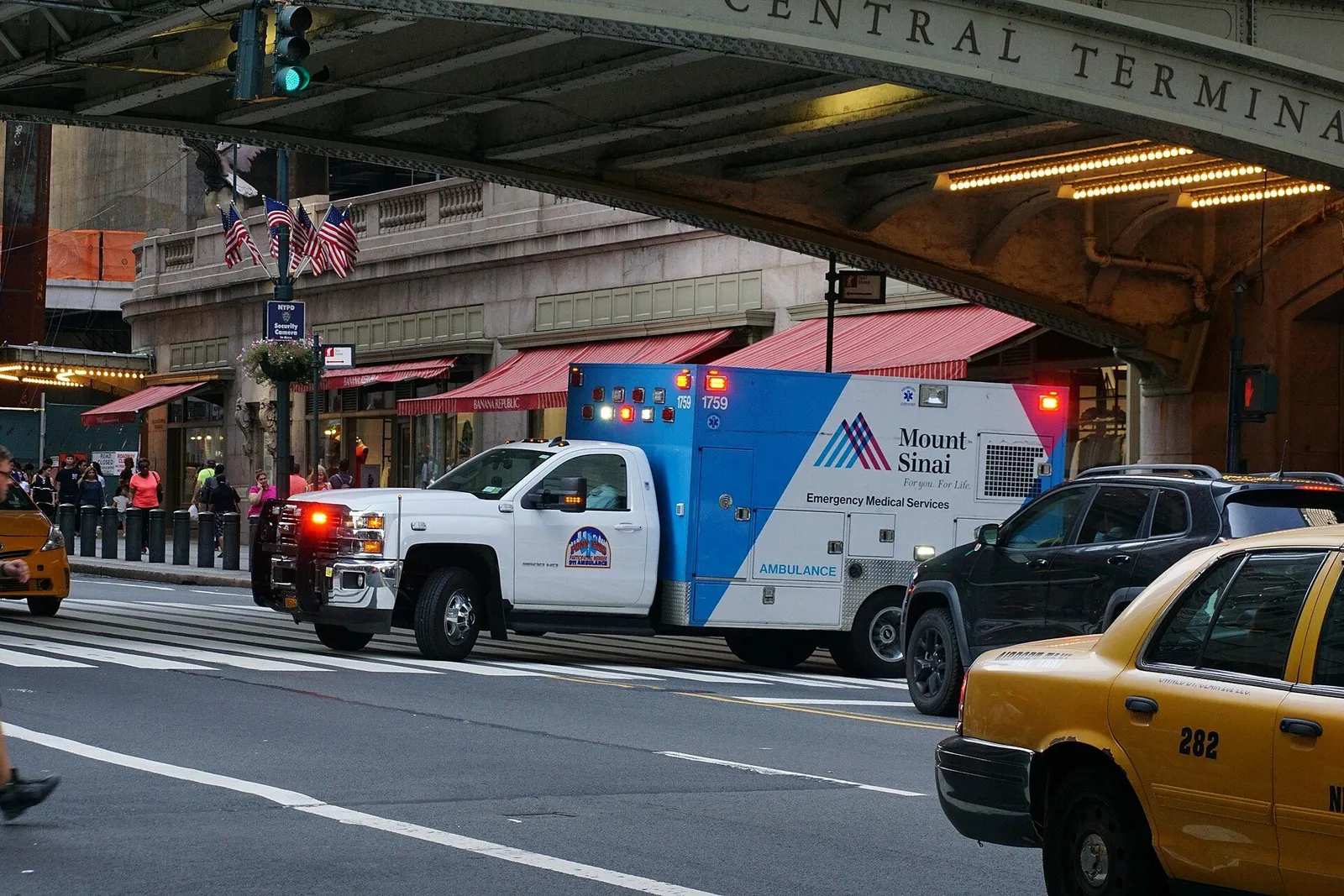
- Call 911 for genuine emergencies; the call is free but ambulance transport is billed separately, often $1,000-2,000
- Buy insurance with at least $100,000 medical and $250,000 medical evacuation coverage on the day you book; the CDC warns an evacuation can exceed $100,000
- CVS and Walgreens pharmacies handle prescriptions, vaccines and over-the-counter medicines, but store counts are shrinking: check hours online before walking across town
Every year, travelers from countries with national health services get hurt in America and discover the second injury: the bill. US hospitals save lives brilliantly and invoice ferociously, and as a visitor you are an out-of-network, self-pay customer by default. The fix costs a few dollars a day and takes ten minutes at booking. Here is how the system actually works from the outside, what things cost when you pay cash, and how to handle an emergency like a local.
Why Insurance Is Not Optional Here
Start from the official advice: the UK Foreign Office tells travelers to the USA that they must have “appropriate travel insurance for local treatment or unexpected medical evacuation”, and the CDC makes the same point for everyone arriving in the country: your home coverage almost certainly stops at the border, and even countries with nationalized healthcare do not extend it to non-citizens. The UK’s EHIC/GHIC card, which covers Britons across Europe, has no force in the United States. You will be asked for payment (or insurance details) at registration, before or alongside treatment.
Two more numbers to internalize. First, ordinary care is not cheap: a single straightforward ER visit generates bills that commonly start around $1,000-2,000 even before imaging, specialists or an overnight stay (national AHRQ data put the average hospital cost of an ER visit far lower, but “cost” is what the hospital spends; self-pay visitors are billed charges, which run much higher). Second, the CDC warns that a medical evacuation, an air ambulance from a remote park or a specialist transfer between hospitals, can cost more than $100,000 on its own. Hiking remote trails or road-tripping the desert Southwest without evacuation cover is the single biggest unforced error in American trip planning.
What Care Actually Costs: Match the Venue to the Problem
American medicine is triaged by price tier, and choosing the right tier is the difference between a $130 receipt and a four-figure one:
| Venue | What it is for | Typical self-pay range (conservative) |
|---|---|---|
| Retail clinic (CVS MinuteClinic and similar, inside pharmacies) | Minor infections, strep tests, vaccines, refills, rashes | About $100-130 for common minor-illness visits |
| Urgent care (walk-in clinic networks) | Sprains, stitches, X-rays, fevers, dehydration; evening and weekend hours | Roughly $150-300 before tests, imaging or medication |
| Emergency room (hospital ED) | Chest pain, breathing trouble, head injury, serious bleeding, strokes, broken bones, anything life-threatening | Commonly $1,000-2,000 to start; rises steeply with CT scans, admission |
| Ambulance (911 transport) | When you cannot safely get there yourself | Often $1,000-2,000, billed separately from the hospital |
The rule of thumb locals use: retail clinic for “I need a doctor to look at this”, urgent care for “this needs treatment today but I am not dying”, ER for “this could kill or permanently harm me”. If you are unsure which tier fits, urgent care staff will tell you plainly if you have come to the wrong place, and no US ER will turn away a genuine emergency regardless of insurance.
One detail that shocks Europeans: the ambulance is a separate, often out-of-network bill from a private operator or fire department, and it arrives whether or not you end up being admitted. Call 911 when it is genuinely needed; just know the transport itself is not free.
Buying Travel Insurance That Actually Covers You
The CDC breaks travel coverage into three products, and for the US you want to check all three boxes:
- Travel health insurance: pays local medical bills. Get at least $100,000 of medical coverage; US hospital bills exhaust thin policies fast. Confirm it covers the activities you will actually do (hiking at altitude, theme parks, skiing) and pre-existing conditions if relevant.
- Medical evacuation insurance: pays to move you to an appropriate hospital or home. Get at least $250,000 of cover; the CDC’s own benchmark is that evacuations can exceed $100,000. If your itinerary includes national parks, deserts or cruise segments, treat this as mandatory, not optional.
- Trip cancellation and disruption cover: refunds prepaid flights and hotels when illness or storms cancel your plans. In US hurricane season (June through November, see our timing guide), this is the policy that saves the deposit.
Buy on the day you book, before any storm or illness is foreseeable: policies bought after a hurricane is named, or after symptoms appear, do not pay. Compare policies on an aggregator or through your usual insurer, read the “pre-existing condition” and “activities” clauses, and carry the policy’s 24-hour assistance number offline. If you are referred to a medical facility, the official UK advice applies word for word: contact your insurer or medical assistance company immediately, before racking up charges they might otherwise dispute.
Getting Care: 911, Pharmacies and Walk-Ins
For a genuine emergency, dial 911 from any phone (it works from locked mobile phones too). State the emergency, the address or nearest cross street, and follow the dispatcher’s instructions; do not hang up first. The UK government’s US travel advice condenses the system to what you need: “Dial 911 and ask for an ambulance”, then call your insurance company as soon as anyone refers you onward for treatment.
For everything that is not an emergency, the pharmacy is the front door of American self-care:
- CVS and Walgreens dominate, with thousands of locations between them (in Manhattan, CVS and the Walgreens-owned Duane Reade sit blocks apart). Both chains have been closing stores for several years, so check store hours on their websites or apps before walking across town to one.
- Prescriptions: bring your medication in original packaging with a copy of the prescription; US brands differ from home brands, so know the generic (chemical) name. A US doctor must issue any new prescription; pharmacies cannot fill foreign prescriptions as written.
- Pharmacists are clinicians here: they administer routine vaccines (flu, COVID boosters, tetanus) without a doctor’s appointment in most states, and can advise on over-the-counter options.
- Over-the-counter shelves are deep: painkillers, antihistamines, stomach remedies and first-aid basics are all self-serve, usually a few dollars per box.
Telehealth is also a realistic middle tier: most insurers’ travel policies and several national apps can put you in front of a US-licensed doctor by video within the hour for a minor issue, typically $50-75 if your policy does not cover it (conservative estimate).
Staying Safe in American Cities
US cities are not uniformly safe or unsafe; they are a patchwork, and the risks are specific rather than general:
- Neighborhood awareness: tourist cores (midtown Manhattan, the National Mall, the Las Vegas Strip) are heavily patrolled and safe at most hours. Five blocks can change the picture, so ask your hotel which streets to avoid after dark rather than relying on old forum posts.
- Car break-ins are the real property crime: never leave bags, luggage, chargers or even jacket bundles visible in a parked car, especially at trailheads and scenic overlooks in cities like San Francisco. Nothing in the cabin, ever.
- Annoyance crime over violence: pickpocketing and phone-grabbing cluster around crowds (Times Square, transit hubs, festival streets). Front pockets and cross-body bags beat back pockets.
- On guns: you may have read about gun culture in the news. The practical reality for visitors is that most places tourists go (hotels, malls, stadiums, bars, transit) ban weapons, incidents involving travelers are rare, and the right response to any disturbance is the boring one: follow staff instructions and move away calmly.
- Outdoor trips need their own math: heat, altitude and distance from care are deadlier than crime. In desert parks, carry far more water than seems reasonable, and remember that a helicopter evacuation from the Grand Canyon backcountry is the $100,000 scenario your evacuation cover exists for. Yellowstone publishes its own safety planning pages (bear country, thermal areas, remote terrain) at nps.gov/yell, and the same logic applies across the park system; see our national parks guide for trip-specific planning.
Common Mistakes
- Assuming your national insurance travels. It does not. No GHIC, EHIC or Medicare-style coverage works in the US, and hospital registration will ask for a card or a deposit.
- Going to the ER for a minor problem. You will wait hours and pay ER prices for what a retail clinic or urgent care could have handled for a fraction. Reserve the ER for emergencies.
- Skipping evacuation cover to save $20. The CDC’s $100,000 benchmark is not marketing copy. If your trip leaves the cities, get the evacuation coverage.
- Calling 911 for non-emergencies and refusing the ambulance when it is needed. The inverse errors are equally common. Ambulances exist for time-critical problems; for everything else, get yourself to urgent care.
- Buying insurance after the problem is visible. Storm named, symptom noticed, flight already cancelled: none of that is insurable. Policies attach at booking.
- Walking into a pharmacy expecting foreign prescriptions to transfer. Bring the original packaging and the generic drug name, and budget a telehealth or clinic visit if you need a US prescription issued.
- Leaving luggage visible in a parked car at a viewpoint. The fastest way to end a road trip. Put everything in the trunk before you park, not while standing at the curb.
Sources & verification (8)
- https://www.gov.uk/foreign-travel-advice/usa/health
- https://wwwnc.cdc.gov/travel/page/insurance/
- https://www.hcup-us.ahrq.gov/reports/statbriefs/sb268-ED-Costs-2017.jsp
- https://www.cvs.com/minuteclinic/services/minor-illness-and-injury-care
- https://www.medicare.gov/coverage/ambulance-services
- https://www.nps.gov/yell/planyourvisit/safety.htm
- https://wwwnc.cdc.gov/travel/page/getting-health-care-during-travel
- https://fairhealthconsumer.org/