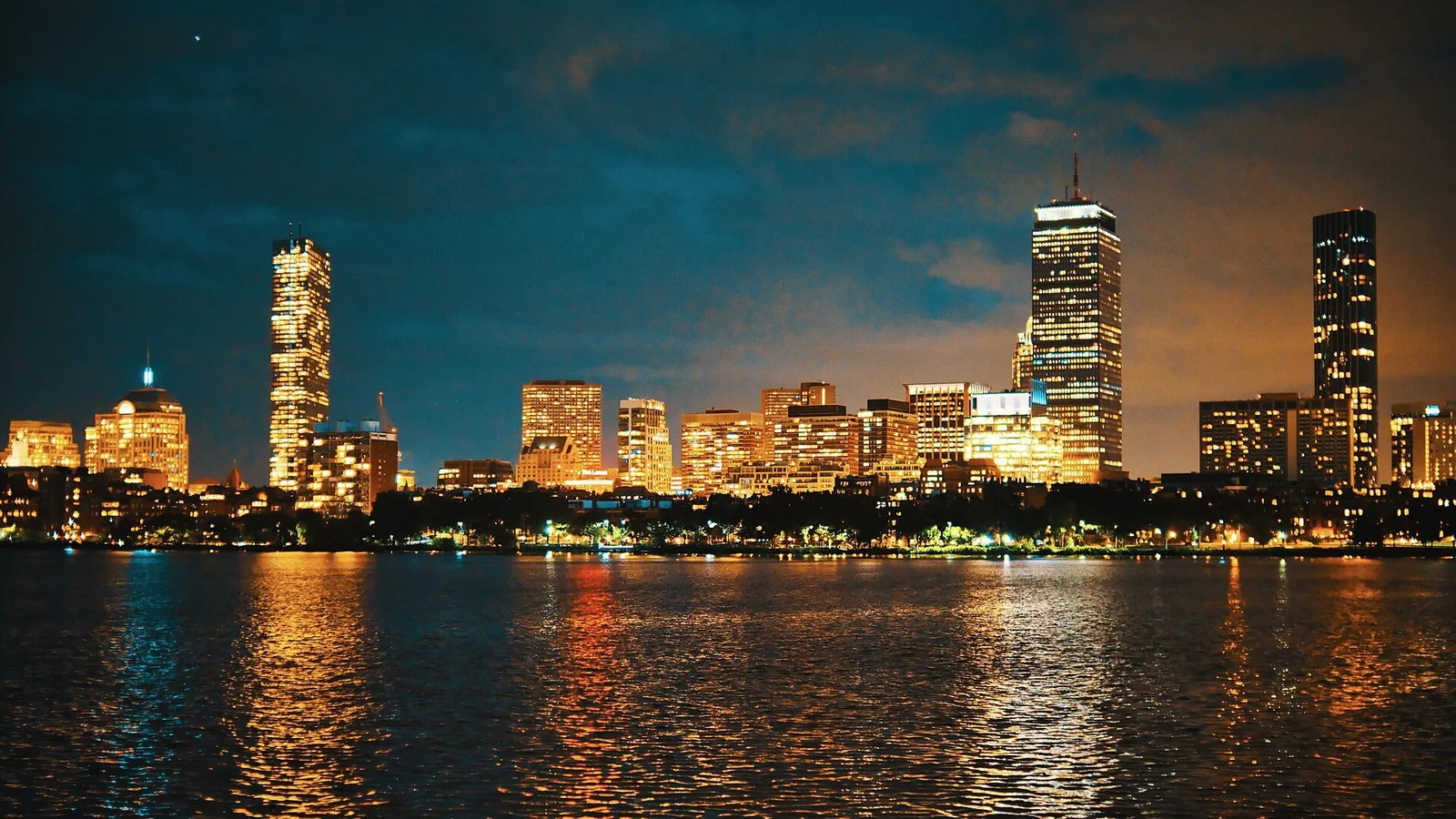
Boston is where the American Revolution started, and it remains the best walking city in the United States: a compact peninsula of brick rowhouses, crooked 17th-century lanes, and university spillover energy, all stitched together by the Freedom Trail's painted red line. The experiences that define it cost little: walking the trail into the North End, rowing along the Charles, standing in Fenway Park's shadow, listening to students argue outside Harvard Yard. It is a smaller, tidier, more local-feeling city than New York, which is exactly why many travelers prefer it. First-timers should plan three days, walk everywhere, eat their way through the North End and Chinatown, and add a ballpark tour even if they cannot name the Red Sox lineup. Boston suits history-minded visitors, families, and anyone who wants an American big city at a strollable scale.
Top sights at a glance
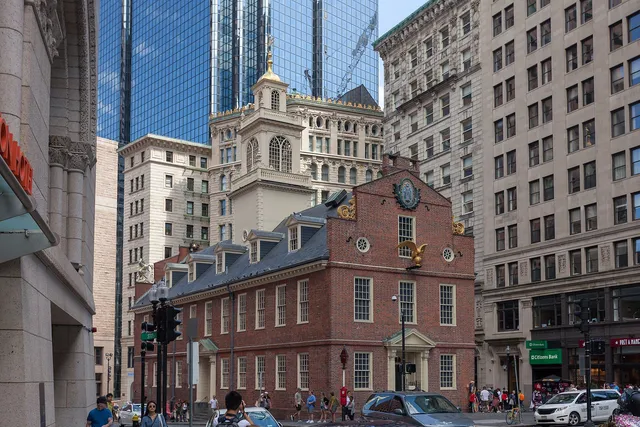
Freedom Trail
The Freedom Trail is a 2.5-mile brick-painted line connecting 16 sites of the American Revolution: Boston Common, the Old State House where the Declaration was first read to Bostonians, Faneuil Hall, Paul Revere's house, Old North Church, and Bunker Hill. Walking it is the single best introduction to the United States that exists, and the downtown half is free to follow on your own, with the official costumed-guided tours adding the storytelling.
Good to know · The line itself is free and self-guided year round; official Foundation tours (Walk Into History, about 90 minutes, 11 of the 16 sites) run daily at 10 a.m., 11 a.m., 12 p.m., 1 p.m., and 2 p.m., with more departures in summer. Book at thefreedomtrail.org. Start at Boston Common and end across the bridge at Bunker Hill.
North End
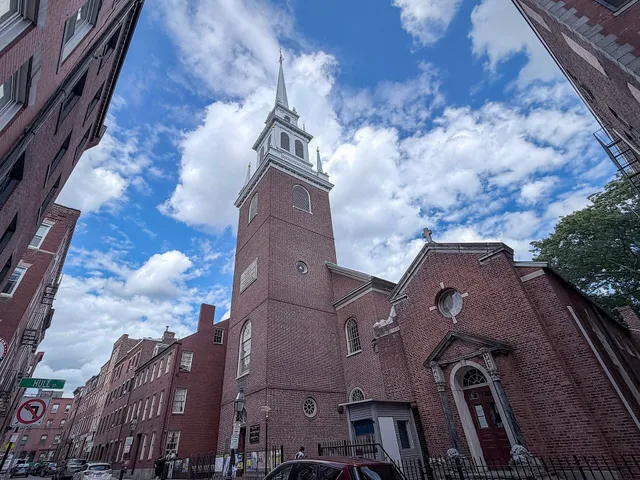
The North End is Boston's oldest neighborhood, a tangle of narrow lanes where Paul Revere lived, the lanterns of Old North Church hung, and Italian immigrants later built what is now the city's best eating district. Cannoli lines form outside pastry shops on Hanover Street, the Old North Church still stands at the top of the hill, and every block smells of espresso and garlic. Come hungry, morning or evening.
Good to know · Free to wander; Old North Church charges a small admission and opens daily (Monday to Saturday 10 a.m. to 5 p.m., Sunday from 12:30 p.m., per oldnorth.com). Weekend evenings bring dinner queues; weekday mornings are for pastry-hopping. Walk down from Haymarket Station or over from Faneuil Hall in ten minutes.
Fenway Park
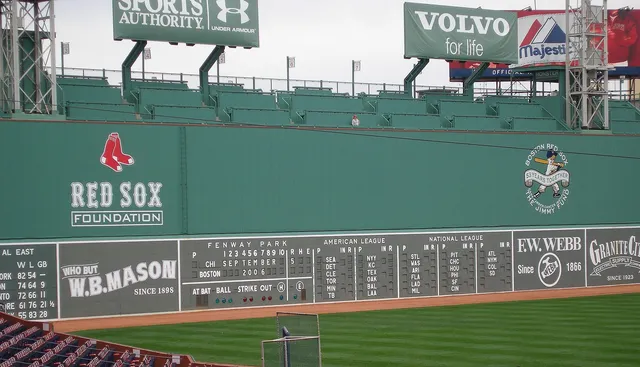
Fenway Park opened in 1912, days after the Titanic sank, and it is the oldest ballpark in Major League Baseball: a cramped, intimate brick rectangle with the 37-foot Green Monster looming over left field, hand-operated for a century. Even non-fans take the tour, because this is a working museum of American urban life, and a game here (or a seat in the bleachers' party atmosphere) is the single most Boston thing you can do.
Good to know · Tours run year round, departing on the hour; adults $30, children 3 to 12 $21 as of October 2026, per mlb.com/redsox. In season (April 1 to October 31) tours run 9 a.m. to 5 p.m., and the last tour on game days leaves three hours before first pitch. Game tickets sell fast in summer; check mlb.com/redsox/tickets.
Harvard University
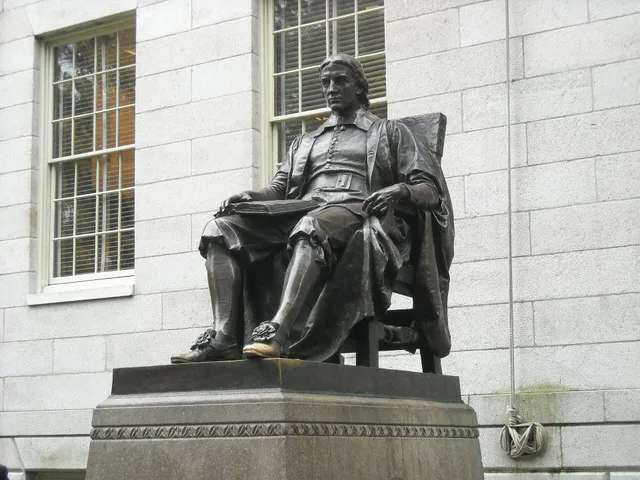
Harvard is the oldest university in the United States (1636), and its walled yard in Cambridge is the most famous campus on earth: brick halls, the gilded John Harvard statue with its lucky shoe polished by a million tourists, and libraries that appear in every college movie ever made. The wider square around it, bookshops, record stores, street musicians, is the best people-watching in New England.
Good to know · Harvard Yard is open to the public. The free, student-led historical tour runs regularly and is capped at 10 people, so register ahead at harvard.edu/visit; a free self-guided app version exists too. Take the Red Line to Harvard Square, and budget an hour for the yard plus an hour for the square.
Boston Common
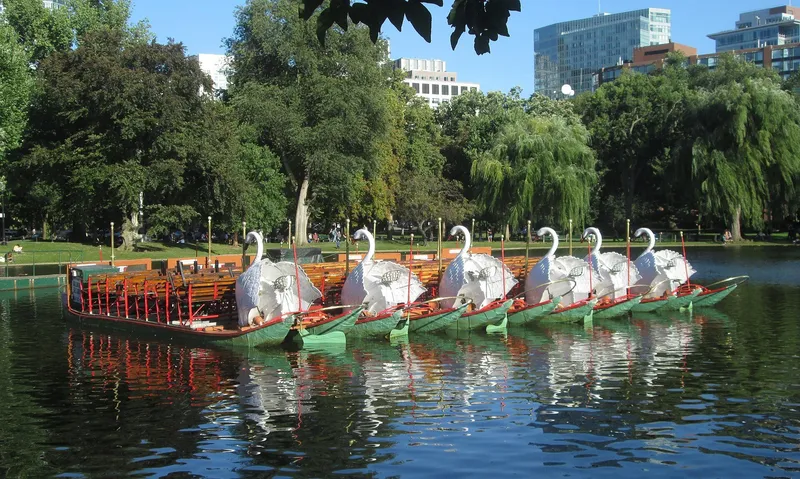
Boston Common is the oldest public park in the United States (1634), and it anchors the Emerald Necklace's downtown end beside its Victorian sibling, the Public Garden, where the pedal-powered Swan Boats have circled the lagoon since 1877. This is where the Freedom Trail starts, where locals picnic under the willows, and where the Frog Pond becomes an ice rink each winter. It is the city's front lawn in every sense.
Good to know · Free, open daily. The Swan Boats run seasonally (roughly mid-April through Labor Day; they operate on a few dollars a ticket, current prices at swanboats.com). Ride the Green Line to Park Street, the country's oldest subway station, and walk the Common into the Public Garden, then straight up Charles Street.
See it in motion
Some places earn a moving picture
Stills can't show how this place moves: the drift, the light show, the crowd flow. We picked a recent, high-quality walkthrough rather than a promotional cut.
Freedom Trail in Boston: 250 Years of American History in 16 Stops
Through My Lens · YouTube · plays on click
Embedded via YouTube's official player (privacy-enhanced mode). Video: Freedom Trail in Boston: 250 Years of American History in 16 Stops by Through My Lens. Not affiliated with Wide Open America; screened for quality and accuracy on 2026-10-15.
Boston is the American Revolution you slept through in school, still standing at street level: the meeting house where the plotting happened, the church whose lanterns signaled the British move, the bridge where the first major battle turned. What the guidebooks underplay is how good the city feels underfoot. Boston is a 17th-century street plan patched with 19th-century brick and 21st-century university money, compact enough to cross on foot in an hour and dense enough that every block hands you something: a bakery, a graveyard full of famous dead, a debate spilling out of a lecture hall. It is also the most European-feeling big city in America, built for walking long before the car showed up. Give it three days: one for the Revolution downtown, one for the North End’s food and the waterfront, and one for Cambridge and whatever ballpark weather allows.
A Bit of History
The Puritans landed in 1630 seeking a bible commonwealth and built a town that would spend the next 150 years becoming the most stubborn place in colonial America. Boston’s merchants grew rich on shipping and, less comfortably, on the slave-trade economy that Atlantic shipping carried; by the 1760s the town was the loudest voice against British taxation. The cascade ran: the Stamp Act protests, the Boston Massacre (1770), the Tea Party (1773), the British occupation, and on April 19, 1775, the march to Lexington and Concord, then Bunker Hill, where the colonial militia bloodied the world’s finest army badly enough to change its mind about the whole enterprise. The Revolution’s story is why you came, and unlike most founding-myth cities, Boston kept the actual buildings.
The 19th century made Boston the intellectual capital of America: abolitionism (the city’s Black community pushed school desegregation cases a century before Brown v. Board), transcendentalism, the first public high school, the first public park, the first subway in the United States (1897, Park Street). Irish famine immigrants transformed a Yankee town into an Irish Catholic one, followed by Italians in the North End and Jews in the West End; by 1900 Boston was more than a third foreign-born, and its political culture (ward bosses, St. Patrick’s Day breakfasts, the Kennedy dynasty) still carries the accent.
The 20th century brought decline and reinvention. Manufacturing left, the port quieted, and mid-century Boston famously gutted downtown neighborhoods for highways, until the Big Dig (the madness: burying the Central Artery, 1991-2007) undid the worst of it and gave back the Greenway and the waterfront. The universities took over as the engine: greater Boston now holds more than 50 colleges and universities, and the metro area runs on biotech, software, and higher education. The Yankees-Red Sox rivalry is the folk religion; the Red Sox’s first championship in 86 years (2004) is the folk miracle.
Culture & Daily Life
Boston is about 675,000 people in the city proper (4.9 million in the metro), and the daily texture is set by students: they arrive in September, vanish in June, and their presence keeps the restaurants cheap-ish, the bookstores alive, and the buses full of interesting overheard arguments. The city is compact and village-proud; each neighborhood (the North End, Charlestown, Jamaica Plain, South Boston, Allston) behaves like a small town with its own loyalties, and locals will ask which one you stayed in before they ask anything else.
Sports are the civic glue, and the Red Sox are a heritable identity rather than a hobby; wearing Yankees gear in certain bars is a genuine social experiment. On game days the Green Line trains toward Kenmore run on a single cheer. Hockey (Bruins) and basketball (Celtics) carry the winter, and rowing on the Charles is the quiet skyline of fall.
Practical notes. Tipping is national standard: 18 to 22 percent at tables, $1 to 2 per bar drink, delivery 10 to 15 percent (the full arithmetic at /guides/tipping-and-sales-tax/). Massachusetts sales tax is 6.25 percent and, mercifully, does not apply to groceries or most clothing, which makes shopping here gentler than in New York. Boston is one of America’s safest big cities in the areas visitors actually use, though it has its rougher edges like anywhere; normal city sense covers it. If you see the gun debate in the news, the traveler’s reality is simple: Massachusetts has the strictest gun laws in the country, venues ban weapons outright, and you will go your whole trip without seeing one outside a museum.
Nature & the Outdoors
Boston’s great luck is the Charles River Basin, a glassy, sail-dotted stretch of water separating Boston from Cambridge, ringed on both banks by uninterrupted park paths. The Esplanade on the Boston side is the classic run or stroll; renting a kayak or a sailboat (community boating on the Esplanade is famously cheap), or simply lying in the grass by the Hatch Shell on a summer evening, is how the city unwinds. Punting and swan-boat pedaling happen on the same water the Freedom Trail’s events once framed.
Frederick Law Olmsted’s Emerald Necklace strings nine parks from the Common through the Fens out to Franklin Park, the green spine of the city. Boston Harbor, once the nation’s filthiest, is now swimmable at Harbor Islands beaches, and ferries run to the islands in summer (tickets from Long Wharf). The Middlesex Fells, north of the city, holds real forest hikes 20 minutes from downtown on the Orange Line.
Practical notes for the outdoors: summers are humid, winters are genuinely cold with real snow, so pack for the season rather than the latitude. And the standard American health reminder applies: if something goes wrong physically, use urgent care rather than the ER unless it is a true emergency, because US medical bills without insurance are punishing; we cover it at /guides/health-insurance-safety/.
Food & Drink
Boston eats its history: this is a town of immigrant kitchens layered on a colonial blueprint. The classics to tick off: clam chowder (creamy, never tomato; ordering the tomato kind marks you as a tourist forever), a lobster roll served warm with butter on a split bun, baked beans with brown bread (the dish that gave the city its nickname, best understood as a historical document), oysters from local waters, and in the North End, cannoli and espresso consumed while walking. Fenway Franks inside the ballpark count as culture, not lunch.
Price reality, as of October 2026: chowder and a sandwich runs $16 to 25, lobster rolls $25 to 38 (harbor sit-downs top that), a solid neighborhood dinner without drinks $30 to 55, and bar beers $8 to 10. Sales tax is 6.25 percent and table tipping is 18 to 22 percent; the /tools/real-price-calculator/ does the conversion math for you.
Where the locals actually eat: Chinatown (compact, excellent, and open late around Beach Street), the North End for Italian (cue the pastry lines on Hanover Street), East Boston’s Oswald Street strip for Ecuadorian and Salvadorean food most visitors never find, and Union Square in Somerville (one Green Line stop from now) for the globally adventurous end. The city’s seafood rule of thumb: the further from the water, the more you pay for the same boat. Seafood shacks near the harbor beat any downtown dining room, and happy hours are still banned statewide (Massachusetts has held its 1984 prohibition; a repeal push advanced in the state Senate in the summer of 2026 but had not cleared the legislature at writing), so bars get around it with fixed-price deal menus. Vegetarians do fine; vegans best in Cambridge and Somerville.
Top Sights
Freedom Trail
The Freedom Trail is a 2.5-mile line of red brick (paint, mostly) running from Boston Common to the Bunker Hill Monument across the Charlestown bridge, threading 16 official historic sites in a walk that tells the whole Revolution in order: the Common, the State House with its golden dome, Granary Burying Ground (Revere, Hancock, Samuel Adams), the Old South Meeting House where the Tea Party was planned, the Old State House balcony where the Declaration was first read in Massachusetts, the Boston Massacre site marked in a cobblestone circle beneath it, Faneuil Hall, Paul Revere’s house, Old North Church, the USS Constitution, and Bunker Hill.
Two ways to do it. Free: walk the line yourself, reading the bronze medallions, going inside whichever sites are open (a few charge small admission fees; most are free). Guided: the Freedom Trail Foundation’s Walk Into History tour, led by guides in 18th-century costume, covers 11 of the 16 sites in about 90 minutes and departs daily at 10 a.m., 11 a.m., 12 p.m., 1 p.m., and 2 p.m., with extra summer departures (book at thefreedomtrail.org, $17 for adults as of October 2026). Start in the morning, wear real shoes, and save the USS Constitution (free, the world’s oldest commissioned warship still afloat) and Bunker Hill for the afternoon; the Charlestown half has the best views and the fewest crowds.
North End
The North End is where Boston keeps its heart: a grid of narrow, crooked streets that predate the automobile by two centuries, packed with Italian kitchens, pastry shops, and enough Revolutionary history to be a museum district on its own. Paul Revere’s small wooden house (c. 1680, the oldest building in downtown Boston) sits mid-block on North Square; Old North Church, where two lanterns told Charlestown the British were coming by sea, anchors the top of the hill; and every lane between them carries a plaque. The Italian century gave it Hanover Street’s restaurant rows and the pastry institutions whose cannoli lines run out the door on summer weekends.
Eat as you walk: this is the correct behavior, and the queue moves fast. The Old North Church charges admission ($10 adults, $5 youth) and keeps daily hours (Monday to Saturday 10 a.m. to 5 p.m., Sunday from 12:30 p.m. per oldnorth.com); Paul Revere House admission is $6. Timing tip: Saturday night dinner queues are the longest in Boston, so do the North End for lunch, or come Sunday morning when the pastry lines stay short. The Greenway, the linear park atop the buried highway, borders the district and makes the best picnic exit toward the harbor.
Fenway Park
Fenway Park opened on April 20, 1912, and has been uncomfortably, gloriously obsolete ever since: a 37-foot-high left field wall (the Green Monster, hand-updated scoreboard and all), seats angled toward each other from a 1912 street grid, and pillars that block views at prices that do not. It is the oldest ballpark in Major League Baseball, and the Red Sox have spent two decades rebuilding the neighborhood around it as a year-round district. The 60-minute guided tour takes you to the top of the Monster, the famous red seat marking Ted Williams’ longest home run, and the stories behind “America’s Most Beloved Ballpark.”
Tours run year round, departing on the hour; tickets cost $30 for adults and $21 for children 3 to 12 as of October 2026, with in-season hours of 9 a.m. to 5 p.m. (April 1 to October 31) and a three-hour cutoff before game time (mlb.com/redsox/ballpark/tours). Game tickets run from around $20 in the bleachers to triple digits behind home plate; buy through mlb.com/redsox/tickets, never from scalpers, whose tickets are routinely invalid. Take the Green Line to Kenmore and follow the crowd. If you cannot make a game, do the tour anyway: it is the rare museum where the building is the collection.
Harvard University
Cross the river into Cambridge and Harvard appears the way it does in the movies, because most campus movies were shot here: Harvard Yard’s brick gates, Memorial Church, and the 1884 statue of John Harvard, whose left shoe gleams from a century of luck-seeking tourists (the statue is said to embody “three lies”: the inscription’s dates are wrong, the model was a student, and John Harvard never owned the university, he willed it his library). The Yard is open to the public, and the best hour available in Cambridge is free: the official student-led historical tour, capped at 10 people, running most days; register at harvard.edu/visit, or take the free self-guided app tour if timing fails.
Harvard Square outside the gates is the other half of the visit: bookshops, street performers, essential used-record stores, and the student density that keeps the cafes argumentative. The Red Line from downtown takes 15 minutes to Harvard station, which empties directly into the square. Add the adjacent MIT campus (a 20-minute riverside walk or one T stop) if architecture interests you; walking between the two schools along the Charles is the best version of the trip.
Boston Common
Boston Common is America’s oldest public park, 44 acres purchased in 1634 as a cow pasture (the cows were banned in 1830, a municipal milestone locals still celebrate in tone). It has hosted public hangings, colonial musters, civil rights rallies, and papal masses, and today it holds the Frog Pond (splash pad in summer, ice rink in winter), softball games, and the official start of the Freedom Trail at its Visitors Center. Adjoining it, across Charles Street, the Victorian-era Public Garden does the romantic work: the lagoon, the suspension bridge, the Make Way for Ducklings statues, and the Swan Boats, pedal-driven barges that have circled since 1877 and operate seasonally, roughly mid-April through Labor Day, for a few dollars a ride (hours and current prices at swanboats.com).
Everything here is free except the Swan Boats and the carousel. The Green Line’s Park Street station, the oldest in the country, surfaces right at the corner. The classic loop: the Common’s Frog Pond, across Charles Street into the Public Garden, around the lagoon, out to Beacon Street to admire the brownstones of Beacon Hill, then up the hill’s gas-lit lanes for the best free walk in the city, ending with lunch back toward Quincy Market. Budget a full morning; Boston’s scale rewards the unhurried.
Getting There & Around
Boston Logan (BOS) sits practically in the harbor, ten minutes from downtown: the Silver Line bus tunnel from South Station or the Blue Line via a free shuttle connection covers the airport run for a subway fare. From New York (about 4.5 hours) or Washington DC (about 7.5), Amtrak’s Northeast Corridor lands at Back Bay Station or South Station, both walkable to the center; regular coach fares often beat flying once airport time is counted.
Inside the city, walk first: downtown, the waterfront, the North End, and Beacon Hill are all within a 20-minute radius, and the street pattern punishes nobody but drivers. The T (the MBTA, America’s oldest subway) covers the rest: subway rides cost $2.40 with the CharlieCard and local buses $1.70, as of October 2026 per mbta.com; tap a contactless card at the fare gates and you need no card at all. The Green Line to Kenmore serves Fenway, the Red Line crosses to Cambridge, and the Blue Line reaches the harbor beaches. Rent a car only to leave the region (Cape Cod, Salem’s October crowds excepted, since the train goes there); parking runs $40 to 60 a night at downtown hotels and the Big Dig’s tunnels charge nothing, which is the only merciful pricing in town.
Where to Stay
Back Bay, around Copley Square and Newbury Street, is the polished pick: brownstone blocks, shopping, and the Green Line at the door, with hotels in every price tier and the Charles two blocks north. It suits first-timers who want restaurants and atmosphere without downtown noise; check bills for urban “destination fees” that appear at checkout.
The waterfront and the North End edge put you where Boston is prettiest: harbor walks, the Greenway, Quincy Market’s crowds, and the North End’s restaurants at your door. It is tourist-central in high summer and quiet on winter weekends, which is the trade. Alternatively, Cambridge (Kendall or Harvard squares) offers lower rates, university energy, and a Red Line ride of 15 minutes to downtown; pick it if your trip tilts toward museums-by-day and cheap dinners.
Beacon Hill is the postcard: gas lamps, brick sidewalks, and the priciest small inns in town, worth it for one night if the budget bends. Two accounting notes: Boston room taxes add roughly 15 percent to quoted rates, and parking, should you ignore the advice to skip the car, runs $40 to 60 a night downtown. Book early for October (fall foliage plus the Head of the Charles regatta) and for any home playoff week in spring; the city is small and it fills.
Sources & verification (14)
- https://www.thefreedomtrail.org/tours/walk-history
- https://www.thefreedomtrail.org/trail-sites/boston-common
- https://www.nps.gov/bost/index.htm
- https://www.nps.gov/bost/planyourvisit/index.htm
- https://www.mlb.com/redsox/ballpark/tours
- https://www.mbta.com/fares/subway-fares
- https://www.mbta.com/history
- https://oldnorth.com/visit/
- https://www.paulreverehouse.org/visit/hours-prices/
- https://www.harvard.edu/visit/tours/
- https://www.harvard.edu/about/history/
- https://www.swanboats.com/plan-your-visit/
- https://ussconstitutionmuseum.org/visit/
- https://taxfoundation.org/location/massachusetts/