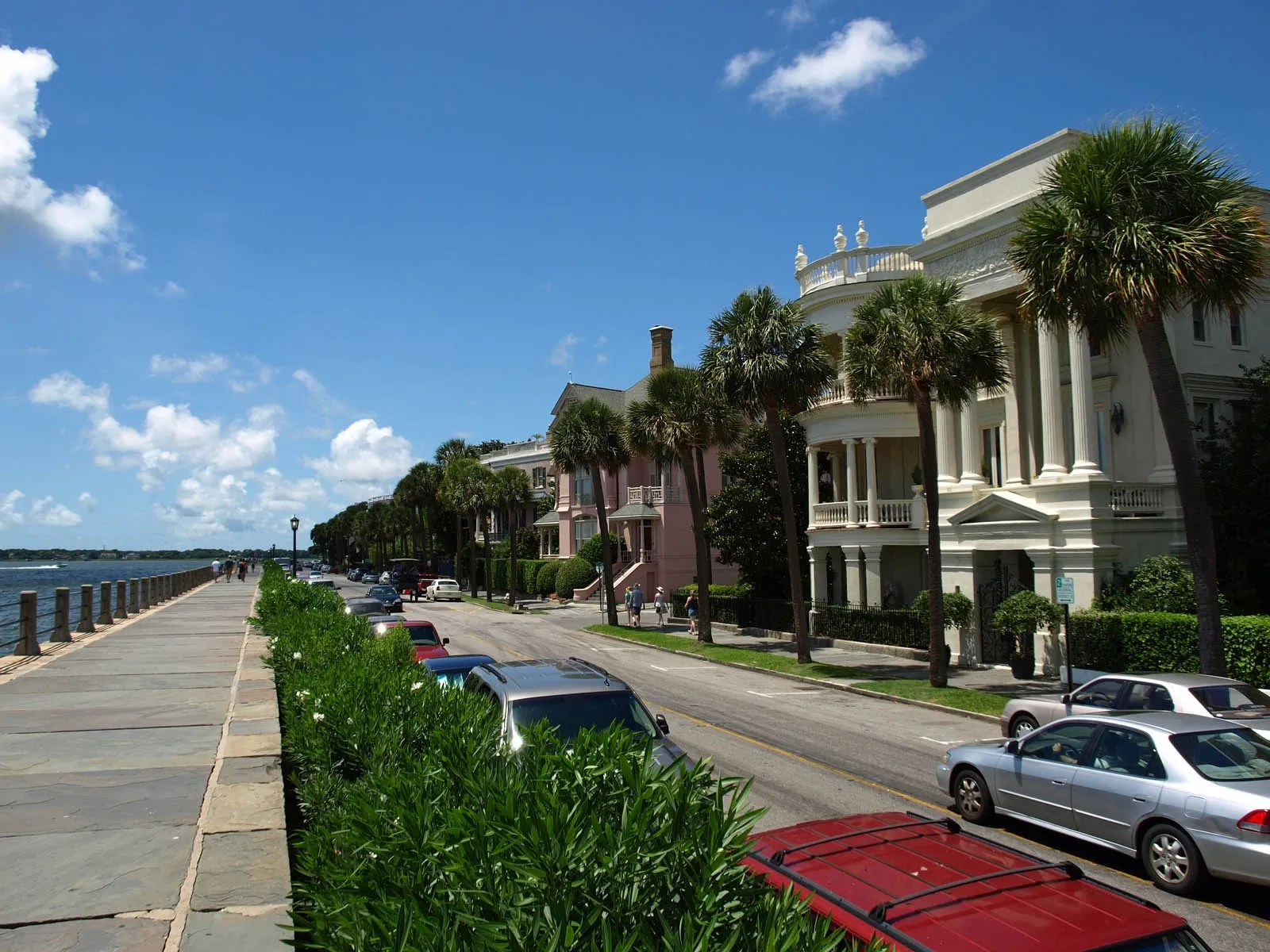
Charleston is the most beautiful and the most sobering city in the American South: a peninsula of pastel rowhouses, church spires, and hidden courtyards, wrapped by two tidal rivers and anchored by a harbor where the Civil War began and where nearly half of all enslaved Africans entering the United States were landed. The city does not let you separate the prettiness from the history, and it is better travel for it. Come for Rainbow Row and the Battery, stay for the ferry to Fort Sumter, the gardens and slave cabins at Magnolia Plantation, Gullah sweetgrass baskets at the market, and a Lowcountry food scene that rivals any city its size. Plan two to three days, walk the historic core, and book the Fort Sumter ferry ahead. Charleston suits history-minded travelers, photographers, food lovers, and anyone who wants the South at its most atmospheric and most honest.
Top sights at a glance
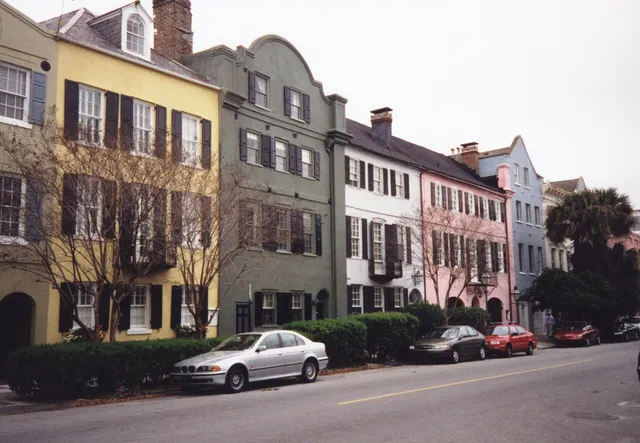
Rainbow Row
Rainbow Row is a single block of East Bay Street where 13 Georgian rowhouses, built as merchant addresses in the 1740s and restored in pastel pinks, greens, and blues during the 1930s and 1940s, became the most photographed street in the American South. It is short, free, and best in early morning light; the whole neighborhood around it, iron gates, hidden gardens, and churchyards, is the real attraction.
Good to know · Free, always open, 83-107 East Bay Street; go before 9 a.m. for empty sidewalks and good light. The houses are private residences, so admire from the sidewalk. Pair it with a loop down to the Battery two blocks south, and hold your camera at an angle to catch several houses without parked cars.
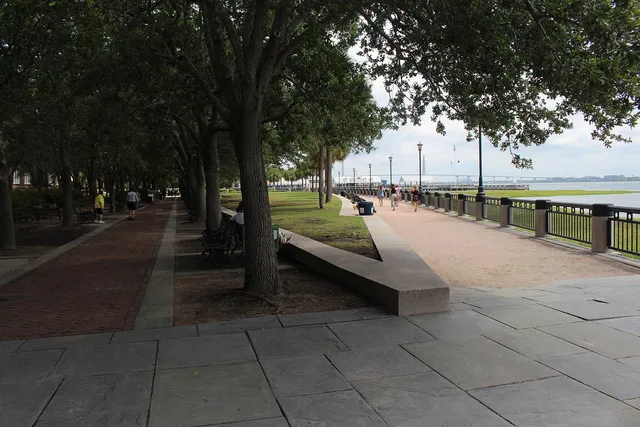
The Battery and Waterfront Park
The Battery is the fortified southern tip of the peninsula, where White Point Garden's live oaks stand among cannons and memorials facing Fort Sumter across the harbor, and the streets approaching it carry the grandest antebellum mansions in the South. Two blocks north, Waterfront Park curves along the Cooper River with shade pavilions, a pier, and the pineapple fountain that became the city's signature photo.
Good to know · Free, always open. Sunset from Waterfront Park's pier, with the Ravenel Bridge lit across the river, is the best free hour in Charleston. White Point Garden's monuments tell the city's story in stone, from Revolutionary defenders to Confederate memorials to civil rights markers; read them critically. Street parking is scarce, so walk from the market district.
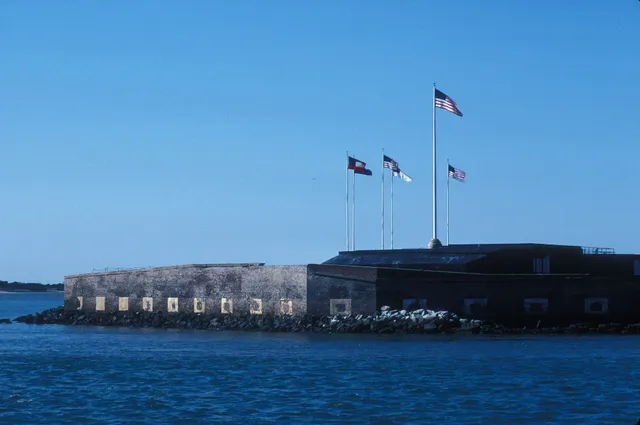
Fort Sumter
Fort Sumter is the brick island fortress in Charleston Harbor where the first shots of the Civil War were fired on April 12, 1861, and it is reachable only by the official concessioner's ferry. The National Park Service charges no entrance fee; the ticket buys a harbor cruise past the city's waterfront, roughly an hour exploring the fort's gun tiers with rangers on hand, and the return ride.
Good to know · Ferries depart Liberty Square (340 Concord Street) and Patriots Point in Mount Pleasant; as of October 2026 the downtown schedule runs 9:30 a.m., 12 p.m., and 2:45 p.m. seasonally, and adult tickets run about $45 including the booking fee (fortsumtertours.com). Book ahead, especially March through July; the full visit takes about 2.25 hours.
Magnolia Plantation and Gardens
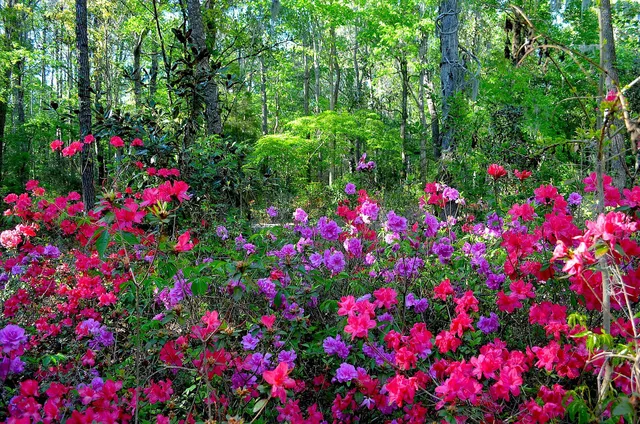
Magnolia, a Drayton family rice plantation worked by enslaved people from the 1680s onward, opened its gardens to the public in 1871 and remains one of America's oldest continuously operating tourist attractions. The romantic plantings of azaleas and camellias are famous, but the essential visit here is the From Slavery to Freedom tour through four restored slave cabins, where the plantation tells its own history plainly.
Good to know · Open daily 9 a.m. to 4 p.m. (closed Thanksgiving and Christmas), 3550 Ashley River Road, about 30 minutes from downtown by car; admission runs in the low $30s and the From Slavery to Freedom tour and house tour are included with same-day tickets (magnoliaplantation.com). Reserve mornings in March and April when the azaleas peak.
King Street
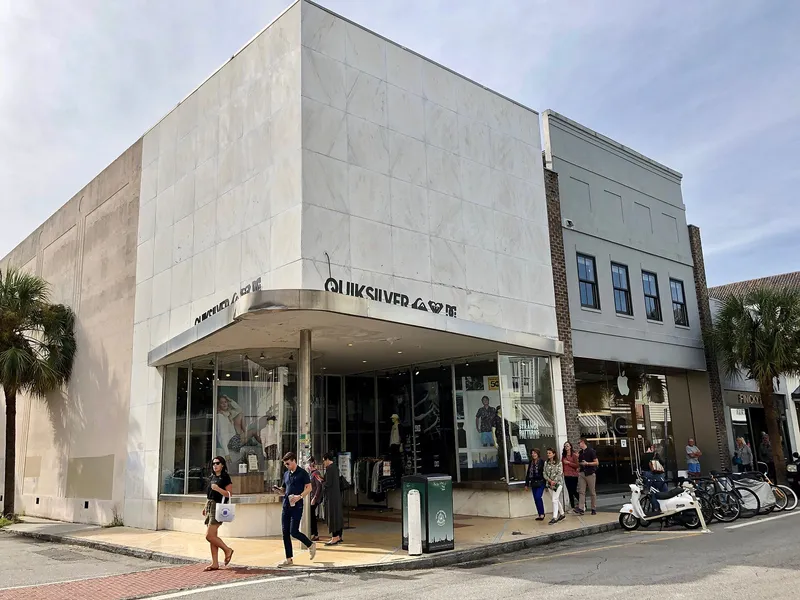
King Street is Charleston's commercial spine and its best people-watching: lower King holds the antiques district in buildings two centuries old, middle King stacks the fashion and design boutiques, and upper King has become the restaurant and nightlife quarter where the city actually eats after dark. It runs from the harbor end of Broad Street north past the Marion Square farmers market.
Good to know · Free to stroll; the DASH shuttle routes loop nearby if your feet give out. Saturday mornings bring the farmers market at Marion Square at the upper end. Shops open around 10 a.m., restaurants buzz from 6 p.m.; do the antiques end in daylight and end with dinner on upper King.
Charleston is the most atmospheric city in the American South, and the one that asks the most of you. The postcard is real: pastel rowhouses and iron gates, church steeples over tiled roofs, live oaks dragging Spanish moss across the streets, a harbor glittering past a seawall promenade. But the same harbor is where the Civil War began, and the same streets made their fortune as the landing point of the Atlantic slave trade; almost half of all enslaved Africans brought to what became the United States arrived here. Charleston handles that inheritance better than most places: the story is told at the fort, in the market halls, and in the slave cabins of the plantations up the river, and a traveler who takes it seriously comes away with a far richer trip than the photos promised. Plan two to three days: a morning for the peninsula’s streets and market, an afternoon ferry to Fort Sumter, a half day at Magnolia, and unhurried evenings for Lowcountry food.
A Bit of History
The English founded Charles Town in 1670 across the Ashley River, moving it to the current peninsula in 1680; within a decade it was among the largest towns in colonial America, grown rich on rice, indigo, and the forced labor of enslaved Africans. That wealth was explicit: Charleston was the primary entry point of the Atlantic slave trade in North America, and almost half of all enslaved people imported into the United States landed on this harbor, many quarantined on Sullivan’s Island before sale in markets clustered around Chalmers and State Streets. The antebellum mansions visitors photograph today were purchased with that economy, and the city’s museums and tour operators say so plainly.
South Carolina seceded first, in December 1860, and the first shots of the Civil War fell on Fort Sumter in the harbor on April 12, 1861. The war ended the plantation economy; Reconstruction briefly brought Black Charlestonians political power before Jim Crow stripped it away. The 1886 earthquake flattened much of the city; rebuilding in place accidentally preserved it, which is why the largest National Historic Landmark district in the United States stands here today. In 2015 a white supremacist murdered nine members of a Bible study at Mother Emanuel AME, one of the oldest Black churches in the South; the city’s reckoning with that massacre, including the removal of the Confederate battle flag from the Statehouse grounds, is part of the living history you will walk past.
Modern Charleston is a tourism and port economy of about 150,000 people, a metro approaching 870,000, and one of the most-visited small cities in the country. The historic core survives on visitors, and the cost is a center that locals increasingly cannot afford.
Culture & Daily Life
Charleston moves slowly and talks politely, and underneath runs a serious cultural engine. The city’s defining cultural inheritance is Gullah Geechee: the descendants of West and Central Africans enslaved on the coastal rice and cotton plantations of the low country, whose isolated island and tidal communities preserved language, foodways, and craft traditions in forms recognizably African. The Gullah Geechee Cultural Heritage Corridor, a federally recognized heritage area running from North Carolina to Florida, anchors here: you will hear Gullah speech, see the coiled sweetgrass baskets that are the region’s signature craft, and eat the rice, okra, and seafood the culture invented. Buy them from the makers at the City Market; prices are fair and the craft is centuries old.
The city is Episcopal-church-steeples, debutante balls, and Spoleto Festival USA, the arts festival that fills the theaters each late May and June. Sports matter less than food; the calendar revolves around oyster roasts in winter and garden season in spring.
Practical notes. Tipping is national standard: 18 to 22 percent at tables, $1 to 2 per bar drink, delivery 10 to 15 percent (the full arithmetic at /guides/tipping-and-sales-tax/). South Carolina’s sales tax starts at 6 percent and Charleston County’s local additions bring it to roughly 9 percent at the register. The historic district is heavily policed and generally safe; normal city sense covers the few blocks beyond it. On guns, the traveler’s reality is simple: venues ban weapons, and you will almost certainly go your whole trip without seeing one.
Nature & the Outdoors
Charleston is a tidal city: the peninsula sits between the Ashley and Cooper Rivers at the edge of the Atlantic, and the water shapes everything. The best outdoors experiences are free: walk the Battery seawall at high tide, watch container ships slide past Fort Sumter, and take the Waterfront Park pier at sunset. Sullivan’s Island, 20 minutes away, offers a broad calm beach with the Fort Moultrie site behind the dunes; Folly Beach, 25 minutes the other way, is the scruffier surf beach.
Middleton Place, Magnolia, and the other Ashley River plantations double as nature preserves: Magnolia’s grounds include the Audubon Swamp Garden, where boardwalks cross alligator water under herons, plus six miles of trails. Kayak tours leave from several landings into the salt marsh creeks, where dolphins strand-feed at low tide, a hunting behavior rare anywhere else. Caw Caw Interpretive Center, 30 minutes south, preserves former rice fields as a wetland sanctuary with honest interpretation of the enslaved people who built them.
Practical notes: Charleston summers are brutally hot and humid, and hurricane season runs June through November, peaking August to October; check the forecast if a storm system is anywhere near the coast. And the standard American health reminder applies: if something goes wrong physically, use an urgent care clinic rather than an emergency room unless it is a true emergency, because US medical bills without insurance are punishing; we cover the mechanics at /guides/health-insurance-safety/.
Food & Drink
Charleston is one of the best food cities in America per capita, and its cuisine is Gullah and Lowcountry cooking carried into the present: shrimp and grits (the signature plate, locally caught shrimp over stone-ground grits), she-crab soup, oyster roasts in the cold months, red rice, okra soup, and benne wafers descended from African sesame candy. The restaurant scene around upper King Street has collected national awards at a rate absurd for a city this size.
Price reality, as of October 2026: shrimp and grits at a sit-down spot runs $20 to 30, a solid dinner without drinks $40 to 70 (this is not a cheap food city anymore), oyster platters $20 to 35 in season, and bar cocktails $14 to 18. Sales tax is roughly 9 percent in Charleston County and table tipping is 18 to 22 percent; the /tools/real-price-calculator/ does the conversion math for you.
Where to actually eat: the market district for quick Lowcountry plates at lunch, upper King Street for the serious dining rooms, and East Bay Street for the old-guard institutions. Seek out Gullah-owned kitchens and the sweetgrass vendors at the City Market; the food is the culture, not just a menu. Vegetarians are served everywhere, but seafood is the point.
Top Sights
Rainbow Row
Thirteen Georgian rowhouses in a row, 83 to 107 East Bay Street, built in the 1740s as merchant addresses fronting the harbor, decayed into slums, and then rescued starting in the 1930s by preservationists who painted them in Caribbean pastels; a nickname and an American icon followed. The colors are the famous part, but the architecture is the point: these are among the oldest intact rowhouses in the country, with the original dwellings upstairs and shops below and dwellings above, exactly as merchants arranged them.
It takes five minutes to see and thirty to enjoy. Go before 9 a.m.: the light is soft, the sidewalks are empty, and parked cars have not yet boxed out your photos. The houses are private homes, so view from the street. Then keep walking, because the real rainbow is the neighborhood around it: Tradd Street and the lanes toward the Battery hold iron gates, hidden gardens, and single houses with their piazzas turned to catch the sea breeze, which is the architectural invention this city is most proud of. The Edmondston-Alston and Nathaniel Russell houses nearby, both paid museums, let you inside the merchant world these streets built.
The Battery and Waterfront Park
The southern tip of the peninsula is where Charleston shows its whole hand at once. White Point Garden, at the confluence of the Ashley and Cooper Rivers, is a park of live oaks and palmettos stacked with cannons, monuments, and mansions facing the harbor; the name marks the oyster shell point early settlers used, the guns mark the artillery batteries that gave the tip its name, and across the water sits Fort Sumter. The blocks south (East Bay, Meeting, and the cross streets) hold the grandest antebellum houses in the city, built with wealth the harbor’s history explains; the park’s monuments now include markers telling that story straight, and the honest visit reads them all.
Two blocks north, Waterfront Park does the relaxing: a linear park along the Cooper River with fountains, shade pavilions, swings, a long pier, and the pineapple fountain, the city’s unofficial symbol. Sunset here, with the Ravenel Bridge lighting up across the river and container ships passing in the channel, is the best free hour in Charleston; bring a takeout dinner and eat it on a bench.
Fort Sumter
The Civil War began here on April 12, 1861, when Confederate batteries opened fire on the US garrison holding this brick island fort in the harbor, and Fort Sumter remains the most consequential single object in South Carolina. The island fort was battered to rubble in the war, rebuilt as a coastal defense installation, and now operates as a national historical park: rangers give the context, the gun tiers are walkable, and the views back at the city are excellent.
The fort has no entrance fee, but it is reachable only by the official ferry, Fort Sumter Tours, from Liberty Square (340 Concord Street) downtown or Patriots Point in Mount Pleasant. As of October 2026 the Liberty Square schedule runs 9:30 a.m., 12 p.m., and 2:45 p.m. in the main season (with a reduced winter schedule), the boat ride is about 30 minutes each way, and you get roughly an hour at the fort, so book 2.25 hours around it. Adult tickets run about $45 including the booking fee; tours sell out from spring through summer, so reserve at fortsumtertours.com ahead of time rather than gambling on the dock. Tickets are refundable until two hours before departure. While you are on the water, note Fort Moultrie on Sullivan’s Island across the channel: its national park unit covers 171 years of coastal defense, from the Revolutionary War through World War II.
Magnolia Plantation and Gardens
The Drayton family began assembling this Ashley River rice plantation in the 1670s, and for two centuries Carolina Gold rice, planted, tended, and harvested by enslaved people, produced the wealth that built it. The gardens themselves date to the 1840s, when the Rev. John Grimké Drayton planted azaleas and camellias for his wife; the plantation opened to the public in 1871 to raise money after the war, making it one of America’s first tourist attractions, and guided tours were led by formerly enslaved workers. Magnolia’s official history is unusually direct about all of this: the wealth, the labor, and the four restored slave cabins that still stand on the property.
Go for both halves. The gardens are romantic American landscape gardening at its most influential, blazing with azaleas from late February into April, with a swamp garden where boardwalks cross black water and alligators sun on the banks. And take the From Slavery to Freedom tour through the cabins (included with admission, running 9 a.m. to 3 p.m. daily), where guides tell the story of the hundreds of enslaved people whose labor built and maintained this place; it is the most honest plantation presentation in the region, and the reason to choose Magnolia over its competitors. Hours are 9 a.m. to 4 p.m. daily except Thanksgiving and Christmas; admission runs in the low $30s, with the Nature Train and seasonal boat tours costing extra. It sits 30 minutes northwest of downtown on Ashley River Road, reachable by car or tour van.
King Street
King Street is the spine Charleston shops, eats, and argues along, running the length of the peninsula. Lower King (below Market) is the antiques district, its showrooms stacked with centuries of Lowcountry furniture, maps, and silver in buildings almost as old. Middle King is the fashion and design strip, local boutiques mixed with national brands, all under the same cast-iron and stucco facades. Upper King, above Calhoun Street, is the modern city: restaurants, bars, galleries, and the Marion Square farmers market on Saturday mornings, where the peninsula’s chefs shop.
The street costs nothing to walk and rewards two passes, one by daylight for the shops and one after 6 p.m. for the restaurant scene, which is where Charleston’s celebrated food culture actually happens. The DASH shuttle routes loop nearby if the distance adds up. Practical notes: the crowd is thickest on Friday and Saturday evenings, parking is a dead end (walk or ride), and the best plan is a lazy afternoon drift from Rainbow Row up Meeting Street, cut across to King at the market, and work your way north until dinner chooses itself.
Getting There & Around
Charleston International (CHS) sits about 12 miles northwest of downtown, a 20 to 25 minute drive with no rail link: rideshares run about $25 to 35, and rental cars are worth it only if the plantations and beaches are the trip. Amtrak serves the city (about 3.5 hours from Charlotte, about 7 from Atlanta), but most visitors arrive by plane or car.
Inside the historic district, walk: the peninsula from the Visitor Center to the Battery is about 2 miles end to end and made for it. CARTA buses cover the rest: $3.50 a ride and $7 for a day pass as of October 2026, free transfers if you ask when boarding, and the downtown DASH shuttles (routes 210, 211, 213) loop the Visitor Center, King Street, and the Aquarium (ridecarta.com). A rental car is a liability in the historic district: hotels charge $40 to 60 a night to park, streets are narrow, and everything you came for is within walking range. Rent only for the Ashley River plantations, Sullivan’s Island, or a Sea Islands day trip.
Where to Stay
The historic district, between Calhoun Street and the Battery, is the whole point of coming: pastel streets, the market at your door, and the harbor walk at the end of the block. It is the most expensive part of town and fills first in spring and fall; the trade for charm is small rooms in old buildings.
Upper King Street and the Cannonborough-Elliottborough blocks to its west have become the local’s answer: restaurant-lined, younger, and noticeably cheaper, with a 15-minute walk or a DASH ride to the historic core. It suits food-focused travelers and anyone staying more than two nights. Mount Pleasant, across the Ravenel Bridge, offers modern mid-range hotels with quick access to Sullivan’s Island and the Patriots Point ferry dock; it suits drivers and families.
Accounting notes: lodging taxes add roughly 13 to 15 percent to quoted rates in Charleston, and spring weekends (Spoleto in late May, azalea season in March and April) push rates to their annual peak, so book those months months ahead. Parking fees at downtown hotels run $40 to 60 per night; confirm them before you reserve a car you do not need.
Sources & verification (14)
- https://www.nps.gov/fosu/planyourvisit/index.htm
- https://fortsumtertours.com/
- https://fortsumtertours.com/tours/fort-sumter-tour/
- https://www.magnoliaplantation.com/magnolia-daily
- https://www.magnoliaplantation.com/history
- https://www.magnoliaplantation.com/faq
- https://www.nps.gov/guge/index.htm
- https://ridecarta.com/fares-passes/
- https://taxfoundation.org/location/south-carolina/
- https://en.wikipedia.org/wiki/Charleston,_South_Carolina
- https://en.wikipedia.org/wiki/Rainbow_Row
- https://en.wikipedia.org/wiki/Old_Slave_Mart
- https://en.wikipedia.org/wiki/Emanuel_African_Methodist_Episcopal_Church
- https://en.wikipedia.org/wiki/Fort_Sumter