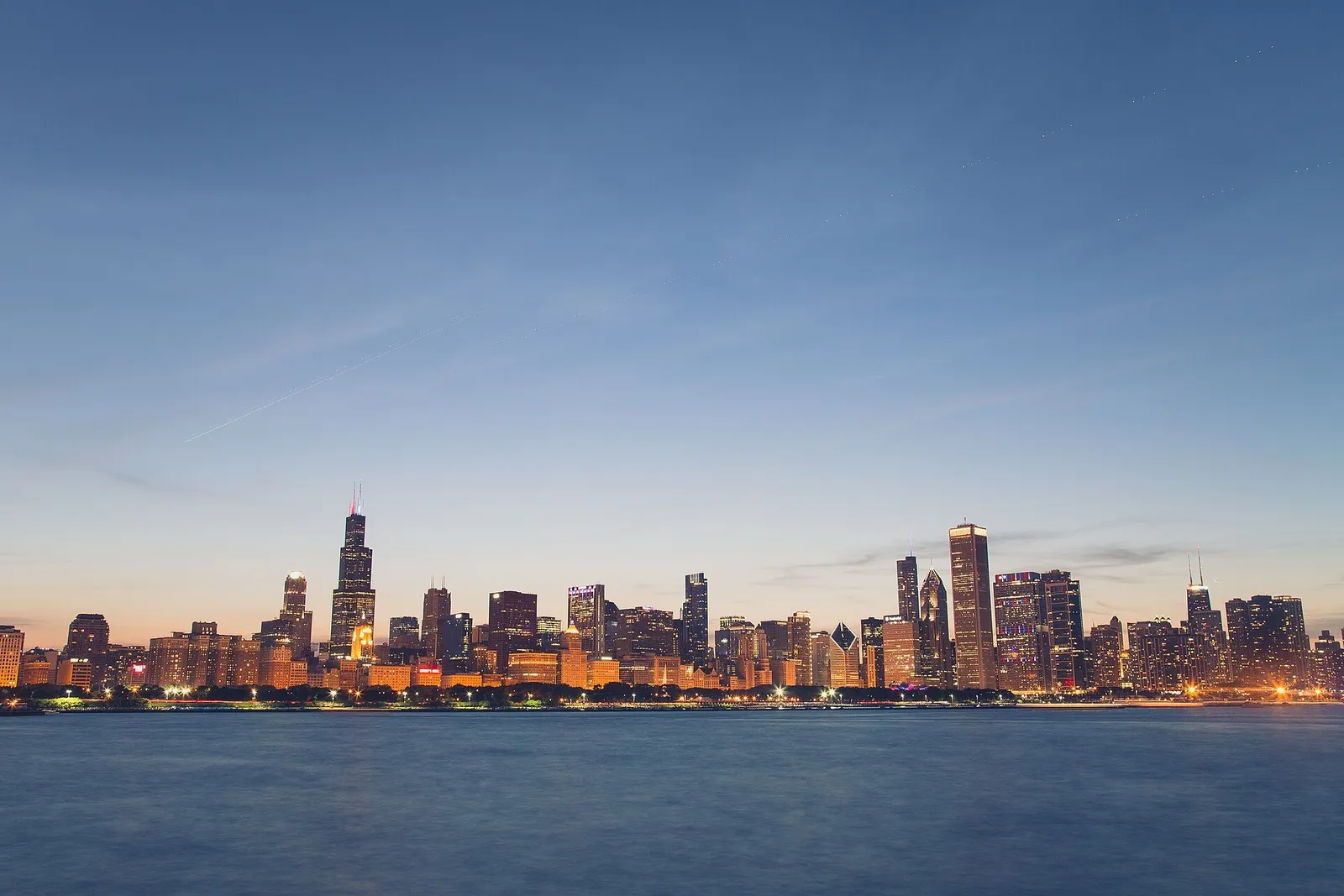
Chicago is America's great inland city, built on a flat plain at the edge of Lake Michigan and rebuilt, after fire and flood, into a living museum of modern architecture. The core experiences are free or nearly free: a lakefront trail that runs unbroken for 18 miles, a park with a giant mirrored bean, river bridges that lift like drawbridges, and blues bars that never learned to close. The Art Institute holds one of the finest art collections in the country, and the river cruise is simply the best city tour in America. Chicago suits first-time visitors who want a big American city without coastal prices or coastal attitude: it is walkable, served by an honest 24-hour train system, and friendly in a way that surprises people. Give it three to four days, ideally between May and October.
Top sights at a glance
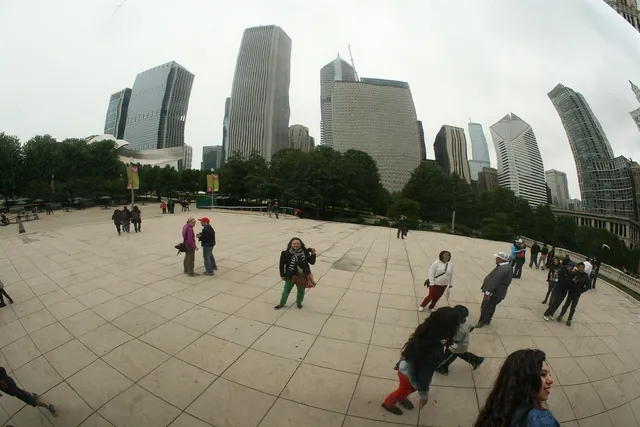
Millennium Park
The city's front lawn, built on former rail yards above the tracks and opened in 2004. Cloud Gate, the mirrored sculpture everyone calls the Bean, bends the skyline into itself and has become the single most photographed object in the Midwest. The park also holds the Frank Gehry-designed Pritzker Pavilion, which stages free concerts and movie nights all summer, the Crown Fountain's digital faces, and the Lurie Garden's quiet prairie planting. It anchors a downtown green corridor that runs from the river to the lake.
Good to know · Free, open daily 6 a.m. to 11 p.m. as of October 2026 (millenniumpark.org lists hours and the summer program). Cloud Gate is nearly empty before 8 a.m.; summer evenings fill for concerts. The park sits directly above Metra and CTA stops between Michigan Avenue and the lake.
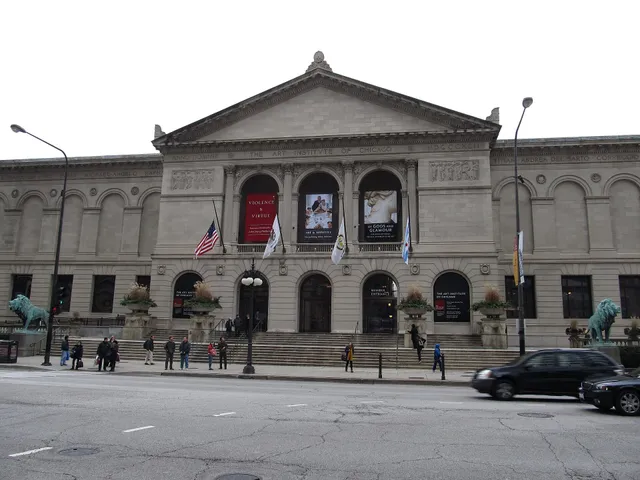
Art Institute of Chicago
One of the two or three greatest art museums in the United States, guarding the entrance to the Loop with its two bronze lions. American Gothic and Nighthawks live here, along with the world's best collection of Impressionist and Post-Impressionist paintings outside Paris, a deep run of medieval and Japanese work, and the Modern Wing's photography and design galleries. You can see the highlights in two hours, but it rewards a full morning and rewards repeat visits even more.
Good to know · General admission is $32 for adults (seniors and students $26, children under 14 free), as of October 2026. Open 11-5 most days, until 8 on Thursdays, closed Tuesdays; buy timed tickets ahead at artic.edu. Free tours run daily at 1:00 and 3:00.
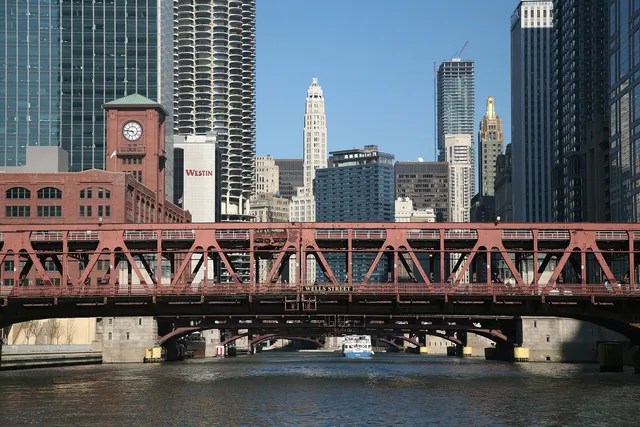
Chicago Riverwalk
A 1.25-mile promenade carved below street level along the main branch of the Chicago River, where the city finally turned and faced the water it spent a century using as a sewer. Wine gardens, cafes, kayak launches, and public art line the path beneath the bascule bridges; the buildings above form the densest cluster of significant architecture in America. Walk it at dusk when the bridges are lit, but the essential version is the 90-minute river cruise, which departs from stairs at the Michigan Avenue bridge.
Good to know · The riverwalk is free and always open. The official Chicago Architecture Center River Cruise (90 minutes, roughly US$45-55 per adult, sold through architecture.org and Ticketmaster) sells out in summer: book at least a week ahead, earlier for sunset slots. Arrive 30 minutes before departure; boats run rain or shine.
Skydeck Chicago
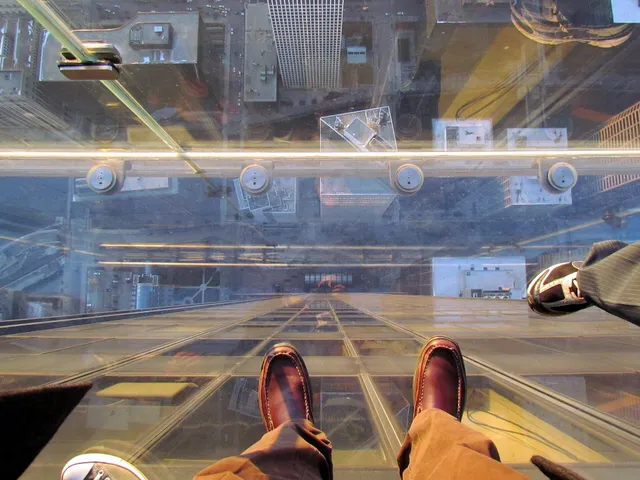
The tallest building in the Western Hemisphere for over two decades, still the city's spine, with an observation deck on the 103rd floor and four glass balconies called the Ledge that extend 1.3 meters (4.3 feet) outside the facade. On clear days you can see three states and, across the lake, Michigan. The line is the honest drawback, which is exactly why timed tickets exist. Sunset slots are the most popular and the most expensive.
Good to know · Adult tickets start at $32, children 3-11 at $24, as of October 2026, with timed entry in 30-minute windows; expedited entry starts at $55 (theskydeck.com). Book online at least a few days ahead for sunset. Open 365 days a year; mornings are quietest.
Navy Pier
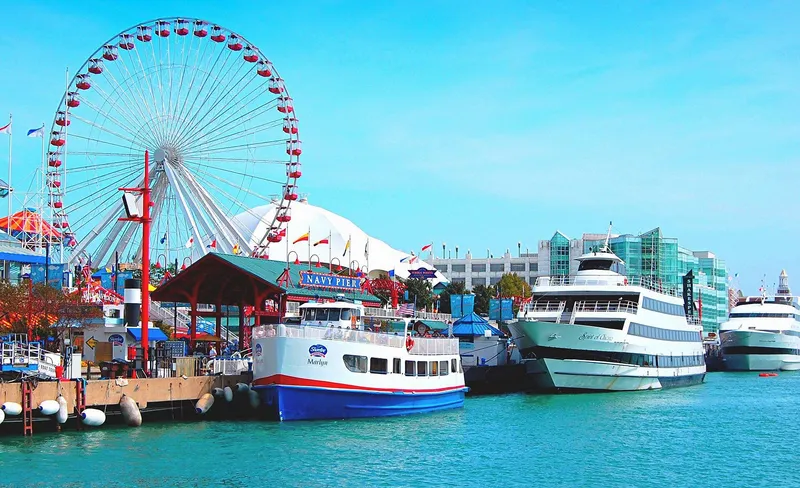
A half-mile pier built in 1916 as a freight and recreation dock, now the city's most popular attraction: a Ferris wheel, boat docks, beer gardens, fireworks in summer, and long views back at the skyline from the lake end. Locals call it touristy, and it is, but the pier also stages the best free fireworks show on the lake and launches the architecture boats. Go at golden hour, ride the wheel, and walk out past the children's museum to the quiet east end.
Good to know · Entry is free; the pier closes only on Thanksgiving and Christmas. A Centennial Wheel ride runs about US$20 per adult (buy at the Pier Park box office; resellers charge more). Fireworks run most Wednesday and Saturday summer nights per navypier.org.
See it in motion
Some places earn a moving picture
Stills can't show how this place moves: the drift, the light show, the crowd flow. We picked a recent, high-quality walkthrough rather than a promotional cut.
The Chicago River Tour with Geoffrey Baer
WTTW (Chicago public television) · YouTube · plays on click
Embedded via YouTube's official player (privacy-enhanced mode). Video: The Chicago River Tour with Geoffrey Baer by WTTW (Chicago public television). Not affiliated with Wide Open America; screened for quality and accuracy on 2026-10-15.
Chicago is what New York would be if it took itself less seriously and moved next to an inland sea. The skyline here is the real thing, a wall of towers invented on this very ground: the skyscraper was born in the Loop after the Great Fire of 1871, and the city has been building upward ever since. Yet the first thing you notice is not the buildings. It is the lake. Lake Michigan behaves like an ocean, 30 miles wide at Chicago, with real beaches, dune grass, and a horizon with nothing on it. Between the towers and the water runs a public shore that no one is allowed to privatize, stitched together by an 18-mile trail. Chicago suits travelers who want the big-American-city experience (world-class museums, architecture, music, food) without New York prices or the feeling of being processed. It is friendly, legible, cheap to move around in, and at its best between May and October.
A Bit of History
Chicago’s story compresses two centuries into a single arc. In 1833 this was a mudflat of a few hundred people at the mouth of a sluggish river; the 1837 canal and then the railroads made it the junction between the farms of the interior and the markets of the East. By 1890 it was the fastest-growing city on earth, the slaughterhouse and lumberyard of a continent.
Then came the fire. On October 8, 1871, a blaze leveled most of the wooden city and left 100,000 people homeless. The rebuild made modern Chicago twice over. Land values and engineering ambition produced the first skyscrapers in the 1880s, steel frames rising from soft lakeshore clay on new foundations, and the world’s first elevated loop of track, the Loop itself, wrapping the downtown in 1897. The 1893 World’s Columbian Exposition drew 27 million visitors and announced that the brute city had taste; its White City spawned the “City Beautiful” movement and Daniel Burnham’s plan of 1909, the source of this city’s unusually generous lakefront parks.
The city also engineered its own plumbing on a scale no one had attempted: in 1900, engineers reversed the Chicago River so it flowed away from Lake Michigan, the city’s drinking water, and into the Mississippi watershed instead. It remains the reason the riverwalk exists at all.
The twentieth century layered on the rest: the Great Migration brought hundreds of thousands of Black families from the South, and with them the Delta blues that took root on the South Side and became the city’s sound; industrial decline did its damage; and after World War II, architects like Mies van der Rohe made the prairie-glass towers that define the lakefront today. What you see in three days of walking is all of it at once: a 19th-century merchant city, a 20th-century modernist one, and a 21st-century city betting on parks. The context makes the views better: take the cruise early in your trip, and the buildings stop being scenery and become a text you can read.
Culture & Daily Life
Chicago is a city of neighborhoods more than of sights, and daily life sorts by them: the North Side lakefront runs dog parks and farmers markets; Pilsen, southwest of the Loop, is the Mexican-American heart with murals on every other wall; the West Loop turned old warehouses and meat markets into the city’s restaurant row; Hyde Park, far south, is the university neighborhood where the Obamas lived. Trains are color-coded and simple.
The sports culture is a civic religion: baseball’s Cubs on the North Side and White Sox on the South, football’s Bears, hockey’s Blackhawks. Wearing the wrong jersey into the wrong bar is a real, if friendly, hazard. Music runs just as deep: Chicago electrified the Delta blues after the war, and in the 1980s it invented house music in Black club culture on the South Side. Blues bars are unpretentious, cover-charge-and-loud affairs, and tourists are genuinely welcome; go on a weeknight, tip the band, and sit close.
Winter is not a rumor here: December through February is genuinely hard, with wind off the lake and January highs often below freezing. Locals plan around it, and the underground pedway and the CTA keep the city working, but do not schedule a January visit expecting the postcard. You may have read about gun violence in American news; the practical reality for visitors is that tourist districts are heavily patrolled, guns are barred from most venues, and following staff directions resolves the rare awkward moment.
The useful action: before you come, pull the events calendar at choosechicago.com. Free lakefront festivals, the summer fireworks schedule, and neighborhood street fests are what make a Chicago trip feel local rather than checked-off, and most cost nothing.
Nature & the Outdoors
Chicago’s outdoors secret is that its best park is 30 miles of water. The entire lakefront is public by law, the legacy of a 19th-century court fight in which the city’s merchants were forced to keep the shore open, and it is strung together by the Lakefront Trail: 18 continuous miles of paved path past beaches, marinas, and harbor pools, with the skyline on one side and open horizon on the other. Renting a Divvy bike (the city’s share system, $1 to unlock plus $0.20 per minute on a classic bike, with a $19.90 day pass, as of October 2026) and riding even one stretch of it, say North Avenue to Navy Pier, is the single best hour of exercise in any American city.
The beaches are free and genuinely sandy; Oak Street Beach sits under tower cranes while North Avenue Beach fills with volleyball on summer weekends. Kayaks put in directly off the riverwalk, paddling between bridge abutments under towers. Lincoln Park, north of downtown, holds a free zoo. One caution that applies to every American city: health care here is excellent and ruinously expensive, so make sure you have travel insurance before any bike crash or ER visit; see /guides/health-insurance-safety/.
Food & Drink
Chicago eats with conviction, and it has four dishes worth planning a day around. The first is deep dish pizza, invented here in the 1940s: a buttery, pie-like crust lined with cheese and topped with a chunky tomato sauce, baked 30 to 45 minutes, so order it the moment you sit down. It is a tourist ritual and an excellent one; locals more often eat tavern-style, a thin cracker-crust pie cut into squares. Do both once, then pick a side. The second is the Italian beef, thinly sliced roast beef soaked in its own jus on a long roll, ordered “dipped” (the whole sandwich goes into the gravy) with hot giardiniera; it is messy, cheap, and best standing at a counter in a neighborhood like Bridgeport. Third, the Chicago-style hot dog: an all-beef dog on a poppy seed bun dragged through mustard, relish, onions, tomato, pickle, sport peppers, and celery salt, and absolutely never ketchup. Fourth, worth the walk to any of its neighborhood temples: Mexican food in Pilsen, from carnitas steamed in copper kettles to weekend birria.
The current center of gravity is the West Loop, where Randolph Street holds the city’s most ambitious kitchens and two vast food halls. Chinatown and Argyle Street (Vietnamese) both reward an evening. Expect US$15-25 for a casual dinner, US$40-70 for a serious one. Tipping is not optional: plan 18-22 percent at table-service restaurants, $1-2 per drink at bars, and 10-15 percent for delivery; the full arithmetic lives at /guides/tipping-and-sales-tax/. Sales tax in Chicago runs 10.25 percent on restaurant meals, among the highest in the country, so a menu price is never the whole bill. Use /tools/real-price-calculator/ to see what you will actually pay.
Top Sights
Millennium Park
Start here, because this is Chicago’s living room and the fastest way to understand the city’s habit of putting public art in public space. The park opened in 2004 on top of active rail yards, which is the kind of over-engineering Chicago does without blinking. Cloud Gate, Anish Kapoor’s seamless mirror of a sculpture, pulls the skyline into its curved belly; arrive before 8 a.m. and you get the Bean with nobody in it, which is the photograph you actually want. Crown Fountain spits water from video faces of local residents all summer. The Pritzker Pavilion, Frank Gehry’s steel-ribboned shell, hosts free concerts and film nights from June through August: bring nothing but a blanket.
The park is free and open daily from 6 a.m. to 11 p.m. as of October 2026, with hours and the events program posted at millenniumpark.org. Time your visit around one evening concert if you can, and walk south afterward through the quieter Lurie Garden and across the Nichols Bridgeway toward the Art Institute, which sits directly across the street.
Art Institute of Chicago
This is one of the great museums of the Americas, and if you see only one paid attraction in Chicago, make it this one. The collection covers 5,000 years, but its signature strengths are American and French: Grant Wood’s American Gothic and Edward Hopper’s Nighthawks hang here, along with more than 30 Monets, the largest Chagall mosaic in the world installed in the courtyard, and a Modern Wing that holds the best photography galleries in the Midwest. The Thorne Miniature Rooms, 68 dollhouse-scale interiors, are quietly beloved.
Practicalities as of October 2026: general admission is $32 for adults, $26 for seniors and students, free for children under 14. The museum opens 11-5 Monday and Wednesday through Sunday, stays open until 8 on Thursdays, and closes Tuesdays. Buy tickets ahead at artic.edu (advance purchase is encouraged, not required), and note that the free daily guided tours at 1:00 and 3:00 are included with entry and are excellent. Enter through the Michigan Avenue doors under the lions; allow two hours minimum, half a day if Impressionists are your weakness.
Chicago Riverwalk
The riverwalk is the city’s masterstroke of the last decade: instead of turning its back on the river, Chicago carved a public promenade a story below street level and let people drink wine beside the water. Walk any stretch and you are moving through a canyon of architecture, 19th-century commercial lofts, 1920s deco towers, and Mies’s black steel giants, with the bridges swinging overhead on a schedule. The path runs about 1.25 miles along the main branch between Lake Shore Drive and Franklin Street.
Two upgrades make it better. First, rent a kayak at one of the riverwalk docks and paddle the main branch at golden hour; no experience needed, life jackets provided. Second, and not optional: take the Chicago Architecture Center’s official river cruise, a 90-minute tour led by trained docents that departs from the First Lady dock at the southeast corner of the Michigan Avenue bridge (112 E. Wacker Drive). Expect roughly US$45-55 per adult as of October 2026, book ahead at architecture.org (it regularly sells out in summer), and arrive 30 minutes early. Do this on day one; every building you meet afterward will come with a story attached.
Skydeck Chicago
Willis Tower (still “Sears Tower” to many locals) held the title of world’s tallest building for 25 years, and its 103rd-floor deck, 412 meters up, remains the classic Chicago view: the lake to the east, the gridded streets running to the horizon, on clear days three states visible. The draw for most visitors is the Ledge, four glass-floored boxes extending outside the building, where stepping out onto nothing is the point. The museum on the way up covers the construction, including how 114 concrete caissons anchor the tower in soft lakebed clay. The elevator ride itself, shooting up 103 floors in about a minute, is part of the fun.
Tickets as of October 2026 start at $32 for adults and $24 for children 3 to 11 (under 3 free), sold as timed entry in 30-minute windows at theskydeck.com; expedited entry starts at $55. Open 365 days a year. Strategy matters: morning slots are quietest, but the city looks best in the hour before sunset, which is exactly when everyone else books, so reserve sunset slots a week or more ahead or accept the queue. Bad-weather tip: on gray days the deck can sit above the clouds, which is either a refundable disappointment or the best photo of your trip.
Navy Pier
Chicago’s most-visited attraction is a 1916 cargo pier turned fairground, jutting half a mile into Lake Michigan, and the honest advice is to calibrate expectations: come for the situation (water on three sides, the skyline framed behind you) rather than the amusements. The Centennial Wheel, a 15-story Ferris wheel with climate-controlled gondolas, delivers the best simple view on the lakefront for about US$20 a ride, bought at the Pier Park box office (resellers and hotel concierges charge more). Summer adds fireworks on many Wednesday and Saturday nights, reflected in the lake, free.
The pier is free to enter and open year-round, closing only on Thanksgiving and Christmas, per navypier.org. The far east end is the payoff most people miss: past the children’s museum and the Shakespeare theater, the pier narrows into quiet benches with open-water views, ideal at sunset. Afterwards, walk or take the free trolley west into Streeterville for dinner, or catch a lake cruise from the docks at the pier’s foot.
Getting There & Around
Chicago is served by two airports. O’Hare (ORD), northwest of the city, connects directly to the Blue Line train: the ride downtown takes about 45 minutes and costs a flat $5, running 24 hours. Midway (MDW), closer in, sits at the end of the Orange Line, about 40 minutes for the standard $2.50 train fare. Every gate takes contactless bank cards, so you need not buy anything in advance (the fare table lives at transitchicago.com).
Inside the city you do not need a car: the CTA train grid plus buses cover nearly everything in this article, base fare is $2.50 on rail and $2.25 on bus with free transfers within two hours, and the Ventra app handles tickets and trip planning. Divvy bikes fill the last mile (pricing above). Remember America’s scale when adding cities: Chicago to Milwaukee is 90 minutes by Amtrak, to St. Louis about 5 hours by train, and flights to the coasts run 4 hours. Rent a car only if you are heading into the Great Lakes or rural Midwest; downtown, parking runs US$50-70 a night at hotels.
Where to Stay
Stay in or near the Loop and River North if it is your first visit: everything in this article is walkable, the trains converge here, and the hotel stock is deep. The trade-off is price and, in parts of River North, a business-traveler sameness. The West Loop is the food-lover’s base, newer hotels around Randolph Street and easy access from Union Station if you arrive by train. Lincoln Park or Lakeview, north along the lake, give you a leafier, more local stay at lower prices, 20 to 30 minutes from downtown on the Red or Brown lines; pick these if you want evenings in neighborhood bars rather than downtown towers.
Budget honestly: downtown Chicago hotel taxes climbed as high as 19 percent in 2026 for larger downtown properties, the highest combined rate in the country, so a $250 room costs closer to $297 before incidentals (details at /tools/real-price-calculator/). Parking is billed separately at most properties. Book well ahead for big convention weeks, when rooms multiply in price; a quick check of the events calendar at choosechicago.com tells you which dates to avoid.
Sources & verification (10)
- https://www.artic.edu/visit
- https://theskydeck.com/plan-a-visit/tickets/
- https://millenniumpark.org/
- https://navypier.org/plan-your-visit/hours-and-admission/
- https://www.transitchicago.com/fares/
- https://divvybikes.com/pricing
- https://www.architecture.org/city-tours/river-cruise
- https://news.wttw.com/2026/03/18/chicago-city-council-boosts-downtown-hotel-taxes-19
- https://www.chicago.gov/city/en/depts/fin/supp_info/revenue/tax_list/hotel_accommodationstax.html
- https://www.britannica.com/place/Chicago