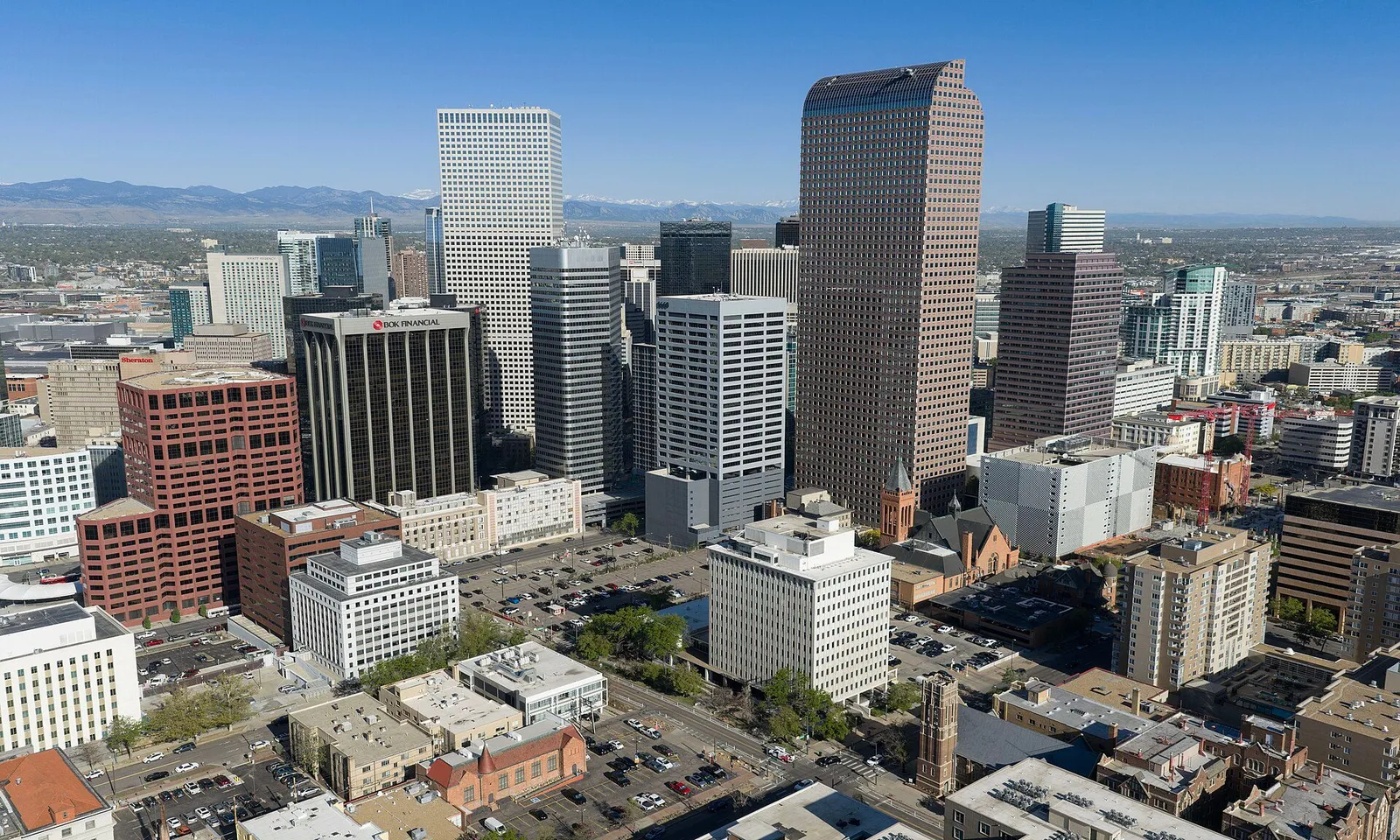
Denver sits a literal mile above sea level on the high plains, with the snow-capped Front Range stacked behind it like a stage set, and it works best as a city-and-mountains combination trip. The core experiences are a sunrise or a concert at Red Rocks Amphitheatre, the restored Union Station terminal, the Victorian lamp posts of Larimer Square, a world-class botanic garden, and a day drive up into Rocky Mountain National Park, roughly 1.5 hours away. Between sights, the city runs on craft beer, green chile, bike lanes, and an unusually reliable supply of sunshine. Denver suits independent travelers who want urban comforts and serious alpine scenery without a car compulsory, and it is the practical gateway for first-time visitors testing altitude before going higher. Give it three or four days, pack sunscreen in every season, and go easy on the alcohol your first night.
Top sights at a glance
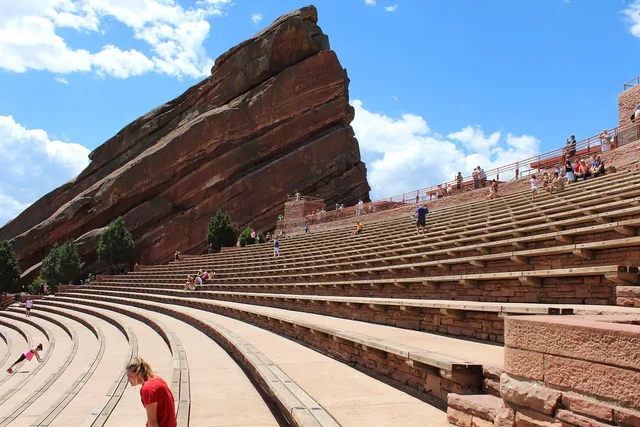
Red Rocks Amphitheatre
A 9,500-seat open-air stage set between two 300-foot sandstone monoliths, owned by the City of Denver and widely considered the finest concert venue in America. When no show is scheduled, the amphitheater is free: local runners own the steps at dawn, hikers take the surrounding park trails, and the Visitor Center's Colorado Music Hall of Fame explains why everyone from Beatles to U2 played here. The views back toward Denver at sunset justify the drive alone.
Good to know · Admission and parking are free. Non-event days, the park opens one hour before sunrise and closes one hour after sunset; on event days the amphitheater closes around 2 p.m., per redrocksonline.com. It sits 15 miles west of downtown near Morrison, a 25-30 minute drive; check the concert calendar before planning a morning visit.
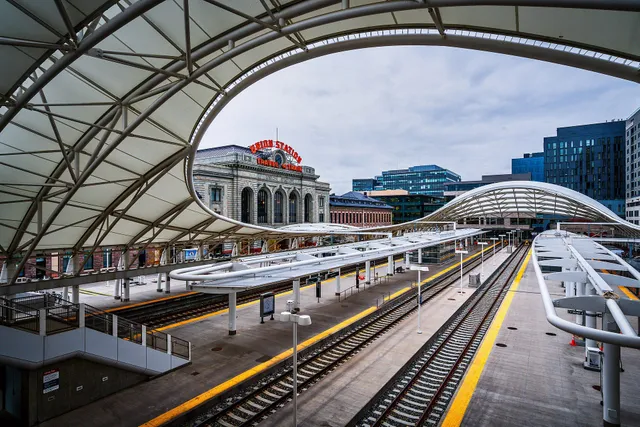
Union Station
Denver's 1914 rail terminal, reopened in 2014 as the city's living room: a cathedral-like Great Hall with 65-foot ceilings, right-angled sofas, and bars inside the old ticket windows, with train platforms still working at the back. The A Line from the airport arrives here every 15 minutes, and the surrounding LoDo blocks hold the city's best people-watching patios. Free to enter, best at dusk when the neon Union Station sign glows.
Good to know · No ticket needed to enter the Great Hall; it is an operating Amtrak and RTD station. The airport train (A Line) takes about 37 minutes and costs $10 with the RTD Airport Day Pass (rtd-denver.com). Come in the early evening for the bar scene inside the hall, and remember it is a station: mind the platform doors.
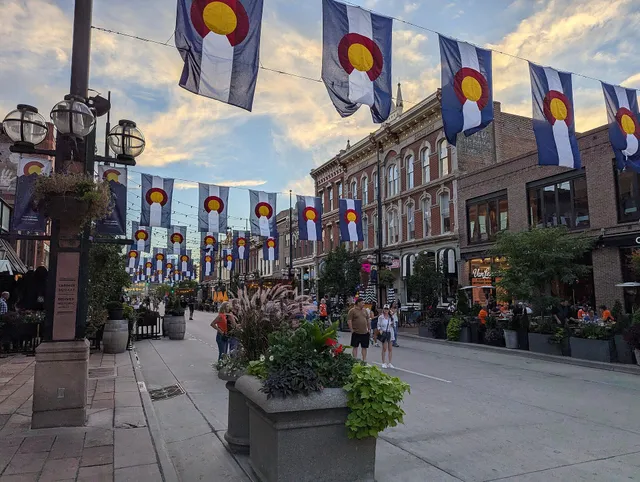
Larimer Square
Denver's oldest block, saved from demolition in the 1960s and now the city's most photogenic street: a row of 19th-century brick buildings under a canopy of string lights, with the block's Victorian storefronts holding independent boutiques, wine bars, and some of the city's most serious kitchens. It is compact, one short block, and it connects on foot to LoDo, Coors Field, and the Union Station district for an easy downtown evening.
Good to know · Free to stroll, day or night; the lights go on at dusk. Reach it on foot from Union Station in about 10 minutes or by light rail to the Larimer stop. Restaurants here book up on weekends, reserve ahead, and note that valet and street parking run pricey, so walk over from your hotel if you can.
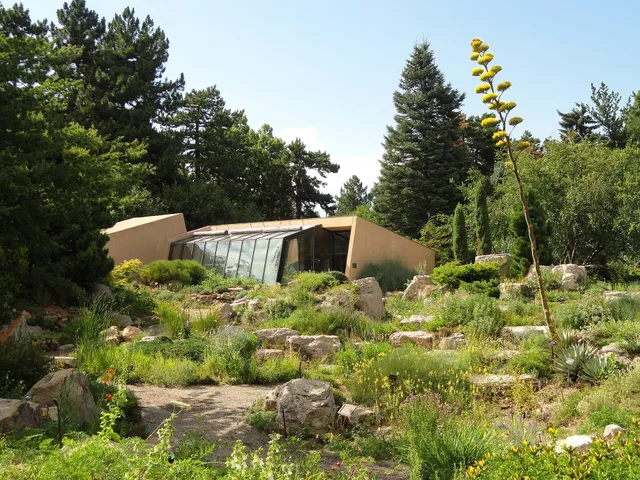
Denver Botanic Gardens
One of America's largest urban botanic gardens, 24 acres at the edge of Cheesman Park holding more than 50 distinct gardens: a Japanese garden with bonsai and koi, water gardens of hardy and tropical lilies, a plains garden of native grasses, and a conservatory of orchids and bromeliads. Outdoor sculpture shows rotate through the beds, and the attached science and art center makes it as much museum as garden. In a dry, high city, it feels almost subtropical.
Good to know · As of October 2026 admission is $16.25 for adults, $12.50 for seniors 65+ and military, $12 for children 3-15 and students, with timed entry required (botanicgardens.org). Allow two to three hours; the gardens sit 2 miles east of downtown, an easy bus or 30-minute walk via City Park.
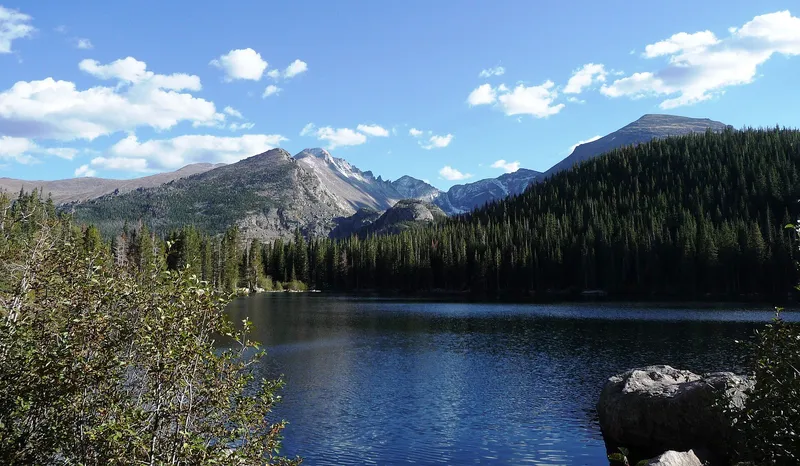
Rocky Mountain National Park
The real Rockies, 415 square miles of granite peaks, alpine tundra, and glacial valleys about 1.5 hours from Denver by car, and the best single day trip in the state. Drive Trail Ridge Road, the highest continuous paved road in America at 12,183 feet, walk the Bear Lake shoreline among 12,000-foot summits, and watch for elk, marmots, and bighorn sheep. Estes Park, the gateway town at the park's edge, makes a natural lunch and souvenir stop.
Good to know · As of 2026, a timed entry reservation ($2 on recreation.gov) is needed for peak-hour entries from late May to mid-October, including a separate Bear Lake Road version; you can also enter before 9 a.m. or after 2 p.m. without one. Entrance is $30 per vehicle per day, and non-U.S. residents 16+ pay an extra $100 per person under the new national-park rules (nps.gov). The park is cashless: bring a card.
Denver is the rare American city that gives you a reason to look up twice: once at the snow-capped wall of the Front Range on the horizon, and once at the sun, which shines here with an intensity that surprises first-time visitors. The Mile High City sits exactly 5,280 feet above sea level, a plains capital that grew rich on gold, silver, cattle, and rail, and reinvented itself as the craft beer, outdoor-gear, and live-music capital of the Mountain West. For travelers, its genius is the combination: a walkable downtown of restored brick terminals and lamp-lit blocks, a world-famous amphitheater carved into red sandstone, and a genuine national park with 12,000-foot peaks about 1.5 hours away by car. You do not need to choose between a city break and a mountain trip. Arrive with sunscreen, drink more water than feels reasonable, and let the altitude set the pace for your first day.
A Bit of History
Denver did not exist before 1858, when prospectors struck gold at the confluence of the South Platte and Cherry Creek during the Pikes Peak Gold Rush and staked a scruffy camp that merged rival settlements into one town, named for James W. Denver, governor of the Kansas Territory. The railroads nearly broke it: the transcontinental line routed north through Cheyenne in 1867, and Denver’s answer was to build its own 100-mile spur, after which the city became the supply, smelting, and banking capital of the entire Mountain West. Silver multiplied the money, and the grand blocks of LoDo and Capitol Hill date from that boom, as does the most famous local, Margaret “Molly” Brown, survivor of the Titanic.
The 1893 silver crash gutted the economy, and the twentieth century balanced mining with cattle, government, and, from the 1950s, aerospace and defense. The oil bust of the 1980s hollowed downtown; the recovery came through a deliberate play on the city’s real assets, including the airport built way out on the plains in 1995, the 2001 light rail system, and the 2014 restoration of Union Station into a transit hub with a bar in the Great Hall. Denver legalized recreational marijuana by statewide vote in 2012 (first in the nation), which reshaped its tourism economy and its image at a stroke.
Modern Denver is one of America’s fastest-growing metros, with roughly 700,000 people in the city and real growing pains of housing costs and commutes. The history is recent and legible: you can trace gold rush to light rail in a single afternoon’s walk.
Culture & Daily Life
Daily life in Denver revolves around being outside. Weekend mornings fill the Cherry Creek bike path and the trail runners queue at Red Rocks before sunrise; afternoons belong to patios and brewery taprooms, of which the metro has hundreds, including several of the most influential names in American craft beer. Dress codes barely exist: outdoor-brand fleece passes for dinner everywhere.
Two practical notes shape the visitor experience. First, the altitude is real. At 5,280 feet the air holds roughly a fifth less oxygen than at sea level, and the climate is high-desert dry; expect to be thirstier, tire faster on stairs, and feel that first evening beer or glass of wine noticeably. Drink water steadily, go easy on alcohol the first 24 hours, use lip balm and moisturizer, and treat a headache with rest and fluids before assuming anything worse; altitude illness that will not clear is a legitimate reason to see a doctor, and travel insurance is essential before any mountain day at /guides/health-insurance-safety/. Second, the sun at altitude is strong year-round: apply sunscreen even in January snow, and wear sunglasses, because UV exposure climbs with elevation.
The marijuana shops you will notice around town: cannabis is legal in Colorado for adults 21 and over, but only for private consumption or licensed lounges, never on streets, in parks, in vehicles, or across state lines. The useful action: book one outdoor thing for each morning (Red Rocks sunrise, a bike ride, the botanic garden), since Denver’s roughly 300 annual days of sunshine reward early plans and afternoon storms build fast in summer.
Nature & the Outdoors
Denver’s outdoor setting is the point of the trip. The city spreads across the high plains at the foot of the Front Range, and on clear days the profile of the Continental Divide runs along the western horizon, 12,000 and 14,000-foot peaks lined up like a mural. Inside the city, the green necklace runs through City Park (with the skyline-and-mountains view across Ferril Lake), Cheesman Park, and Washington Park, where the loop road fills with runners and pedal boats cross the pond; the South Platte River greenway threads 10-plus miles of trail south to north through the city.
Real mountain country begins where the plains end. Golden and the mouth of Clear Creek Canyon sit 20 minutes west; Morrison and Red Rocks 25 minutes; and the great wall of the Rockies, with Rocky Mountain National Park as its headline act, an hour and a half away. Summer afternoons build thunderstorms over the divide, so plan mountain hikes for morning starts and be off exposed ground by noon.
A note on climate, since it catches travelers out: Denver is semi-arid, with hot dry summers, cold but sunny winters, and snow that often melts within days. Pack layers for 30-degree daily temperature swings. Medical care in the city is excellent but wildly expensive without insurance; sort coverage before you go at /guides/health-insurance-safety/.
Food & Drink
Denver’s table is Western before it is anything else. The city’s own dish is the Denver omelet, ham, pepper, and onion, invented for miners and still a diner staple, and the state’s contribution to flavor is green chile, a pork-stewed Hatch pepper sauce poured over burritos and eggs across the Front Range. Beyond those, the menus run to bison burgers, Rocky Mountain trout, and a farm-to-table scene fed by Colorado agriculture, with steakhouses as the old-money institution and Colorado lamb its signature.
The drink scene is the headline. Denver is the birthplace city of American craft beer’s modern era, home to both the Great American Beer Festival every fall and a taproom culture where the biggest names run beer gardens within walking distance of downtown; a taproom flight costs a few dollars more than a single pint elsewhere. Colorado wine, cider, and a fast-growing distillery row fill in the rest, and coffee culture runs strong in the Highland and RiNo districts.
Geographically: LoDo and Larimer Square hold the polished rooms, RiNo (River North) the murals, food halls, and experimental kitchens, and Highland the neighborhood bistro strip. Expect US$15-25 per person casual, US$60-120 for a serious dinner with drinks. Tipping is standard American: 18-22 percent at tables, $1-2 per drink, 10-15 percent for delivery, with the arithmetic at /guides/tipping-and-sales-tax/. Colorado’s state sales tax is just 2.9 percent, but city and special-district taxes push Denver’s combined rate to roughly 9 percent per Avalara, added at the register.
Top Sights
Red Rocks Amphitheatre
Fifteen miles west of downtown, the prairie ends at a seam of red sandstone and the city built a stage inside it: two monoliths, Creation and Ship Rock, lean together over a slope of seats that has hosted concerts since 1941. The acoustics are famous and free to test; on non-event days anyone can stand at the mic stand where the Beatles played their only Colorado show, climb the rows, and watch the sun drop across the whole Denver basin. Trailheads for the park’s short hiking loop start from the lower lots, and dawn belongs to the local fitness crowd doing the amphitheater steps.
The rules are simple and worth knowing. Admission and parking cost nothing. Per redrocksonline.com, the park opens one hour before sunrise and closes one hour after sunset on non-event days, but on concert days the amphitheater itself closes around 2 p.m. for soundcheck, so check the calendar at redrocksonline.com before you plan a morning visit, and time a non-show day for the empty-stage photos. If your dates line up with a show, buying a ticket is one of the great American concert experiences; bring layers, because mountain nights turn cold even after hot afternoons. The drive from downtown takes 25-30 minutes, and rideshares run long queues after shows, so drive yourself or book a return pickup in advance.
Union Station
Union Station is the front door Denver built for itself in 1914 and the best free interior in the city. The Great Hall runs the length of the building under 65-foot vaulted ceilings, hung with chandeliers and furnished with deep sofas and chess tables, and the old ticket windows now pour drinks, which turns the terminal into the city’s most atmospheric bar from late afternoon onward. Out back, the platforms still work: Amtrak’s California Zephyr and Winter Park Express arrive here, and the airport train departs every 15 minutes.
Practicalities: no ticket or fee is needed to walk in; it is a working RTD and Amtrak station with restaurants and bars around the hall’s edges. If you fly into Denver International, taking the A Line train to Union Station costs $10 with the RTD Airport Day Pass (rtd-denver.com) and delivers you downtown in about 37 minutes without touching a highway. From the station, the whole historic core opens on foot: Larimer Square 10 minutes southeast, Coors Field next door, and the Platte River trails two blocks west. Come back at dusk for the neon sign over the entrance, which photographs best from the Wynkoop street corner.
Larimer Square
One block, and the oldest street in town: this was Denver’s first commercial row, born with the 1858 gold camp, and by the 1960s it was a derelict block slated for demolition until preservationists restored the Victorian storefronts instead, an early victory that shaped how the whole downtown aged. Today the block hangs under a canopy of string lights and holds the city’s densest cluster of upscale kitchens, wine bars, and independent shops, with the Victorian storefronts labeled by original tenant.
You need an hour to walk it. The lights switch on at dusk, which is the moment for photos down the center of the street; the block is closed to through traffic and pedestrian-friendly at all hours. Restaurants here are among the city’s best and book out on weekends, so reserve ahead rather than walking in. Practical notes: Larimer Square sits 10 minutes on foot from Union Station, light rail stops a block away, and parking is the expensive part of the evening, which is one more reason downtown Denver is best experienced without a car.
Denver Botanic Gardens
Two miles east of downtown, the Botanic Gardens prove how much grows at a mile high. The 24-acre York Street campus strings together more than 50 themed gardens: a dryland mesa garden of cactus and yucca that mirrors Colorado’s own plains, a Japanese garden with one of the largest bonsai collections outside Japan’s clubs, water gardens where tropical lilies the size of plates float all summer, and a Victorian conservatory of orchids and cycads for snowy days. rotating sculpture exhibitions place large art between the beds, and the Freyer-Newman Center next door stacks a science museum, an art gallery, and a library in one building.
As of October 2026, admission is $16.25 for adults, $12.50 for seniors 65+ and military with ID, and $12 for children 3 to 15 and students, with children 2 and under free (botanicgardens.org). Timed entry is required, so reserve a morning slot online rather than walking up; free admission days sponsored by the regional tax district appear several times a year on the same site. Allow two to three hours, and in summer go early, since the gardens open onto direct high-altitude sun by midday. The route back into town through City Park gives you the classic skyline-with-mountains photograph.
Rocky Mountain National Park
The reason Denver exists as a base, and the best day of the trip: the Continental Divide itself, 415 square miles of peaks, tundra, and elk-filled meadows, roughly 1.5 hours from downtown by car via Estes Park. In one day you can drive Trail Ridge Road above 12,000 feet (the highest continuous paved road in North America, open roughly late May to mid-October), walk the shore of Bear Lake under Hallett Peak, and watch a herd of elk cross a meadow at dusk, all without backcountry skills.
Do the paperwork first, because 2026 rules are strict. Entrance costs $30 per vehicle per day (or $35 for seven days), the park is entirely cashless, and under national rules introduced in January 2026, non-U.S. residents aged 16 and over pay an additional $100 per person nonresident surcharge unless covered by an annual or America the Beautiful pass; the nonresident annual pass is $250 (nps.gov/aboutus/nonresident-fees.htm). Separately, from May 22 to mid-October, a timed entry reservation is required to enter during peak hours: 9 a.m. to 2 p.m. park-wide, and 5 a.m. to 6 p.m. for the Bear Lake Road corridor, at $2 per reservation on recreation.gov, with next-day slots released at 7 p.m. MDT. The workaround is easy: enter before 9 a.m. without a reservation, which also beats the crowds. Start early, carry layers (it snows up there in July), and drive Trail Ridge Road before afternoon storms. Altitude note: most trailheads sit above 9,000 feet, so keep the first day’s exertion modest and drink water; see the insurance note above.
Getting There & Around
Denver International (DEN) is one of America’s largest airports, built 25 miles northeast of downtown on the plains. The best arrival into town is the RTD A Line train, which runs from the terminal to Union Station every 15 minutes in about 37 minutes; the Airport Day Pass costs $10 (rtd-denver.com). Rideshares run US$45-70 downtown depending on demand, with a 35-50 minute drive down Peña Boulevard.
Downtown works without a car: LoDo, Larimer Square, Union Station, and the museums cluster within walking distance, and RTD light rail and buses cover the wider grid, with the same $2.75 3-hour pass and $5.50 local day pass covering buses and trains within the city zone. Two destinations argue for a rental: Red Rocks (buses are impractical) and Rocky Mountain National Park, where a car transforms the day; rent for those days only, since downtown parking runs US$30-50 per night at hotels. Amtrak’s California Zephyr stops at Union Station if you want the scenic arrival; in summer, day-tour shuttles to Estes Park leave from downtown if you would rather not drive.
Where to Stay
Stay in LoDo or Union Station on a first visit: the restored warehouses and lofts between Larimer Square and the river put the train from the airport, the best bars, and Coors Field at your door, and it is the quiet-end of downtown after midnight. Highland, across the river northwest, is the neighborhood pick, bistro blocks and rowhouses with 10-15 percent lower rates and a 20-minute walk or 5-minute rideshare to downtown. RiNo suits the young and the social, murals, beer gardens, and music venues north of downtown, cheapest of the three and liveliest at night.
Budget honestly. Combined sales tax runs about 9 percent and lodging adds a city lodging tax on top, so expect roughly 15 percent in combined taxes and fees on the room rate; downtown hotel parking costs US$30-50 a night, and some properties quote a destination or resort fee at check-in, so read the itemization with /tools/real-price-calculator/. Summer weekends, the Great American Beer Festival in fall, and ski-season Fridays fill the city, so book those windows well ahead.
Sources & verification (11)
- https://www.nps.gov/romo/planyourvisit/fees.htm
- https://www.nps.gov/romo/planyourvisit/timed-entry-permit-system.htm
- https://www.nps.gov/aboutus/nonresident-fees.htm
- https://www.redrocksonline.com/plan-your-visit/getting-here/
- https://www.redrocksonline.com/
- https://www.botanicgardens.org/tickets-log
- https://www.rtd-denver.com/fares-passes/fares
- https://www.avalara.com/taxrates/en/state-rates/colorado.html
- https://www.unionstationondenver.com/
- https://www.larimersquare.com/
- https://www.denver.org/