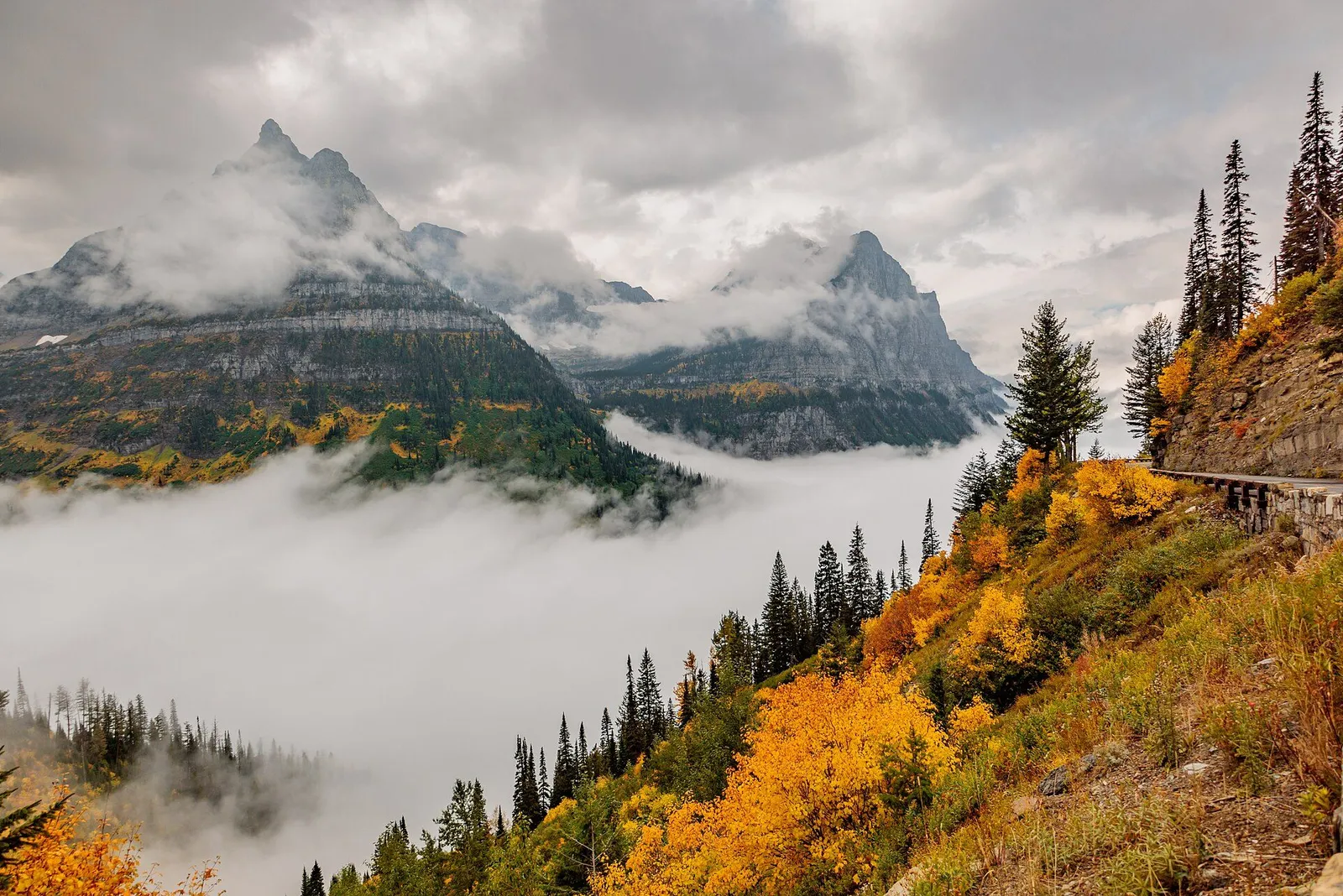
Glacier National Park is a million acres of carved peaks and hanging valleys on Montana's border with Canada, anchored by the Going-to-the-Sun Road, one of the great drives on Earth, usually fully open from late June until mid-October. The core experiences are that road, the boat-colored waters of Lake McDonald and St. Mary Lake, day hikes like the Highline Trail along the Garden Wall, and wildlife that includes both black bears and grizzlies. Big changes for 2026: vehicle reservations have been dropped, replaced by a ticketed shuttle pilot and three-hour timed parking at Logan Pass, and non-US visitors aged 16 and over pay a $100 per-person surcharge on top of the $35 vehicle entry. Base yourself in Whitefish or West Glacier, start early, and give the park at least three days; the full Going-to-the-Sun experience plus one hike and one quiet corner is the minimum honest dose.
Top sights at a glance
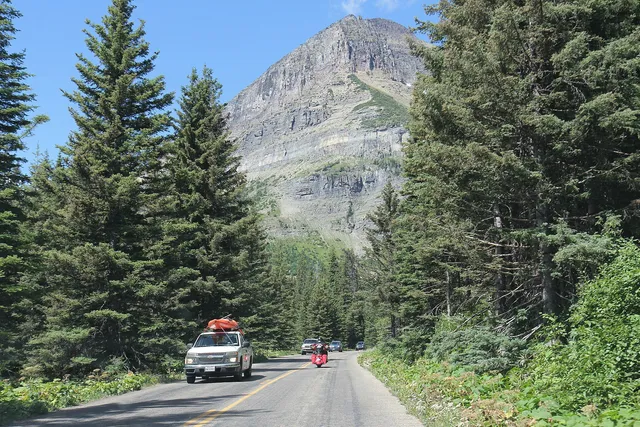
Going-to-the-Sun Road
The 50-mile engineering marvel that crosses the park west to east, climbing from Lake McDonald's forested valley over 6,646-foot Logan Pass and down to St. Mary Lake, built between 1921 and 1933 and still carrying traffic on switchbacks hung against 3,000-foot cliffs. Every viewpoint on the standard tour appears from the road: the Loop, the Weeping Wall, Jackson Glacier Overlook, Wild Goose Island. The full road does not usually open until late June at the earliest, and the alpine sections close for winter around the third Monday of October.
Good to know · Vehicles over 21 feet long or 8 feet wide are banned between Avalanche Creek and Rising Sun, and over-10-foot-tall vehicles risk the rock overhangs west of Logan Pass. Parking at Logan Pass fills at dawn in July and August; under 2026 rules the lot runs three-hour timed parking, so arrive by 8 a.m. or use the free shuttle (now a ticketed pilot, check nps.gov/glac). Get same-day road status by texting GNPROADS to 333111.
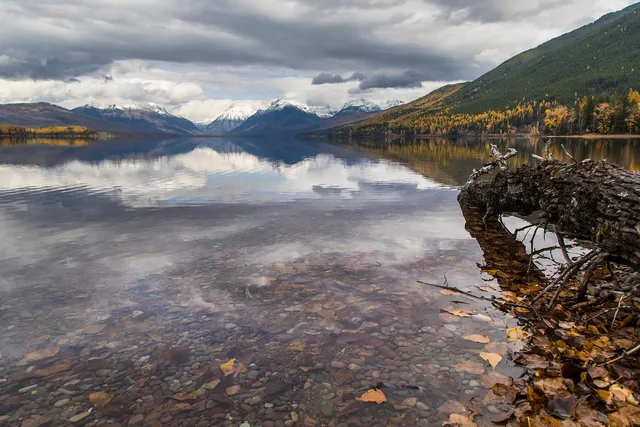
Lake McDonald
The park's biggest lake, a 10-mile finger of glacial water ringed by old-growth forest on the west side, its shoreline famous for skip-smooth stones in green, red, and pink argillite. Apgar Village at the foot of the lake is the park's genteel hub: boat rentals, an ice cream counter, and the classic view up the water toward the Garden Wall. The historic Lake McDonald Lodge, a 1913 Swiss-chalet-style building, anchors the head of the lake with its giant fireplace and lakefront terrace.
Good to know · The lodge area and Apgar are the easiest sights in the park, flat and shuttle-served, and Lake McDonald Creek's pebble beach is the standard swim for anyone braver than the water temperature. Sunrises here look east up the lake toward the peaks, worth the 6 a.m. alarm. Driving the Going-to-the-Sun Road early? Lake McDonald's pullouts are the warm-up act and the best early-light photography in the park.
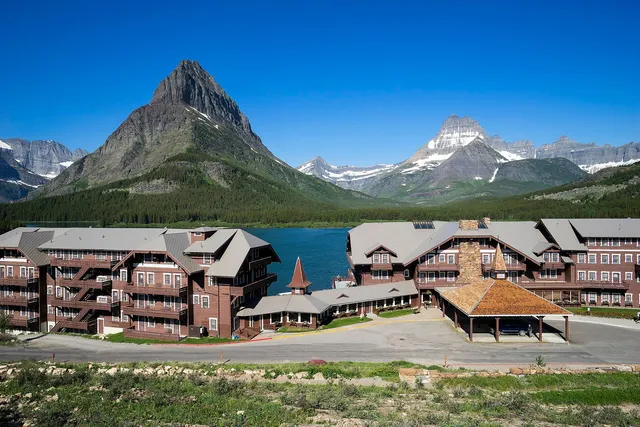
Many Glacier
The park's signature valley on the east side, a horseshoe of 8,000-foot peaks around Swiftcurrent Lake that locals call the heart of Glacier. It is the trailhead kingdom: Grinnell Glacier views up the valley, Iceberg Lake tucked under the Continental Divide, and the historic Many Glacier Hotel sitting on the water like a timbered liner. Wildlife viewing is the equal of the hiking: grizzlies work the meadows at dusk most evenings of summer, moose work the shallows, and ranger talks at the hotel cover both.
Good to know · It is 20 miles, about 40 minutes, north of St. Mary, and roughly 2.5 hours from West Glacier, so decide deliberately whether to sleep west or east. Road reconstruction has affected access in recent seasons, so check current conditions at nps.gov/glac before committing a day. Start trailheads by 8 a.m. in July and August for parking; carry bear spray, and read the grizzly rules at nps.gov/glac before any hike.
Highline Trail
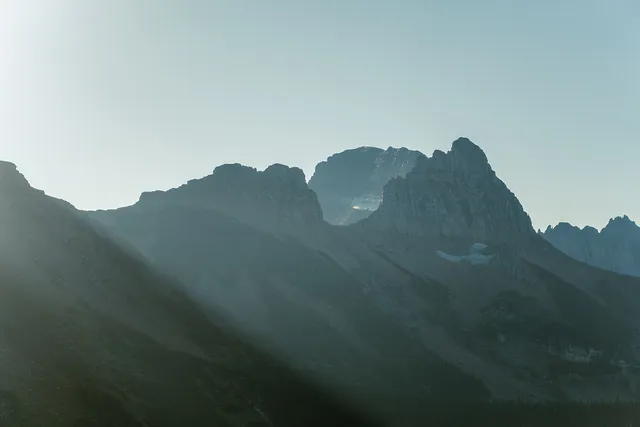
Glacier's most famous day hike: from the Logan Pass visitor center the trail leaves directly across the road and traverses north along the Garden Wall, a cliff-hugging path carved into the mountainside with the Going-to-the-Sun Road visible 1,000 feet below and bighorn sheep and mountain goats standing around like they own the place. The Garden Wall section rolls 7.6 miles one way to Granite Park Chalet, with an optional add-on up Swiftcurrent Pass or the classic exit down to the Loop. Wildflower season peaks in July, and the trail holds snow later than almost anything else in the park.
Good to know · Open typically July through September once the wall's snowbanks melt out; check the trail status page before planning. The start is at Logan Pass, where 2026 timed parking and the shuttle pilot apply, so ride the shuttle to the pass and plan the downhill finish to the Loop, where a shuttle stop closes the loop. A handrail guards the first exposed quarter mile (the so-called Highline scare section); it is optional-feeling but real, and anyone with vertigo should think twice. Take the standard mountain kit: water, layers, sun protection, bear spray, and an early start, both for weather and parking.
Two Medicine
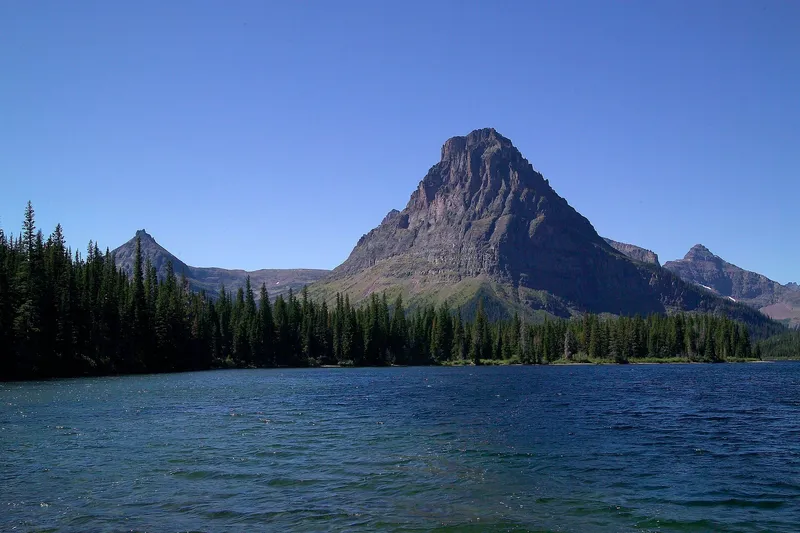
The quiet southeast corner, where Two Medicine Lake sits under Rising Wolf Mountain and draws a fraction of the traffic of the northern valleys. This was Blackfeet country long before it was a park, and the region still carries their place names; the easy Running Eagle Falls walk and the longer climbs toward Scenic Point and Upper Two Medicine Lake give every energy level a trail. Historic boat tours and the backcountry Twin Falls route round out a half or full day well off the shuttle circuit.
Good to know · Reached from East Glacier Park village, about 45 minutes from West Glacier via US-2, and rarely full, which makes it the park's best bad-crowds escape hatch in July. Afternoon thunderstorms build over the divide most summer days, so do exposed hikes in the morning. The national park entrance fee applies at the entrance station; services are minimal compared with Apgar, so fuel up and stock food in East Glacier or Browning.
Glacier is the park people mean when they say “the American Alps”: a million acres of sawtooth peaks on the Continental Divide in northwest Montana, carved into hanging valleys and finger lakes by ice that, a century ago, still filled most of them. The park’s modern dilemma is exactly its 20th-century charm. Everyone wants the Going-to-the-Sun Road, the 50-mile highway threaded across cliffs above lakes, and in recent summers reservation systems rationed it. For 2026 the reservations are gone: the park dropped vehicle entry permits, added a ticketed shuttle pilot and three-hour timed parking at Logan Pass instead, and in practice that means the early bird wins again. Come for the drive, stay for the hiking, and keep your bear spray where you can reach it.
A Bit of History
The human story starts with the Blackfeet, whose territory covered these mountains’ eastern flank and who still hold rights to use the park east of the Divide; their language names much of what you will see, and the Sun Road itself borrows from Going-to-the-Sun Mountain. The railroad arrived in 1891, when James J. Hill’s Great Northern pushed over Marias Pass, and Hill’s son Louis spent the 1910s building a chain of Swiss-style chalets and hotels to sell “See America First” tourism to train travelers. Glacier became a national park in 1910, and the Going-to-the-Sun Road, finished in 1933, remains one of the first roads in America designed for the automobile scenic experience rather than to get anywhere fast.
The glaciers themselves are the shrinking headline. The park held around 80 named ice bodies a century ago; surveys now count roughly two dozen, many reduced to lingering snowfields, and federal researchers project the named glaciers could be gone within the coming decades. None of that diminishes the scenery the ice left behind: the park is essentially a museum of glacial landforms, and the USGS science on the retreat is part of what a visit here means now.
Geology & Landscape
The rock under Glacier is the Belt Supergroup, mile-thick layers of Precambrian mudstone and limestone colored green, red, and purple by trace iron, some 1.4 billion years old, among the best-preserved sediments of that age on Earth. The overthrust that pushed them east over younger rock created the Lewis Overthrust, the geological structure that lets ancient rock sit atop rock hundreds of millions of years younger; rangers explain it well at the Logan Pass visitor center. The ice did the rest: U-shaped valleys like Many Glacier, arête ridges like the Garden Wall, and lakes stacked in every elevation band, from Lake McDonald’s 3,200 feet to small tarns above 6,500.
Wildlife is a genuine headline, and it comes with rules. Glacier is one of the lower-48’s strongest grizzly populations, plus black bears, mountain goats, bighorn sheep, moose, and wolves; carry bear spray on every trail (you cannot fly with it, so buy or rent locally), make noise in brush and near running water, and store food properly in the campgrounds. The habituated mountain goats and sheep at Logan Pass look tame; they are not, and feeding or approaching wildlife is illegal and dangerous. Medical help is far away and expensive without insurance: sort that at /guides/health-insurance-safety/ before the trip.
Culture & Daily Life
Glacier runs on gateway-town culture. Whitefish, 25 minutes from the west entrance, is the liveliest base: a ski town with a genuine main street, good food, and Amtrak’s Empire Builder calling at its depot (the train also stops at West Glacier; check current schedules at amtrak.com). West Glacier and Apgar hold the summer-camp energy, ice cream and rafting outfitters; St. Mary and East Glacier serve the east side, where the Blackfeet Nation’s influence is strongest and Sun Tours’ Blackfeet-perspective bus tours are worth booking for the first day. Cell service disappears inside the park, download offline maps, and the mountain weather shifts fast: July afternoons build thunder, and it can snow at Logan Pass any month of the year.
The rhythms that matter: shuttle-or-drive decisions by 7 a.m., trailheads by 8, off exposed ground by early afternoon in storm season. Tipping and pricing run small-town American; rafting guides and shuttle drivers expect 15-20 percent, restaurants 18-22, see /guides/tipping-and-sales-tax/. Montana has no state sales tax, which softens every bill by a pleasant margin.
Food & Drink
The park itself runs on lodge kitchens and camp stores: the historic dining rooms at Lake McDonald Lodge, Many Glacier Hotel, and the Belton Chalet area outside the gate do hearty, lodge-priced fare in buildings worth seeing anyway. The real food scene is in the gateways. Whitefish punches hardest for its size: Montana beef, huckleberry everything, craft breweries on Central Avenue, and espresso at dawn. West Glacier’s small strip and East Glacier’s historic downtown hold the burger-and-shake end plus a surprising number of good taco counters, and food trucks work the summer entrances. Budget US$15-25 casual, US$40-80 at lodge dining rooms, and book the historic dining rooms a few days ahead in July and August.
Two local notes: huckleberry season (mid-summer) is a religion here, appearing in pancakes, milkshakes, and cocktails, and Montana’s no-sales-tax rule applies to restaurant meals too. Water in the park is potable at developed sites but always filter backcountry sources against giardia.
Top Sights
Going-to-the-Sun Road
Fifty miles, two large lakes, one 6,646-foot pass, and about five hours of driving if you stop at everything, which you will. From the west, Lake McDonald’s valley funnels you upward through cedar forest to the Loop and the famous cliff-hung traverse above the Weeping Wall to Logan Pass; east of the pass the road drops through alpine tundra past Jackson Glacier Overlook (the only glacier visible from the road) to Sun Point and St. Mary Lake, ending at St. Mary on the Blackfeet side. Full opening typically comes late June at the earliest, and the alpine stretch closes for the winter around the third Monday of October; sections lower down run earlier and later.
The rules that shape your day, as of October 2026: vehicle reservations are not required in 2026, but Logan Pass runs three-hour timed parking and the park shuttle system is operating as a ticketed pilot, so check nps.gov/glac for the current season’s arrangement before you set an alarm. Oversize vehicles (over 21 feet long or 8 feet wide, mirrors included) are prohibited between Avalanche Creek and Rising Sun; over-10-foot vehicles should beware westbound overhangs below Logan Pass. The single best plan in July remains: shuttle or drive to the pass for sunrise, hike the Highline, and ride or drive the rest of the road in the afternoon light, which is the direction the photographers shoot it.
Lake McDonald
The west side’s anchor and the park’s gentlest day. Ten miles of glacial water, the historic 1913 lodge at its head, Apgar Village at its foot with rentals and rentals-adjacent ice cream, and the famous colored-stone shoreline at places like the Lake McDonald Creek beach. The stones are argillite, tinted red and green by iron compounds, smoothed by millennia of glacial runoff; they photograph best midday when the water is calm, and skipping them is a parkwide pastime.
Plan it as either the first evening’s flat walk or the early-morning photo run: Apgar’s shore looks straight up the lake at the Divide, and dawn light on calm water is the signature shot. The lake’s shuttle stop makes it the natural put-in for the Going-to-the-Sun Road if you are riding rather than driving; boats rent by the hour at Apgar in summer, and swimming is briefly excellent in August, which locals will tell you with a straight face about 55-degree water.
Many Glacier
If you have one hiking day in Glacier, spend it here. The valley holds Swiftcurrent Lake and the Many Glacier Hotel (the park’s most spectacular building, a 1914 timber chalet on the water), and trailheads for Grinnell Glacier, Iceberg Lake, and Cracker Lake, three of the finest day hikes in the national park system, all 9-12 miles round trip through country where grizzlies outnumber people before the parking lot fills. Shorter options include the Swiftcurrent Nature Walk and the lake loop, and boat tours work the paired lakes in summer.
Access is the whole game: the valley is 40 minutes up a dead-end road from St. Mary, and reconstruction has closed or restricted that road in recent seasons, so verify current status at nps.gov/glac the day before. Sleep in the valley (the hotel or the motor inn, both bookable far ahead, or the campground at Swiftcurrent) if you can, because dawn wildlife in the meadows between the lakes is a reasonable alarm clock. Carry bear spray, hike in twos or more, and make noise; this is working grizzly country and the rules are for real.
Highline Trail
The trail people fly across the country for. It starts, improbably, at a sign directly across the Going-to-the-Sun Road from the Logan Pass visitor center, and for the first quarter mile it cuts along the Garden Wall on a ledge guarded by a handrail, the road a distant ribbon below. Then it relaxes into the traverse it is famous for: 7.6 mostly-level-but-always-exposed miles along the wall’s flank to Granite Park Chalet, with mountain goats and bighorn sheep as regulars, avalanche lilies and beargrass in July, and views west into the Flathead country that never stop.
Logistics define it. The trail holds snow into July and is properly a July-September hike; check status first. Start at Logan Pass under whatever parking and shuttle rules the season runs (2026: timed parking, ticketed shuttle), and plan the standard one-way: Highline to the chalet, then the steep 4 miles down to the Loop trailhead and a shuttle ride back to the pass or down to Apgar. Take more water than you think, sun protection even in clouds, and layers for a day that starts at 45 and ends at 80. If thunderstorms build, and they will, get off the wall early; the chalet is the weather refuge.
Two Medicine
Glacier’s old forgotten corner, and the park’s best answer to “we couldn’t park anywhere else.” Two Medicine Lake sits under Rising Wolf Mountain’s 9,000-foot face, and the area’s trails range from the half-mile Running Eagle Falls walk to the relentless climb to Scenic Point above the valley, with Upper Two Medicine Lake and Twin Falls in between. The boat concession runs the lake in summer, cutting miles off the hike to the falls, and the campstore and small campground keep it low-key.
Come here for the half-day when Logan Pass defeated you, or for a first day’s acclimatization hike. The Blackfeet presence is part of the visit: the tribe’s reservation borders the park here, and the name Two Medicine comes from their use of the valley. Afternoon thunderstorms roll in over Rising Wolf most July days with startling regularity, so set out in the morning, and the east-side wind can be relentless; bring a shell even in sunshine.
Getting There & Around
Fly into Glacier Park International (FCA) at Kalispell, 30 minutes from West Glacier and 20 from Whitefish, with connections through Seattle, Denver, Minneapolis, and Salt Lake; or ride Amtrak’s Empire Builder, which stops at Whitefish, West Glacier, and East Glacier Park on the Seattle-Chicago run (the East Glacier stop moves to Browning off-season; schedules at amtrak.com). Calgary is a solid 3-hour northern option in summer for road-trippers combining Banff.
A car is near-essential; the park is 60 driving miles west to east with limited shuttle reach into Many Glacier and Two Medicine. The free shuttle serves the Going-to-the-Sun corridor (2026 arrangements: check nps.gov/glac), and Glacier Park Lodges runs paid connections on the east side in summer. Fill the tank in West Glacier, St. Mary, or Browning; there is no fuel inside the park. Road status by text: GNPROADS to 333111.
Where to Stay
Whitefish is the best all-around base: a real town with restaurants, breweries, and the train, 25-45 minutes from the west entrance, and quieter weekday rates. West Glacier and Apgar put you at the gate for dawn starts; East Glacier, St. Mary, and Babb serve the east side and Many Glacier with motels and small lodges. Inside the park, the historic hotels (Many Glacier Hotel, Lake McDonald Lodge, Glacier Park Lodge just outside, and the chalets) open a summer booking window roughly 13 months ahead and sell the prime weeks quickly; campgrounds run a mix of reservation and first-come on recreation.gov. Montana levies no state sales tax, but lodging facilities add resort fees at the top end, so run the real total through /tools/real-price-calculator/ before you book.