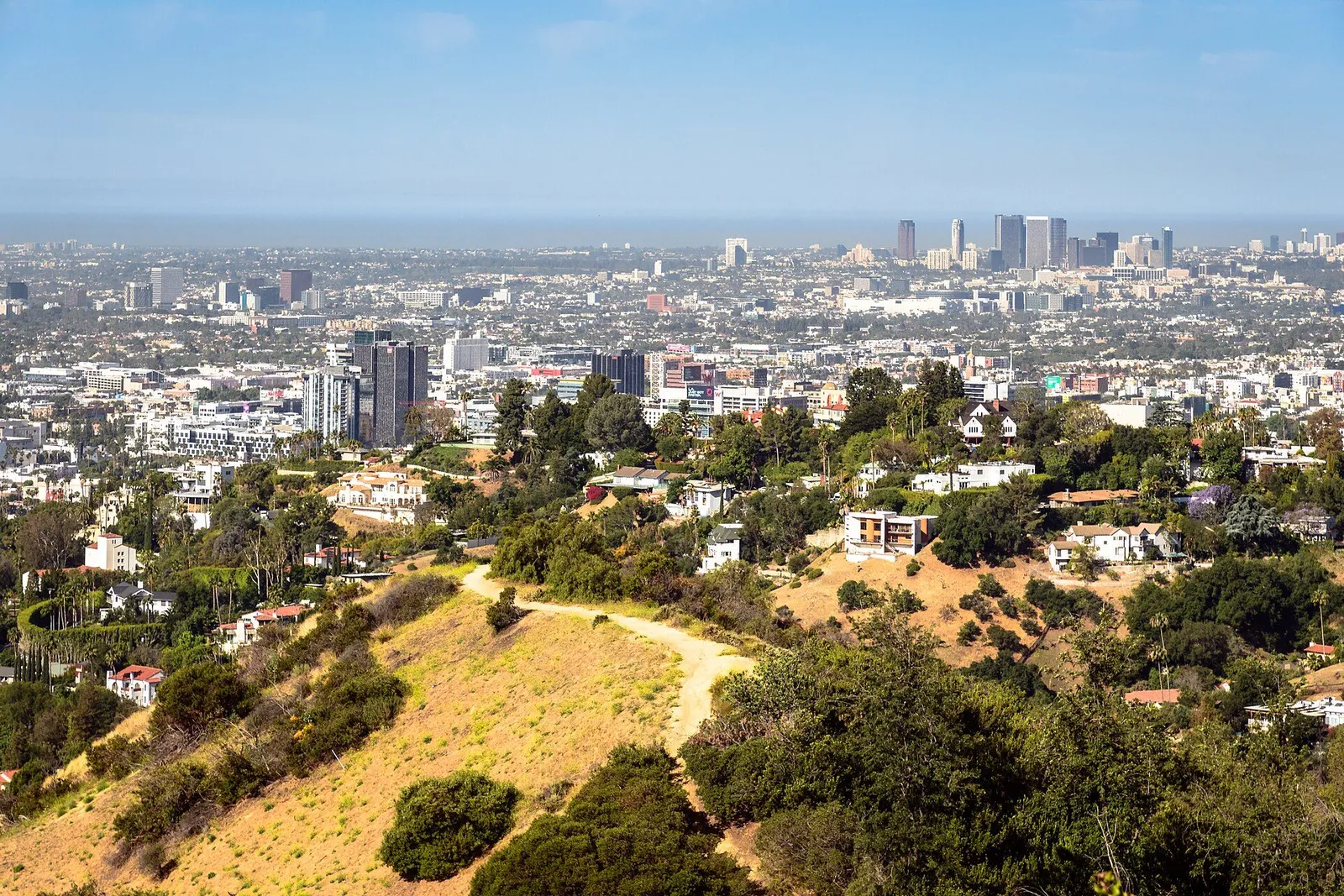
Los Angeles is less a city than a constellation: a basin-wide scatter of beach towns, hillside neighborhoods, and boulevards stitched together by freeways, sun, and the film industry that made its place names famous. The core experiences are free or close to it: Griffith Observatory over the city lights, the Getty Center's art and gardens, the boardwalk theater of Venice Beach, and a pier at Santa Monica where Route 66 runs into the Pacific. LA suits first-time travelers who like choosing their own adventure, because the city rewards picking two neighborhoods a day rather than conquering a checklist. Give it four or five days, plan around traffic honestly, and eat your way through taco trucks, Korean barbecue, and the San Gabriel Valley along the way.
Top sights at a glance
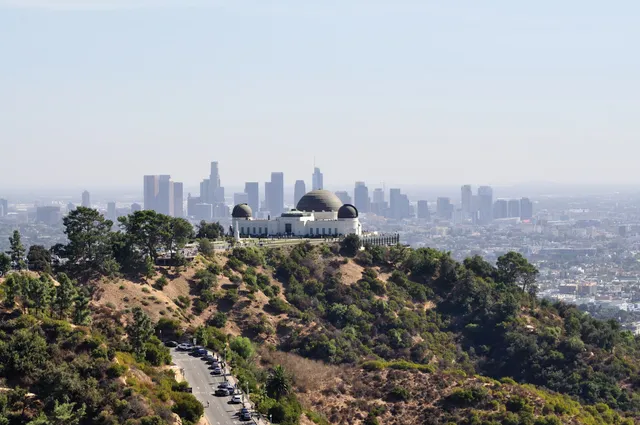
Griffith Observatory
On the south slope of Mount Hollywood sits the most visited public observatory on Earth, a 1935 Art Deco dome that gives away the city's single best view for nothing: the whole LA basin below, the Pacific on clear days, and the Hollywood Sign close enough to read. Inside are telescopes, a Hall of the Sky, and the 290-seat Samuel Oschin Planetarium; outside, lawns and trailheads where the whole city comes at golden hour.
Good to know · Free admission, Tuesday to Friday noon to 10 p.m. and weekends 10 a.m. to 10 p.m., closed Mondays, as of October 2026. The planetarium show costs $12 for adults, sold on-site only for same-day shows. The parking lot fills by sunset; rideshare up Observatory Road beats circling for a spot.
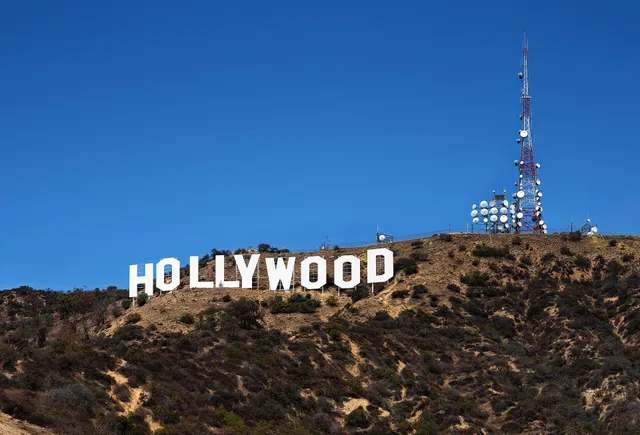
Hollywood
Hollywood Boulevard is the movies' front porch, and it is gloriously kitsch: 2,700 brass stars along the Walk of Fame, celebrity handprints in the TCL Chinese Theatre forecourt, costumed characters working the sidewalk, and film premieres in full swing at the grand old movie palaces. Half an honest afternoon is plenty, ideally with the Hollywood Sign framed above it from the boulevard's better viewpoints.
Good to know · The Walk of Fame is a free public sidewalk, as of October 2026, with the star map at walkoffame.com. Do not hand the costumed characters your phone for a photo unless you expect to tip. Walk one block north to Hollywood Boulevard's side streets for food, and see the sign itself from the lake or Canyon trailheads.
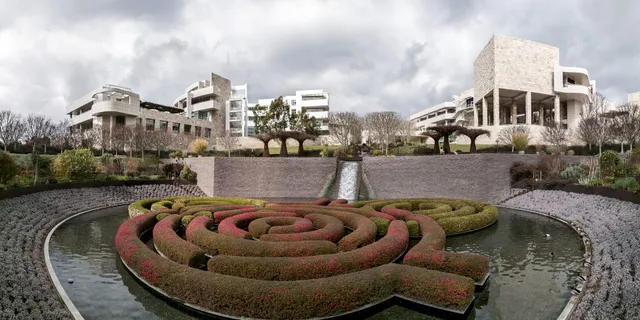
Getty Center
Oil money built the hilltop museum money cannot buy into: a Richard Meier complex of white travertine pavilions above the 405 freeway, holding European paintings, illuminated manuscripts, and one of the world's best photography collections, plus the spiraling Central Garden by Robert Irwin. The view spans the basin to the ocean, the tram ride up is part of the fun, and admission is completely free.
Good to know · Free, but a timed-entry reservation is required: book at getty.edu days ahead for weekends. Hours are 10 a.m. to 6:30 p.m. Tuesday to Friday and Sunday, until 9 p.m. Saturday, closed Monday, as of October 2026. Parking is $25 per car ($15 after 3 p.m., $10 after 6 p.m.; free Saturday evenings after 6).
Santa Monica Pier
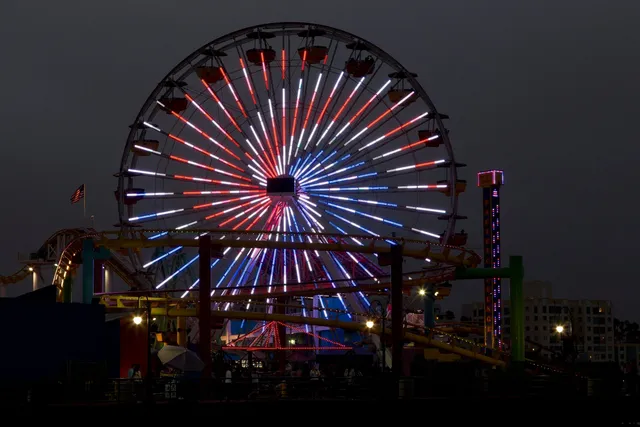
The pier is where Los Angeles meets the Pacific, and where Route 66 officially runs out of road: a 1916 double-jointed pier with a solar-powered Ferris wheel, a 1922 carousel, fishermen, street performers, and the best sunset seating in the city. Pacific Park's rides sit at the end, the beach spreads wide behind you, and the original Route 66 end sign makes the obligatory photo.
Good to know · Walking the pier is free; Pacific Park rides are pay-per-ride or unlimited wristbands, priced at the entrance, as of October 2026. Rent a bike on the strand and ride the dedicated beach path south to Venice in 20 minutes. Parking structures near the pier charge by the hour; the Metro E Line rail terminus is two blocks away.
Venice Beach
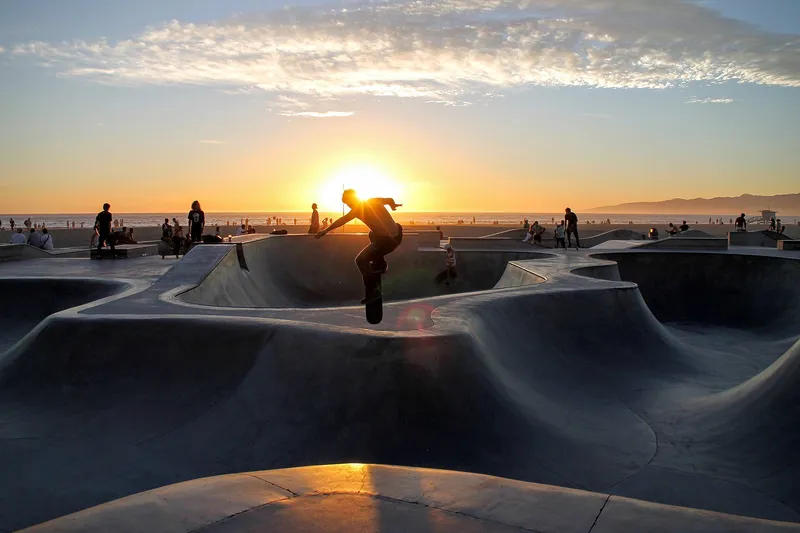
Venice is the free public theater of Los Angeles: a boardwalk where muscle beach lifters, skate bowl acrobats, basketball courts, street vendors, and a parade of tourists all perform at once, with the Pacific performing behind them. One block inland, the 1905 canal district goes silent and pretty, and Abbot Kinney Boulevard holds the neighborhood's best coffee and design shops.
Good to know · Free, and best mid-morning to sunset; the boardwalk is quietest at dawn and rowdiest on weekends, as of October 2026. Keep valuables out of sight, especially in parked cars. From Santa Monica, walk or bike the beach path south in about 20 minutes, or take Venice Boulevard inland to see the canals.
See it in motion
Some places earn a moving picture
Stills can't show how this place moves: the drift, the light show, the crowd flow. We picked a recent, high-quality walkthrough rather than a promotional cut.
Griffith Observatory & Epic LA Skyline Views | Los Angeles Walking Tour
Wind Walk Travel Videos · YouTube · plays on click
Embedded via YouTube's official player (privacy-enhanced mode). Video: Griffith Observatory & Epic LA Skyline Views | Los Angeles Walking Tour by Wind Walk Travel Videos. Not affiliated with Wide Open America; screened for quality and accuracy on 2026-10-15.
Los Angeles does not reveal itself from the freeway, which is why so many first-timers leave disappointed. The city is a basin-wide archipelago of distinct neighborhoods: a beach town here, a hillside village there, a boulevard of strip malls where the best food in the city hides behind a sign in Mandarin. Give it four or five days and it starts making sense. Watch the city light up from Griffith Observatory, stand where movie premieres have stood for a century, walk the Getty’s gardens for free, and finish with your feet in the Pacific at Santa Monica. LA is the most American of big cities in one specific way: it assumes you have a plan, and it rewards the people who show up with one.
A Bit of History
Los Angeles was founded in 1781 as a Spanish colonial pueblo of 44 settlers, and for a century it stayed a modest adobe town trading hides and wine. The 1880s changed everything: transcontinental railroads reached the Pacific and launched a land boom, and Los Angeles grew from a few thousand people into a metropolis in one generation. Growth needed water, so the city quietly secured rights 230 miles east in the Owens Valley and built the Los Angeles Aqueduct, completed in 1913, an engineering coup that made the basin’s expansion possible and its politics dramatic ever since.
The movies arrived almost by accident: filmmakers chased sunshine and distance from Edison’s patent lawyers, and by the 1910s Hollywood’s climate had turned it into the world’s film capital. Oil derricks came with it, dotting the basin through the 1920s. The city annexed itself outward along the longest streetcar network in the world, then paved most of it over in favor of freeways, a decision that still defines LA life and its traffic. By 1932 the city hosted its first Olympics; the 1984 Games recast it as a model of private funding, and the 2028 Olympics are already reshaping transit timetables today.
Modern LA is the county capital of a metro of about 13 million people, with the city proper around 3.8 million, the second-largest in the United States. The movie industry scaled down from its studio-system peak but never left: it lives in the working alleys of Burbank, the premiere billboards of Westwood, and the entire self-image of the place. Layered over that is a newer American story, of immigration from Mexico, Korea, Armenia, Iran, and China that made LA one of the great food cities on Earth while almost nobody was looking.
Culture & Daily Life
The honest first fact about LA is transportation. This is a car city: distances that look trivial on a map take 40 minutes at the wrong hour, and locals plan days geographically, never crossing the basin twice. The counterweight is a transit system that finally works for visitors on certain corridors: the Metro rail network (B Line to Hollywood, E Line to Santa Monica) and a fare system that caps your day at $5 no matter how many rides you take, as of October 2026, via the TAP card. Use rail where it goes, rideshare where it does not, and never schedule a meeting across town 90 minutes before it starts.
Daily culture is outdoor, casual, and health-conscious to a degree that surprises Europeans: hikegroups at dawn, juice shops where bars should be, and conversation that opens with “where are you parked?” The entertainment industry is the weather here; everyone has a script, a call sheet, or a cousin who did VFX on something you have seen. And the city runs on diversity: more than 200 languages are spoken across the county, and whole neighborhoods are their own national cuisines, which is why the eating section below matters more here than in most American cities.
Alcohol follows US rules: 21 and over with ID, enforced at every bar. Two situational notes for comfort: you may encounter news stories about gun issues in the US, but the visitor reality is that LA’s tourist districts are heavily policed, and following staff and security directions settles anything; and while street homelessness is visible in parts of Downtown and Venice, treating it as background rather than spectacle, and keeping normal city precautions, is what locals actually do.
Nature & the Outdoors
Los Angeles is ringed by serious geography: the San Gabriel Mountains rising to 10,000 feet north of the basin, the Santa Monica Mountains running to the sea, and 70-plus miles of coastline. Griffith Park, the huge municipal park holding the observatory, has dozens of trailheads, including the short but steep paths toward the Hollywood Sign. In the east, Eaton Canyon and Sturtevant Falls give the San Gabriels their classic waterfall hikes; in the west, Backbone Trail sections run through chaparral with ocean views.
The beach is LA’s front yard, and it is fully public. The 22-mile Marvin Braude Bike Trail (the “strand”) runs continuous from Pacific Palisades through Santa Monica and Venice to Torrance, past volleyball courts and the skate bowl. Water is Pacific-cold year round (swimmers wear wetsuits; everyone else walks the shore). Summer mornings bring the marine layer, a gray overcast that burns off by noon most days: schedule beaches for the afternoon and hikes for the morning.
Two practical notes. Rattlesnakes and heat are real on inland trails; carry water and give wildlife room. And US healthcare has no free emergency care for visitors: an ER visit without insurance can run to four figures, so confirm your travel medical cover before you hike or surf; details in /guides/health-insurance-safety/.
Food & Drink
LA may be the best eating city in America, and its genius is the $4 taco as much as the $200 tasting menu. The taco is the city’s default unit of food: trucks and street carts across the basin serve excellent al pastor and carne asada for a few dollars, with clusters in Boyle Heights, Highland Park, and Koreatown’s edges. Korean barbecue in Koreatown runs from $20 lunch specials to high-end beef, Sichuan and northern Chinese cooking anchors the San Gabriel Valley (a 30-minute drive east that food people plan whole days around), and Armenian, Thai, Oaxacan, and Persian neighborhoods each support dozens of restaurants worth crossing town for.
The classics live here too: the original 1958 hamburger stands that seeded California’s burger culture, French-dip sandwiches from 1908, and the health-food California cuisine that treats a salad as a main course. Farmers markets run most days of the week somewhere in the county; the Sunday market in Santa Monica is the postcard one.
Budgeting: casual meals run $15-25, good sit-down dinners $40-70, and coffee is a competitive sport. Tipping is standard US practice: 18-22 percent at table service, $1-2 per drink, 10-15 percent for delivery, with the full breakdown in /guides/tipping-and-sales-tax/. Menu prices exclude sales tax, so add roughly 10 percent to posted prices; /tools/real-price-calculator/ shows how the US sticker-price system works.
Top Sights
Griffith Observatory
Griffith Observatory is the view that explains Los Angeles: from its lawn and rooftop terraces, the entire basin unrolls from Downtown’s towers to the airport’s flight paths, with the Hollywood Sign looming close on the ridge behind. The 1935 building is a working public observatory, free to enter every day it opens (Tuesday to Friday from noon, weekends from 10 a.m., until 10 p.m., closed Mondays, as of October 2026), with exhibits that walk you through the sky, telescopes on the roof that staff operate after dark, and the 290-seat Samuel Oschin Planetarium.
The planetarium show is the one thing worth paying for: about $12 for adults, $10 students and seniors, $8 for children 5-12, as of October 2026, with tickets sold only at the observatory and only for that day’s shows, which run every 60 to 90 minutes. The live presenter format makes it genuinely good, not a tourist trap.
Timing makes the visit: come an hour before sunset, walk the short trail west toward the sign, watch the city switch on, then stay for the telescopes. Parking is free but scarce; the lot fills by golden hour and the roadside spaces stretch down the hill, so rideshare up is a fair trade.
Hollywood
Hollywood Boulevard is the one street every visitor thinks they should see, and the trick is to see it efficiently. The Hollywood Walk of Fame strings more than 2,700 brass stars along the boulevard’s sidewalks (free, always open; the searchable star map lives at walkoffame.com). The TCL Chinese Theatre forecourt holds the celebrity hand-and-footprint slabs going back to 1927, the El Capitan next door runs proper premieres, and Ovation LA’s mall gives you an escalator view up to the Hollywood Sign itself.
Manage expectations and it is fun rather than disappointing: this is a working commercial street with costumed characters, Star Tours, and tourist pricing, not the film industry itself. Do not hand your phone to a costumed character for a photo without expecting a tip request, and keep the usual watch on your bag in crowds.
For the sign without a car, the viewpoints along the boulevard and the Hollywood & Highland terrace do the job. For the real thing, hike from Griffith Park’s brush canyon trailheads or Lake Hollywood Park below. Cap the visit with a walk one block north to Franklin Avenue, where the restaurants are better and cheaper than the boulevard’s.
Getty Center
The Getty Center is the best free museum experience in the United States: an entire hilltop campus of Richard Meier’s travertine pavilions, reached by a three-minute driverless tram, holding European paintings from the Renaissance to Impressionism, medieval manuscripts, and photography, all of it funded by an endowment so large that admission costs nothing. The Central Garden, Robert Irwin’s winding 134,000-square-foot living sculpture, is worth the trip alone, and the terraces look south over the whole basin to the ocean.
Free does not mean walk-in. Admission requires a timed-entry reservation booked online at getty.edu, days ahead for weekends, as of October 2026. Hours run 10 a.m. to 6:30 p.m. Tuesday to Friday and Sunday, to 9 p.m. Saturday, closed Monday. Parking is the one real cost: $25 per car, dropping to $15 after 3 p.m. and $10 after 6 p.m., and free on Saturday evenings after 6.
Plan two to four hours. Food on the hilltop is decent cafeteria-grade, so a late-morning arrival with a garden picnic strategy works well. If you have one more free day, the Getty Villa, the antiquities branch in Malibu, uses the same free-reservation system with a separate booking.
Santa Monica Pier
The pier is the postcard of the LA coast and a genuinely working piece of 1916 engineering: two piers fused into one, carrying a solar-powered Ferris wheel, a 1922 carousel, bait fishermen, and the official western terminus marker of Route 66, where the road that carried dust-bowl migrants to California simply runs into the sea. Walking out over the water is free, open daily, as of October 2026; Pacific Park’s rides and games at the end are pay-as-you-go or wristband, with prices at the entrance.
The pier anchors the best public beachfront in the city. Behind it, Santa Monica State Beach runs wide and sandy; below it, the bike path (the strand) begins its run to Venice; and inland two blocks, the pedestrian Third Street Promenade and the Metro E Line terminus connect it all to Downtown in about 45 minutes.
Time it for late afternoon: swim or walk the beach, then ride the wheel as the sun drops into the ocean. Parking nearby runs by the hour in city structures, and summer weekends pack the pier by sunset, which is half the show.
Venice Beach
Venice Beach is Los Angeles at its most unfiltered. Developer Abbot Kinney carved canals here in 1905 and called it the Venice of America; the canals survive one block inland, a quiet grid of bridges and handcrafted homes, while the boardwalk along the sand became something else entirely: a permanent street festival of Muscle Beach lifters, the skate bowl under the palms, basketball courts, artist stalls, and every kind of performer who ever needed a crowd.
The rules of engagement are simple. It is free and public, best from mid-morning through sunset, rowdiest on summer weekends. Watch your belongings the same way you would on any crowded beach promenade; car break-ins are the one crime that targets visitors here, so leave nothing visible in parked cars.
Two detours make the visit. The canal district’s two-block walk is the most photogenic quiet in the city, and Abbot Kinney Boulevard, one block inland from the boardwalk’s south end, holds the coffee shops, restaurants, and boutiques where Venice actually spends its money. From Santa Monica, the 20-minute beach-path walk or bike ride is the classic approach.
Getting There & Around
Los Angeles International Airport (LAX) is the obvious gateway, sitting at the basin’s western edge. Ground transport has been in a decade-long rebuild: the airport’s own Automated People Mover was still not carrying passengers as of October 2026, delayed into testing and litigation, so you will use airport shuttles and buses just as travelers always have (check flylax.com before you fly). FlyAway buses run direct from the airport to Union Station and the San Fernando Valley for roughly $10 each way. Metro rail serves the airport area via a free shuttle link, and rideshare to most visitor neighborhoods runs $30-60.
Inside the city, Metro rail covers the corridors visitors need: the B Line to Hollywood, the E Line to Santa Monica, and fare capping that limits you to $5 a day and $18 a week no matter how much you ride, as of October 2026, using a TAP card (metro.net). Rideshare covers the rest. Rent a car only if your trip includes Malibu, the San Gabriels, or theme-park suburbs; parking at hotels adds $30-70 a night.
Where to Stay
Santa Monica or Venice suits beach-first travelers: mornings on the strand, the E Line downtown, and sunset at the pier, at the highest hotel rates in the city plus parking charges. Hollywood and the neighborhoods around it put you on the B Line with mid-range prices and quick access to Griffith Observatory. Downtown’s historic core and Arts District are the value play with the best restaurants in the tower district and Union Station’s transit connections, quieter on weekends. Wherever you book, budget the hotel parking fee ($30-70 a night is standard), check whether the quoted rate includes it, and note that US hotels add sales tax on top of listed prices; run your dates through /tools/real-price-calculator/ before committing.
Sources & verification (9)
- https://griffithobservatory.org/visit/
- https://griffithobservatory.lacity.gov/exhibits/samuel-oschin-planetarium/
- https://www.getty.edu/visit/center/
- https://www.metro.net/riding/fares/
- https://en.wikipedia.org/wiki/LAX_Automated_People_Mover
- https://www.walkoffame.com/
- https://santamonicapier.org/
- https://en.wikipedia.org/wiki/Los_Angeles
- https://www.law.cornell.edu/uscode/text/23/158