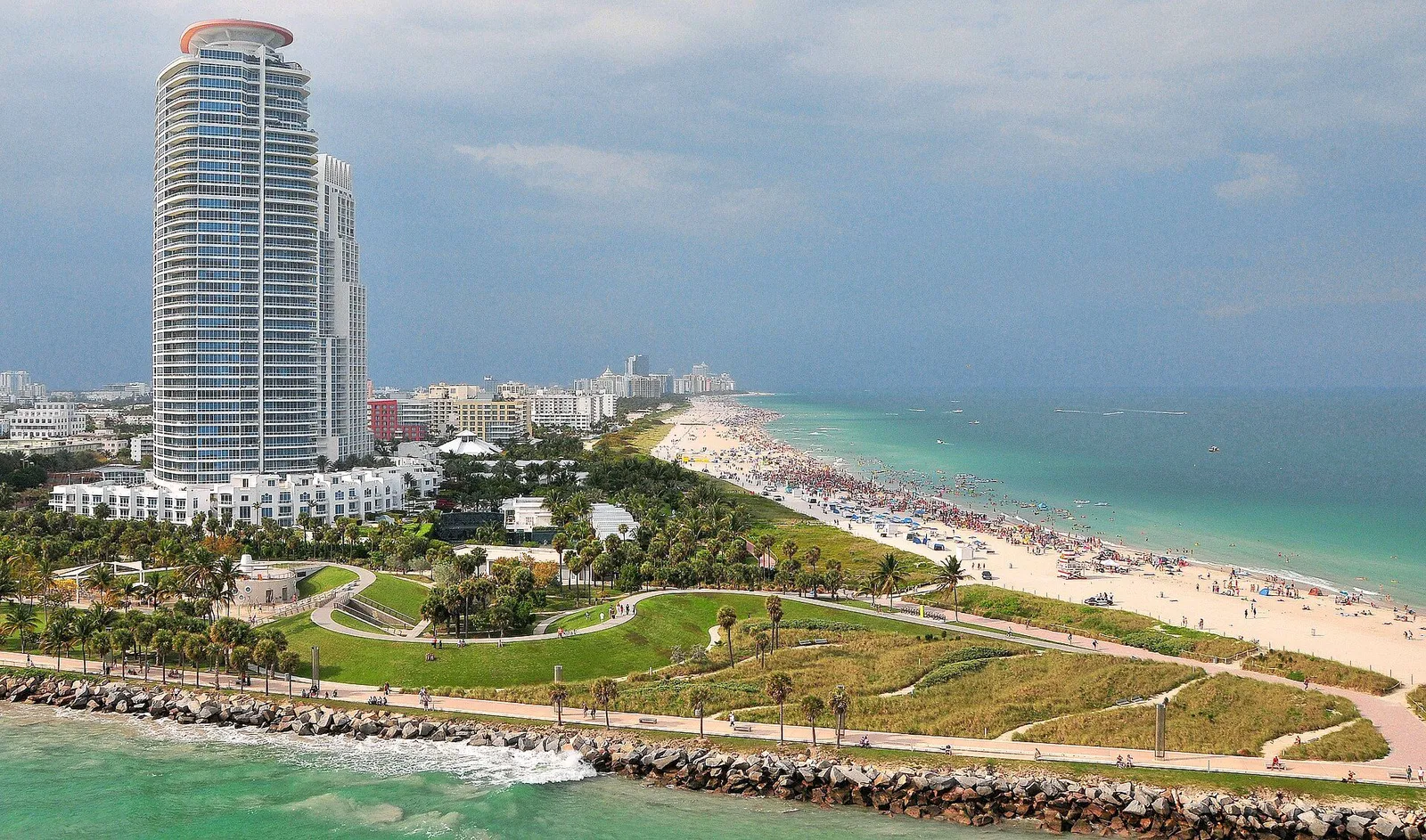
Miami is the closest thing the United States has to a Caribbean capital: a beach city where Spanish is the working language, breakfast runs through a walk-up window and an espresso cup, and the closest wild alligators live 45 minutes from art galleries. The core experiences split cleanly between sand and city. South Beach delivers the fantasy: pale sand, turquoise water, and the world's densest Art Deco district. Then Miami proper rewards curiosity: the murals of Wynwood, cigar smoke and dominoes in Little Havana, Haitian cooking in Little Haiti, and the wild Everglades at the doorstep. Miami suits travelers who want a beach holiday with actual culture attached, and it punishes the unprepared: summer is brutally hot and storm-prone, resort fees pile onto hotel bills, and the best months run December through April.
Top sights at a glance
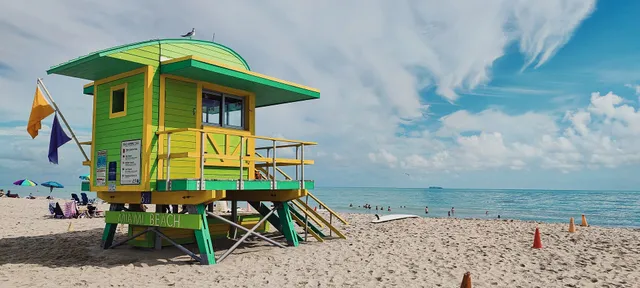
South Beach
The famous stretch of sand at the southern end of Miami Beach, wide, pale, and free, backed by a boardwalk, palm shade in Lummus Park, and a line of lifeguard towers painted in candy colors. The water is warm year-round and calm in winter; the people-watching is the second attraction, from bodybuilders at the pull-up bars to fashion shoots on the sand. Go early: the light is best before 10 a.m., the sand is yours, and the afternoon heat is not.
Good to know · The beach is free and open to the public with lifeguard towers, and flags mark surf conditions: stay between the red and yellow flags. Arrive before 9 a.m. in warm months for parking and cooler sand; rent an umbrella rather than trusting sunscreen alone.
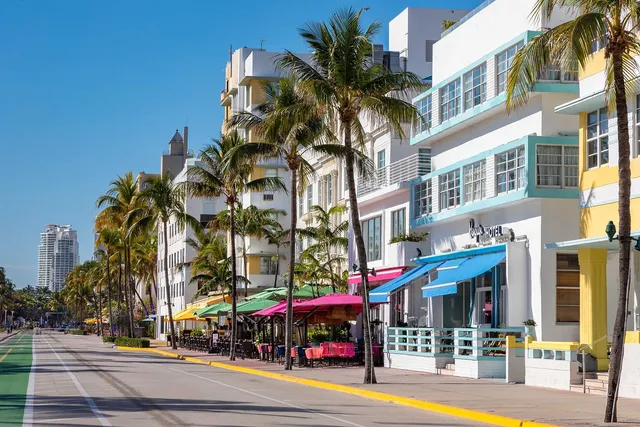
Art Deco Historic District
The world's largest concentration of Art Deco architecture, roughly 800 buildings raised along Ocean Drive and the surrounding blocks in the 1930s and early 1940s: pastel stucco, porthole windows, neon tubes, and ship-like curves built on a Depression budget. The district was rescued from demolition in the 1970s by preservationists and is now the reason Ocean Drive looks like a movie set. The buildings are hotels and restaurants, so the tour is free: walk, look up, and read the plaques.
Good to know · The Miami Design Preservation League runs its official Art Deco Walking Tour daily from the Art Deco Welcome Center at 1001 Ocean Drive, about US$50 per person as of October 2026 (times and tickets at mdpl.org). Or take the self-guided version free with the center's pocket map.
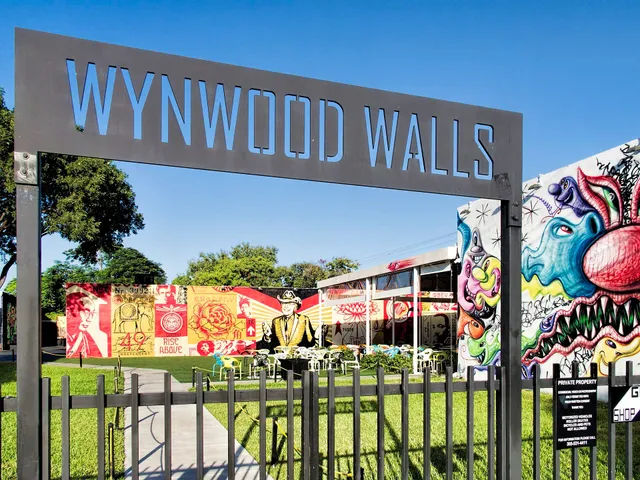
Wynwood Walls
The open-air museum that turned a warehouse district into the center of American street art. Since 2009 the Walls have commissioned large-scale murals by leading graffiti and contemporary artists from around the world; the surrounding blocks of Wynwood carry dozens more painted walls, plus breweries, galleries, and cafes in the old garment factories. It is a compact, high-impact stop: an hour inside, an hour wandering the neighborhood, and some of the most photographed walls in America.
Good to know · Admission is $12 for adults 18 and up (children 12 and under free), open daily 10:30 a.m. to 6:30 p.m. as of October 2026 (tickets at thewynwoodwalls.com). Second Saturdays bring the Wynwood Art Walk street festival; nearby garages charge roughly $20-40, so take the free City of Miami trolley instead.
Little Havana
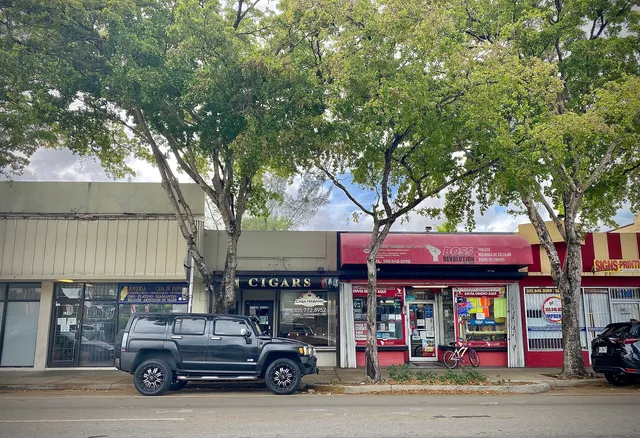
The Cuban heart of Miami, running along Southwest 8th Street (Calle Ocho) west of downtown: walk-up coffee windows, cigar shops where rollers work in the doorway, roosters painted on every corner, and the noise of dominoes slamming at Maximo Gomez Park, the famous Domino Park. This is a living neighborhood, not a re-creation; the exile story since 1959 is the whole point. Come hungry, order in whatever Spanish you have, and linger: the neighborhood rewards slowness.
Good to know · Free to explore; Fridays and weekends bring live music and street life. Find the monthly Viernes Culturales cultural walk on the last Friday of each month via the Little Havana merchant association. Coffee at a ventanita costs about $1-2; bring small bills for tips.
Everglades National Park
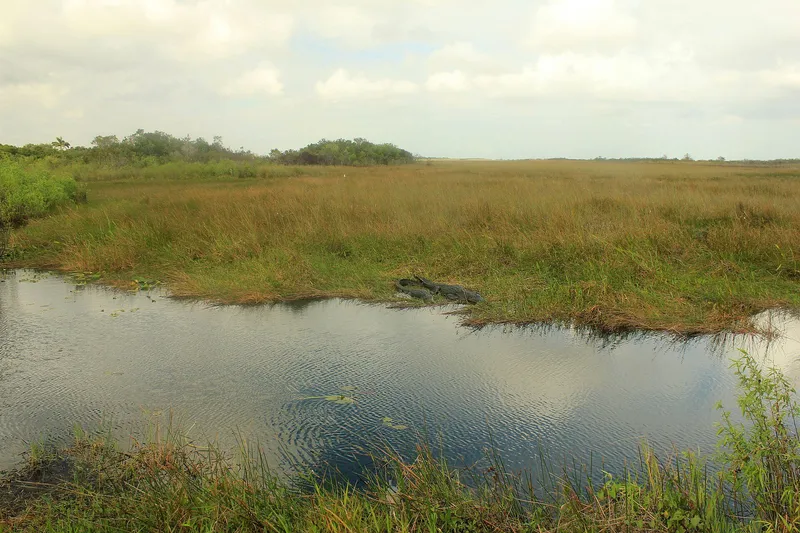
A river of grass 50 miles wide and barely two feet deep, the largest subtropical wilderness in North America and one of the strangest landscapes in the national park system. Alligators sun on the Anhinga Trail boardwalk within minutes of the parking lot, herons and roseate spoonbills crowd the sloughs, and manatees drift along the coasts. From Miami, the practical gateways are the Royal Palm entrance at Homestead and the Shark Valley loop, both under 90 minutes away.
Good to know · Entry is $35 per vehicle (7 consecutive days), and as of 2026 non-US residents aged 16+ pay an additional $100 per-person surcharge at Everglades, one of 11 parks with the fee; the $250 nonresident annual pass beats the surcharge if you will visit two or more parks (details at nps.gov). The Shark Valley tram tour costs about $36; airboat rides operate outside the park boundary.
See it in motion
Some places earn a moving picture
Stills can't show how this place moves: the drift, the light show, the crowd flow. We picked a recent, high-quality walkthrough rather than a promotional cut.
Ocean Drive Miami Beach Walking Tour | South Beach 4K
305 Spot · YouTube · plays on click
Embedded via YouTube's official player (privacy-enhanced mode). Video: Ocean Drive Miami Beach Walking Tour | South Beach 4K by 305 Spot. Not affiliated with Wide Open America; screened for quality and accuracy on 2026-10-15.
Miami is the United States with the volume turned down and the temperature turned up: a tropical city of glass towers, pastel beach hotels, and espresso windows, where the ocean is a five-minute walk from the financial district and the wildest landscape in the country lies just past the suburbs. First-timers expect a beach town. What they find is a real metropolis of about 450,000 (six million in the metro area), the finance capital of Latin America, a city where Haitian Creole and Portuguese are on the ballot papers. The trick is splitting your days: the beach in the cool mornings, Wynwood, Little Havana, or the swamp in the afternoons, outdoor dining in the evenings. Come in the dry season, budget for the fees that pile onto every hotel bill, and Miami delivers the exact postcard you came for, with more substance behind it than you expected.
A Bit of History
Miami is the youngest of America’s big cities and the only major one founded by a woman. Tequesta people had lived at the mouth of the Miami River for thousands of years when Julia Tuttle, a Cleveland widow who owned land on the river, persuaded railroad magnate Henry Flagler to extend his line south in 1896, famously with a box of orange blossoms after a frost killed the fruit further north. The city incorporated the same year with a few hundred residents. The 1920s land boom raised it in a decade; the 1926 hurricane, which killed hundreds, taught the city its architecture: the storm-resistant pastel hotels that went up along Ocean Drive in the 1930s are what we now travel to see.
The transformation that made modern Miami happened in one week of 1959. After Fidel Castro took Cuba, the exiles began arriving, wave after wave for decades, and they rebuilt not just a population but an economy of banks, shipping, and media conducted in Spanish, making Miami the commercial gateway to Latin America. The 1980s added a darker reputation, and the decades since reversed it with art, dining, and money from every hemisphere: Wynwood’s murals and the city’s December art-week status grew from that shift.
The newest chapter is climate: Miami sits on porous limestone a few feet above the sea and now raises roads and pumps against routine flooding. It remains a city making itself, which is part of the street-level energy: everyone here is working on somebody’s second act.
Culture & Daily Life
Miami runs bilingual, and Spanish is the language you will hear most: roughly two thirds of Miamians speak it at home. Visitors are welcome in either language, though a “buenos dias” opens doors. The city’s rhythm follows the heat: mornings on the beach, a long lunch, everything outdoors from late afternoon on. Coffee culture is Cuban: the ventanita, a walk-up window on a street corner, serves cafecito (sweetened espresso in thimble cups), cortadito, and pastelitos all day.
The neighborhoods each carry a flag. South Beach is the visitor beach and nightlife district. Brickell, downtown, is the glass finance quarter. Wynwood is galleries and murals. Little Havana is Cuban exile history; Little Haiti, to its north, carries Caribbean food and art; Coconut Grove is the leafy, sailboat old village; Coral Gables the planned Mediterranean suburb. Dressing up is a real local sport, but the uniform is loose: linen, sneakers, sunglasses, everywhere except church.
Two practical notes belong here. First, you may have seen gun violence in American news; the practical reality for visitors is that tourist districts are well patrolled, guns are barred from bars and most venues, and following staff guidance resolves any incident. Second, hurricane season runs June 1 through November 30: travel in that window is usually fine, but buy refundable rates and take hotel instructions seriously if a storm approaches; the advisories at nhc.noaa.gov are the source everyone here watches.
The useful action: build one evening around the local calendar. The official calendar at miamiandbeaches.com lists gallery nights, food festivals, and free concerts; Second Saturday Wynwood Art Walk and the last-Friday Viernes Culturales in Little Havana are the two standing institutions.
Nature & the Outdoors
The outdoors here is water in three directions, and it is mostly free. The beach is public by Florida law from the dunes to the waterline, and the sand in front of the famous hotels belongs to everyone. Swim between the lifeguard towers and learn the flag system, green for calm, yellow for moderate surf, red for dangerous, and the purple flag that warns of jellyfish; South Florida rip currents are genuine and drown swimmers every year, so if you feel yourself pulled sideways, do not fight it, swim parallel to shore.
Beyond the sand, Key Biscayne’s Crandon Park and Bill Baggs Cape Florida offer calmer water and a lighthouse walk, and Oleta River State Park, north of the beaches, rents kayaks and paddleboards for mangrove channels where manatees surface in winter. Biscayne Bay itself is a marine nursery: dolphins fish off the causeways at dawn, and paddling tours run through mangrove tunnels that feel nothing like the city 20 minutes behind you. Two cautions apply to all of it: the sun here is serious, so reapply sunscreen like it is your job, and American health care is excellent and ruinously expensive, so travel insurance is not optional before you kayak, swim, or hike. See /guides/health-insurance-safety/.
Food & Drink
Miami’s food identity is Cuban first, and the Cuban sandwich is the city’s signature: ham, roast pork, Swiss cheese, pickles, and mustard pressed flat on Cuban bread (the Tampa version adds salami, a heresy Miamians enjoy disputing). The full canon: pastelitos (flaky sweet or savory pastries) with cafe con leche at breakfast, croquetas by the dozen, media noche sandwiches at midnight, vaca frita, and black beans with everything. Find it in Little Havana and in every strip mall: the best version of anything usually costs under US$15 and comes on a paper plate.
The city eats far beyond Cuba. Peruvian ceviche and rotisseries have become Miami’s second cuisine, Argentine steakhouses, Venezuelan areperas, Haitian griot (fried pork with pikliz) in Little Haiti, and Caribbean seafood throughout. Stone crab claws, a Florida delicacy served chilled with mustard sauce, run October 15 through May 1 per the state wildlife commission, so a winter visit earns you the season’s opening. Fine dining clusters in Wynwood, Brickell, and Coral Gables at US$60-150 per person; reservations and dress codes are real in the winter season.
Practicalities: sales tax is 7 percent in Miami-Dade, and restaurants add an automatic gratuity to larger parties, so read the bill before you double-tip. Standard tipping otherwise: 18-22 percent at the table, $1-2 per drink, 10-15 percent for delivery; the full guide is at /guides/tipping-and-sales-tax/. Happy hour is the local financial instrument: half-price drinks from 5-7 p.m. are standard even in expensive rooms.
Top Sights
South Beach
Start at the beach, because everything else in this city is a side dish to it. South Beach runs from the cruise-port inlets down to the jetty at South Pointe, and its famous stretch sits between 5th and 15th Streets, where Lummus Park’s palm shade separates the sand from Ocean Drive’s pastel hotels. The sand is wide and pale, the water turquoise and bathtub-warm most of the year, and the whole thing is free: no passes, no clubs: pick a spot between the lifeguard towers. The photogenic towers themselves, painted in deco pinks and teals, are the best landmarks for finding your group again.
Timing is everything. Before 9 a.m. you get cool air, empty sand, and joggers; by noon the umbrellas multiply and the heat builds; sunset brings the parade of people back to the boardwalk, which is its own free show. Swim between the flags, watch for the purple jellyfish flag, and carry what you need: there are rentals for chairs and umbrellas but no free shade. Walk south to South Pointe Park at the end of the day, where the jetty frames cruise ships and the inlet traffic in the best free viewpoint on the beach.
Art Deco Historic District
One block inland from the sand sits the world’s densest collection of Art Deco architecture, about 800 buildings erected between the mid-1920s and the mid-1940s along Ocean Drive, Collins Avenue, and the streets between. Look for the vocabulary: neon outlining the facades, curved “eyebrow” shades, porthole windows, terrazzo floors. The district’s survival is the interesting part: by the 1970s the neighborhood was dilapidated and demolition was the plan, until a preservation movement (now the Miami Design Preservation League) bought time, fixed facades, and turned the strip into the city’s postcard.
The best way in is the official Art Deco Walking Tour, run daily from the Art Deco Welcome Center at 1001 Ocean Drive, about US$50 per person as of October 2026, booked at mdpl.org; the guide unlocks the stories (which building was a Depression-era work project, which hotel starred in which film) that the facades only hint at. The self-guided version costs nothing: take the center’s free map and stroll after breakfast. Return at night, when the neon comes on: the same street is a different museum.
Wynwood Walls
In 2009 the developer Tony Goldman fenced six warehouse walls in a forgotten garment district and commissioned the best street artists in the world to cover them. Wynwood Walls is now the permanent open-air gallery at the center of Miami’s art economy, refreshed with new commissions, and the neighborhood around it, dozens more painted walls, breweries in old factories, galleries and shops, is the bigger attraction. Do the Walls in an hour and the district in a morning.
Admission is $12 for adults 18 and up, with children 12 and under free, open daily 10:30 a.m. to 6:30 p.m. as of October 2026; timed tickets at thewynwoodwalls.com skip the line in season. Go early or late for light and temperature, and wear comfortable shoes: the real Wynwood extends for blocks in every direction. If your dates hit a second Saturday, the neighborhood’s Art Walk street festival turns the whole grid into an open house, free and crowded. The free City of Miami trolley stops nearby, or rideshare from the beach takes 15 minutes.
Little Havana
Calle Ocho (Southwest 8th Street) west of downtown is the cultural center of the Cuban diaspora, and the best sight in Miami that costs nothing. Walk the stretch between 12th and 17th Avenues: the ventanita coffee windows pouring cafecito, cigar shops with rollers at the doorway, fruit stands, the painted roosters on nearly every corner (the result of an annual public-art parade), and Domino Park, formally Maximo Gomez Park, where elderly players slam tiles under a mural of past summits and absolutely do not want your advice on the game. The exile story since 1959 is told on the block’s monuments and in every conversation.
Time it for a Friday or the weekend, when live music spills out of the bars and restaurants, or for Viernes Culturales, the last-Friday cultural procession of gallery openings, domino lessons, and dancing. Eat here: Cuban sandwiches, vaca frita, and croquetas at counter-service spots for US$10-20, and the best coffee value in the city ($1-2 at the windows, tip the bartender). Cigars are sold everywhere; smoking rules apply indoors and out, so ask before lighting. The neighborhood is 10 minutes by rideshare or bus from downtown.
Everglades National Park
The Everglades is not a swamp but a slow river of grass covering much of South Florida, and it is the wildest thing within an hour of a US beach resort. From Miami, most visitors take two routes. Shark Valley, 45 minutes west, runs a 15-mile loop road into the heart of the marsh where alligators pile up along the canal in cool months; the guided tram tour (about $36 per adult, two hours, booked at sharkvalleytramtours.com) or a rented bicycle covers it. The Royal Palm entrance at Homestead, about 75 minutes south, leads to the Anhinga Trail, a short boardwalk where gators, herons, and turtles hunt within camera range; go at 8 a.m. when the boardwalk is cool and the animals feed.
Now the money question, because it changed in 2026: park entry is $35 per vehicle for 7 consecutive days, and Everglades is one of 11 US national parks where non-US residents aged 16 and over must pay an additional $100 per-person surcharge, per the National Park Service. Do the arithmetic before you go: a visiting couple pays $270 for one park; the $250 nonresident annual pass beats that if your trip includes two or more of the 11 parks (Yellowstone and the Grand Canyon are also on it). Children 15 and under are exempt from the surcharge. Airboat rides, the loud flat-bottomed boats of television fame, operate just outside the park boundary (the park itself does not allow them) and cost roughly US$40-100 depending on length; they are a thrill but a poor ecological substitute for the tram. Pack water, sun protection, and repellent, and keep insurance current: this is real wilderness, and the nearest ER is not near.
Getting There & Around
Miami International (MIA) sits 7 miles northwest of downtown, and the Metrorail’s Orange Line runs directly from the airport station to downtown and Brickell in about 30 minutes for $2.25 a ride, as of October 2026 (fares rise to $2.75 in January 2027, per Miami-Dade County; a 1-day pass is $5.65). Rideshare to South Beach costs roughly US$30-45; county buses bridge downtown and the beach cheaply if slowly. The free Metromover loop circulates downtown and Brickell.
Inside Miami Beach, walk or use the cheap municipal trolleys; parking is expensive everywhere (US$20-40 a day at garages, more at hotels) and traffic is genuine. A rental car earns its cost only for the Everglades, Coral Gables, and the Florida Keys: Key Largo is about an hour south on US-1, Key West four. Remember continental scale if adding cities: Orlando is 3.5 hours by car, and flights to the Northeast take about 3. Amtrak’s Silver Meteor connects New York and Washington overnight if you want the classic arrival.
Where to Stay
South Beach is the atmosphere pick: deco boutique hotels steps from the sand, nightlife on Ocean Drive, and prices (and noise) to match; it is the right base if the beach and evenings out are the trip. Downtown and Brickell, 15 minutes across the bay, hold the modern business hotels: quieter nights, better rates, the free Metromover outside the door, and easy Metrorail access to the airport; the practical base for itineraries that mix city and beach. Midtown and Wynwood suit art-driven stays, walkable to the Walls and the design district, with parking that does not ruin you. North Beach, the stretch north of 63rd, is the local’s answer to South Beach: same sand, half the price, family-sized rooms, and a 20-minute bus ride from the famous part.
Budget with discipline: Miami-Dade stacks about 13-14 percent in combined hotel taxes on the room rate (7 percent sales tax plus tourist development taxes, heaviest in Miami Beach), and South Beach hotels almost always add a mandatory resort fee of roughly US$25-50 per night for pools and Wi-Fi you may not use: check the fee line before you book, not at checkout. Winter season (December through April) books out weeks ahead at the best value properties, so reserve early; use /tools/real-price-calculator/ to see the all-in number before you commit.
Sources & verification (12)
- https://www.nps.gov/ever/planyourvisit/fees.htm
- https://www.nps.gov/aboutus/nonresident-fees.htm
- https://www.doi.gov/pressreleases/department-interior-announces-modernized-more-affordable-national-park-access
- https://www.sharkvalleytramtours.com/tram-tours/hours-and-rates-for-shark-valley-everglades-tram-tours/
- https://thewynwoodwalls.com/admissions
- https://wynwoodwalls.com/visit/
- https://mdpl.org/tours/art-deco-walking-tour/
- https://www.miamidade.gov/global/service.page?Mduid_service=ser1617316231654558
- https://www.miamidade.gov/global/release.page?Mduid_release=rel1791321030577194
- https://myfwc.com/news/all-news/stone-crab-1025/
- https://www.nhc.noaa.gov/climo/
- https://www.britannica.com/place/Miami