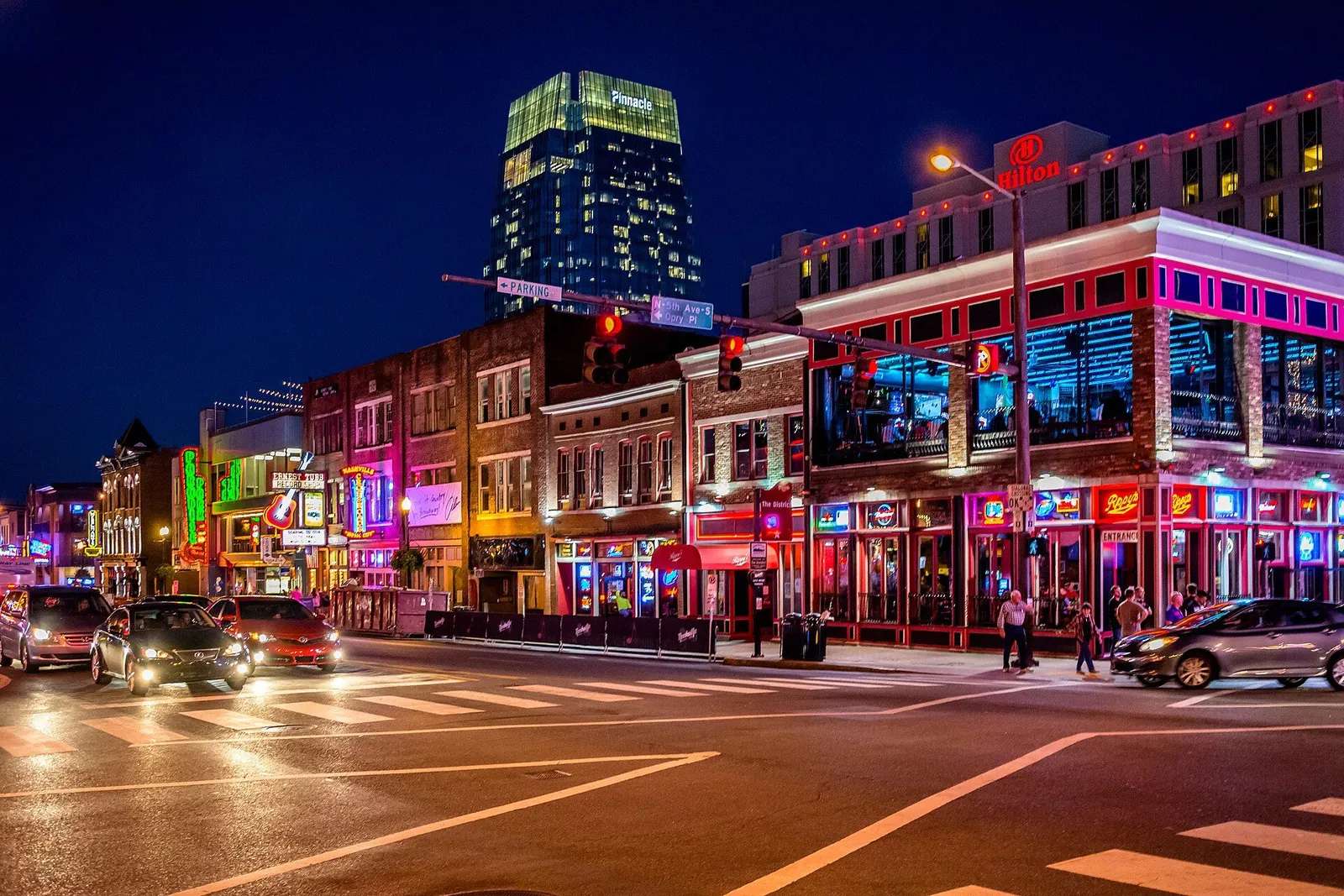
Nashville is the capital of country music and a city that takes live music more seriously than anywhere else in America. Its calling cards are the neon canyon of lower Broadway, where bands play originals and covers for tips from late morning until 3 a.m., the Grand Ole Opry stage that has broadcast weekly since 1925, and a museum district that explains how a fiddle trade became a global industry. Beyond the music, the city offers serious Southern cooking, a full-scale Greek Parthenon in a leafy urban park, and walkable riverfront neighborhoods. Nashville suits travelers who like their sightseeing loud, social, and inexpensive at the core: the best rooms on Broadway cost nothing but a tip. Give it three to four days, ideally in spring or fall, and plan at least one Opry show.
Top sights at a glance
Broadway
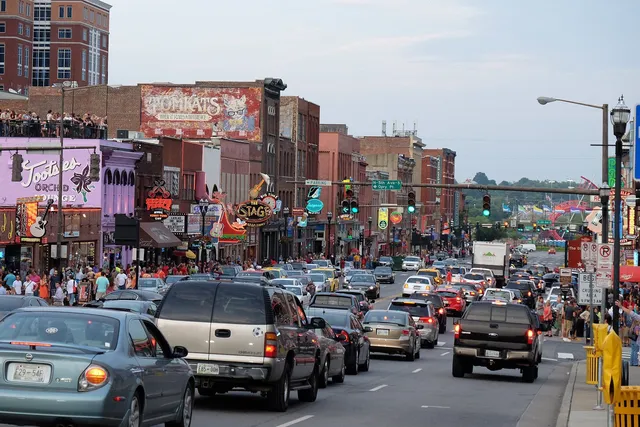
Lower Broadway is a five-block canyon of honky-tonks where the music never stops and the cover charge is zero. Multi-story bars book bands from noon to close, songwriters test material at afternoon open mics, and the street itself becomes a festival of cowboy hats, bachelorette parties, and neon. It is touristy, loud, and genuinely fun, and it sits at the center of a downtown that also holds the Ryman, the country music museums, and the Cumberland River waterfront.
Good to know · Free entry at essentially every venue; budget tips for the band ($5-10 per set is a fair norm). Doors on lower Broadway generally go 21-and-over in the evening, so carry photo ID. Go before 6 p.m. for seating and a calmer room, and check each venue's door policy on its own site.
Grand Ole Opry
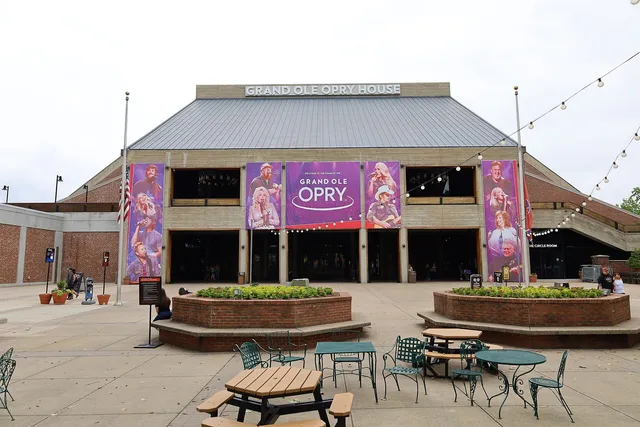
The longest-running radio broadcast in American history, on air weekly since 1925, still tapes live shows several nights a week from its 4,400-seat arena theater beside the Cumberland River. An Opry ticket buys you a two-hour show where a star lineup rotates every twenty minutes: fifty years of hitmakers on one stage, commercial-free, broadcast live on WSM 650 AM. It is equal pieces concert, variety show, and church service for country music.
Good to know · Shows run most nights of the week in the Opry 100 era, often twice on Saturdays; book at opry.com, where seat prices vary by lineup and sell out for headliners. The Opry House sits about 9 miles northeast of downtown, a 20-25 minute rideshare; free backstage tours run on show days.
Country Music Hall of Fame
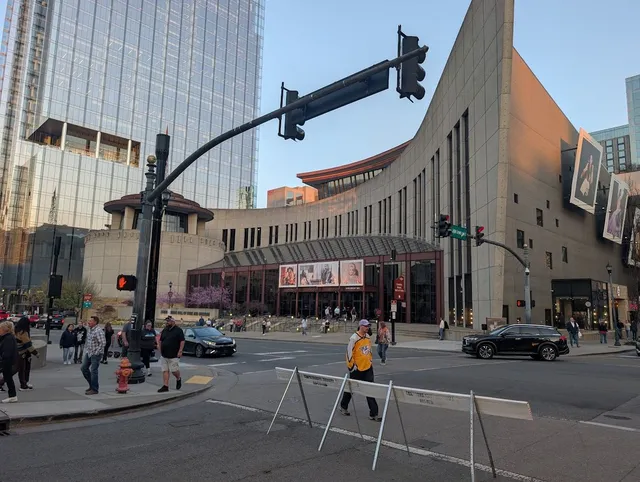
The industry's official museum and one of the best music museums anywhere, tracing country from Appalachian ballads and the Bristol sessions to stadium pop-country, with Elvis's gold Cadillac, original lyric manuscripts, and stage costumes as waypoints. The Rotunda at its heart honors every Hall of Fame member with a bronze plaque, and daily songwriter sessions put working writers on a stage inside the museum.
Good to know · Open daily 9 a.m. to 5 p.m. CT; timed tickets are sold at countrymusichalloffame.org and mornings before 11 a.m. are calmest. Add the RCA Studio B shuttle tour, the 1957 room where Nashville's greatest records were cut, and give the museum at least three hours.
Ryman Auditorium
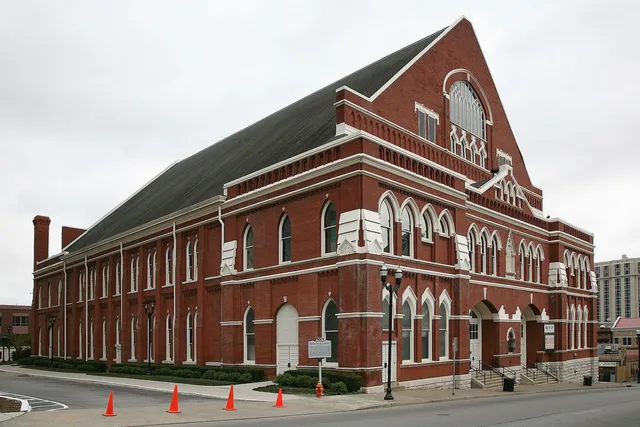
The Mother Church of country music, a converted 1892 gospel tabernacle with a balcony of wooden pews and acoustics that performers still call the best in America. Home of the Grand Ole Opry from 1943 to 1974, it now works as a live room for everything from bluegrass to rock, and daytime self-guided tours let you stand on the stage, see the dressing rooms, and watch an immersive film about the building's life.
Good to know · Daytime tours run daily 9 a.m. to 4 p.m.; as of October 2026 the self-guided tour is $25 plus tax, with guided backstage and VIP options at roughly $43 and $62 (ryman.com/tours). Children 12 and under tour free with an adult. Book an evening show here if you can: the room is the attraction.
Centennial Park and Parthenon
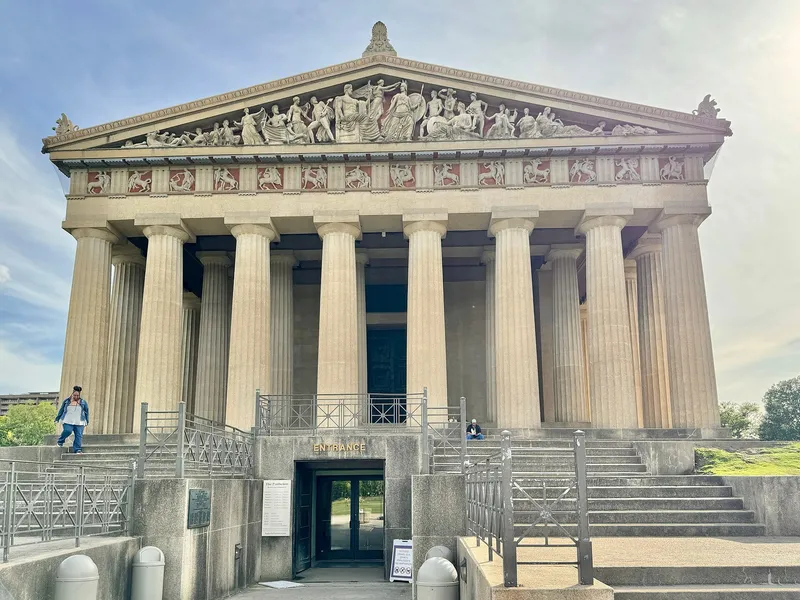
Nashville's front yard, a 132-acre park built for the 1897 Tennessee Centennial Exposition and anchored by the world's only full-scale replica of the Parthenon of Athens. Inside the building, a museum holds a 63-painting collection of American art and a 42-foot gilded statue of Athena, rebuilt from ancient descriptions. Around it: a shaded one-mile loop, a lake with ducks and paddle craft, sunbathers, and the city's best people-watching.
Good to know · The park is free, always open, and served by frequent buses from downtown in about 15 minutes. The Parthenon museum charges $15 for adults ($10 seniors and youth 4-17, under 4 free) and sells tickets only on site; hours run 9 a.m. to 4:30 p.m. Monday to Saturday and 12:30 to 4:30 p.m. Sunday per nashvilleparthenon.com.
Nashville runs on music the way other cities run on finance, and the first thing you notice is that the industry is not behind glass: it is playing for tips on a bar stool twenty feet away. This is a working capital of about 690,000 people, home to songwriters, session players, and more recording studios per capita than anywhere in America, and the visitor economy sits right on top of it. The result is a city where the headline experiences cost almost nothing. Bands on lower Broadway play for tip jars, the Grand Ole Opry sells reserved seats for the price of a mid-range concert, and the museums that explain it all cluster within a fifteen-minute walk. Add serious Southern food, a Greek temple in the park, and a warm, self-aware friendliness, and you get the easiest first trip in the South. Bring earplugs, bring an appetite, and do not schedule your mornings too tightly.
A Bit of History
Nashville was founded in 1779 as a stockaded river settlement called Fort Nashborough, on the Cumberland River in lands long used by the Cherokee, Creek, and Shawnee. It grew fast as the river port of the middle Tennessee plantation country, became the permanent capital of Tennessee in 1843, and by the Civil War sat astride the railroads both sides fought over; the 1864 Battle of Nashville helped break the Confederacy’s western army. The city that emerged after the war billed itself as the Athens of the South, built universities including Vanderbilt, and staged the 1897 Tennessee Centennial Exposition, whose centerpiece, a full-scale Parthenon, proved so beloved the city rebuilt it in concrete.
Music industrialized here in the 1920s. WSM radio launched a Saturday-night barn dance in 1925, renamed it the Grand Ole Opry, and turned Nashville into the place country musicians had to be. The Opry moved into the Ryman Auditorium in 1943 and broadcast there for three decades, while labels, publishers, and session bands (the famous Nashville Sound players) filled the blocks around Music Row. The 1974 move to a purpose-built Opry House in the riverbottoms east of downtown briefly drained downtown, and the 1998 opening of the Country Music Hall of Fame’s current building and the 2010s honky-tonk boom brought it all flooding back.
The twenty-first-century Nashville is one of America’s fastest-growing cities, with construction cranes and rising rents, and the bachelorette-party reputation that comes with them. The working-music culture underneath is older and tougher than the neon suggests, and it is the reason to come.
Culture & Daily Life
Daily life here organizes around the writer’s round: four songwriters in a row with acoustic guitars, trading the stories behind songs they wrote, often hits you know. Rounds happen nightly in small rooms across town, and they are the most Nashville thing a visitor can attend. Locals are friendly in a direct, unhurried way; conversation with strangers is normal, and tipping the band is expected etiquette everywhere live music plays.
Two practical realities shape a visit. First, alcohol rules are venue-specific: bars on lower Broadway pour drinks into plastic cups you can carry in the district, but each honky-tonk sets its own door policy, many go 21-and-over after early evening, and staff do check photo ID, so carry it. Second, lower Broadway after 10 p.m. is genuinely rowdy, drunk, and dense; it is heavily policed and most nights are trouble-free, but keep your drink capped, keep your phone zipped away in crowds, and take a rideshare home rather than walking alone past the core. You may also see news coverage of gun violence in America; the practical reality for visitors is that tourist districts are patrolled, weapons are barred from bars, and following staff instructions resolves any incident.
The useful action: build each evening around one booked thing (an Opry show, a Ryman concert, a writers round) and let Broadway be the after-party, not the plan.
Nature & the Outdoors
Nashville’s outdoors life centers on the Cumberland River and a ring of green space. The riverfront Cumberland Park and the John Seigenthaler Pedestrian Bridge give the best free views of the skyline, and the bridge itself, closed to cars, is the city’s evening walking promenade. Centennial Park holds the Parthenon and a shaded running loop; Shelby Bottoms, east of downtown, preserves 950 acres of floodplain forest with flat greenway miles for walking and cycling.
For a half-day escape, the Natchez Trace Parkway begins in the city’s southwestern edge, a 444-mile national park corridor with no commercial traffic, and Radnor Lake State Natural Area, 20 minutes south, offers quiet lake trails with deer, owls, and herons inside the city limits. Summers are hot and humid (high 80s to low 90s F) and made for early mornings; October and April are the walking months. One caution that applies across American travel: medical care is excellent and wildly expensive, so carry travel insurance before you cycle, hike, or step off a curb on Broadway. Details at /guides/health-insurance-safety/.
Food & Drink
Nashville’s signature dish is hot chicken: fried chicken lacquered with cayenne paste, ordered by heat level from plain to absurd, served on white bread with pickles. It is mandatory once, at any of the old-school lunch counters or newer sit-down rooms around town, and the “medium” will outclass your confidence; order “mild” your first time. Beyond it, the city cooks classic Tennessee: biscuits with sausage gravy at breakfast, meat-and-three lunch plates (choose a meat, choose three sides) where the vegetables come with ham hocks, and barbecue that leans pork shoulder and brisket.
The drinking culture is the other food group. Honky-tonks pour cheap beer and Tennessee whiskey; distilleries around downtown run tastings of the local bourbon style. For a calmer evening, the Germantown and 12South neighborhoods hold the ambitious kitchens, and the Tennessee farmers market downtown makes a good cheap lunch. Expect US$12-20 per person casual, US$50-90 for a sit-down dinner with drinks.
Tipping is standard American: 18-22 percent at tables, $1-2 per drink at bars, 10-15 percent for delivery, and cash in the band’s tip jar wherever you stay for a set. The arithmetic lives at /guides/tipping-and-sales-tax/. Sales tax runs about 9 percent combined in Davidson County (Tennessee’s state rate is 7 percent per Avalara), and it is added at the register on top of menu prices.
Top Sights
Broadway
Walk it once at noon and once at midnight, because they are different attractions. By day it is a scaled neon canyon with street musicians on corners, cheap lunch, and rooms where you can sit ten feet from a band that would headline elsewhere. By night it is a five-block street party: bands on every level of every bar, balconies over the crowd, and a density of cowboy hats that never fully quits until the 3 a.m. closings. Cover charges are rare; the economics run on drinks and band tips, so carry small bills.
Pace yourself and pick your rooms. The famous multistory honky-tonks anchor every corner; the second-floor and third-floor rooms are usually calmer and sound better than street level. Bring photo ID for every door: most lower-Broadway venues enforce 21-and-over in the evening, cards are checked, and under-21 visitors are turned away regardless of company. Watch your tab and your belongings, the street is as pickpocket-prone as any festival, and if a night goes sideways, staff and the visible police details will handle it quickly. If you want the scene without the crush, the same music plays a block east at the riverfront and in the Printers Alley district.
Grand Ole Opry
The Opry is a radio show that happens to sell seats, and that is its charm: between songs the announcers read sponsor copy live, the stage door swings for the next act, and the whole two-hour show beams out on 650 AM exactly as it has since 1925. Lineups rotate every few songs, so a single ticket might hold a bluegrass band, a superstar, an eighty-year-old legend, and a debut, which keeps the audience in a state of permanent surprise. The Opry 100 anniversary era has loaded the calendar with big names, and shows run most nights of the week, often twice on Saturdays.
Book at opry.com, where prices swing by lineup and seat tier; the main floor center is worth the premium, and this is one arena show where the back rows still see fine. The Opry House sits about 9 miles northeast of downtown (20-25 minutes by rideshare), and show-day backstage tours run before curtain if you want the dressing-room lore. Dress is casual to smart-casual; you will see both jeans and dresses, and nobody turns a head either way.
Country Music Hall of Fame
The Hall of Fame is the map for everything else you will do in Nashville, so go early in your trip. Galleries follow country music from ballads carried over from the British Isles through the Bristol sessions of 1927, honky-tonk, bluegrass, the Nashville Sound, outlaw country, and into modern stadium pop, told through instruments (Maybelle Carter’s guitar), handwritten lyrics, and stage wear from Nudie suits to sequined gowns. The bronze plaques of the Hall of Fame Rotunda, where members are permanently enshrined, land with surprising weight, and daily songwriter sessions bring working writers into the building.
Practicalities as of October 2026: open daily 9 a.m. to 5 p.m. CT at 222 Rep. John Lewis Way S, with timed tickets at countrymusichalloffame.org; admission runs in the US$30 range for adults (check current pricing online), and the museum stays calmest before the 11 a.m. tour groups. Budget three hours, and strongly consider the add-on shuttle to Historic RCA Studio B, the room where the Nashville Sound was invented; it books out in busy seasons, so reserve both at the same time.
Ryman Auditorium
The Ryman is the soul of Nashville music and the single best building to enter. Built in 1892 as a gospel tabernacle, it became the Grand Ole Opry’s home from 1943 to 1974, and the wooden pews, the curved balcony, and the famously perfect acoustics survived the years when the building sat neglected; its 1994 restoration made it the most loved live room in America. Daytime self-guided tours run daily from 9 a.m. to 4 p.m., leading you through star-studded exhibits, an immersive film about the hall’s life, and onto the stage itself, where the staff will take your photo.
As of October 2026 the self-guided tour costs $25 plus tax (children 12 and under tour free with a paid adult), with a guided backstage tour around $43 and a VIP option around $62, all bookable at ryman.com/tours. The better play, though, is a ticket to an actual evening show: the room transforms, the pews stay honest, and you understand the “Mother Church” nickname without anyone explaining it. It sits two blocks from the Hall of Fame on Rep. John Lewis Way, so pair the two in one day.
Centennial Park and Parthenon
Take a morning off the neon and ride fifteen minutes west to Centennial Park, the 132-acre site of the 1897 Tennessee Centennial Exposition. Nashville built its Parthenon as the exposition’s art palace, loved it too much to demolish, and rebuilt it in reinforced concrete between 1920 and 1931, making it the world’s only exact-size replica of the Athenian original. Inside, the city museum holds 63 19th- and 20th-century American paintings donated by collector James Cowan and, on the lower floor, Alan LeQuire’s 42-foot gilded Athena Parthenos, reconstructed from ancient descriptions; it is the largest indoor sculpture in the Western world and genuinely startling.
The park around it is free and designed for loitering: a lake with ducks and pedal craft, a shaded mile loop, lawns full of dogs and pick-up games, and seasonal concert series under the trees. The Parthenon museum charges $15 for adults and $10 for seniors 62+ and youth 4 to 17 (under 4 free), sells tickets only at the on-site counter, and opens 9 a.m. to 4:30 p.m. Monday through Saturday, 12:30 to 4:30 p.m. Sunday. Photograph the columns from the lake side in morning light.
Getting There & Around
Nashville International (BNA) sits about 8 miles east of downtown, a 15-20 minute ride. Rideshares and taxis from the airport typically run US$25-40 to downtown; the cheaper option is the WeGo public bus route 18, which runs from the airport terminal to downtown for a few dollars (schedules at wegoheremarket.com and flynashville.com). Book return rides with buffer: BNA security lines have grown with the city.
Downtown is compact and walkable: Broadway, the museums, the Ryman, and the riverfront all sit within a 15-minute walk, and rideshares fill the gaps cheaply outside peak surges. There is no urban rail, and buses are sparse by big-city standards, so plan around walking plus rideshare. You need a rental car only for day trips (Franklin’s battle sites 30 minutes south, the Jack Daniel’s Distillery in Lynchburg about 1.5 hours southeast, Mammoth Cave about 1.5 hours north), and downtown hotel parking runs US$40-60 per night, so rent after, not during, your downtown stay.
Where to Stay
Stay downtown or adjacent if this is your first visit. The blocks around Broadway and the river put the honky-tonks, the Ryman, and the museums at your door, at the cost of nightly noise; ask for a room facing away from Broadway, since the party runs until 3 a.m. The Gulch, just southwest, trades honky-tonk access for restaurants and a quieter, polished feel, still walkable to downtown. East Nashville, across the river, is the value and character pick: music rooms, murals, and half-price rates, a 10-minute rideshare from the action, best for travelers who want a neighborhood over a lobby.
Budget honestly. Combined lodging taxes in Davidson County add up in the mid-teens percent range on the room rate, downtown parking adds US$40-60 a night, and many full-service properties quote a resort or destination fee at check-in; read the itemization with /tools/real-price-calculator/. During CMA Fest in June and the major convention weeks, downtown hotels sell out and minimum-stay rules appear, so book those windows months ahead or shift your dates.
Sources & verification (10)
- https://countrymusichalloffame.org/plan-your-visit/
- https://www.opry.com/
- https://ryman.com/tours/
- https://ryman.com/plan-your-visit/
- https://www.nashvilleparthenon.com/hours-admission
- https://www.nashvilleparthenon.com/about
- https://www.nashville.gov/departments/parks/parthenon
- https://www.avalara.com/taxrates/en/state-rates/tennessee.html
- https://www.flynashville.com/
- https://www.visitmusiccity.com/