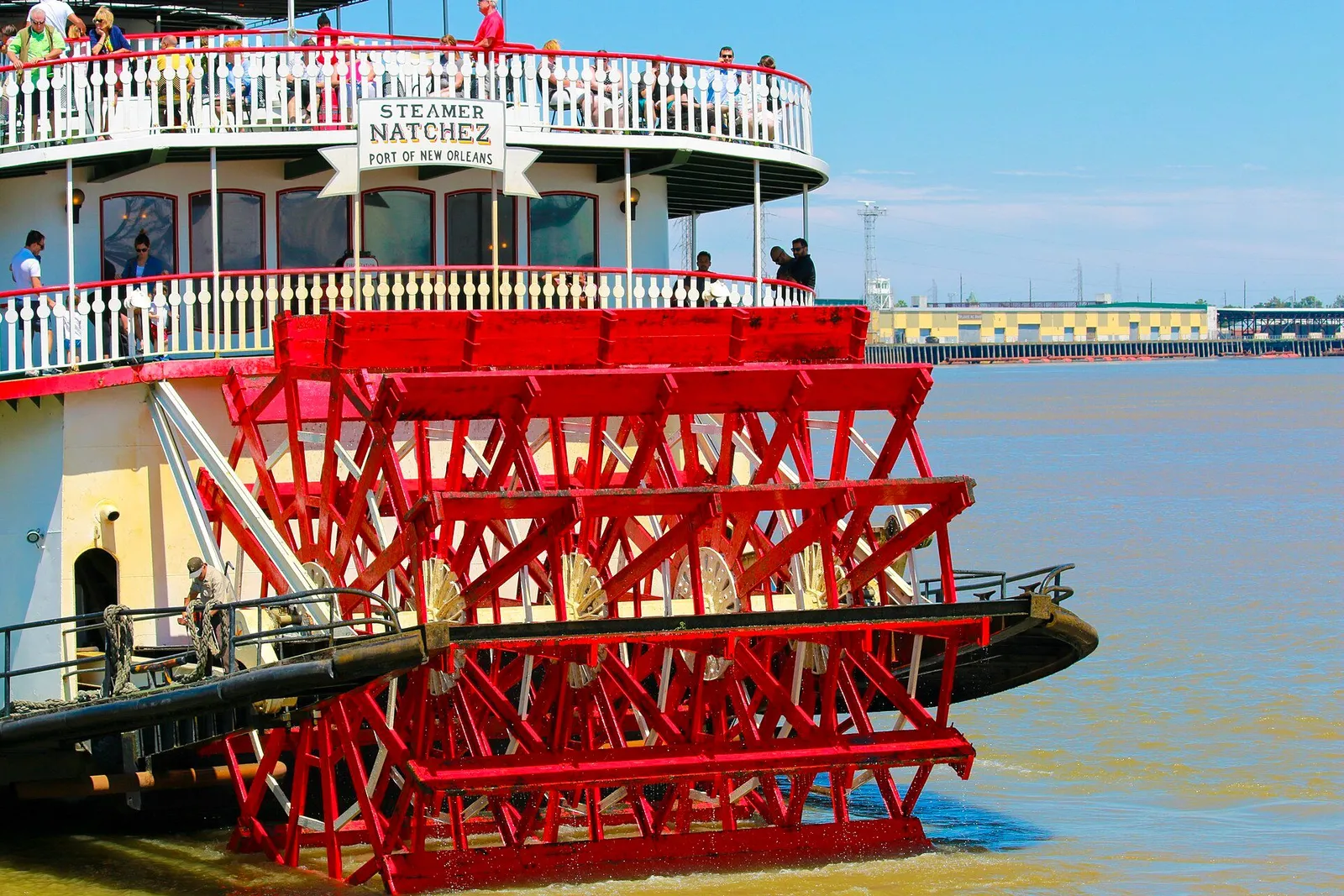
New Orleans is the least typical city in the United States, and locals will tell you so with pride. Founded by the French on a crescent of the Mississippi, ruled by the Spanish, bought by the Americans, and raised on Caribbean trade and West African rhythm, it produces culture the way other cities produce traffic: brass bands second-lining through the streets, powdered sugar on your shirt, above-ground cemeteries, and a nightlife that predates electricity. The core experiences are eating creole and cajun food at the source, hearing live jazz on Frenchmen Street, riding the oldest streetcar line in the world under live oaks, and boating through cypress swamps where alligators surface beside the boat. New Orleans suits travelers who come for food, music, and atmosphere rather than checklist sights. Give it three to four days, and avoid the swamp-like summer.
Top sights at a glance
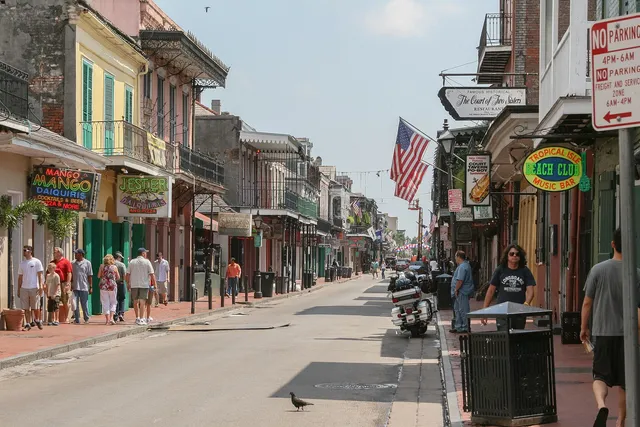
French Quarter
The original city, a 13-by-7-block grid laid out in 1721, is America's most atmospheric neighborhood: stucco walls in pastel shades, cast-iron balconies dripping with ferns, hidden courtyards, and horse mules clopping past keg parties. Bourbon Street is its famous, rowdiest spine; Royal Street one block over holds galleries, antique shops, and street musicians, and the residential blocks toward Rampart stay genuinely quiet. The Quarter is free, always awake somewhere, and best twice: at 7 a.m. with coffee in hand, and at night.
Good to know · Free to explore around the clock. Go before 9 a.m. for empty streets and good light; pick up a self-guided walking map at the 1850 House or the French Market welcome kiosks. Bars serve drinks to go in plastic cups, and open containers are legal on Quarter streets.
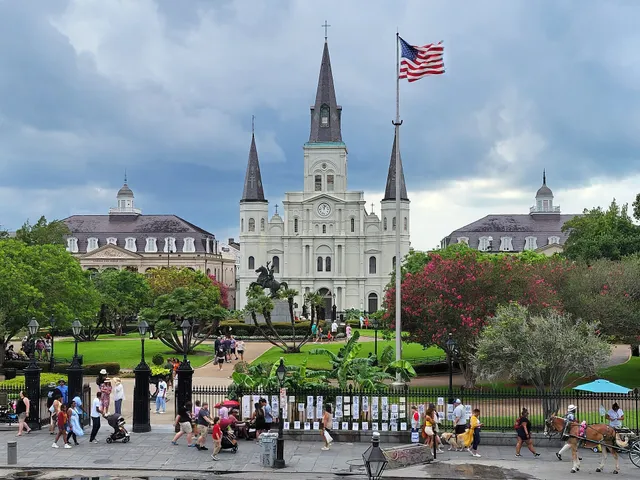
Jackson Square
The city's drawing room, facing the river on the spot where the Louisiana Purchase was signed. Flanked by the twin-spired St. Louis Cathedral and the flanking Cabildo and Presbytere museums, the square hosts portrait artists, tarot readers, brass buskers, and a daily tide of visitors, with Andrew Jackson rearing up on horseback at center. Watch the paddlewheel steamboats turn against the current, then walk the Moonwalk along the levee for the best free river view in town.
Good to know · The square itself is free and open all day. The cathedral welcomes visitors daily 9:30 a.m. to 4 p.m. (last entry 3:45 p.m.), free, with hours shortened around weddings and holidays per stlouiscathedral.org. The two state museums on the square charge modest admission and explain the history you just walked through.
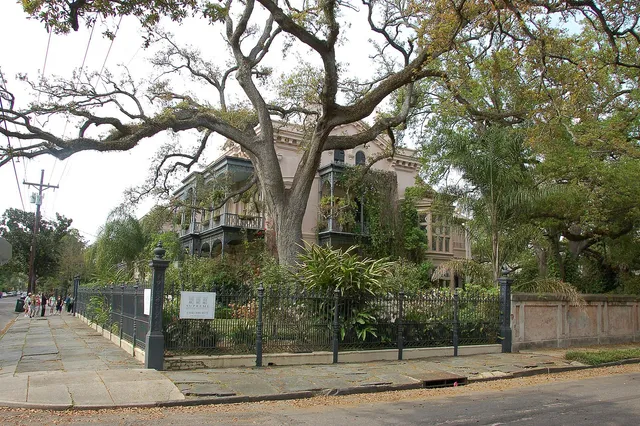
Garden District
The American city that grew up across Canal Street after the Louisiana Purchase, where sugar and cotton fortunes built Greek Revival mansions set back behind gardens and iron fences. Live oaks arch over the sidewalks, Anne Rice's old house draws literary pilgrims, and Magazine Street, the district's commercial spine, runs six miles of independent shops and casual restaurants. Ride out on the St. Charles streetcar, the oldest continuously running line in the world, and walk the quieter cross streets.
Good to know · The streetcar costs $1.25 a ride; a 1-day Jazzy Pass is $3 (norta.com). Walk-in visits to Lafayette Cemetery No. 1 have no regular public hours as of October 2026, so see it through a licensed guided tour or check nola.gov's Division of Cemeteries page before you go.
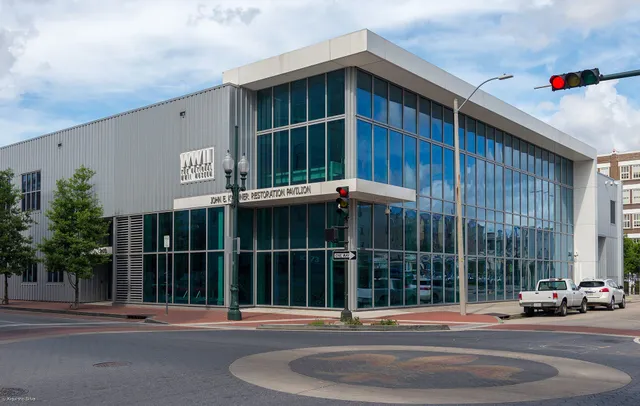
National WWII Museum
The most-visited museum in New Orleans and one of the best history museums anywhere, built here because the landing craft that won the war were designed and produced by a local boat builder. Five pavilions walk you from Pearl Harbor to the fall of Berlin and Tokyo through immersive galleries, oral-history recordings, and a dizzying collection of aircraft suspended overhead. Even visitors who avoid museums emerge four hours later, shaken and impressed.
Good to know · Adult admission is $37 (seniors $34, students and military $27, under 5 free), open daily 9 a.m. to 5 p.m., as of October 2026. Closed Mardi Gras Day, Thanksgiving, Christmas Eve, and Christmas. Buy timed tickets ahead at nationalww2museum.org and budget at least half a day; the 4D film costs extra.

Bayou Swamp Tour
The Louisiana that exists beyond the levees: cypress and tupelo forest standing in black water, Spanish moss overhead, herons, turtles, and alligators holding still as driftwood until they are not. Tour docks sit 30 to 45 minutes from downtown, on the fringes of Jean Lafitte National Historical Park and along Lake Maurepas. A slow pontoon boat gives you the ecology and the photo time; an airboat gives you speed and adrenaline. Both are run by working Cajun guides who treat the swamp as home turf.
Good to know · Small-group pontoon tours start around US$35-40 per person; airboats and tours with hotel pickup run US$90 and up, as of October 2026. Book 2-3 days ahead in warm months, when alligators are active, and take the morning slot for calm water. Wear closed shoes and bug spray.
See it in motion
Some places earn a moving picture
Stills can't show how this place moves: the drift, the light show, the crowd flow. We picked a recent, high-quality walkthrough rather than a promotional cut.
4K Walking Tour through New Orleans' French Quarter (Narrated)
New Orleans Tours by Foot · YouTube · plays on click
Embedded via YouTube's official player (privacy-enhanced mode). Video: 4K Walking Tour through New Orleans' French Quarter (Narrated) by New Orleans Tours by Foot. Not affiliated with Wide Open America; screened for quality and accuracy on 2026-10-15.
New Orleans does not feel like the rest of the United States, and it does not try to. The oldest city on the Gulf sits in a crescent of the Mississippi, five feet under sea level at parts, held out of the water by a century of engineering, and it has spent three hundred years perfecting the art of not worrying. Here is a city where funerals parade with brass bands, where dinner is the main event of the evening and the reason you booked the flight, where bars hand you a plastic cup for the walk. First-timers usually arrive expecting a theme park version of all this. What they find is a working, scruffy, gloriously alive city of roughly 385,000, easy to walk, cheap to cross by streetcar, and generous with its culture in a way few American cities are. Come hungry, come in cool months, and give the place more than a long weekend.
A Bit of History
New Orleans was founded in 1718 by the French colonizer Jean-Baptiste Le Moyne de Bienville on high ground along the Mississippi’s crescent, in territory long used by the Chitimacha people. The grid of the French Quarter was laid out in 1721, and the city passed to Spain in 1763, back to France in 1800, and then, with the Louisiana Purchase of 1803, to the United States, all within living memory of the buildings you can still touch. That layered ownership is why the Quarter looks the way it does: much of what tourists call “French” architecture is actually Spanish colonial brick with cast-iron galleries added in the 19th century.
The Americans arrived and settled upriver from the Creole city, and the two populations distrusted each other enough that the road between them, Canal Street, was called the “neutral ground,” a name New Orleanians still use for any street’s median. Sugar and cotton made fortunes here, and enslaved people made the sugar and cotton; by the mid-1800s New Orleans held the South’s largest slave market and its wealthiest port. It was also the most Caribbean, most Catholic, most African city in America, and out of that mix, in Congo Square’s Sunday gatherings and the ballads of the levee camps, came the music. Jazz crystallized around 1900 in the brothels and dance halls of Storyville, was carried up the river when the district was shut down in 1917, and became America’s one undisputed original art form.
The twentieth century was unkind: barge traffic killed the port’s monopoly, the oil business moved its offices to Houston, and the city’s population peaked in 1960. Then came Hurricane Katrina in August 2005, when levee failures flooded 80 percent of the city and displaced hundreds of thousands. The recovery is two decades old and visibly incomplete in places, but the culture survived because the people who make it refused to leave. Treat the place accordingly.
Culture & Daily Life
Daily life here runs on a calendar of festivals that locals treat as infrastructure. The season of Mardi Gras technically begins on Twelfth Night in early January and builds for six weeks of parades and king cake before Ash Wednesday; Jazz Fest takes over the last weekend of April and the first of May; and between them come food festivals, Greek picnics, and neighborhood second lines, the brass-band processions that follow funeral or parade routes through the streets. Nobody watches from a distance: locals pull folding chairs to the curb, and visitors are welcome to join the parade trail behind the band.
Neighborhood character matters more than any single sight. The Marigny and Bywater, downriver from the Quarter, are the music and mural districts; Treme, just north of the French Quarter, is the oldest Black neighborhood in America and jazz’s nursery; Uptown is the leafy university-and-porch district along St. Charles; Algiers, across the river, is quiet and almost tourist-free. From June through September, life happens early and after dark; slow down accordingly.
A note on two realities. First, you may have seen gun violence in American news; the practical reality for visitors is that tourist districts are well patrolled, guns are barred from bars and most venues, and following staff guidance resolves any incident. Second, cemeteries here are culture, not morbidity: above-ground tombs were engineering, not romance, since the water table is too high to dig, and they are treated with real respect.
The useful action: check the parade and festival calendar at neworleans.com before locking dates. Timing a trip around a second line or a parading krewe costs nothing extra and is the difference between seeing the city and joining it.
Nature & the Outdoors
The natural environment is the story here, even inside the city. New Orleans is a bowl between the river and the lake, and the levees that protect it are also its best walkways: the “batture,” the sloped land between levee top and water, makes a green riverside stroll almost anywhere along the Mississippi, and the Moonwalk beside Jackson Square gives you working ships at eye level. City Park, a few miles north of downtown, is one of the country’s largest urban parks, a forest of ancient live oaks draped in Spanish moss, with free entry and kayak rentals on the lagoons. Bayou St. John, the old water route into the city, is now a slow canoe-and-picnic corridor through Mid-City.
The real outdoors, though, is the swamp, and it deserves a guided visit: cypress-tupelo forest standing in tea-black water, alligators sunning in winter shallows, egrets, owls, and nutria. Tours run year-round, but wildlife is most active in warm months and most comfortable for you between October and April. Mosquitoes are a real problem from May through October; bring repellent. And a caution that applies to all American travel: medical care is excellent and wildly expensive, so carry travel insurance before you kayak, swamp-walk, or step off a curb in the Quarter. Details at /guides/health-insurance-safety/.
Food & Drink
New Orleans is the one American city where eating is the primary sightseeing, and the cuisine has two distinct branches. Creole cooking is the city’s own: European technique meeting Caribbean and West African ingredients, built on the “holy trinity” of onion, celery, and bell pepper, and expressed in gumbo (a dark-roux stew over rice), jambalaya, and sauce piquante. Cajun cooking is the country cooking of the Acadian parishes to the west: bolder, earthier, famous for boudin sausage and crawfish, which New Orleans boils with corn and potatoes and eats with both hands when the season runs, roughly late winter through early summer.
The working person’s foods are the ones to chase. Red beans and rice on Mondays, the old washday tradition, still anchors lunch menus across the city. The po-boy, a dressed-in-everything sandwich on crackly French bread (roast beef with gravy, or fried shrimp), is the best cheap meal in America. The muffuletta, a round sesame loaf piled with olive salad and Italian cold cuts, came out of the Sicilian delis of Decatur Street. Beignets, square fried doughnuts under a snowfall of powdered sugar, belong to late morning with cafe au lait at the old coffee stands by the French Market, cash helps, and wear dark colors. For something sweet in summer, find a sno-ball stand and order it “stuffed.”
Where to spend your evenings: Frenchmen Street in the Marigny, three blocks of live-music rooms where the cover charge is modest and the bands are world-class, is the right choice over Bourbon Street’s frozen-drink chaos. The city’s ambitious kitchens cluster in the Quarter, on Magazine Street, and around the Warehouse District; expect US$15-30 per person casual, US$60-150 for the tasting-menu institutions (book weeks ahead). Tipping is standard American: 18-22 percent at tables, $1-2 per drink, 10-15 percent for delivery; arithmetic at /guides/tipping-and-sales-tax/. Sales tax adds roughly 10 percent per nola.gov, and cocktails mix around US$12-16 in decent bars.
Top Sights
French Quarter
Give the Quarter your first morning and your last night, because it transforms completely. At dawn the streets are washed down, the gas lamps are off, and you get the place as residents know it: balconies dripping with ferns, cats on doorsteps, the smell of bread from the ovens. Walk Royal Street for galleries and ironwork, Pirate’s Alley for the photograph, and the residential blocks near Rampart for the quiet pastel rows. The architecture explains itself if you look up: Spanish-era brick with entresol windows, 19th-century cast-iron galleries, and the tall Creole townhouses of Royal.
At night the balance tips. Bourbon Street between Canal and St. Ann is a genuine American spectacle, loud and unapologetic, worth one loop through and no more; the good nightlife lives one and two streets away, in piano rooms and cocktail bars with a century of practice. Drinks travel legally in plastic cups, which surprises visitors and is simply practical. No admission charge anywhere: the Quarter is a neighborhood first and an attraction on purpose.
Jackson Square
The square is the city’s front porch and its most concentrated hour of sightseeing. The St. Louis Cathedral anchors the north side, the oldest cathedral in continuous use in the United States, and its doors are open to visitors daily from 9:30 a.m. to 4 p.m., free, with last entry at 3:45 and closures around weddings and holidays per stlouiscathedral.org. Inside it is modest by European standards but serene, and visitors are welcome.
Flanking the cathedral, the Cabildo and the Presbytere, twin colonial buildings now run as the Louisiana State Museum, hold the actual documents of the Louisiana Purchase and the best exhibits anywhere on Mardi Gras and on Hurricane Katrina. Around the square itself, portrait artists have staked out the fence for generations, brass bands set up without warning, and the Andrew Jackson statue commemorates the victory of 1815. Finish by crossing Decatur to the Moonwalk along the river: paddlewheel steamboats churn past working freight ships, and the whole scene is free.
Garden District
Cross town on the St. Charles streetcar, the oldest continuously operating line in the world, rattling under a canopy of live oaks past mansions that sugar and cotton built. This was the “American sector,” and the nouveau-riche rivalry with Creole New Orleans produced the grandest residential architecture in the South: Greek Revival columns, double-galleried porches, and gardens tall enough to hide the houses from the street. Washington Avenue and Coliseum Street hold the classics; walk the side streets too, and mind private property (locals live here, and tour groups have a reputation).
Two practical notes. First, Lafayette Cemetery No. 1, the iron-fenced necropolis that photography made famous, has had no regular public walk-in hours since safety work began, and as of October 2026 its status is listed as open only by arrangement per nola.gov: see it on a licensed walking tour or verify access on the city’s Division of Cemeteries page. Second, budget time for Magazine Street on the district’s river side: six miles of independent shops, record stores, and low-key restaurants where the city’s younger cooks work. The streetcar costs $1.25 a ride or $3 for a 1-day Jazzy Pass.
National WWII Museum
Do not skip this because it sounds like every other war museum. The National WWII Museum, one of the best-reviewed history museums in the country, tells the entire American war through five pavilions of immersive exhibits: the road to war, the D-Day landings (the museum began as the National D-Day Museum, honoring the Higgins boats built in New Orleans that carried the landings), the Pacific island campaigns, and the home front. Oral-history listening stations, where veterans tell their own stories, are the emotional core, and the US Freedom Pavilion’s suspended aircraft formation justifies the trip alone.
Practicalities as of October 2026: $37 for adults, $34 for seniors, $27 for students and military, free for children under 5; open daily 9 a.m. to 5 p.m., closed Mardi Gras Day, Thanksgiving, Christmas Eve, and Christmas. The 4D film “Beyond All Boundaries” costs extra (about $12 with admission) and is worth it if you have the time. Buy timed tickets at nationalww2museum.org before you arrive; the museum sits in the Warehouse District, a 15-minute walk from the Quarter. Half a day minimum.
Bayou Swamp Tour
Forty-five minutes outside the city, the levees end and the real Louisiana begins: water forest, cypress knees breaking the surface, moss hanging like stage curtains. Two boat styles dominate. Pontoon swamp tours, on flat-bottomed boats with naturalist guides, cruise slowly enough to find alligators, owls, and herons, and the guides, often lifelong Cajuns, make the ecology genuinely funny; expect roughly US$35-40 per person, as of October 2026. Airboat tours trade the naturalist calm for speed across the marsh, and outfits that include hotel pickup typically run US$90 and up.
Book direct with an operator 2-3 days ahead, take the morning slot for glassy water and active wildlife, and dress for the elements: it is colder on the water in January and hotter in July than downtown. Alligators are most visible in the warm months and slow down in winter, which is worth knowing when choosing your season. Wear closed shoes and repellent; the swamp is not dangerous on a licensed tour, but it is wild, and the insurance note above applies. The best operators cluster along the Barataria side, south of the city, inside the wider Jean Lafitte wetlands.
Getting There & Around
Louis Armstrong International (MSY) sits about 11 miles west of downtown. The city-regulated taxi flat rate to the Central Business District and French Quarter is about $36 for one or two passengers (roughly $15 each after that); rideshares run similar or more at peak times. Cheapest option: the RTA airport express bus into downtown for $1.25, listed on neworleans.com’s airport transportation page. The ride takes 35-50 minutes depending on traffic.
Inside the city you will barely use a car. The French Quarter, Marigny, and CBD connect on foot; the streetcar network (Riverside, Canal, and the oak-lined St. Charles line) covers the rest for $1.25 a ride, and the 1-day Jazzy Pass at $3 pays for itself on the second trip; buses fill the gaps, all fares on norta.com. Remember that the South is vast: Baton Rouge is 1.5 hours by car, the Mississippi plantation houses an hour, Cajun country two. Rent a car only for those day trips; parking in the Quarter and CBD runs US$30-50 per night. Amtrak’s City of New Orleans sleeper connects Chicago in about 19 hours if you want the classic arrival.
Where to Stay
The French Quarter itself is the atmosphere pick: courtyard hotels and small inns inside the historic grid, worth the premium for first-timers who want dawn walks and midnight beignets. Request a room facing an interior courtyard, not the street; the Quarter’s nightlife does not sleep, and Bourbon-adjacent rooms are loud until 3 a.m. The Marigny and Bywater, one neighborhood downriver, trade polished lobbies for music-venue proximity and often half the price; pick these if Frenchmen Street is your priority. The CBD and Warehouse District hold the modern, business-grade hotels: quietest nights, the WWII Museum next door, and a 15-minute walk to everything; the practical choice for most itineraries.
Budget honestly: combined hotel taxes in Orleans Parish run about 15-16 percent on top of the room rate per nola.gov and BGR’s analysis, and downtown parking adds US$30-50 a night; resort fees are less common than in Miami but appear on full-service properties (check the itemization at /tools/real-price-calculator/). During Mardi Gras and Jazz Fest, hotels sell out weeks or months ahead and often impose multi-night minimums: book those two windows first, then build the rest of the trip around them.
Sources & verification (12)
- https://www.nationalww2museum.org/visit
- https://stlouiscathedral.org/
- https://www.norta.com/ride-with-us/how-to-pay/fares
- https://www.neworleans.com/plan/transportation/airport-shuttle/
- https://www.airboatadventures.com/
- https://www.cajunencounters.com/tours/swamp-tour-new-orleans
- https://www.tripadvisor.com/AttractionProductReview-g60864-d11460069-Large_Airboat_Swamp_Tour_with_Transportation_from_New_Orleans-New_Orleans_Louisiana.html
- https://nola.gov/next/property-management/topics/division-of-cemeteries/
- https://nola.gov/sales-tax-rate/
- https://www.bgr.org/report-index/bgr-analyzes-the-orleans-parish-hotel-tax-structure/
- https://www.nhc.noaa.gov/climo/
- https://www.britannica.com/place/New-Orleans-Louisiana