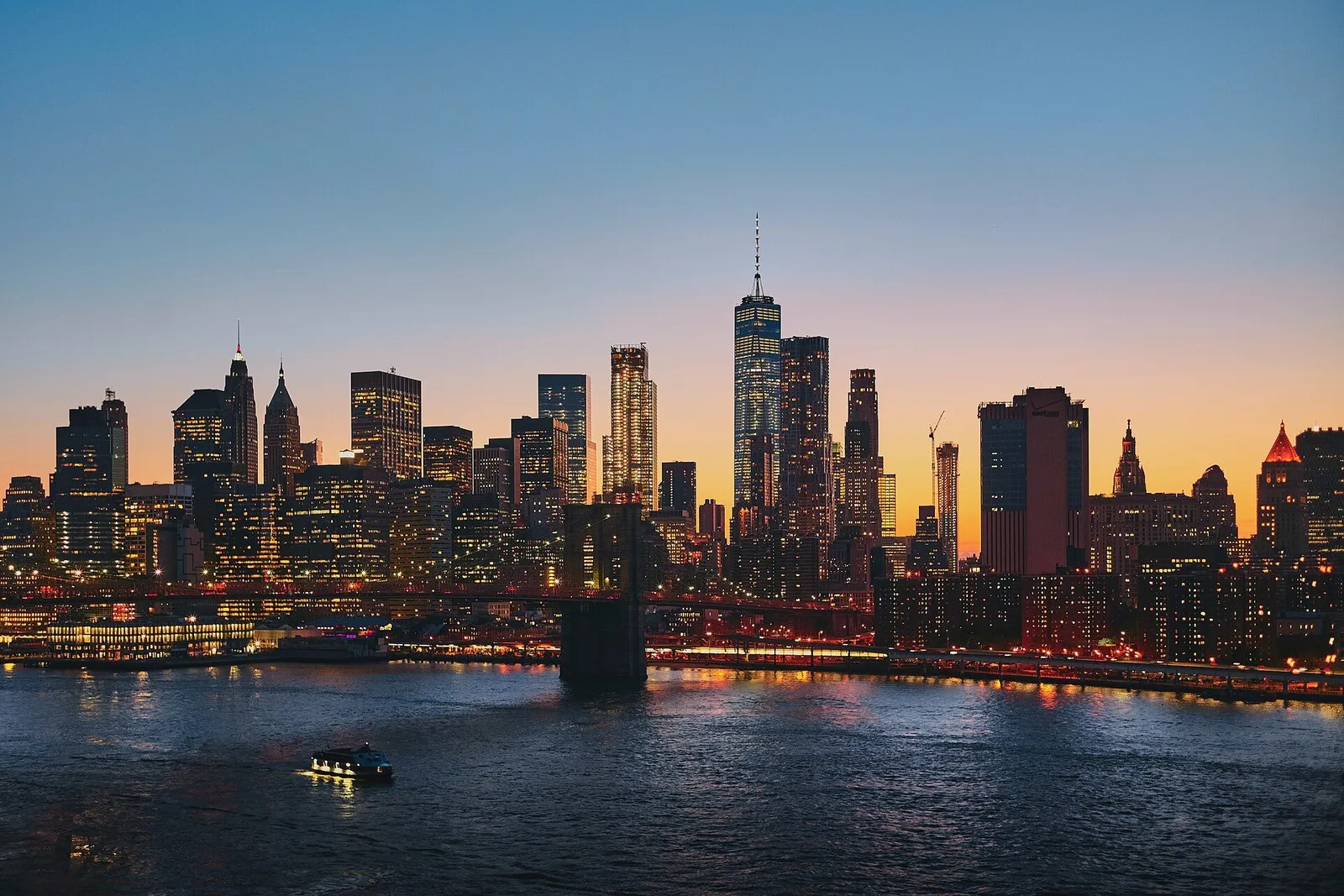
New York City is the most visited city in the United States, and for once the hype is accurate: no other American city packs this much walkable variety into one place. One day you are standing under the Statue of Liberty, the next you are lost in the Metropolitan Museum of Art, and by evening you are eating hand-pulled noodles in Queens or watching the lights of Times Square do their unstoppable thing. Five boroughs hold 8.5 million people, more than 800 languages, and enough parks, museums, and neighborhoods to fill a month. First-timers should give Manhattan four full days, ride the subway everywhere, book timed tickets before leaving home, and budget for the city's real costs: sales tax at checkout and 18 to 22 percent tips at tables. NYC rewards walkers who look up and subway riders who look ahead.
Top sights at a glance
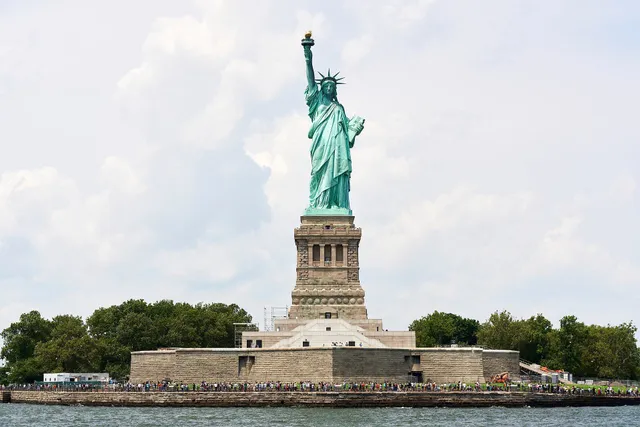
Statue of Liberty
The statue France gave the United States in 1886 remains the single most famous arrival image in America, and the ferry ride from Battery Park is half the point: you approach Liberty Island from the water, the way generations of immigrants did. The 305-foot copper figure holds her torch over New York Harbor, with Ellis Island's immigration museum on the same ticket, close enough to do both in one morning.
Good to know · Tickets cost $26 for adults and $17 for children 4 to 12 as of October 2026, sold only through statuecitycruises.com. Choose a morning departure, and reserve crown or pedestal access at the same time: crown tickets sell out months ahead. Ignore anyone selling tickets around Battery Park; the official booth is inside Castle Clinton.
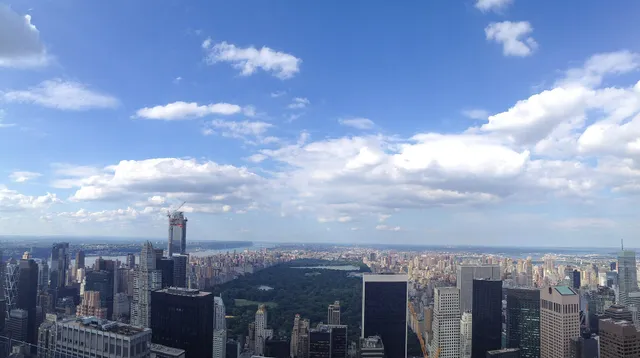
Central Park
Central Park is 843 acres of deliberate countryside in the middle of Manhattan, designed in the 1850s and now the most filmed public space on earth. Lakes, woodlands, a castle, a carousel, and 58 miles of paths sit under the towers of Midtown. It is free, open daily, and the reason hotel rooms facing it cost double: this is the city's shared backyard, and locals use it like one.
Good to know · Enter anywhere; good first gates are at Grand Army Plaza (59th Street and 5th Avenue) or 72nd Street. Free official maps and restroom locations live at centralparknyc.org. Morning is best: joggers and dog walkers before 9 a.m., tour buses after. The park closes at 1 a.m.
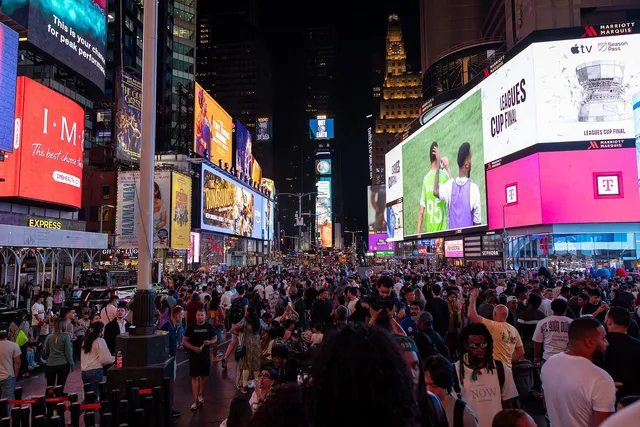
Times Square
The crossroads of the world is a canyon of LED billboards that never goes dark, and it is exactly two experiences: overwhelming and worth seeing once, then avoidable forever. Around 300,000 people pass through daily. Come after sunset for full effect, look up for ten minutes, take your photo, then walk two blocks in any direction for a calmer and cheaper version of New York.
Good to know · Free, always open, most crowded 6 to 10 p.m. Skip the costumed characters demanding tips for photos, and skip eating here: prices inflate within two blocks of the square. For same-day half-price Broadway tickets, use the official TKTS booth under the red steps (tdf.org).
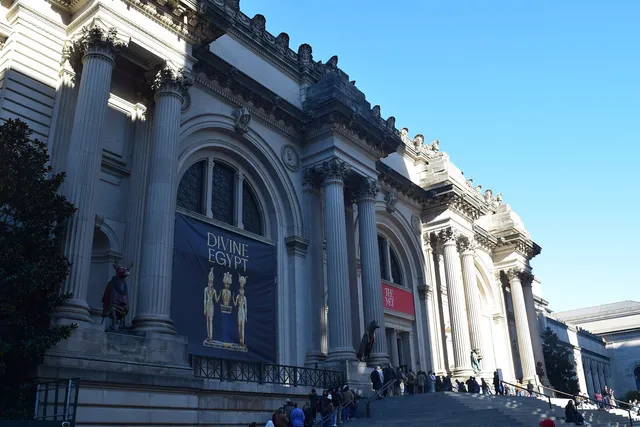
Metropolitan Museum of Art
The Met is the largest art museum in the United States and one of the three or four greatest on earth: five thousand years from Egyptian temples to Impressionism under one Fifth Avenue roof. The Temple of Dendur, a real Egyptian monument in a glass-walled hall, and the armor court justify the trip alone. You cannot see it all; pick two wings and go deep.
Good to know · Adult admission is $30 as of October 2026, with pay-what-you-wish tickets for New York State residents; check hours before you go at metmuseum.org because closing days vary. Buy timed-entry tickets online to skip the line. Enter at the 81st Street side if the main steps are jammed.
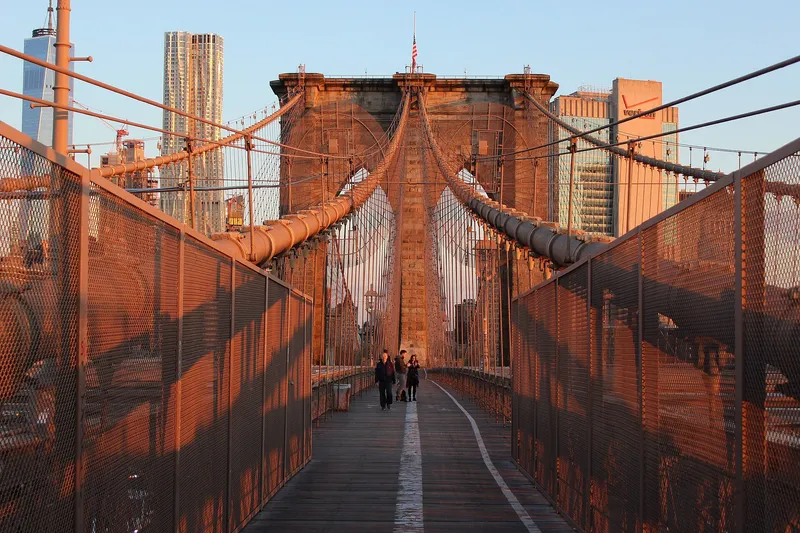
Brooklyn Bridge
The 1883 bridge that made New York New York is still a working road with a wooden boardwalk floating above the traffic, and walking it is the best free hour in the city. The Gothic stone towers and web of steel cables frame the skyline on both sides, and the view improves with every block. Walk toward Manhattan in the morning so the sun is behind you.
Good to know · Free, open around the clock; the Manhattan entrance sits at Park Row near City Hall (subway: Brooklyn Bridge/City Hall station). The walk takes 30 to 45 minutes one way. Cyclists share the boardwalk, so stay in the pedestrian lane, and start from Brooklyn if you want the skyline face-on.
See it in motion
Some places earn a moving picture
Stills can't show how this place moves: the drift, the light show, the crowd flow. We picked a recent, high-quality walkthrough rather than a promotional cut.
New York City: What It's Like Now | Manhattan Walking Tour
Strolling The City · YouTube · plays on click
Embedded via YouTube's official player (privacy-enhanced mode). Video: New York City: What It's Like Now | Manhattan Walking Tour by Strolling The City. Not affiliated with Wide Open America; screened for quality and accuracy on 2026-10-15.
New York City is the skyline half the planet can draw from memory, and it feels exactly like the movies, only louder and faster. The second thing everyone notices is how practical it is: a grid so logical you can navigate after one day, a subway that runs all night, and neighborhoods that change personality every ten blocks. The Statue of Liberty, Times Square, and Central Park matter, but the real New York happens between them: a bagel at 8 a.m., a park bench at noon, a jazz trio at midnight. It is expensive, crowded, and occasionally rude, and none of that matters, because four days here will give you more stories than a month almost anywhere else. Bring comfortable shoes and a plan for the big tickets; the city handles the rest.
A Bit of History
The Dutch bought the island of Manhattan from the Lenape in 1626 for goods worth about 60 guilders and called their trading post New Amsterdam. The English took it in 1664 and renamed it for the Duke of York, but the Dutch left their footprint in the city’s founding temperament: New York has been about money, trade, and making a deal ever since. Wall Street is literally the site of a wall built to keep out the British.
New York was briefly the first capital of the United States: George Washington took the oath of office on Wall Street in 1789. The city that mattered nationally, though, was the port. The Erie Canal, opened in 1825, wired the interior to New York Harbor, and the city exploded from 60,000 people in 1800 to 3 million by 1900, absorbing waves of Irish, German, Italian, Jewish, and Chinese immigrants, each leaving neighborhoods you can still eat your way through. Ellis Island processed 12 million of them between 1892 and 1954; about 40 percent of Americans can trace an ancestor through it.
The skyscraper was invented here for a simple reason: Manhattan is an island, and land ran out before ambition did. The Woolworth Building, the Empire State Building, and the World Trade Center (destroyed 2001, reborn in 2014) each held or chased the world’s-tallest title. The five boroughs consolidated into one city in 1898, which is why Brooklynites still call it Brooklyn.
The 1970s nearly broke the city, with bankruptcy and crime, but that era seeded the art, hip-hop, and punk scenes that became global exports. Since the 1990s, New York has been one of the safest big cities in America, and Times Square went from red-light district to billboard canyon. The September 11 attacks remain the city’s deepest wound; the memorial pools at the World Trade Center site are free and worth your quiet half hour.
Culture & Daily Life
New York is roughly 8.5 million people packed into 300 square miles, and the daily culture is built on that arithmetic. New Yorkers walk fast, stand right on escalators, and will give you precise directions then walk off mid-sentence. Nobody is being hostile; the average resident is quietly, constantly late. Keep right on sidewalks and do not stop at the bottom of subway stairs, and you are already halfway to fitting in.
The neighborhoods are the real museum. Chinatown, Little Italy, Koreatown, Harlem, and Washington Heights are the famous ones, but the pattern holds everywhere: Jackson Heights in Queens holds Latin American, Indian, and Tibetan blocks within a mile of each other, and Brighton Beach is a Russian boardwalk. One in three New Yorkers was born abroad, which is the practical reason to skip a second day of shopping: an afternoon riding the 7 train through Queens eats better than most countries.
Tipping is not optional here and runs higher than most visitors expect. Table service means 18 to 22 percent of the pre-tax bill, bar drinks mean $1 to 2 per drink, and delivery means 10 to 15 percent. Sales tax adds 8.875 percent at checkout, which is why nothing costs the sticker price. Our /guides/tipping-and-sales-tax/ page has the full arithmetic, and the /tools/real-price-calculator/ does it for you.
Two pieces of etiquette will save you embarrassment. Do not block the subway doors: let people off before you get on. Stay alert on late-night platforms, keep your phone out of your back pocket, and ignore the costumed characters of Times Square, who demand money after posing with you. If you see news coverage of gun debates, the traveler’s reality is simple: guns are banned in nearly every place you will enter, so follow staff instructions and move on.
Nature & the Outdoors
New York is one of the greenest big cities in America, which surprises people who only know the skyline. Central Park alone is bigger than Monaco, and it is one of hundreds: Prospect Park in Brooklyn (designed by the same men, and locals argue the better park) and the High Line, an elevated freight rail turned garden promenade. All are free.
Water frames everything, and the city’s best outdoor hours happen on it. The Staten Island Ferry is a free 25-minute boat ride that sails directly past the Statue of Liberty; the upper deck at sunset is a genuine attraction at zero dollars. Ferries also run to Governors Island, a car-free park with picnic lawns and skyline views (seasonal, roughly May through October; check govisland.com).
For exercise, run the Central Park loop (6.1 miles), rent a Citi Bike (day passes via citibikenyc.com), or kayak on the Hudson for free with the volunteer runs at Downtown Boathouse in summer. Bring common sense: sunscreen in summer, layers in wind, and if you somehow need emergency care, know that American ER bills without insurance are punishing, which is why we cover travel insurance at /guides/health-insurance-safety/.
Food & Drink
New York has the deepest food scene in the country, and the honest advice is to skip the famous-name restaurants and follow the neighborhoods. The essentials: a bagel with scallion cream cheese, a pizza slice eaten folded while walking, a pastrami sandwich at a Jewish deli, dumplings in Chinatown, a halal-cart chicken over rice (look for the longest line of construction workers at lunch), and the bodega’s bacon-egg-and-cheese on a roll.
Price reality, as of October 2026: a pizza slice runs $4 to 6, a bagel $4 to 8, a deli sandwich $12 to 18, a solid neighborhood dinner without drinks $30 to 50, and a splurge easily clears $80 a head before the tip. Add sales tax and 18 to 22 percent table service tips to every sit-down check; our /guides/tipping-and-sales-tax/ page walks through a real bill.
Ethnic food is where the city is untouchable, and most of it is cheap: Jackson Heights for Colombian and Tibetan, Flushing for the best Chinese food in the Western Hemisphere (take the 7 train to the end), Sunset Park for Mexican, Brighton Beach for Eastern European, Arthur Avenue in the Bronx for Italian without the Little Italy markup. Vegetarians eat extremely well here.
On drinking: happy hours (roughly 4 to 7 p.m.) discount cocktails to $8 to 14, and the tap water is excellent, so carry a refillable bottle. Coffee runs from bodega carts ($2 to 3) to serious roasters on every block. Note: buying alcohol requires ID, and foreign driver’s licenses occasionally get refused at bar door checks, so carry your passport on big nights out.
Top Sights
Statue of Liberty
The statue is 305 feet of copper and iron on an island in New York Harbor, a gift from France completed in 1886, and it remains the most eloquent thing America has ever said to the world. The ferry ride is part of the experience: boats leave from Battery Park in Manhattan and Liberty State Park in New Jersey, and the approach from the water is the image immigrants carried in for two generations. The same ticket covers Ellis Island’s immigration museum, where you can look up your own family name in the records for free.
Practical reality: the ferry is run by a single authorized operator, and tickets cost $26 for adults, $23 for seniors, and $17 for children 4 to 12 as of October 2026, bought only from statuecitycruises.com. Reserve a few days ahead for general admission; crown access, up a 162-step spiral staircase inside the statue, sells out months ahead and carries strict rules (42-inch minimum height, four tickets per order, one visit per person every six months, photo ID required). Pedestal access costs a small supplement and books out weeks ahead. Take the first boat of the morning, budget half a day for both islands, and buy nothing from ticket sellers around Battery Park; the NPS itself warns they overcharge.
Central Park
Central Park is the reason Manhattan’s density is livable: 843 acres of lakes, meadows, and 58 miles of paths laid out in the 1850s on swamp and rock, now the most filmed park on earth. Locals use it as their actual backyard, and visitors should too: you can spend a full morning here without spending a cent. The classic route runs from Grand Army Plaza up through the Mall’s elm canopy, past Bethesda Terrace’s fountain (the movie location you already recognize), up to Belvedere Castle, and out along the reservoir’s running track with the towers of Fifth Avenue over the trees. Strawberry Fields’ Imagine mosaic honors John Lennon a few steps from the Dakota, where he lived.
The park is free and open daily until 1 a.m., and its caretaker, the Central Park Conservancy, keeps free maps and restroom listings at centralparknyc.org. Go early: before 9 a.m. it belongs to runners and dog walkers, and by 11 the southern entrances are a tour-group current. Rowboat rentals at the Loeb Boathouse in season and the Central Park Zoo are the paid extras, none of them necessary. The park is genuinely safe by day; after midnight, stick to the perimeter roads.
Times Square
Times Square is 42nd and Broadway turned into a canyon of light, and honesty is the useful posture toward it: a magnificent, exhausting, commercial spectacle you should see exactly once, after dark, when the screens reach full power. Around 300,000 people move through on a busy day, and the theater district around it is the real reason the neighborhood exists: this is the front door to Broadway, which sells about $1.8 billion of tickets a year.
Do three things and leave. Look up until your neck hurts; the billboards are the show. Take your photos from the red TKTS steps, which exist precisely for this. If you want theater, use the TKTS booth under those steps for same-day tickets at 25 to 50 percent off (run by TDF, a nonprofit; check tdf.org for hours) or book through each theater’s own box office. Skip the costumed characters (they demand payment after photos) and anyone selling “VIP” tickets on the sidewalk. Two blocks east or west, normal-priced New York resumes.
Metropolitan Museum of Art
The Met is a city block two stories tall and five thousand years deep: Egyptian temples, Greek and Roman sculpture, medieval armor, Rembrandt and Vermeer, and the best collection of American art anywhere, all on Fifth Avenue facing Central Park. Its signature spaces outperform most entire museums: the Temple of Dendur sits in a glass hall the size of an airplane hangar, and the Arms and Armor court is the room every child remembers for life.
You cannot do it in a day, so pick two wings and do them properly. Adult admission is $30 as of October 2026, with pay-what-you-wish for New York State residents; hours vary by day, so confirm them at metmuseum.org, where you can also buy timed tickets and skip the line. The rooftop garden (May through October) gives a Central Park skyline view included in admission. If you finish early, the Cloisters, the Met’s medieval branch in Fort Tryon Park, is worth the A train ride: a European monastery dropped into a forest.
Brooklyn Bridge
The Brooklyn Bridge opened in 1883 as the longest suspension bridge on earth and the first to use steel-wire cable, and walking its elevated boardwalk between the Gothic stone towers is still the best free hour in New York. Engineer John Roebling designed the cable pattern you walk under, his son built it, and his daughter-in-law Emily ran the project’s final years. The wooden planks, the web of steel, and the skyline on both sides make the 30-to-45-minute walk feel like a painting.
Walk it toward Manhattan in the morning: the sun stays behind you and you finish at City Hall with the whole day ahead. The Manhattan entrance is at Park Row (the Brooklyn Bridge/City Hall subway stop serves it); the Brooklyn side descends into DUMBO, where the classic postcard shot of the bridge framing the Empire State Building waits at Washington Street, plus waterfront lawns at Brooklyn Bridge Park and Jane’s Carousel. The bridge is free and open around the clock; cyclists have their own lane, so stay inside the pedestrian divider, and avoid the midday crush in summer. Bonus: the free Staten Island Ferry terminal is a 15-minute walk from the Manhattan end if you want a second skyline view from the water.
Getting There & Around
Three airports serve the city, and none is in it. JFK (Queens) connects to Manhattan by the AirTrain plus subway or LIRR (total 50 to 75 minutes, roughly $11 all in) or by taxi at a flat fare of $70 plus tolls and tip. LaGuardia has no rail link; buses plus subway run about an hour. Newark (New Jersey) connects via AirTrain plus NJ Transit to Penn Station in about 45 minutes. From Boston or Washington DC, take the train: Amtrak’s Northeast Corridor runs hourly, and regular fares often undercut flying once airport time is counted.
Inside the city, the subway plus your own feet covers everything, and a car is a liability, not a convenience. The fare is $3.00 per ride with OMNY, the tap-to-pay system that takes contactless credit cards and phones directly at the turnstile (no app or card purchase needed), with a weekly cap of $35, after which rides are free for the rest of that week, as of January 2026. Full details live at new.mta.info/fares. Taxis and rideshares work well for late nights; expect traffic south of 59th Street at almost any hour. The one exception to no-car: if your trip continues to the Hudson Valley or the Jersey Shore, rent the car as you leave the city, not when you arrive.
Where to Stay
Midtown East and Midtown West put you walking distance from the major sights and cost accordingly: convenient, busy, and the priciest rooms in town, with many large hotels adding daily “facility fees” on top of the quoted rate, so always check the total before booking. Choose it if this is your first visit and you want sights and Broadway out the door.
The Lower East Side, East Village, and Chelsea are the better-value sweet spot: subway-dense, full of independent restaurants and bars, and 10 to 20 minutes by subway from Midtown. Downtown means quieter streets at night and better food per dollar.
Across the river, Long Island City (Queens) and Downtown Brooklyn deliver modern hotels at lower rates, with subway rides of 10 to 20 minutes into Midtown. Check two line items in every booking: room-occupancy tax adds roughly 15 percent to your bill, and parking, if you foolishly kept the car, runs $50 to 70 a night. Book eight or more weeks ahead for May, June, September, October, and December; this city sells out.
Sources & verification (8)
- https://www.nps.gov/stli/planyourvisit/fees.htm
- https://www.nps.gov/stli/planyourvisit/visit-the-crown.htm
- https://statuecitycruises.com/tickets
- https://www.metmuseum.org/visit/plan-your-visit
- https://new.mta.info/fares
- https://new.mta.info/fares/omny-fare-capping
- https://www.nycgovparks.org/parks/central-park
- https://taxfoundation.org/location/new-york/