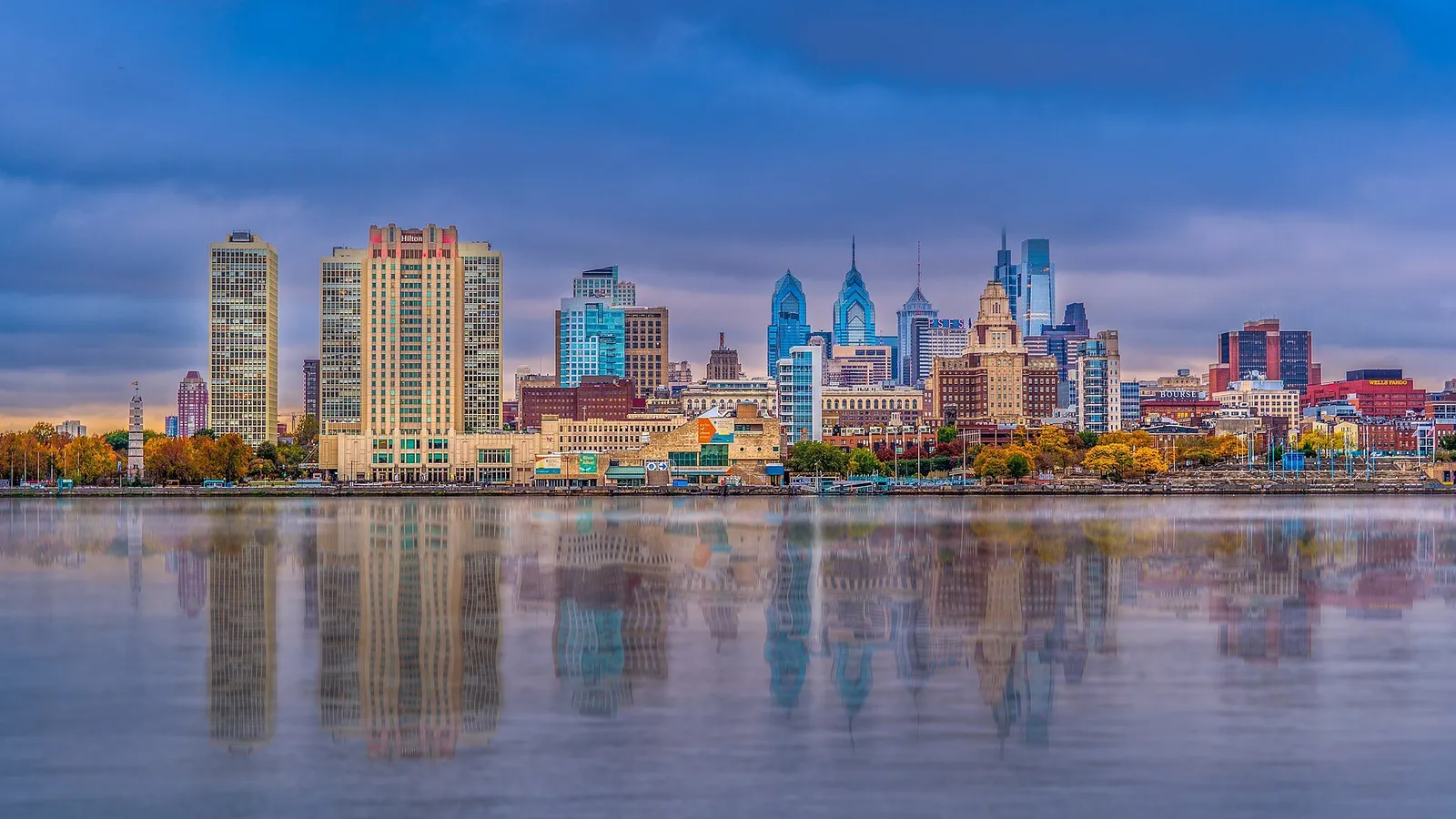
Philadelphia is where the United States began: the room where the Declaration of Independence and the Constitution were both signed sits a block from the Victorian market where the city still does its food shopping, and the whole historic core is compact enough to cover on foot in a morning. But the city is more than its birth certificate. It holds one of America's great art museums, a crumbling first-of-its-kind prison that doubles as a lesson in criminal justice, a serious eating culture that runs from cheesesteak windows to Amish produce stalls, and an affordability the coastal giants gave up on years ago. First-timers should plan two to three days, skip the rental car entirely, and pair the historic square with a night in Fishtown or a morning on the Schuylkill river trail. Philadelphia suits history-minded visitors, museum lovers, rail travelers, and anyone who wants a full American city at half of New York's price.
Top sights at a glance
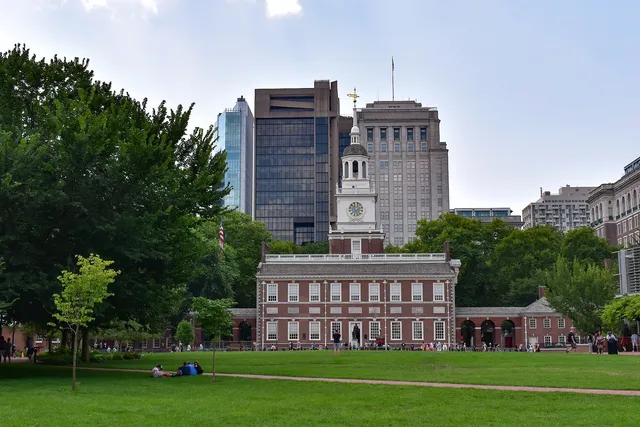
Independence Hall
Independence Hall is the redbrick Georgia-style statehouse where delegates adopted the Declaration of Independence in 1776 and drafted the United States Constitution in 1787, the only building on earth that can claim both documents. A National Park Service ranger leads you through the Assembly Room, past the original chairs and inkstands, in a 20-minute tour that is the closest thing America has to a founding pilgrimage.
Good to know · Entry is free but timed tickets are required for tours (10:40 a.m. to 4 p.m.); the $1 per ticket fee is charged on recreation.gov, where tickets go on sale up to 30 days ahead, with next-day tickets released at 5 p.m. the day before. From 9 to 10:30 a.m. the hall runs an open house with no ticket needed. Arrive 30 minutes early for security screening.
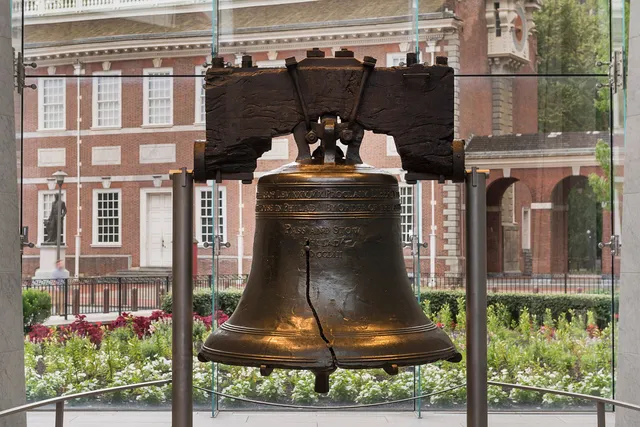
Liberty Bell
The Liberty Bell, inscribed with the Bible line "Proclaim liberty throughout all the land," cracked on the way to becoming the most famous object in America, and the 2,080-pound bell now hangs in a glass pavilion across from Independence Hall. The free exhibit hall walks you through the bell's stranger history: its adoption by abolitionists in the 1830s, its touring days, and the 1846 crack that silenced it for good.
Good to know · The Liberty Bell Center (526 Market Street) is free, requires no tickets, and opens daily 9 a.m. to 5 p.m., first come, first served, with airport-style security screening; the shortest lines are before 9:30 a.m. or late afternoon. There are no restrooms inside, so use the Independence Visitor Center across Market Street first.
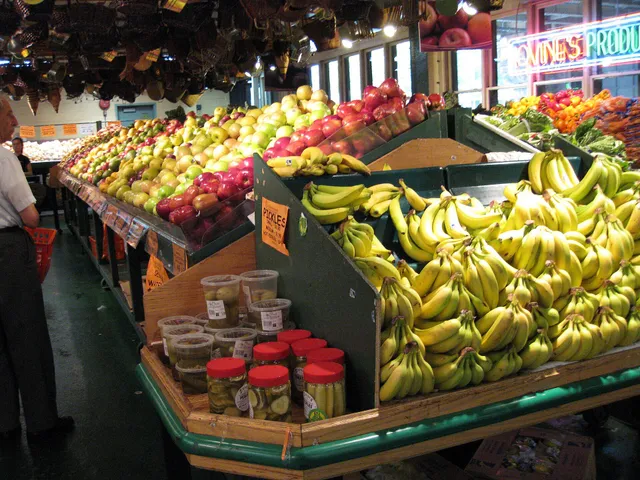
Reading Terminal Market
Reading Terminal Market has been feeding Philadelphia from beneath a former railroad headhouse since 1893, and today roughly 80 independent merchants pack the block: Pennsylvania Dutch farm stalls, cheesesteak counters, butchers, bakeries, Bassett's ice cream, and produce stands that have operated for generations. It is the best single food stop in any American city center, and visiting counts as sightseeing whether you buy anything or not.
Good to know · Open daily 8 a.m. to 6 p.m. (readingterminalmarket.org); no admission, no tickets. Arrive before 9:30 a.m. on weekdays for a calm breakfast, and expect serious weekend crushes from noon on. Note that several Amish-run Pennsylvania Dutch stalls close on their rest days, so check the directory board if a specific counter is the goal.
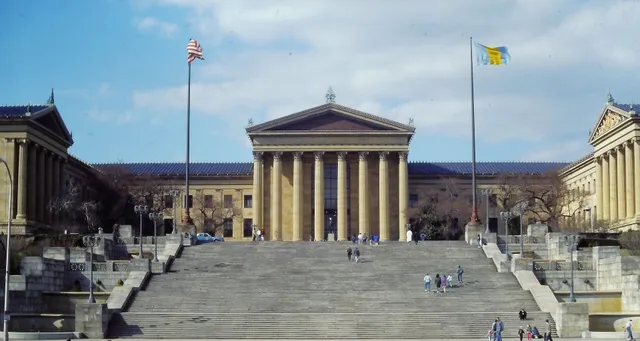
Philadelphia Museum of Art
The Philadelphia Museum of Art occupies a Greek-revival acropolis at the end of the Benjamin Franklin Parkway, and its 72 front steps, immortalized by the film Rocky, are the most famous workout in America. Inside is a top-tier collection: Van Gogh's Sunflowers, a room of Duchamp, medieval cloisters shipped stone by stone, and one of the largest Rodin collections outside Paris next door.
Good to know · As of October 2026 the museum opens Monday, Thursday, and Sunday 10 a.m. to 5 p.m., Friday to 8:45 p.m., and closes Tuesdays and Wednesdays; admission runs around $30, and the first Sunday of the month is Pay What You Wish (reserve the PWYW slot at philamuseum.org). The Rocky statue stands at the bottom of the steps, free 24 hours.
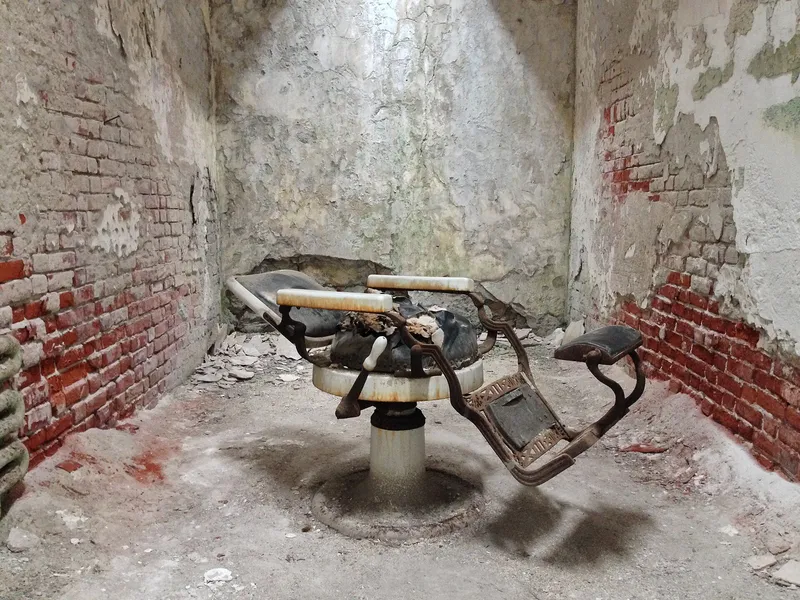
Eastern State Penitentiary
Eastern State Penitentiary opened in 1829 as a radical experiment: a wagon-wheel prison built to force inmates into silent penitence in solitary cells, a model copied worldwide before being abandoned as cruelty. Abandoned since 1971, its crumbling cellblocks now hold an honest, evidence-rich audio tour about mass incarceration, plus glimpses of Al Capone's surprisingly furnished cell. It is the most thought-provoking ticket in Philadelphia.
Good to know · Open daily 10 a.m. to 5 p.m. March through November (2027 Fairmount Avenue); online tickets run $21 adults, $19 seniors, $17 youth and students, a couple dollars more at the door (easternstate.org). The core audio tour takes about 40 minutes. Halloween Nights, the separate-admission evening festival on select October and November dates, transforms the site entirely.
Philadelphia is the closest thing the United States has to a capital of itself, in both senses. From 1790 to 1800 this was literally the capital of the young country, and in the symbolic sense it never stopped: the room where the Declaration of Independence was adopted, the room where the Constitution was written, and the cracked bell that abolitionists and civil rights marchers all claimed stand within one block of each other. What guidebooks underplay is how alive the rest of the city feels around that pilgrim site: rowhouse blocks and mural-covered walls, a Victorian market still selling produce under a railroad shed, museum steps people run up at dawn for a movie they saw as children. Give it two days: one for the historic square and the market, one for the art museum, the old prison, and a neighborhood dinner on the way home.
A Bit of History
William Penn, a Quaker with a genuine (if imperfect) commitment to religious tolerance, laid out Philadelphia in 1682 on Lenape land between two rivers, designing America’s first planned grid. The town grew rich on grain, shipping, and the wider Atlantic economy that included the slave trade; by the 1770s it was the largest, most sophisticated city in colonial America. That prominence is why the Revolution happened here in ink as well as spirit: the Continental Congress met in the Pennsylvania State House, adopted the Declaration of Independence on July 4, 1776, and, eleven years later, wrote and signed the United States Constitution in the same room. Philadelphia served as the national capital from 1790 to 1800, years when President George Washington brought enslaved people to work in the President’s House, two steps from today’s Liberty Bell Center, a truth the National Park Service exhibits rather than hides.
The 19th century made Philadelphia the workshop of America: textiles, locomotives, ships, and the railroads whose Reading Company built the market terminal downtown in 1893. The city’s free Black community was the largest and most consequential in the North; Richard Allen founded Mother Bethel African Methodist Episcopal Church here in 1794, and the Underground Railroad ran through Black Philadelphia long before the Civil War. Immigration layered Irish, Italian, Jewish, Polish, and later Puerto Rican neighborhoods onto the rowhouse grid. The 20th century hit hard: industry left, jobs went, and mid-century highways sliced whole neighborhoods apart. Since the 1990s the city has rebuilt around universities, hospitals, and a genuine arts scene: the Mural Arts program has produced thousands of walls across the city, and former industrial districts like Fishtown now set the nightlife agenda. In July 2026 the nation’s 250th birthday brought the party back to Philadelphia, exactly where it always insisted it belonged.
Culture & Daily Life
Philadelphia holds about 1.55 million people, the sixth-largest city in the country, and it behaves like a collection of villages that share a grudge list. Ask a local where they are from and the answer is a neighborhood, not the city: Fishtown, South Philly, West Philly, Manayunk, each with its own loyalties. The famous edge is real but narrow; day to day, Philadelphians are blunt, funny, and unusually willing to tell you exactly which sandwich to order. Sports are the civic religion and the Eagles are the state church; the rest of the calendar fills with baseball, basketball, hockey, and soccer, and the South Philly stadium complex hosts America’s largest tailgate party on autumn Sundays.
Practical notes. Tipping is national standard: 18 to 22 percent at tables, $1 to 2 per bar drink, delivery 10 to 15 percent (the full arithmetic at /guides/tipping-and-sales-tax/). Pennsylvania sales tax is 6 percent and Philadelphia adds its 2 percent local share, so you pay 8 percent at the register. Philadelphia is a big American city with big-city inequality; the visitor zones of Center City, Old City, and the museum districts are busy and well-policed, and normal city sense covers the rest. On guns, the traveler’s reality is simple: venues, museums, and transit ban weapons, and you will almost certainly go your whole trip without seeing one.
Nature & the Outdoors
Philadelphia’s outdoor luck is the Schuylkill River, and its best free experience is the Schuylkill Banks trail running from Center City northwest past Boathouse Row, whose lit-up boathouses double in the water at dusk. Rent a kayak on the river, run or bike the trail, or continue into Fairmount Park, one of the largest urban park systems in the United States, with more than 2,000 acres of woods, historic houses, and trails inside the city limits.
Wissahickon Valley Park, a steep wooded gorge in the city’s northwest, hides a creek, ruined mills, and a trail network that feels like Vermont, 25 minutes from City Hall by car or bus. Bartram’s Garden in Southwest Philadelphia, America’s oldest surviving botanical garden (1728), sits on the tidal Schuylkill, and the Delaware riverfront programs piers and roller rinks in season.
Practical notes: Philadelphia summers are hot and humid enough to wreck an unprepared afternoon, and winters are gray but mild by Boston standards. And the standard American health reminder applies: if something goes wrong physically, use an urgent care clinic rather than an emergency room unless it is a true emergency, because US medical bills without insurance are punishing; we cover the mechanics at /guides/health-insurance-safety/.
Food & Drink
Philadelphia eats above its weight class and below its price tier, and it does so with rules. The cheesesteak is the civic dish: thinly sliced beef on a long roll, ordered as “whiz wit” (Cheez Whiz with fried onions) or with provolone, at counter windows where you pay in cash, step aside, and never discuss it calmly. The roast pork sandwich, sharp provolone and bitter greens piled on shredded slow-roasted pork, is the connoisseur’s answer and arguably the better sandwich. Beyond the icons: soft pretzels sold from carts for pocket change, hoagies (the city’s name for a sub), water ice (pronounced “wooder ice”), and a BYOB restaurant culture, bring your own bottle, no corkage fee, that grew out of liquor-license law and keeps good dinners cheap.
Price reality, as of October 2026: a classic cheesesteak runs $12 to 16, roast pork similar, a market lunch at Reading Terminal $12 to 20, a solid neighborhood dinner without drinks $30 to 55, and bar beers $7 to 9. Sales tax is 8 percent in Philadelphia and table tipping is 18 to 22 percent; the /tools/real-price-calculator/ does the conversion math for you.
Where to actually eat: Reading Terminal Market for breadth under one roof (go at breakfast); East Passyunk Avenue and 9th Street in South Philadelphia for the cheesesteak strip and Italian grocery culture; Chinatown for some of the best regional Chinese food on the East Coast, packed into four blocks north of City Hall; and Fishtown for the new wave, taquerias, natural wine, and barbecue in former industrial blocks. Vegetarians do well everywhere; vegans should look at West Philly.
Top Sights
Independence Hall
The building is modest: a redbrick former Pennsylvania statehouse with a wooden steeple, built in the 1750s for a colonial legislature. What happened inside remade the world. The Declaration of Independence was adopted here on July 4, 1776, and in the summer of 1787 the same Assembly Room hosted the Constitutional Convention, which produced the United States Constitution still in force today. The National Park Service runs the building as the centerpiece of Independence National Historical Park, and the tour is honest rather than pageantic: rangers talk about the men in the room, the enslavers among them, and the compromises that were punted forward.
Logistics. Timed-entry tickets are required for the standard tours, which run from 10:40 a.m. to 4 p.m. and last about 20 minutes; from 9 to 10:30 a.m. the hall operates an open house with no ticket needed. Reserve at recreation.gov up to 30 days in advance (the fee is $1 per ticket), and if you missed the window, next-day tickets release at 5 p.m. the evening before. Arrive 30 minutes early for airport-style security on Independence Square. Congress Hall next door is free and unticketed; the US Congress sat there for ten years.
Liberty Bell
The bell is smaller than every visitor expects, the crack is bigger, and the line can stretch across the lawn. The story the exhibit tells is better than the object: cast in London in 1751 for the Pennsylvania State House, cracked and recast twice by local founders, it rang for occasions lawful and less so until 1846, when the now-famous fracture widened and silenced it permanently. The name “Liberty Bell” was coined by abolitionists in the 1830s, who claimed the inscription, from Leviticus, “Proclaim liberty throughout all the land unto all the inhabitants thereof,” as their argument in bronze; suffragists and civil rights leaders did the same in later generations.
The Liberty Bell Center is free, unticketed, and open daily 9 a.m. to 5 p.m.; you pass through security, walk a hall-length exhibit, and find the bell framed in glass against Independence Hall at the far end. Two practical notes: there are no restrooms inside (the Independence Visitor Center across Market Street has them), and the line is longest between 10 a.m. and 1 p.m., so come at opening or late afternoon. Do not skip the President’s House memorial at the center’s southeast corner, an open-air site marking the quarters where Washington held enslaved people during his presidency, including Ona Judge, who escaped from here in 1796; it is the most quietly powerful free exhibit in the park.
Reading Terminal Market
Under the headhouse of the old Reading Railroad terminal, since 1893, Philadelphia keeps a public market that functions exactly as intended: farmers, butchers, bakers, and counters selling to locals who shop weekly, with tourists flowing through in between. Roughly 80 independent merchants operate under the shed. The Pennsylvania Dutch (Amish and Mennonite) stalls in the center aisles are the signature: hand-rolled soft pretzels, whoopie pies, shoofly pie, and family-style counters where the roast pork sandwich reached its final form. Bassett’s, one of America’s oldest ice cream companies, has scooped on this floor since 1893.
The market opens daily 8 a.m. to 6 p.m., and timing is everything: at 8:30 a.m. you can eat breakfast at a counter in peace, while by 12:30 p.m. on a Saturday every seat is contested. The Amish-run stalls close on their rest days (typically Sundays and one weekday), so the market is quieter those days. No admission, no tickets; entrances on 12th and Arch Streets, one block from the Jefferson subway station.
Philadelphia Museum of Art
The museum sits at the end of the Benjamin Franklin Parkway like a Greek temple: a vast complex completed in 1928, holding more than 200,000 objects collected since the 1876 Centennial Exposition. The galleries hold Van Gogh’s Sunflowers, the largest room of Marcel Duchamp’s work anywhere, a medieval cloister reassembled stone by stone, and American rooms salvaged from demolished mansions. The Rodin Museum across the parkway, included with the same ticket, holds the largest public collection of Rodin sculpture outside Paris, The Thinker guarding the entrance.
And then there are the steps. The 72 stone front steps, and Sylvester Stallone sprinting them in the 1976 film Rocky, turned the museum into a monument to effort as much as art; the bronze Rocky statue stands at the base, and running the steps at any hour, free, remains one of the great foolish joys of American travel. As of October 2026 the museum opens Monday, Thursday, and Sunday 10 a.m. to 5 p.m., Friday to 8:45 p.m., and closes Tuesdays and Wednesdays. Admission runs around $30 for adults; the first Sunday of each month is Pay What You Wish, which requires reserving the special PWYW slot at philamuseum.org. Do the steps at sunrise or after dinner, the galleries midday.
Eastern State Penitentiary
In 1829 Philadelphia opened the most influential prison ever built. Eastern State Penitentiary’s architects believed isolation would produce genuine penitence, hence the word “penitentiary,” which this building popularized; its hub-and-spoke design, cellblocks radiating from a central rotunda, was copied by hundreds of prisons worldwide. Each inmate lived alone, exercised alone, and wore a hood when moved. The system was abandoned within decades as inhumane, the prison aged into overcrowded ordinary use, and it closed in 1971 with a roster that included Al Capone, whose 1929 cell came furnished with a desk, lamp, and radio.
Today it is a stabilized ruin, deliberately unrestored, and the self-guided audio tour is the best 40 minutes of historical storytelling in the city: what the experiment meant, who lived inside, and what America’s mass incarceration era owes to this design. Tickets run $21 adults ($19 seniors, $17 youth and students) online, a couple of dollars more at the door, everything included; hours are 10 a.m. to 5 p.m. daily March through November. In October, the separate-admission Halloween Nights festival takes over select evenings, which is a different experience entirely; daytime is the thoughtful one. The site sits in Fairmount, a 20-minute walk from the art museum, and children under 7 are not recommended.
Getting There & Around
Philadelphia International Airport (PHL) sits seven miles from Center City, and the SEPTA Airport Line regional rail covers it in about 25 minutes to University City and the downtown stations (Suburban, Jefferson); it charges a flat airport fare, meaningfully more than the subway, bought as a Quick Trip from the kiosk (confirm the current price at septa.org). A taxi or rideshare runs $30 to 40.
By train, Philadelphia is the easiest big city in America to reach: Amtrak’s Northeast Corridor arrives at 30th Street Station, a monumental 1933 hall, about 1.5 to 2 hours from New York and 2 to 2.5 from Washington DC, with regional trains costing a fraction of the premium ones.
Inside the city, walk and ride SEPTA. Center City and Old City are compact and flat; the Broad Street and Market-Frankford subway lines cross at City Hall, and a single transit ride costs $2.90 as of October 2026, with two free transfers when you tap a contactless card. Buses cover everywhere else, and the Indego bike share docks around Center City. A rental car is a liability here: parking at downtown hotels commonly runs $50 or more per night, and every sight in this guide is reachable on foot or transit. Rent only for day trips beyond the rail lines (Brandywine Valley, the Jersey Shore).
Where to Stay
Old City is the obvious first-timer pick: cobblestone blocks, the historic square at your door, and Elfreth’s Alley, the postcard street, two blocks north. It is quiet at night by big-city standards and books quickly around holidays; it suits history-focused visitors who want to beat the crowds to Independence Hall at opening.
Center City around Rittenhouse Square and Midtown Village is the local favorite: the best restaurant density, Reading Terminal in walking range, and the two subway lines crossing at City Hall. It suits everyone else, couples, food travelers, and rail arrivals, and holds the widest spread of price tiers. Fishtown and University City, one subway or El ride out, offer lower rates and the most character per dollar if your evenings matter more than your commute.
Two accounting notes: hotel taxes add roughly 15 percent to quoted rates, and check confirmations for urban “destination fees,” which appear at checkout rather than booking. Parking, if you ignored the advice about cars, runs $50 or more per night downtown. Book early for holiday weeks and any home Eagles or Phillies game weekend; the rooms fill accordingly.
Sources & verification (15)
- https://www.nps.gov/inde/planyourvisit/independencehall.htm
- https://www.nps.gov/inde/planyourvisit/independencehalltickets.htm
- https://www.nps.gov/inde/planyourvisit/libertybellcenter.htm
- https://readingterminalmarket.org/visit-us/
- https://www.philamuseum.org/visit
- https://www.philamuseum.org/faq
- https://www.easternstate.org/historic-site/hours-of-operation
- https://www.easternstate.org/historic-site/know-before-you-go
- https://en.wikipedia.org/wiki/Southeastern_Pennsylvania_Transportation_Authority
- https://taxfoundation.org/location/pennsylvania/
- https://en.wikipedia.org/wiki/Liberty_Bell
- https://en.wikipedia.org/wiki/Eastern_State_Penitentiary
- https://en.wikipedia.org/wiki/Philadelphia_Museum_of_Art
- https://en.wikipedia.org/wiki/Reading_Terminal_Market
- https://en.wikipedia.org/wiki/Philadelphia