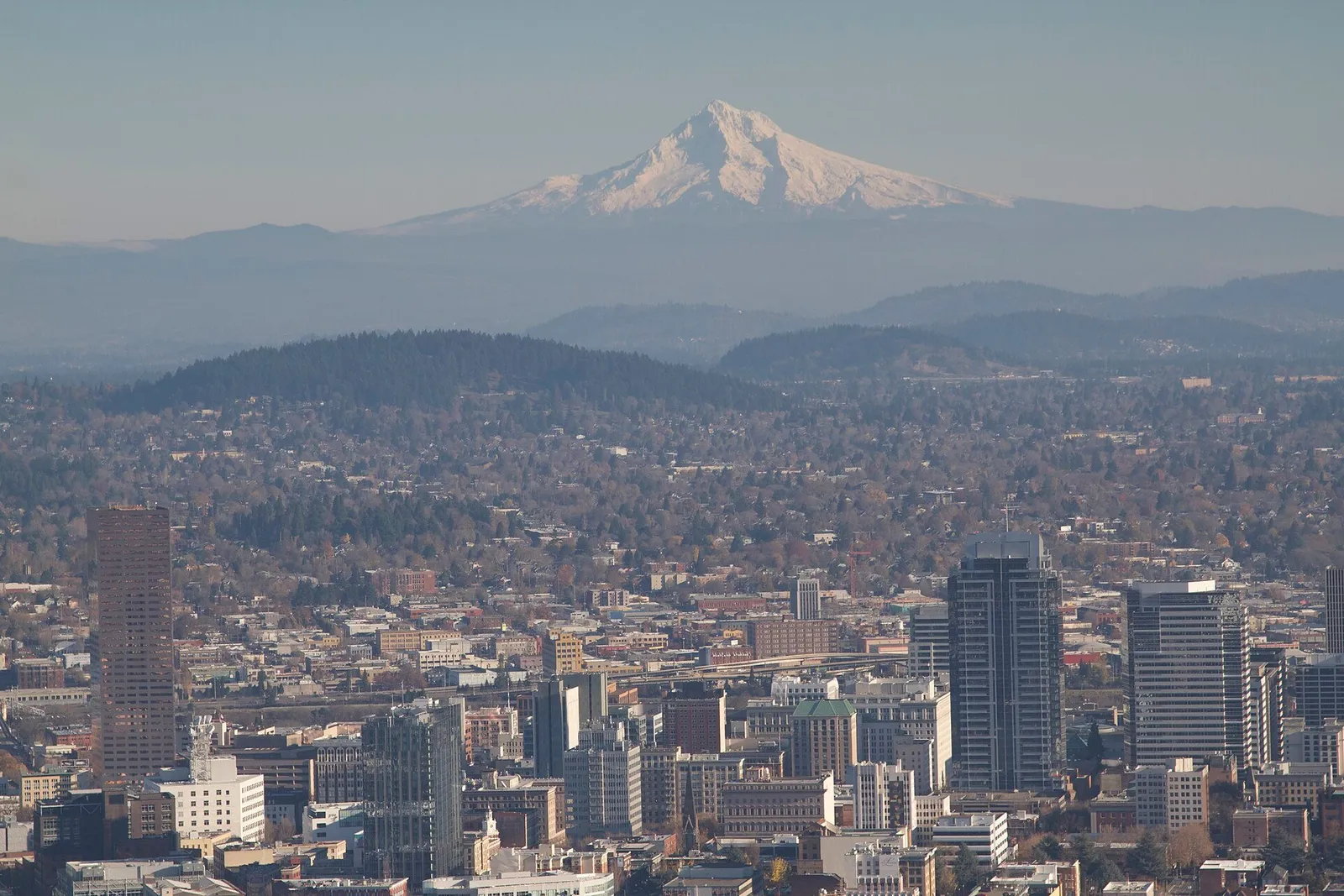
Portland, Oregon is the Pacific Northwest's ideas city, a compact downtown of bridges and bicycles an hour from both the Columbia River Gorge's waterfalls and Mount Hood's ski slopes, and the practical base for seeing both. The core experiences cost little: Powell's City of Books, an entire city block of it, the food cart pods that replaced the food court, Lan Su's Ming-dynasty garden in Chinatown, and the International Rose Test Garden's 10,000 bushes in Washington Park, free since 1917. Oregon charges no sales tax, which quietly discounts everything, and the light rail runs from the airport to downtown in 40 minutes for $2.80. Portland suits independent travelers who want city pleasures and serious nature in one trip: coffee, beer, books, and a waterfall before lunch. Summer is the blue-sky season; come June through September, or accept the drizzle that locals consider the personality.
Top sights at a glance
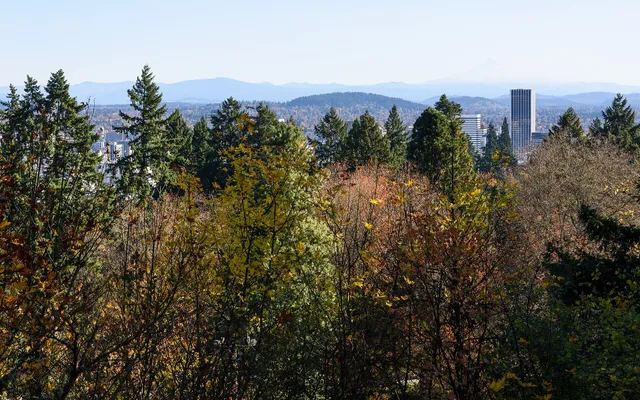
Washington Park
The 410-acre hillside park west of downtown holding the city's best pair of gardens: the Portland Japanese Garden, 12 acres of five garden styles on a terraced hillside widely called the most authentic Japanese garden outside Japan, and the International Rose Test Garden, free since 1917, where more than 10,000 bushes of 600 varieties bloom May through October in the city that has made the rose its civic flower. The park adds the Oregon Zoo, a children's museum, the Hoyt Arboretum's 12 miles of forest trail, and the Portland Japanese Garden's $22.50 adult admission, all stitched by a free seasonal shuttle.
Good to know · The Japanese Garden runs $22.50 for adults as of October 2026 (japanesegarden.org); the Rose Test Garden is free and peaks in June. Take MAX Blue or Red to Washington Park station and the park shuttle, which circles all the sites, in summer; parking inside fills by mid-morning on weekends. Pair the gardens with a Hoyt Arboretum loop for a full easy day.
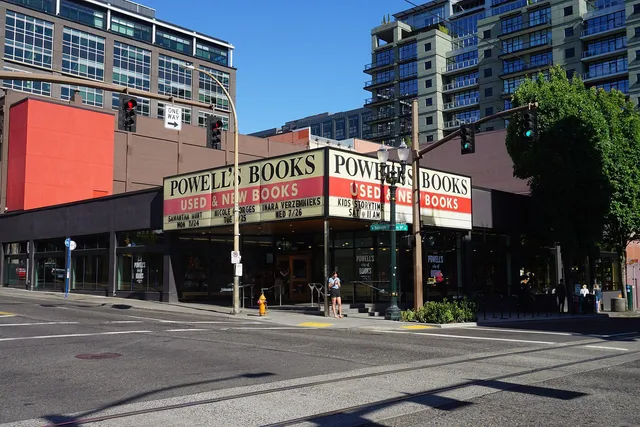
Powell's City of Books
The largest independent new-and-used bookstore in the world, occupying a full city block at the edge of the Pearl District, its nine color-coded rooms holding roughly a million volumes and a map issued at the door like a hiking trailhead. Used and new copies shelve together at the same title, browsers spend hours, and the Rare Book Room upstairs holds the collector end. Powell's is the city's living room, the thing Portland was being before it was a meme, and the single most reliably recommended stop in town.
Good to know · Free to enter, open daily with long hours (check powells.com for current times); grab the store map at the entrance and pick one color room if your time is short, the Rose Room's literature is the classic wander. The coffee shop inside is the rest stop. Downtown parking runs meters and garages; the streetcar and MAX both stop within blocks, and the Pearl's galleries make the walk outward worthwhile.
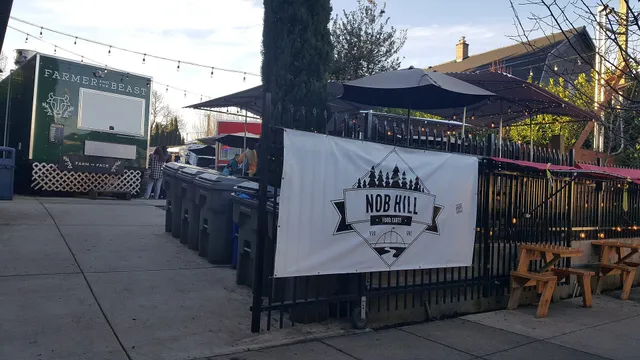
Food Cart Pods
Portland's food cart culture runs on pods: permanent clusters of trailers and tiny kitchens sharing picnic tables, dozens of pods across the city holding hundreds of carts serving poke, Ethiopian, birria, Georgian khinkali, and the city's unofficial sandwich of fried chicken and pickles. Unlike food trucks elsewhere, most Portland carts stay put, so a pod is a food court without the food court, where a group can each want a different continent and eat at one table. The best pods sit downtown and across the river on the eastside, and the scene feeds the city's restaurant ranks, carts graduate to brick and mortar constantly.
Good to know · Lunch over dinner for the widest open selection; most carts close mid-afternoon and many run cash-free, card-tap friendly. The city's food cart guide at travelportland.com maps current pods, a moving target as real estate reshuffles them. Budget US$12-18 a plate; the picnic tables are first-come, and rainy-day strategy is picking a pod with covered seating, of which the downtown and eastside flagship pods both have.
Lan Su Chinese Garden
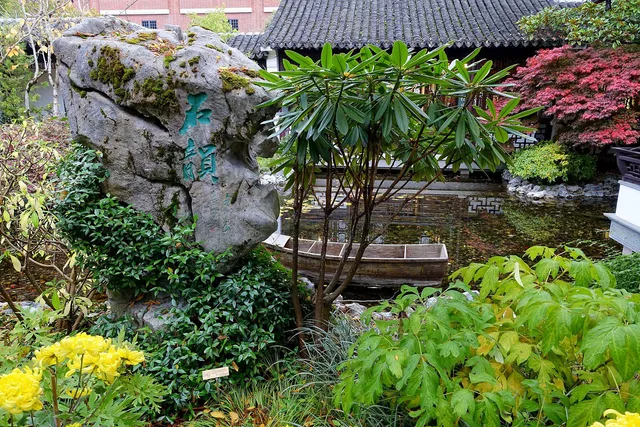
A full-spectrum Suzhou-style walled garden built in 1999-2000 by artisans from Portland's Chinese sister city, an entire city block in Old Town Chinatown transformed into lake, pavilions, a teahouse, and the scholarly landscape of a Ming dynasty estate. The rocks are Lake Tai limestone, the plants are the Chinese scholar's canon of pine, bamboo, and plum, and the 'leaks' in the walls frame courtyard views the way a scroll paints them. It is small, dense, and the most transported-feeling hour in downtown Portland, with tea service in the two-story teahouse overlooking the lake.
Good to know · Admission is $18 for adults, $17 seniors and students, $15 youth 6-18, children 5 and under free, per lansugarden.org. An hour does it, two with tea; the garden sits two blocks from the MAX and the northern streetcar loop, making it the natural pairing with Powell's and Old Town's blocks. Late afternoon light on the lake and the teahouse's window tables are the connoisseur timing.
Columbia River Gorge
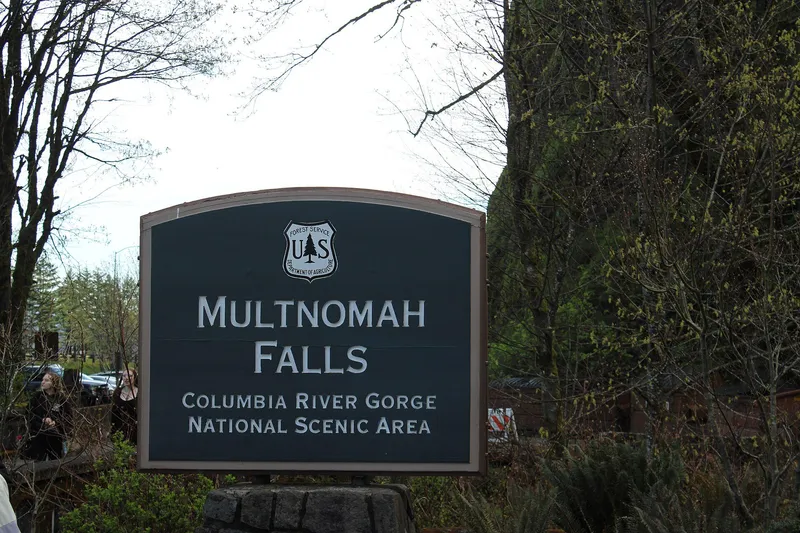
The river's 4,000-foot canyon through the Cascades begins 20 minutes east of downtown, a National Scenic Area holding the densest waterfall corridor in the country: Multnomah Falls, Oregon's tallest at 620 feet with its 1914 lodge and arched Benson Bridge, plus Latourell, Shepperd's Dell, Wahkeena, and Horsetail Falls stringing the Historic Columbia River Highway. Upstream, Hood River sits at the gorge's windsurfing heart an hour out, with Mount Hood's south side, orchards, and the Fruit Loop behind it. It is the region's one unmissable day trip, and the falls corridor's access now runs on a timed permit in the busy season.
Good to know · A timed-use permit is required to visit Multnomah Falls from I-84's Exit 31 between May 22 and September 7 (2026 season), a $2 nonrefundable reservation per vehicle booked on recreation.gov; permits apply to visits between 9 a.m. and 6 p.m., are capped at two per day per visitor, and release 14 days ahead, with a share held free at the Gateway information center. Slots' same-day availability is thin in July and August. Outside those dates just come early: 8 a.m. beats the tour buses year-round. Pair the falls with the Historic Highway's smaller falls and the Hood River fruit stands for the full day, and check road and trail statuses, gorge trails close periodically for fire recovery.
Portland is the city American urbanists cite when they want to prove a city can be humane: streetcars, light rail from the airport, bike lanes that go somewhere, a forest park bigger than Central Park on its west hills, and a downtown you can cross on foot between bookstores. It is also the practical base for the Pacific Northwest’s greatest hits, the Columbia River Gorge’s waterfalls 20 minutes east, Mount Hood an hour southeast, the coast ninety minutes west, which makes it the rare big city that works as an only destination for a first Northwest trip. The city’s decades as a magnet for the creative and the outdoorsy left it with the deepest coffee, beer, and food-cart cultures in the country. The jokes about it are all true, and the jokes are not the reason to come; the reason is that it all actually functions.
A Bit of History
Portland began in 1843 as a stump-town clearing called The Clearing, at the Willamette’s last good crossing before the Columbia; its founders flipped a coin in 1845 to choose the name, Portland beat Boston by the side of a copper penny now displayed at the historical society. Timber made it, the Oregon Trail ended here, and the city’s Burnside-side skid row and shipping docks fed a port economy that peaked mid-century. The 1905 Lewis and Clark Exposition put it on the map, and the 1970s urban growth boundary, a legal ring around sprawl that still holds, made it the country’s great planning experiment: density inside, farmland outside.
The modern city is the result: about 650,000 people in the city proper, neighborhoods of bungalows and corner bars, and a 1990s-to-now run as the young creative magnet that produced the television parodies. Visitors see the residue honestly, the buses and the bikes and the bookstores, and also a downtown that has struggled post-2020 like every West Coast downtown, which locals will discuss with you at length if prompted.
Culture & Daily Life
Portland’s culture is participation. Weekends run farmers markets, trail runs in Forest Park, and the bike paths; the city holds more breweries than any city its size on Earth, and the beer is not the point so much as the third place, the taproom as living room. Two regulatory facts define the visitor experience. First, Oregon has no sales tax, so the sticker price is the price, a fact worth building a shopping list around (the full picture at /guides/shopping-in-america/). Second, cannabis is legal in Oregon for adults 21 and over, sold in licensed shops, but consumption is private-only, never on the street, in parks, or across state lines, the same rules as Colorado.
Rain is the culture’s other half. From October through May the sky runs drizzle-gray, locals do not use umbrellas (hoods and denial), and everything green gets greener; June through September deliver the Northwest’s best weather anywhere, dry, low-eighties, light until ten. Pack layers year-round, the same July day can run 60 degrees and rain in the gorge and 95 downtown. The city’s street homelessness is visible downtown, as in every West Coast city; ordinary awareness is the rule, not anxiety.
Nature & the Outdoors
Forest Park, 5,200 acres of Douglas fir on the west hills above downtown, is one of the largest urban forests in the United States, its 80-plus miles of trail including the 30-mile Wildwood, and it is the locals’ daily cathedral; enter from the MacLeay Park trailhead for the classic Balch Creek canyon walk to the Stone House. Washington Park adds the gardens and zoo; Mount Tabor, an extinct volcanic cinder cone in the eastside, gives the free sunset view over the skyline; and Council Crest, the city’s high point, tops it. The Willamette River’s bridges make the waterfront loops, and the Esplanade’s floating walkway on the east bank is the morning run.
Beyond the city the gorge and Mount Hood define the weekend, waterfalls May through October, ski season November through April on Hood, and the coast’s Haystack Rock at Cannon Beach ninety minutes west, see /destinations/seattle/ for pairing the whole region. Outdoor risk here is real but mundane: gorge trails carry waterfall-spray slickness and cliff edges, the Columbia runs cold and fast, and cell service dies in the canyons, so file your plan and sort medical insurance at /guides/health-insurance-safety/ before the hike day.
Food & Drink
Portland eats and drinks with the seriousness of a city twice its size and the prices of one half it. The food cart pods are the signature (above), but the brick-and-mortar scene ranges from counter kamameshi and poutine to a tasting-menu tier that holds national rankings, and the city’s doughnut shops, two of them world-famous with lines to prove it, anchor the tourist diet. Pacific Northwest ingredients rule: salmon, Dungeness crab in season, berries in July, hazelnuts, mushrooms, and a farm network that makes the farmers markets a religion. Expect US$12-18 cart plates, US$20-40 casual restaurant mains, US$80-150 tasting menus.
The drink culture is the deepest layer: the beer scene holds a couple of hundred breweries metro-wide with the IPA as civic dialect; natural wine bars cluster on the eastside; cider distills the orchard country; and the coffee roasters, third-wave pioneers, mean a pour-over is never far. Tipping runs 18-22 percent at tables, $1-2 a drink at bars, carts often have tip screens, 10 percent is plenty there, full arithmetic at /guides/tipping-and-sales-tax/. And again, no sales tax, the menu price plus tip is the whole bill.
Top Sights
Washington Park
The hilltop park is really four or five visits in one. The Japanese Garden is the crown: five garden styles, flat strolling garden to sand-and-stone dry landscape, terraced above the city with a view of Mount Hood that the design borrows like a borrowed scroll painting, and a cultural village of buildings added in 2017. Down the hill the Rose Test Garden, free, blooms over 600 varieties from May to October with its Shakespeare garden and its gold-medal winners’ row, the place to smell the city’s official flower in the City of Roses. Between them run the Hoyt Arboretum’s forest paths, the zoo, and the children’s museum, all on the free summer shuttle from the MAX station in the deepest transit-served park in America.
Practicalities: the Japanese Garden costs $22.50 adult as of October 2026, book timed tickets at japanesegarden.org in summer; the roses and arboretum are free; the shuttle runs on the summer calendar, check washingtonparkpdx.org. Half a day covers a garden plus the arboretum walk; make it a full one with the zoo for families. The park sits 20 minutes west of downtown by MAX, and the order that works is roses first, arboretum second, Japanese Garden last, its late-afternoon light and tea service are the finisher.
Powell’s City of Books
A city block, a million books, and the color-coded rooms that have eaten more visitor afternoons than any attraction in Oregon. The layout is the charm: enter at the corner entrance under the old Powell’s sign, pick up the map, and accept that you will be late for everything afterward. The Pearl Room holds literature and the rare book room’s glass cases; the Red Room, children’s and the graphic novels; the Gold Room, science fiction’s long wall. New and used copies of the same title shelve together, so the price sticker is a slot machine, and the staff picks shelf-talkers are a citywide literary institution.
Free, open daily, hours at powells.com; the coffee shop in the middle is the regrouping point. The store anchors the Pearl District’s walkable blocks of galleries and boutiques, and the streetcar stops at its door. Two rules: check your bag at the desk if asked, and give yourself a hard stop, nobody leaves on time. The rare book room’s short hours make it the first check for collectors.
Food Cart Pods
The pods are Portland’s dining room. The model is stable, permanent clusters of purpose-built carts on a shared lot with shared picnic tables and fire pits, so unlike a roving truck scene, you can plan a lunch around one. The flavors run global because the model priced immigrant kitchens into ownership: a cart costs a fraction of a restaurant, so the Oaxacan mole lady and the Khmer noodle cart and the Georgian baker operate side by side. Downtown’s pods cluster near the Alder and Ankeny blocks and the 10th and Alder corner legacy; the eastside’s pods, on Hawthorne, Division, Alberta, and the inner industrial streets, hold the local’s lunch scene and the covered seating.
Show up hungry and do laps before ordering, the pods reward comparison; order at the window, they text you when ready, and budget US$12-18 a plate. Travel Portland’s food cart page (travelportland.com) maintains the current pod map, pods do move as lots redevelop. Lunch, 11:30 to 2, is peak selection; some carts sell out, most close by late afternoon, and the best rainy-day pods have the covered halls.
Lan Su Chinese Garden
The garden is one city block of transported Suzhou, and the block disappears once you are inside the wall. Built 1999-2000 with 65 artisans from Suzhou, Portland’s sister city, it holds Lake Zither, the moon-encircling bridge, the Knowing the Fish pavilion, and the teahouse, two stories of windows over the water where the tea service runs the full ceremony light. The poetry of the place is in the borrowed views, every wall leak and lattice window frames a composition of pine, rock, and water, and the plantings follow the Chinese scholarly canon, the Three Friends of Winter included. The mission wing tells the story of Portland’s Chinese community, one of the oldest in the West, with an honesty about the exclusion era that most garden museums skip.
Admission is $18 adult, $17 senior and student, $15 youth, under 6 free, at lansugarden.org; an hour covers the garden, add thirty minutes for tea. The garden sits in Old Town two blocks from MAX, pairing naturally with Powell’s and the downtown pods. Chinese New Year and the autumn moon festival bring performances; check the events calendar if your dates align.
Columbia River Gorge
The gorge is why a lot of people fly to Portland at all. Twenty minutes east of downtown the Columbia saws through the Cascade Range in a canyon 4,000 feet deep, and the historic highway its engineers built in 1913-1922 to show off the scenery strings its waterfalls: Latourell’s basalt column plunge, Wahkeena’s 242-foot ribbon, Multnomah’s double-tiered 620-foot drop that makes it Oregon’s tallest, with the Benson Bridge dead center between the tiers and the Multnomah Falls Lodge, a 1914 timber lodge, at its base. The hike to the bridge is a quarter mile of paved path; to the top of the falls it is a mile and a half of switchbacks with the gorge unfolding behind you.
The access rules as of 2026: a timed-use permit booked on recreation.gov ($2 per vehicle) is required for the Exit 31 falls visit between May 22 and September 7, with slots released in advance; before 9 a.m. or after 3 p.m. shoulder visits and the off-season need no permit. Take the historic highway itself, not just the freeway, Vista House at Crown Point is the viewpoint above it all, and continue to Hood River for lunch, the windsurfers, and the Fruit Loop’s orchards behind town. Trails in the gorge’s fire-scarred areas close periodically; check the Forest Service status before committing. One practical caution: the crowds are morning-early or nothing in July, and the photo you want of Benson Bridge without forty strangers in it exists only before 8:30 a.m.
Getting There & Around
Portland International (PDX) is 20 minutes northeast of downtown and consistently rated among America’s best-run airports; the MAX Red Line runs terminal to downtown in about 40 minutes for a $2.80 adult fare ($5.60 caps your day on TriMet), with trains every 15 minutes most of the day. Amtrak serves Union Station downtown on the Cascades (Vancouver BC-Seattle-Portland-Eugene) and Coast Starlight (LA-Seattle) lines. I-5 and I-84 meet here, and the drive down the Columbia from the east is one of the country’s great interstate approaches.
You do not need a car in the city: MAX, the streetcar, buses, the Biketown bike-share, and feet cover downtown and the eastside neighborhoods. A car matters for the gorge’s full length, Mount Hood, and the coast; rent one for those days only, parking and car-share apps fill the gaps. Driving note: Oregon’s famous no-self-pump gas law has loosened, but most stations still pump it for you, a small theater worth experiencing once.
Where to Stay
Downtown and the Pearl District put you walkable to Powell’s, Lan Su, the pods, and the streetcar, with the Pearl’s converted-warehouse boutiques the quieter pick of the two; central-city hotels add parking fees that are worth checking before booking. The eastside, across the Willamette, is where the city actually lives: Lloyd/Convention Center for MAX convenience, and the inner eastside, Belmont, Hawthorne, Division, Alberta, for the neighborhood stays, indie hotels and motels reborn with good coffee, a 10-20 minute bus or rideshare from downtown. July through September is the price and availability peak, book two months out for summer weekends, and Oregon’s lodging taxes run high with no sales tax to offset them, so run the itemized total through /tools/real-price-calculator/ before you commit.