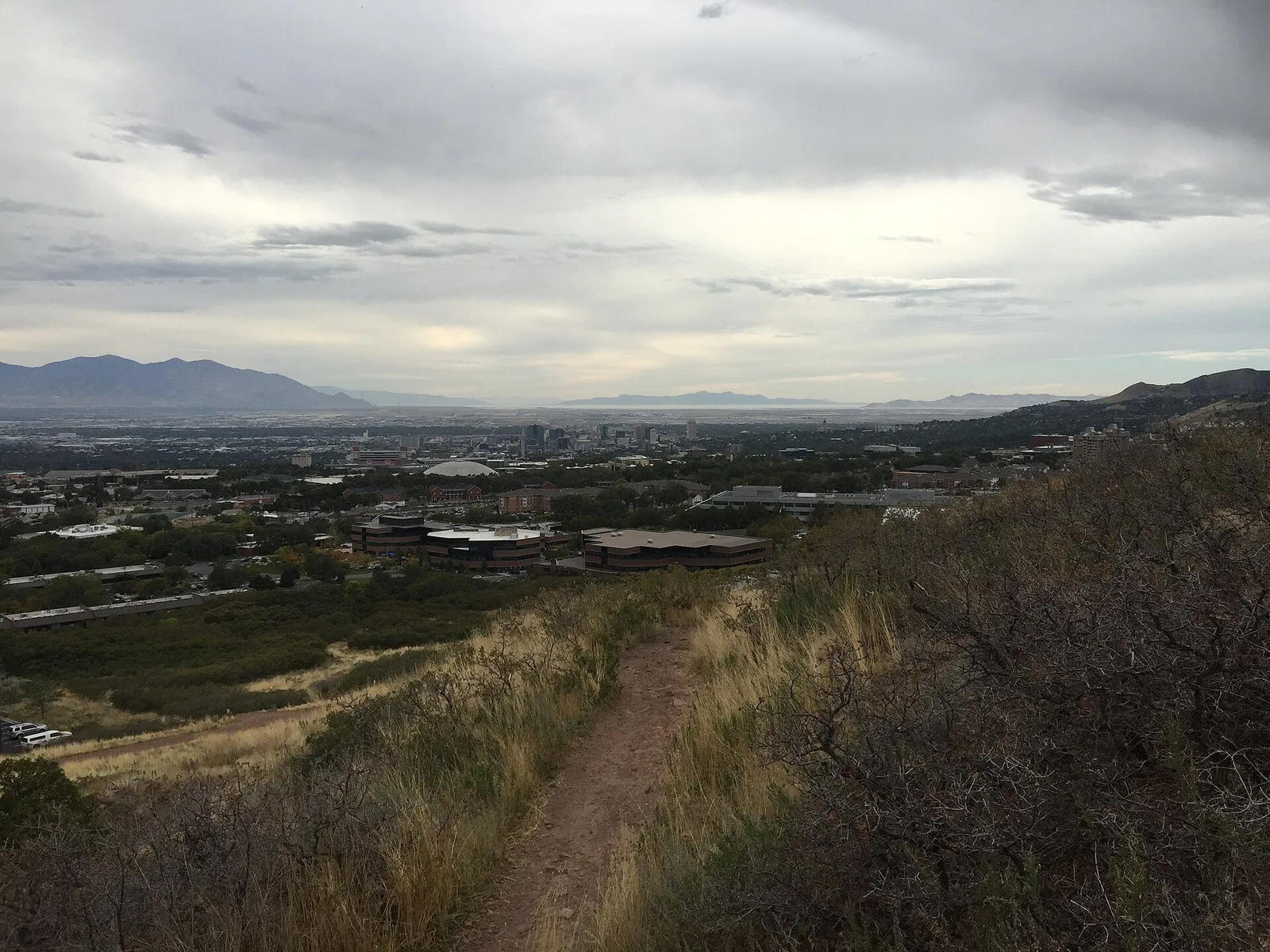
Salt Lake City is the LDS church's headquarters and the practical capital of the Mountain West, a grid of wide streets under 11,000-foot Wasatch peaks, 15 minutes from a major airport and half a day's drive from Utah's five national parks. The core experience is Temple Square, the church's world center, whose granite temple emerges from a multi-year restoration with a public open house running April 5 through October 1, 2027, a once-in-a-century chance to see inside; the square itself, the tabernacle's choir, and the adjacent state capitol are free now. Add the Natural History Museum of Utah's dinosaur halls, bison herds on Antelope Island in the Great Salt Lake, and Park City's ski town main street 35 minutes up the canyon, and the city works as either a stop or a base. It suits road-trippers, skiers, families, and anyone heading to the Mighty 5; give it two days, and time your temple expectations to 2027.
Top sights at a glance
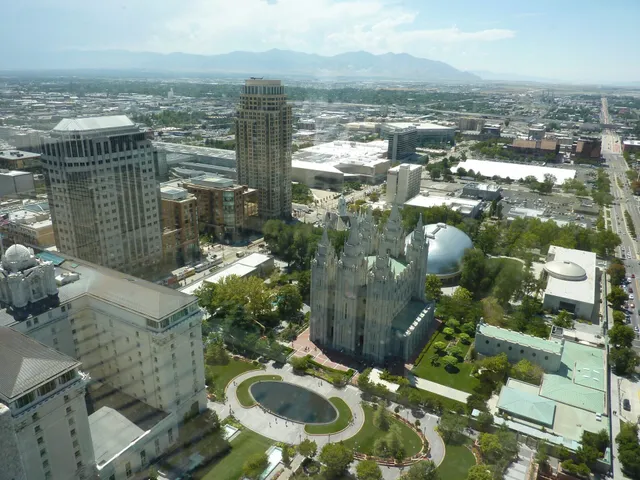
Temple Square
The 10-acre world headquarters of the Church of Jesus Christ of Latter-day Saints, its centerpiece the six-spired granite Salt Lake Temple, 40 years in the building in the 1800s, now emerging from a seismic restoration that began in 2019. The square's other icons, the domed 1867 Tabernacle home of the Tabernacle Choir, the Assembly Hall, and the visitor pavilions, sit among re-landscaped plazas, and the Conference Center next door seats 21,000 for the church's gatherings. The headline for this decade: the temple itself, closed to the public since 2019, opens for a once-in-a-lifetime public open house, Rejoice in Christ, April 5 through October 1, 2027, per templesquare.org.
Good to know · Free to enter the square and its visitor centers, and the temple open house tickets (2027) are free but must be reserved at templesquare.org, where dates and entry windows are posted. The Tabernacle Choir's Thursday rehearsal and Sunday broadcast are traditionally open to the public; confirm current times on the choir's own site before going. Modest dress is appreciated, missionaries of many languages guide for free, and photography rules vary by building, so ask at the pavilions.
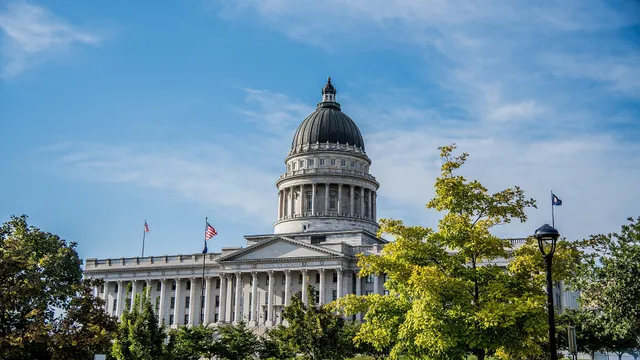
Utah State Capitol
The 1916 neoclassical capitol sits on a hill 500 feet above downtown, its Corinthian portico and 165-foot rotunda dome made of Georgia marble and Utah granite, visible from most of the valley. The interior runs grand and free: the rotunda's murals and frieze of Utah history, the governor's ceremonial office, chambers of the house and senate in cherry and oak, and a Hall of Governors lined with busts. The grounds add Korean and Vietnam memorials and a view over the whole city grid to the Great Salt Lake's plain.
Good to know · Free and open daily, with free guided tours typically on the hour on weekdays (check the schedule at utahstatecapitol.gov); self-guided tour brochures cover it in 45 minutes when tours are off. Walk up from Temple Square in 20 minutes or drive and park free on the hill. Pair it with Memory Grove Park below it, the canyon-mouth trail locals use for their evening loop.
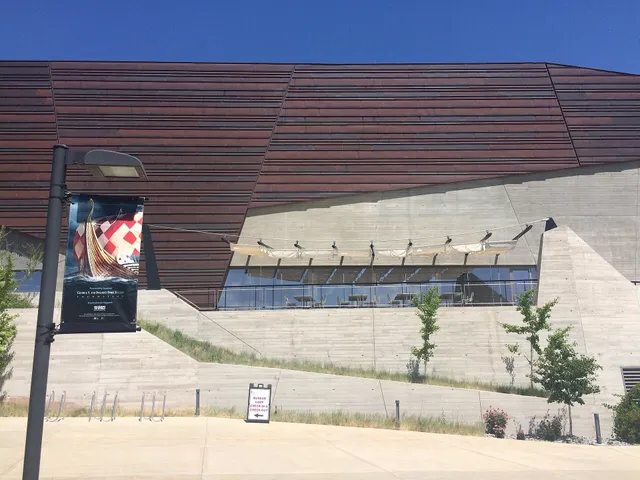
Natural History Museum of Utah
The Rio Tinto-centered museum on the shore of the Bonneville shoreline trail above the university campus, a copper-skinned building terraced into the hillside whose galleries tell Utah's whole natural story: the world's finest collections from dinosaur quarries like Cleveland-Lloyd, where allosaurus bones pile in predator abundance, the First Peoples galleries with a genuine respect for contemporary tribes, and the Land galleries explaining the basin-and-range and lake that shaped everything. It is the best rainy-day or family stop in the city, and the trailhead outside adds a free foothills walk.
Good to know · Open 10 a.m. to 5 p.m. daily, Wednesdays to 9 p.m., last admission 30 minutes before close; admission is $24.95 for adults, $22.95 for seniors 65+ and young adults 13-24, $20.95 for children 3-12, and timed tickets are worth booking at nhmu.utah.edu on weekends and in summer. Budget 2-3 hours. Take TRAX red or blue line to University and transfer, or drive 15 minutes with paid parking; the Bonneville Shoreline Trail outside gives the city-skyline-and-Oquirrh view in ten minutes' walk.
Antelope Island State Park
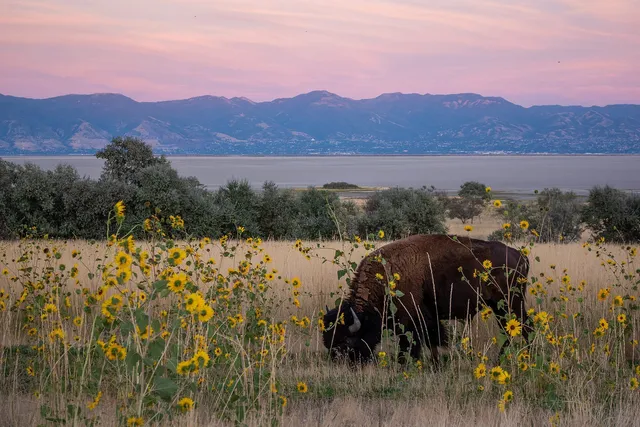
The Great Salt Lake's largest island, 28 square miles of grassland and basalt ridges reached by a causeway an hour north of downtown, home to one of the nation's oldest and largest public bison herds, 500-700 animals, plus pronghorn antelope, bighorn sheep, and the lake's brine flies and shrimp that migratory birds work by the million. The scale is preposterous: white salt flats, an inland sea, and mountains with no one on them, an hour from a state capital. Sunset on Bridger Bay, with the lake's surface mirroring pink, is the region's quiet showstopper.
Good to know · Day-use is $20 per vehicle ($15 motorcycle, walk/bike-in less), the park is open 6 a.m. to 10 p.m. daily except Thanksgiving and Christmas, per stateparks.utah.gov. The annual bison roundup in late October, with 2026 push dates October 24 and working October 27-29, is a public spectacle worth timing. Note two current realities: the main boat ramp is closed for low water, and rideshare apps will not pick up on the island, so drive yourself or take a tour; bring water and layers, the island runs hotter and windier than town.
Park City
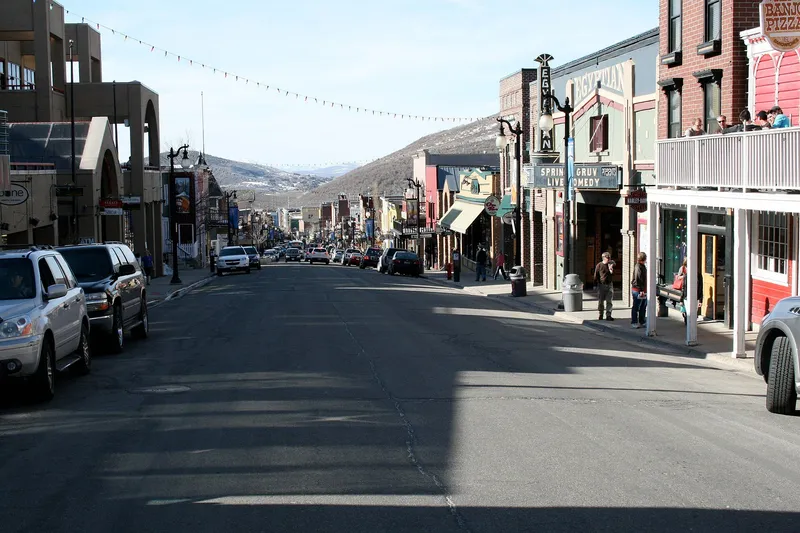
The silver-mining town turned ski resort an easy 35-40 minutes up I-80 and the canyon, whose Historic Main Street, lined with 1880s false fronts now holding galleries, bistros, and the Sundance Institute's home base, doubles as Utah's most walkable evening. In winter three resorts, including the 2002 Olympics' venues at Park City Mountain and Deer Valley, hang off the town's edges; in summer the lifts run for alpine slides and mountain bikers, and the Sundance Film Festival takes the whole place over each January. It is the city's mountain playground and the state's priciest postcode, worth the drive any season.
Good to know · Free buses loop the town and base areas once you park; Main Street's garages run paid, and winter weekends fill early. In ski season compare the three hills' rules carefully, one is snowboard-free, and buy lift tickets days ahead online, window prices are the sport's highest, with the full breakdown at /guides/winter-and-skiing/. Summer weekday mornings give you Main Street nearly alone; festival-time January books the town out months ahead.
Salt Lake City is the city non-Mormon travelers expect to find strange and instead find pleasant: a clean, gridded, mountain-framed capital of about 200,000 where the church’s monumental core sits next to a normal downtown of coffee, breweries, and a surprisingly good food scene, and where the Wasatch’s 11,000-foot wall sits so close to the east side that neighborhoods have canyon trailheads. Founded by Brigham Young’s pioneers in 1847 on a desert lake’s shore, it remains the Latter-day Saint church’s world headquarters, which gives it the Temple Square, the choir, and the genealogy library, and it doubles as the region’s logistics hub: the airport is 15 minutes from downtown, five national parks sit three to five hours south, and ten ski resorts sit within an hour. Two days here, between a landing and a road trip, is the standard pattern, and it is a good one.
A Bit of History
Mormon pioneers arrived in July 1847, Young reportedly satisfied at the view with the words “This is the right place”, and within days had platted a city of wide streets and 10-acre blocks around a temple block at the center, a plan that explains everything about Salt Lake’s spread-out feel today. The church built the temple over 40 years of granite hauled by oxen from Little Cottonwood Canyon, drove the settlement of the Intermountain West, and fought the federal government to a statehood compromise in 1896 that banned polygamy. The 1869 transcontinental railroad joined at Promontory Summit an hour and a half north, the Golden Spike now a national historical park, converting the remote theocracy into a crossroads.
The twentieth century brought war industries, copper mining’s century-scale hole in the Oquirrhs, the 2002 Winter Olympics that built the region’s sport infrastructure, and the tech-and-finance corridor (“Silicon Slopes”) that now fills the southern suburbs. The Great Salt Lake’s historic low levels of recent years have made the city an international case study in Western water politics; the lake’s dust is the issue locals will tell you about unprompted.
Culture & Daily Life
Salt Lake runs on a live-and-let-live split personality the visitor meets immediately: the church’s sober core, no coffee or alcohol in the doctrine, and around it a young, outdoor-industry city with a real beer scene (Utah’s alcohol laws are the country’s most distinctive, low-alcohol beer in groceries, wine and spirits only in state stores, details at /guides/alcohol-laws/). The grid is the daily geography: streets are named for their distances in blocks from Temple Square, so “700 East 2100 South” is an address and a map in one, and the blocks are long, so distances that look walkable are not.
Practical notes: the city is genuinely family-friendly and early-to-bed by big-city standards, Sunday closures are more common than on the coasts, and the inversion, the winter smog that pools in the valley under high pressure, is worth knowing about if you have respiratory issues and visit in January. Tipping runs 18-22 percent with the arithmetic at /guides/tipping-and-sales-tax/; Utah’s state and local sales tax combines to about 7.5 percent in Salt Lake City.
Nature & the Outdoors
The city’s setting is the outdoor story. The Wasatch Front rises directly east, City Creek, Red Butte, Emigration, and Parley’s canyons stack trailheads within 15 minutes of downtown, and Snowbird, Alta, Brighton, and Solitude sit 30-45 minutes up Little and Big Cottonwood, the “greatest snow on earth” pitch being a trademarked phrase and also, in the dry powder months of January and February, an argument. The Bonneville Shoreline Trail traces the ancient lake’s beach above the city for a runnable ridge view. West across the valley, the Oquirrh Mountains and the Great Salt Lake’s flats run to Antelope Island (above) and the Bonneville Salt Flats, an hour and a half beyond.
Weather is four real seasons: hot dry summers, brilliant fall colors up the canyons in late September and October, snowy winters with the world’s best powder claims, and muddy glorious springs. Altitude is mild (the city sits at about 4,300 feet), but the canyon resorts run to 10,000-plus, so hydrate and pace day one, and sort medical insurance before any ski or hiking trip at /guides/health-insurance-safety/. For the full ski picture, see /guides/winter-and-skiing/.
Food & Drink
Salt Lake eats better than its reputation, which spent a century being “no caffeine, no fun”. The canon runs regional: funeral potatoes (cheesy hash-brown casserole) as the potluck institution, fry sauce with everything fried, Utah scones as fried dough rather than the English biscuit, pastrami burgers, and a genuinely excellent Asian food scene along State Street’s old corridor. The Sugar House and Central 9th neighborhoods hold the chef-driven rooms, the downtown carts cluster around Gallivan Plaza, and the eastside’s coffee roasters fuel the outdoor-industry workforce. Salt Lake’s combined sales tax sits around 7.5 percent, so the register math is mild by big-city standards.
Drinking requires the rules brief: breweries and bars operate normally inside, but grocery stores sell only low-alcohol beer, and wine and spirits live in state stores (DSHW) with Sunday closures at many locations; the full breakdown is at /guides/alcohol-laws/. Expect US$12-25 casual mains, US$60-100 with drinks at the top rooms, and tipping at the standard 18-22 percent.
Top Sights
Temple Square
The square is the reason the city exists where it does, and the 2019-2026 restoration has been the church’s megaproject: the temple on new seismic base isolators, its stone cleaned and pinnacles rebuilt, the plaza re-graded into a garden campus, and two new visitor pavilions opened to carry the story. The visiting experience is free and remarkably welcoming: volunteer missionaries from dozens of countries guide the grounds, the Tabernacle’s acoustically legendary dome hosts the choir whose Thursday rehearsals and Sunday broadcasts have been public institutions for a century (confirm current times on the choir’s site), and the Conference Center across North Temple seats 21,000 with a rooftop meadow, genuinely, planted in native grass.
The timing story is the headline: the temple itself, closed to all but construction crews since 2019, opens to the general public for the Rejoice in Christ open house from April 5 to October 1, 2027, with free timed tickets at templesquare.org, after which it will be rededicated and reverts to church-members-only access. So: before April 2027, you see the square, the pavilions, and the temple’s exterior and grounds; between April and October 2027, you can walk the interior; after that, the exterior again for another century. If your trip is flexible, this is the rare tourist fact that can set your dates.
Utah State Capitol
The hill north of the square holds the statehouse, free, open daily, and among the most accessible capitols in the country: no metal detectors, no lines, just the rotunda and its 165-foot dome, the murals of Brigham Young and the railroad, and the chambers. The free guided tours, weekdays on the hour as a rule, cover the building’s survival of the fault-line politics beneath it, the retrofit after the 2020 Magna earthquake being fresh evidence. The Hall of Governors and the beehive, the state’s cooperative symbol everywhere you look, carry the civics lesson.
The grounds matter as much as the building: the memorial groves, the view down State Street’s dead-straight arrow to the lake, and Memory Grove’s canyon mouth below. Walk it from Temple Square in 20 minutes uphill for the full approach, or drive and park free. Sunset from the east steps, with the city grid going gold and the Wasatch going pink, is the local postcard.
Natural History Museum of Utah
The state’s natural history museum, on the university’s eastern bench, is the field-trip version of everything Utah is famous for. The dinosaur galleries are the heart: Utah’s Morrison Formation is the world’s richest late-Jurassic ground, and the museum’s allosaurus, stegosaurus, and the Cleveland-Lloyd quarry’s predator puzzle, why one mud hole holds dozens of carnivores, display like a detective story. The First Peoples galleries work through the region’s Native nations with contemporary voices, the Land galleries explain the basin-and-range, and the Past Worlds terrace frames it all against the actual mountains.
Practicalities: 10 to 5 daily (Wednesdays to 9), last entry 30 minutes before close, adult tickets in the low-to-mid twenties, book timed entry at nhmu.utah.edu for weekends. Two to three hours does it; add the Bonneville Shoreline Trail outside for the free view. Getting there: 15 minutes by car with paid parking, or TRAX to University plus a short bus or 25-minute uphill walk, so most visitors drive or rideshare.
Antelope Island State Park
An hour north on I-15 and across a causeway, and you are on an island in a salt sea with bison. The herd, 500-700 head, descended from 12 animals brought in 1893, is the park’s spine: you will see them, from the road at buffalo-point distances, and the annual late-October roundup (2026: push October 24, working October 27-29, auction to follow) is the working-cattle spectacle it sounds like. Pronghorn, bighorn, and the birdlife of the Pacific Flyway share the island, Bridger Bay’s beach and white oolitic sand give the surreal swim, and the Fielding Garr Ranch at the south end preserves the island’s ranching century.
The park runs $20 per vehicle for day use, 6 a.m. to 10 p.m. daily except Thanksgiving and Christmas. Two current cautions from the park itself: the main boat ramp is closed for low water, and no rideshare service will pick up on the island, so arrive in your own vehicle or a tour. Bring more water than feels reasonable in summer, when the flies at the shoreline are thick and the shade is scarce, and go for sunset, when the lake’s brine mirror turns the sky’s colors and the bison graze through them.
Park City
Thirty-five minutes up the interstate and canyon, and the mining-era main street runs downhill under its false fronts: art galleries in the old bank, the 1899 social hall, the Sundance catalog store, and a density of good kitchens that would embarrass cities ten times its size. Winter makes it the access point for Park City Mountain, Deer Valley, and the 2002 Olympic venues at Utah Olympic Park, where the summer bobsled runs and museum carry the games’ hardware; summer turns the same lifts into alpine coaster and bike-haul service; and each January the Sundance Film Festival converts every venue in town to a cinema.
Logistics: the town’s free buses loop Main Street and the resort bases, so park once; winter weekend traffic up the canyon argues for early arrival or the ski bus. Main Street’s steep length rewards real shoes. Ticket-buying for the resorts should happen online days ahead at the resorts’ own sites, the walk-up window being the most expensive ticket counter in American skiing, and January’s festival books the town out entirely, see /guides/winter-and-skiing/ for the full mountain math.
Getting There & Around
Salt Lake City International (SLC), rebuilt into one of the country’s newer terminals, sits 15 minutes west of downtown and is a major Delta hub, which is why so many Europe-to-Mountain-West itineraries route through it. TRAX light rail’s Green Line runs from the airport to downtown in about 20 minutes, $2.50 a ride with a $5-a-day cap when you pay by card or the FAREPAY app (current fares at rideuta.com), FrontRunner commuter rail runs north-south along the Wasatch, and the downtown free-fare zone covers the core blocks. Amtrak’s California Zephyr calls once daily each way, the Oakland-Chicago run that doubles as the slowest, loveliest way to arrive from either coast. I-15 and I-80 cross here; Las Vegas is 6 hours south, the Mighty 5 parks spread 3 to 5 hours south, and the city is the natural launch point for /itineraries/utah-mighty-5-road-trip/ or /itineraries/colorado-rockies-loop/.
A car is useful in the city and essential for the canyons, the island, and any parks itinerary; downtown parking is cheap by big-city standards. For ski days, the resort ski buses and the UTA canyon routes take the canyon stress off.
Where to Stay
Downtown, between Temple Square and the courthouse blocks, puts everything walkable and the airport train at the door; the hotel stock is business-priced and convention-sensitive, so check the calendar against your dates. Sugar House, 10 minutes southeast, is the neighborhood pick, independent restaurants and shops around a park, at gentler rates. The airport/North Temple corridor trades scenery for price, and Park City, up the canyon, is the ski-base splurge that makes sense December through March. Utah lodging taxes add roughly 12-13 percent in combined tax, among the nation’s higher room taxes, so run the itemized total through /tools/real-price-calculator/ before booking, and note ski-season weekends and the October LDS general conference weekends fill downtown early.