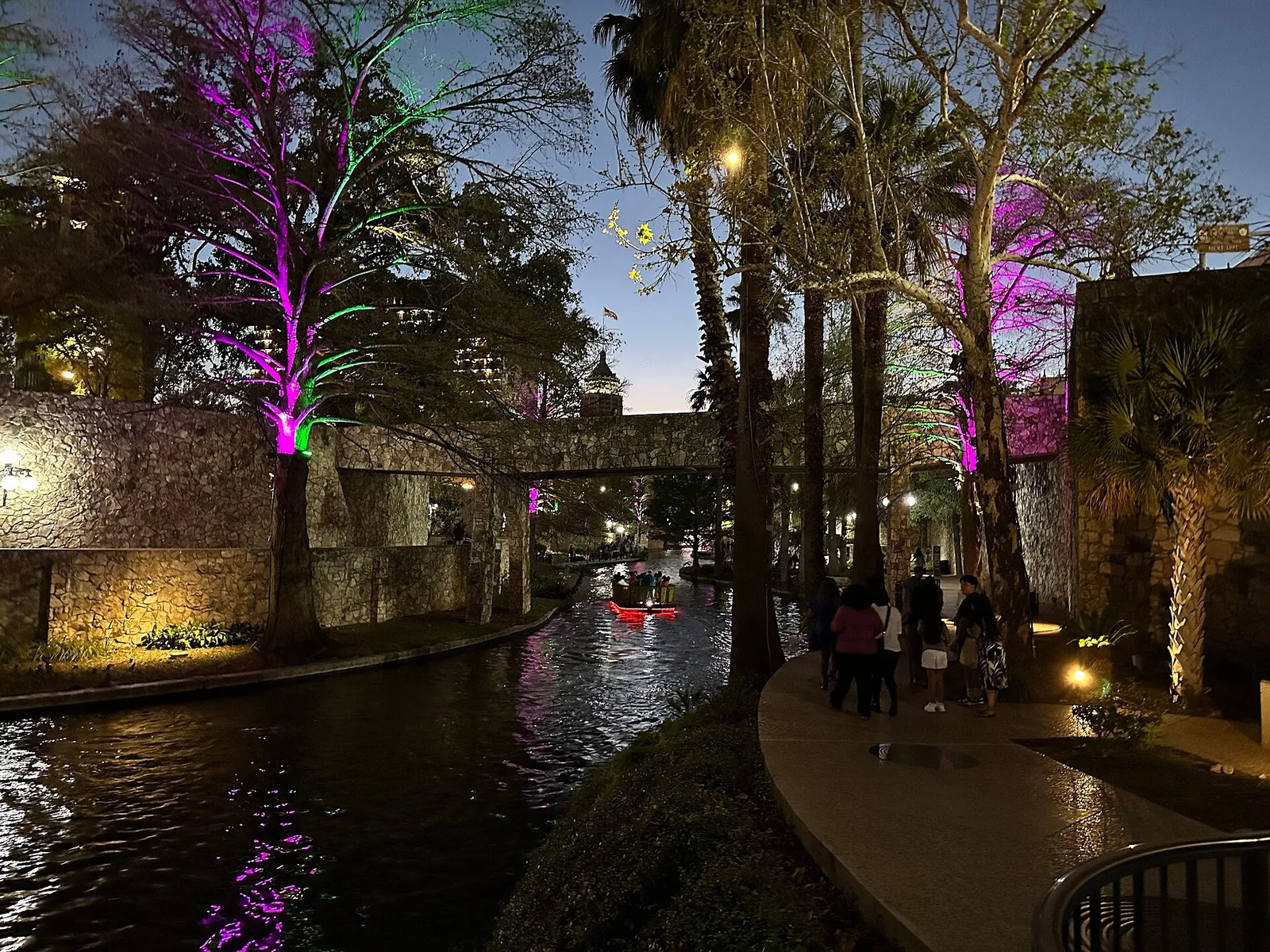
San Antonio is Texas's most historically layered city, a Spanish colonial mission town that became the Republic's legend and now runs a 15-mile river corridor through downtown. The core experiences are the River Walk's stone banks and barges, the Alamo's free-but-reserved church, and, the real sleeper, the four other missions strung south along a hike-and-bike trail as a UNESCO World Heritage site, all free. Add the Pearl brewery district's food scene, a Japanese Tea Garden that costs nothing, and puffy tacos and breakfast tacos at serious Tex-Mex prices, and the city lands as one of America's best-value city breaks. San Antonio suits families, couples, and first-time Texas visitors; summer is seriously hot, so February-April and October-November are the kind months, and the April Fiesta festival is the calendar peak. Two full days cover it well, three with the missions at walking pace.
Top sights at a glance
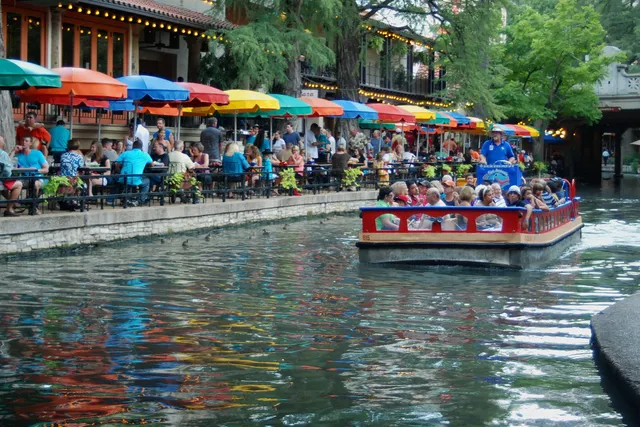
River Walk
The San Antonio River channeled a story below street level in the 1930s and 1940s, its banks now walled with stone, layered with cypress, restaurants, and footbridges for 15 miles through the city, the most-visited stretch being the downtown loop beneath the hotels. The river-level world runs 10-20 feet below traffic, so the noise drops away and the walk becomes the city's main street: barges passing, dinner crowds, herons working the shallows. GO RIO's 35-minute narrated electric barge cruises run daily 10 a.m. to 10 p.m. and give the loop's history in a sitting.
Good to know · Free to walk; cruises run in the mid-teens per adult, children cheaper, tickets at goriocruises.com or the river-level kiosks. The downtown loop between the Houston Street and Convention Center edges takes a slow hour on foot; go after dark for the full effect, when the cypress lighting comes on and the heat leaves. The Mission Reach extension south and Museum Reach north add miles of quieter trail if the loop feels like a theme park, which by August it briefly is.
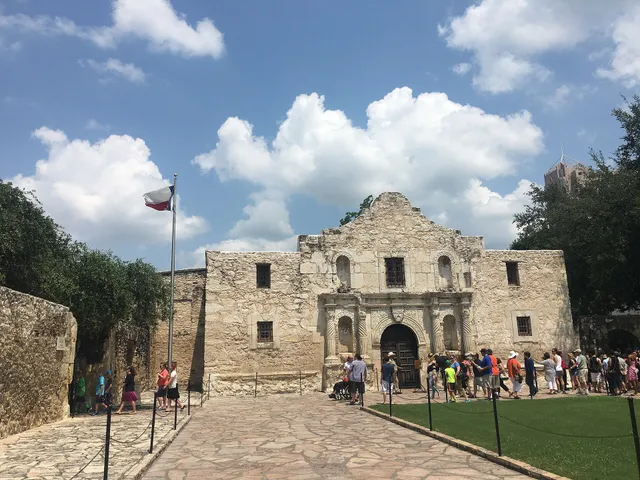
The Alamo
Mission San Antonio de Valero, founded 1718, later a fortress where roughly 200 Texian defenders died in March 1836, and now the shrine of Texas identity, its 1750s limestone church face the most recognizable facade in the state. The free church visit, the Long Barrack museum, and the new Collections Center, home of a major private Alamo collection, sit on a compact downtown site that is being re-landscaped into a proper civic plaza. The story the site tells is bigger than the battle, Spanish colonialism, Tejano history, and the westward push, and the exhibits have grown more honest about all of it.
Good to know · Admission to the Alamo Church is always free but reservations are now required; book a timed slot at thealamo.org, evenings before for the next morning. Open daily 9 a.m. to 5:30 p.m., closed Christmas, last entry 30 minutes before closing. The paid guided battlefield tours and the Collections Center exhibit cost extra and are worth it for anyone past schoolbook level; combine with the 30-minute River Walk walk and the evening light on the facade.
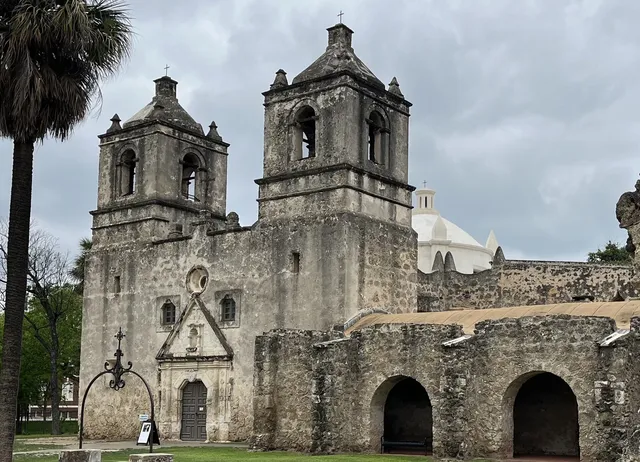
San Antonio Missions
The four sister missions south of the Alamo, Concepción, San José, San Juan Capistrano, and Espada, founded 1731 and earlier, together a UNESCO World Heritage site since 2015 and the largest collection of Spanish colonial architecture in the United States. Mission San José, the Queen of the Missions, holds the restored granary, the famous Rosa's Window carving, and a visitor center; Concepción's original 1755 frescoes survive on its walls; San Juan and Espada keep working farmland and the Espada Aqueduct, the oldest Spanish aqueduct in Texas. All four remain active Catholic parishes, which is part of the power of the place.
Good to know · Free; no entrance pass is required at this national historical park (nps.gov/saan), and that also means the 2026 nonresident national-park surcharge does not apply here. The missions string 8 miles south of downtown along the Mission Reach trail; drive between them in an easy half-day loop or bike the paved riverside trail for the full experience. San José's visitor center orients; mass times interrupt visits on Sundays, respectfully so.
The Pearl District
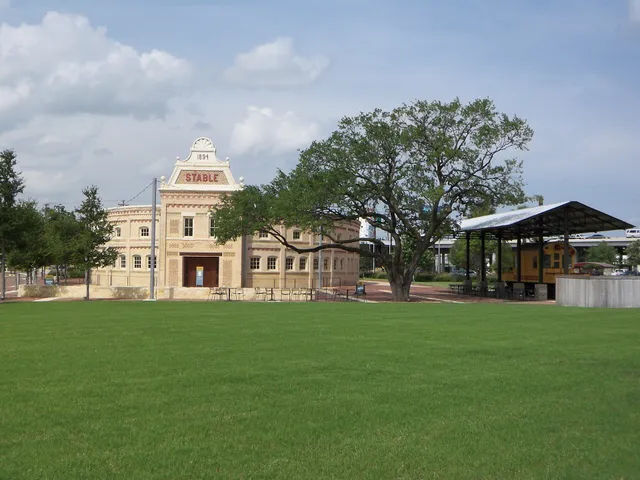
The former Pearl brewery complex, a 22-acre campus of 19th-century industrial buildings reborn since the 2000s as the city's food quarter: a branch of the Culinary Institute of America, a dozen serious kitchens, an adaptive-reuse headline hotel, the campus green, and an amphitheater where the River Walk's Museum Reach ends. The Saturday farmers market is the city's best, the campus's paseo plazas run with kids and dogs, and the mixed programming, from tamales at the farmers stalls to tasting menus, covers every budget. It is the modern San Antonio answer to the River Walk's 1950s version.
Good to know · Free to wander; the farmers market runs Saturday mornings, plus a smaller Sunday market, arrival by the Museum Reach river walk from downtown is a pleasant 30-minute stroll or a short rideshare. Budget for what you eat, US$15-30 casual, more at the chef rooms; book dinner ahead on weekends. The campus sits at the north end of the River Walk extension, so it pairs naturally with a one-way river stroll back downtown.
Japanese Tea Garden
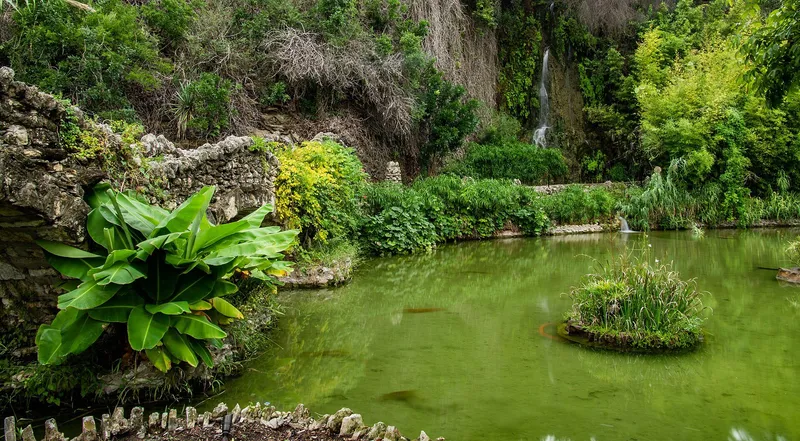
A sunken quarry turned garden since 1918, five minutes north of downtown in Brackenridge Park: limestone walls hung with vines, a 60-foot waterfall, koi pools on terraced levels, stone bridges and a pavilion, and the Jingu family's original 1920s tea house story, all carved from a cement works pit that donated itself to beauty. The garden's free admission and dense, shady layout make it the city's best free hour, and its adjacency to the zoo and the Sunken Garden Theater makes a whole Brackenridge morning of it.
Good to know · Free, open daily during daylight hours (the city posts seasonal times at sanantonio.gov). Parking on site is limited on weekends; the 15-minute drive or the VIA bus from downtown both work. Paths are stepped and occasionally steep between terraces; take the walk slowly in summer heat, and the garden's shade makes mid-morning the right timing.
San Antonio is the Texas that surprises people expecting Texas. The seventh-largest city in America runs on a mostly Mexican-American culture, a river the city had the sense to build its downtown around instead of over, and 300 years of layered history from Spanish missions to the Republic’s founding legend. It is cheaper than Austin two hours northeast, friendlier to families than most big cities, and walkable in a way Houston and Dallas have never attempted. The Alamo gives it the icon, the River Walk gives it the pleasure, and the four missions downriver give it the depth; most visitors do the first two and leave the best one on the table.
A Bit of History
Spanish Franciscans founded the Mission San Antonio de Valero, the future Alamo, in 1718, and four more missions along the river by 1731, a colonial system of conversion, agriculture, and Coahuiltecan labor whose churches still stand. The 1836 revolution made the Alamo’s ruined church famous, roughly 200 defenders dead to a man against Santa Anna’s army, and the battle cry Remember the Alamo carried Texas to independence weeks later at San Jacinto. The city grew as a military post through both world wars, earning its Military City USA title, and the 1968 HemisFair world’s fair left the Tower of the Americas and the convention infrastructure that turned the River Walk into a national destination.
The modern city holds about 1.5 million people, a UNESCO inscription for the missions (2015), and a civic identity that treats its Mexican heritage as the mainstream rather than a garnish, which is exactly why the food is this good.
Culture & Daily Life
San Antonio’s pace is family-slow and festival-minded. Fiesta San Antonio, 10 days in late April, fills the city with parades, cascarones (confetti eggs cracked over heads, this is real), and medal-collecting; it is the calendar’s peak and books hotels a month ahead. December’s River Walk holiday lighting runs the river banks in colored bulbs, and Easter season’s Passion plays at the missions draw the parishes. Day to day, the culture runs bilingual and unremarkably so, street signage, greetings, and menus slide between English and Spanish, and visitors who try a little Spanish get warm returns.
Practical notes: Texas’s combined sales tax tops out at 8.25 percent, and San Antonio charges the maximum, so the register adds it to everything; tipping runs the standard 18-22 percent with the arithmetic at /guides/tipping-and-sales-tax/. The guns question travelers sometimes ask about Texas: the state’s rules are permissive by national standards, but the tourist’s practical reality in San Antonio is museums, river walks, and taco lines, with the same ordinary city awareness as anywhere. Summer heat is the actual local hazard, more below.
Nature & the Outdoors
San Antonio sits at the edge of the Texas Hill Country, and the city’s own green spine is the river: the Mission Reach and Museum Reach extensions turned 15 miles of the San Antonio River into hike-and-bike trail, with the Mission Reach’s restored riparian habitat earning landscape-architecture awards and herons, turtles, and the occasional otter in the middle of a city. Brackenridge Park, the Japanese Tea Garden’s home, adds oak-shaded trails and the zoo; the Natural Bridge Caverns and Hill Country wine country sit 30-40 minutes north for a half-day escape.
The heat is the thing to plan around. From June through September, afternoons run 95-100 degrees Fahrenheit and warmer, and the sun is the South Texas kind; the local pattern is early mornings outdoors, midday museums and long lunches, evenings on the river. Carry water in any season, take the sun seriously even in February, and sort travel medical coverage at /guides/health-insurance-safety/ before the trip, because American healthcare pricing forgives nothing.
Food & Drink
San Antonio is a Tex-Mex original and the breakfast taco’s capital. The canon: puffy tacos, a deep-fried shell the size of a small plate, born here; breakfast tacos on flour tortillas bought by the half-dozen; enchilidas in chile con carne or verde; fajitas, which the city’s chefs popularized northward; and margaritas on the rocks at river level or in the Pearl’s craft rooms. The barbacoa and brisket traditions anchor weekends, and the West Side’s older joints and the Pearl’s chef kitchens bracket the price range honestly: US$3-6 a taco, US$15-25 a plate casual, US$60-100 at the top rooms. The 2017 designation as a UNESCO Creative City of Gastronomy, the first in Texas, was earned not granted.
Two practical notes: Sunday brunch after mass is the civic meal, so expect waits at the famous West Side kitchens, and Texas beer and margarita culture tips by the drink, $1-2 per round at the bar, 18-22 percent at tables, with the tax-and-tip math at /guides/tipping-and-sales-tax/. Water is free everywhere if you ask; drink more of it than feels reasonable from May through September.
Top Sights
River Walk
The river is the reason the city works. What floods and an engineering fight nearly turned into a concrete drain in the 1920s, a preservation campaign and a Works Progress Administration crew turned into the stone-banked, cypress-shaded, footbridged river level you walk today, 15 miles of it, with the famous downtown loop as its heart. Walk the loop slowly: the restaurants beneath the hotels, the Arneson River Theater with its stage on one bank and seats on the other, the bridges every hundred yards, the barges sliding past. The loop takes an unhurried hour; add the Museum Reach north to the Pearl for a quieter second, or the Mission Reach south for eight restored-river miles.
The 35-minute GO RIO narrated cruise, daily 10 a.m. to 10 p.m., is the tourist standard and earns it, running in the mid-teens per adult; buy at the kiosks or goriocruises.com, and go at dusk when the lighting doubles everything. After dark the loop becomes the city’s promenade; that is not a criticism, that is the show. If the loop’s commercial stretch gets thick, two bridges in either direction the banks quiet down.
The Alamo
The small limestone church stands in the middle of downtown like a held breath, the 1750s facade smaller in person than in every photograph, which is part of the point of going. The free church visit takes in the interior’s quiet and the names on the walls; the Long Barrack, the mission-era convento and the battle’s final redoubt, carries the main exhibit story; and the Ralston Family Collections Center displays the Alamo collection amassed by a certain English drummer over five decades, uniforms, documents, and a cannon or two. The new plaza plan has been restoring sightlines from the church outward, undoing a century of street grid carelessness.
Book the free timed reservation at thealamo.org, the church now requires it, and take the first slot of the morning to have the shrine semi-to-yourself. Open 9 a.m. to 5:30 p.m. daily except Christmas, last entry 30 minutes prior; the paid guided tours and exhibit add cost and depth in that order. The Alamo and the River Walk are a five-minute walk apart, so the standard morning is one then the other, and the whole civic district, the Menger’s historic bar across the street excepted, fits on foot.
San Antonio Missions
Drive or bike eight miles south and the city’s best half-day begins. Mission Concepción first, its 1750s church the oldest unrestored stone church in America and its original frescoes, including the sun face above the entrance, still visible on the walls. Mission San José, the biggest and most restored, granary, mill, flying buttresses, the famous Rosa’s Window, and the park’s visitor center, where the 23-minute film is worth the half hour. Then San Juan Capistrano’s spare white chapel and farmland trails, and Espada, the smallest, with the 1740s Espada Aqueduct, the oldest Spanish aqueduct in Texas, a mile east. All four hold Sunday masses in parishes that never closed, which is the difference between a ruin and a living place.
It is all free, no pass required, a national historical park without a gate (nps.gov/saan); arrive orientation at San José’s visitor center. The best structure: drive the loop with an hour at San José and 30-40 minutes elsewhere, or bike the Mission Reach trail from downtown, eight flat river miles, and earn the churches. Take water seriously on the trail in warm months; the shade is genuine but the sun is South Texas.
The Pearl District
The Pearl brewery, which opened in 1883 and brewed its last in 2001, has spent the decades since becoming the best urban-renewal project in Texas. The campus holds the Culinary Institute of America’s San Antonio branch, a dozen kitchens from taqueria to tasting menu, a pair of markets, an independent bookstore, an adaptive-reuse hotel in the old brewhouse, and lawns and plazas that the neighborhood treats as its living room. Third Thursday brings live music; the amphitheater holds the river’s northern terminus; and the whole thing is walkable in an hour, edible in a weekend.
The Saturday farmers market, morning through early afternoon, is the flagship, producers from the Hill Country and the West Side, tamales, bread, produce, and coffee, with a smaller Sunday edition. Budget flexibly, the campus runs from US$4 tacos to US$100 tasting menus; the food hall solves mixed budgets at one table. Come by the Museum Reach river walk from downtown for the approach, and return by rideshare after dark, the campus lighting is designed for lingering.
Japanese Tea Garden
A century-old quarry garden five minutes from downtown, and the city’s best free hour. Cement-company pits became terraced pools and paths in 1918; the Jingu family, Japanese-American friends of the park’s benefactor, ran the tea house until their wartime internment stripped them of it, a story the garden now tells honestly, and Mexican-American gardener and artist Dionicio Rodríguez’s faux-bois concrete work lines the paths. Today it is koi pools, a tall man-made waterfall, stone bridges, a hillside pavilion, and deep shade, all inside Brackenridge Park’s oak forest with the zoo next door.
Free, open daily in daylight hours; parking is small and weekend-tight, so morning is doubly right. The terraces involve steps and grades, so take it slow in summer, and the adjacent Brackenridge Park trails and the historic Sunken Garden Theater round out a full morning. The garden’s address on the city’s parks pages at sanantonio.gov carries current hours and any closures.
Getting There & Around
San Antonio International (SAT) is 15 minutes from downtown with nonstops across the country’s hubs; Austin-Bergstrom, 80 minutes north, adds international and low-cost options for Hill Country combinations. Amtrak serves San Antonio with the Texas Eagle, daily from Chicago, and the Sunset Limited, three days weekly from New Orleans and El Paso, meeting at the historic depot just outside downtown. I-10 and I-35 cross here, making the city a natural stop on any Texas or Gulf Coast drive.
Downtown and the River Walk work entirely on foot, and VIA buses and rideshares cover the rest cheaply; a car earns its cost for the missions loop (or take the VIA bus 42 mission route), the Pearl-to-missions day, and Hill Country escapes. Parking downtown runs US$10-25 a night at hotels; summer note, get the car’s cabin cooled before anyone under ten touches a seatbelt buckle.
Where to Stay
On the River Walk for the classic stay: river-level hotels and high-rises between the Houston Street bridge and the Convention Center put the walk, the Alamo, and the evening promenade at the door, at rates that swing with conventions and Fiesta. The Pearl district is the design pick, boutique and food-forward at the campus’s edge, a mile and a half north of downtown. Southtown, the King William Victorian district just south of downtown, is the local’s choice: B&Bs and art galleries in restored mansions, walkable to the missions trailhead. December’s river lighting and late April’s Fiesta are the price peaks; check both against your dates, and run the room-plus-fee total through /tools/real-price-calculator/ before booking, Texas hotels are candid about resort fees.