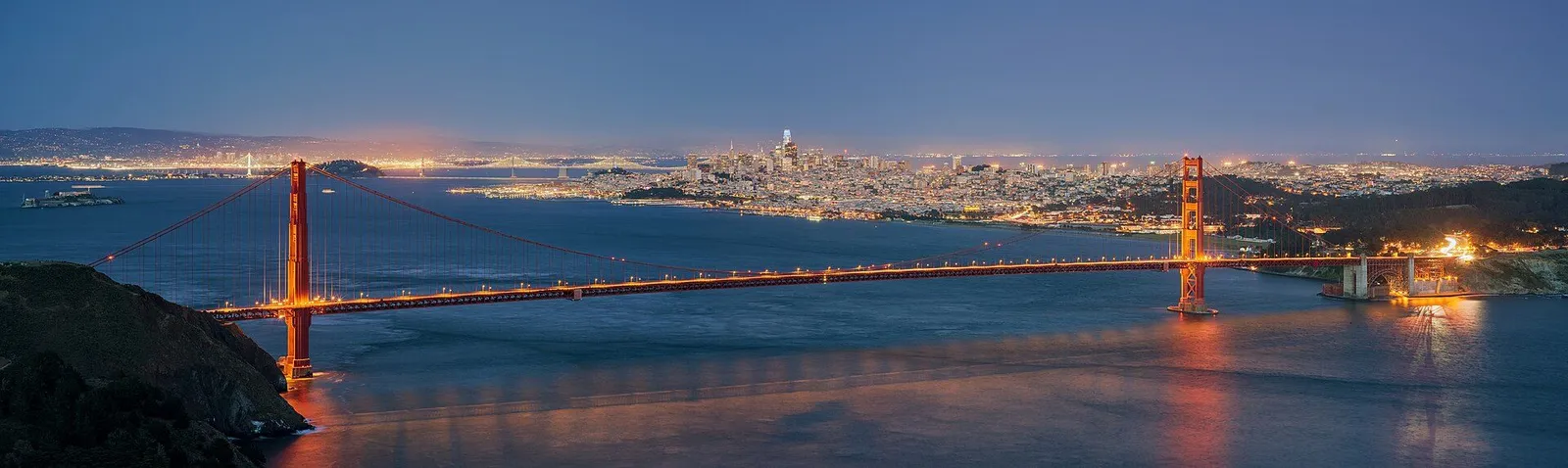
San Francisco packs more scenery, history, and pure walkable strangeness into seven square miles than any American city has a right to. The core experiences define the American postcard: walking the Golden Gate Bridge above the fog, ferrying to the prison island of Alcatraz, riding a cable car over Nob Hill, and eating Dungeness crab where the fishermen land it. The city suits first-time US travelers unusually well because it is compact, transit-rich, and best understood on foot, one steep neighborhood at a time. Give it three or four days, dress in layers no matter the forecast, book Alcatraz the moment your flights are fixed, and let the city's cold blue light do the rest. Come in September if you want the sunshine locals brag about.
Top sights at a glance
Golden Gate Bridge
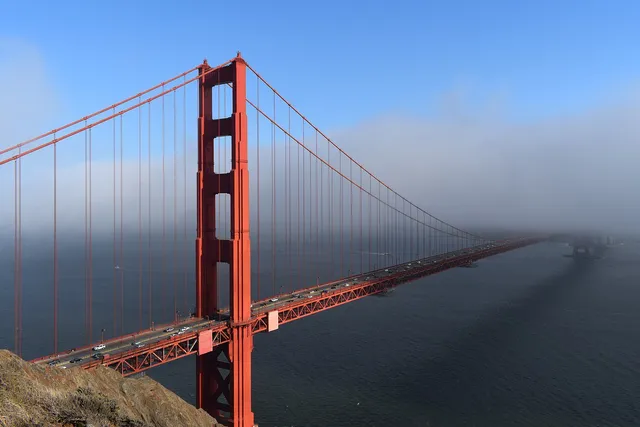
The 1937 suspension bridge is the most photographed structure in the United States, and no photograph prepares you for the scale: towers 746 feet above the water, a 1.7-mile main span, and fog pouring through the Gate like a tide. Walking it is free and takes under an hour round trip from the San Francisco side, with the Marin Headlands offering the classic skyline-after shots on the far end.
Good to know · Walking and cycling are free both directions; only southbound cars pay the electronic toll, as of October 2026. The Bridge's Welcome Center (open daily 9 a.m. to 6 p.m.) has restrooms, exhibits, and the best map of viewpoints. Fog sits on the span most summer mornings; September and October give the clearest light.
Alcatraz Island
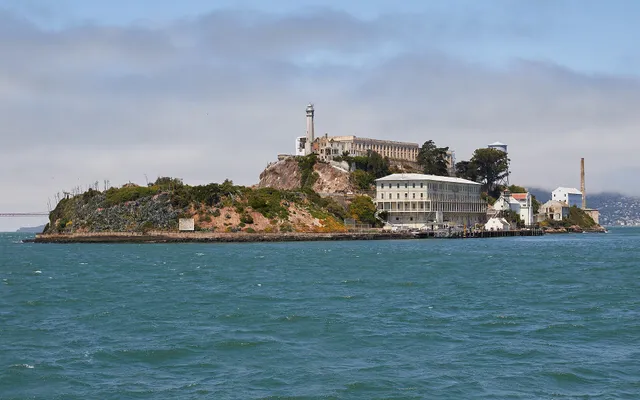
The Rock held a Civil War fortress, the country's most feared federal prison (1934-1963), and an occupation by Native American activists in 1969, all on one windy island with the best views of the skyline. The cellhouse audio tour, built from recordings of former inmates and guards, is the best-produced audio guide in American tourism, and the ferry ride across the bay is part of the experience.
Good to know · The day tour costs $47.95 for adults ($45.15 seniors 62+, $29.15 children 5-11), including the audio tour, as of October 2026, sold only by Alcatraz City Cruises from Pier 33 (alcatrazcitycruises.com). The National Park Service strongly recommends booking well ahead; summer tickets sell out weeks in advance.
Fisherman's Wharf
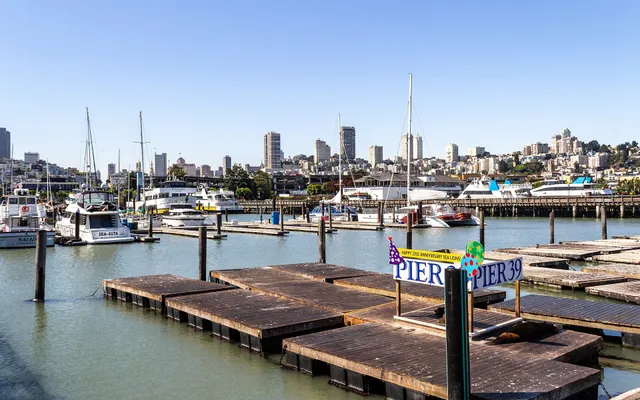
The wharf is the city's tourist port of entry, and it earns its crowds: crab stands cracking Dungeness on outdoor tables, the working fishing fleet at Jones Street dock, street performers on the strip, and Pier 39 next door, where wild sea lions have hauled out on the docks since 1989 and become the city's laziest residents. It is also the practical hub: Alcatraz ferries, cable car terminus, and bay cruises all start here.
Good to know · Free to wander, as of October 2026; the sea lion docks at Pier 39 cost nothing and reward morning visits. Eat crab at one of the walk-up counters rather than the sit-down tourist rooms. From here you can walk the waterfront to the Ferry Building or bike the flat path toward the bridge.
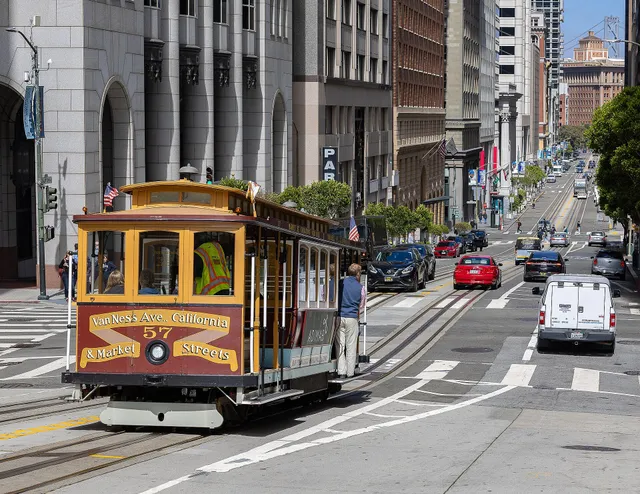
The Cable Cars
San Francisco's cable cars are the world's last manually operated system of their kind, running since 1873 on underground cables at a steady 9 miles per hour, up hills that make pedestrians reconsider their route. The Powell-Hyde line is the classic ride: cresting Nob Hill, rattling down to the bay past Lombard Street's crooked block, with the bay and Alcatraz framed at the bottom. It is transit, it is a fairground ride, and it is the city's most fun $9.
Good to know · A single ride is $9 with no transfers, paid to the conductor or in the MuniMobile app; a 1-Day Visitor Passport at $15 gives unlimited rides including cable cars, as of October 2026, per sfmta.com. Board the Powell-Hyde line at Powell and Market; queue early or mid-morning to skip the hour-long lines at midday.
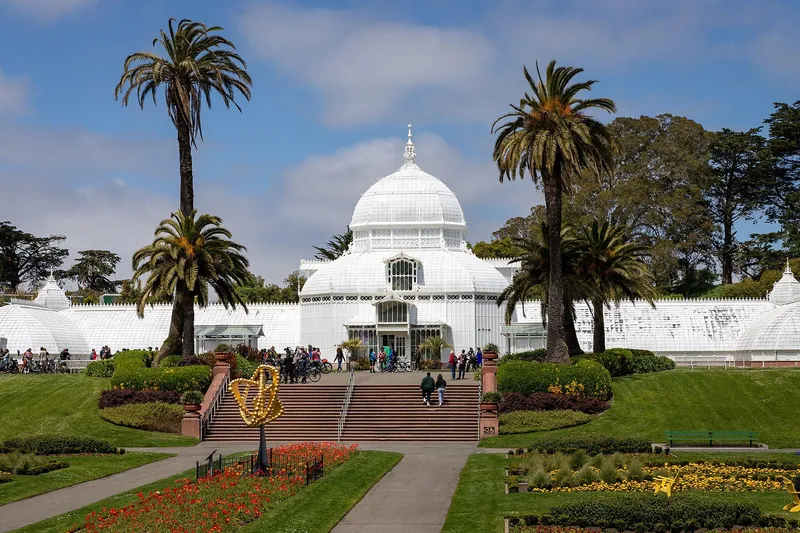
Golden Gate Park
A thousand acres of planted dunes stretching from the Panhandle to the Pacific, Golden Gate Park is the city's back garden: bison grazing in a paddock, rowboats on Stow Lake, the windmill at Ocean Beach, and the Japanese Tea Garden at its heart, the oldest public Japanese garden in North America, all pagoda roofs, koi ponds, and drum bridges. The free park shuttle loops the eastern half when you want to skip the walk.
Good to know · The Tea Garden opens 9 a.m. daily (until 4:45 p.m. winter, 5:45 p.m. summer, last entry earlier), as of October 2026, with modest admission managed by gggp.org; check that site for current prices and any free-entry windows. Entry is cheapest on weekday mornings when the fog is still in the trees. The 5 Fulton bus or the free shuttle gets you there from downtown.
See it in motion
Some places earn a moving picture
Stills can't show how this place moves: the drift, the light show, the crowd flow. We picked a recent, high-quality walkthrough rather than a promotional cut.
America's Most Scenic Ride | San Francisco Cable Cars | Full City Tour | 4K
Travel Hungry For Life · YouTube · plays on click
Embedded via YouTube's official player (privacy-enhanced mode). Video: America's Most Scenic Ride | San Francisco Cable Cars | Full City Tour | 4K by Travel Hungry For Life. Not affiliated with Wide Open America; screened for quality and accuracy on 2026-10-15.
San Francisco is the American city that looks like its own postcard, and the remarkable thing is that the postcard is still true. The bridge rises out of fog exactly as promised. Cable cars still haul up hills that would embarrass an Alpine village. Sea lions still claim the docks at Pier 39 as if paying rent. What the postcard does not show is the pleasure of the city itself: seven square miles of steep, salt-air neighborhoods where every block turns a corner into a different country, a different cuisine, or a different microclimate. San Francisco rewards walkers, layers, and early mornings better than anywhere in the United States. Give it three or four days and book the Alcatraz ferry the day your flights are confirmed.
A Bit of History
San Francisco exists because of gold. A scruffy Mexican port of about 800 people called Yerba Buena renamed itself in 1847, and when gold was found in the Sierra Nevada foothills in January 1848, the world arrived: within two years the city held tens of thousands of fortune-seekers from every continent, making it the fastest-growing place in America and the banking capital of the West almost overnight. The speculators, banks, and railroads that financed the mines built the steep downtown whose survivors you can still walk in Jackson Square.
The city has kept testing itself against disasters. In 1906 the great earthquake and the fires that followed it leveled most of San Francisco and left hundreds dead, yet the city rebuilt in a visionary burst that peaked with the 1915 Panama-Pacific Exposition, whose surviving palace now houses the Exploratorium’s neighbor in the Marina. The cable car, invented in 1873 by Andrew Hallidie after he watched a horse slip on a wet cobblestone grade, survived the quake and politics alike, and still climbs California Street as working transit.
The twentieth century layered on identity. The Golden Gate and Bay Bridges opened in 1936 and 1937, ending the ferry era; World War II filled the bay with shipyards and launched Pacific deployments. After the war the city became America’s counterculture capital: the Beat writers in North Beach, the Summer of Love in 1967, and the election of Harvey Milk to the Board of Supervisors in 1977, making the Castro the political heart of LGBTQ America. The 1989 Loma Prieta earthquake knocked down the elevated freeway along the waterfront, and the city replaced it with the walkable Embarcadero you see today. The dot-com booms of 1999 and the 2010s brought tech money, some of the country’s highest housing costs, and the modern skyline of glass towers rising over 19th-century frames. Today the city counts roughly 800,000 residents, small for its global fame, which is precisely why it works so well on foot.
Culture & Daily Life
The first skill in San Francisco is dressing for its weather, which is really four weathers. The city sits in a cold ocean current, so summer means fog banks rolling in over the Sunset District while downtown bakes; September and October are reliably the warmest, sunniest months, and winter is mild, green, and occasionally dramatic. Locals carry a fleece in August. You should too.
The second skill is thinking in neighborhoods rather than itineraries. Chinatown is the oldest Chinese community in North America and still a living one, not a facade; the Mission holds the city’s Latino roots, its best burrito counters, and block after block of murals; the Castro remains the symbolic capital of LGBTQ America; North Beach keeps the Italian cafes where the Beats drank coffee. The city’s wealth gap is visible on the same sidewalks, and street homelessness is real in parts of Downtown and the Tenderloin: locals treat it as a civic fact, not a photo opportunity, and visitors should do the same, walking with normal city awareness and keeping car interiors empty of bags.
Daily logistics are friendly. Muni buses, streetcars, and the BART subway under Market Street cover the city well, and the cable car lines are functioning public transit with a tourist price. Two American constants apply: tipping runs 18-22 percent at restaurants ($1-2 per drink at bars, detailed in /guides/tipping-and-sales-tax/), and posted menu prices exclude sales tax, so expect the bill to land a few percent above the menu; /tools/real-price-calculator/ walks through the arithmetic. Alcohol is 21-and-over with ID, and bars check.
Nature & the Outdoors
The city’s natural setting is the show: a hilly peninsula between the Pacific and the bay, with headlands, dunes, and beaches built into the street grid. Lands End, at the city’s northwest corner, is the essential walk, a coastal trail over cypress headlands with shipwreck views, the Sutro Baths ruins, and postcard angles on the bridge. The Presidio, the former army post turned national park, adds 1,500 acres of forest, batteries, and the best picnic lawns in the city, threading all the way down to Baker Beach at the bridge’s foot.
Across the Golden Gate, the Marin Headlands rise higher and wilder, with old gun batteries and hawk migrations; the Sausalito ferry or a bike ride over the bridge connects them to the city. In the bay itself, Angel Island’s fire roads give the best 360-degree panorama in the region, and winter brings whale migrations within sight of coastal bluffs (most reliably on a booked boat tour).
The Pacific is cold enough (roughly 50-58F) that swimmers wear wetsuits, currents at Ocean Beach are serious, and fog swallows coast trails by afternoon in summer, so plan exposed walks for mornings. One practical note applies to all of this: US emergency care is not free for visitors, and an ER visit without insurance can cost hundreds to thousands of dollars, so confirm travel medical cover before your hike; see /guides/health-insurance-safety/.
Food & Drink
San Francisco eats well on every budget, and the foods it invented are still the point. Sourdough bread, raised on the city’s wild yeast since the Gold Rush, is the local staple: order it as a bowl for clam chowder at the wharf, or as the base for an honest sandwich anywhere downtown. Dungeness crab, pulled from these waters, lands on outdoor tables at Fisherman’s Wharf cracked and garlic-buttered (the season generally runs through the winter and spring months). The Mission-style burrito, a meal-sized foil log invented in the Mission District, remains the best cheap dinner in town for $10-15.
Chinatown’s dim sum houses and barbecue windows do lunches for $15-25, North Beach keeps the Italian table, and the Ferry Building’s marketplace halls hold the farmers market that defines California produce culture on Saturdays. Coffee is a civic religion here: the West Coast espresso culture that went global started in these neighborhoods, and a flat white costs $5-7 nearly anywhere.
Budgeting runs higher than most US cities: casual meals $18-30, good dinners $50-80. Tipping is standard US practice, 18-22 percent for table service, $1-2 per drink, 10-15 percent for delivery, with the full guide at /guides/tipping-and-sales-tax/, and remember that menu prices gain sales tax at the register.
Top Sights
Golden Gate Bridge
The Golden Gate Bridge delivers more than its reputation, which is a rare thing for the most photographed bridge on Earth. The numbers are the doorway to the experience: opened May 27, 1937, a total length of 8,981 feet, main towers 746 feet above the water, and that International Orange paint job chosen for visibility in fog. Walking the span is free in both directions, takes 30-50 minutes each way, and puts you 220 feet above a strait where the Pacific pours into the bay through the fog like slow smoke.
Start from the San Francisco side at the Welcome Center (daily 9 a.m. to 6 p.m.), which holds exhibits, restrooms, and the trailhead to the bridge deck; as of October 2026, only southbound cars pay the toll, so walkers and cyclists pay nothing. Cyclists renting bikes near Fisherman’s Wharf ride the flat bay path out and cross under the bridge to Fort Point for the under-span view, then climb to the deck.
Fog decides your photographs: it blankets the bridge most summer mornings, burns off by midday, and stays away entirely on September and October afternoons. The classic full-bridge-with-skyline shot comes from the Marin Headlands overlooks on the north end, a short drive or a determined walk beyond the far tower.
Alcatraz Island
Alcatraz is the best-run tourist experience in America: a national park island, an award-winning audio tour, and a ferry ride through the bay, all for a fare that goes back into the park. The island’s layers justify the trip on their own: a Civil War fortress, the federal prison that held Al Capone from 1934 to 1963, the 1969 occupation by Native American activists whose painted slogans still stand, and a seabird colony that takes over the grounds in spring.
The audio cellhouse tour, voiced by former inmates and guards, takes about 45 minutes and is included in every ticket; the full visit runs two and a half to three hours with the exhibits, gardens, and exterior loop. As of October 2026, the day tour costs $47.95 for adults, $45.15 for seniors 62 and older, and $29.15 for children 5-11, with night tours a few dollars more; the figures are published by the National Park Service at nps.gov/alca.
Two rules make the visit. First, buy only from Alcatraz City Cruises, the park’s single authorized ferry from Pier 33; resellers mark up the same seat. Second, book early: the Park Service strongly recommends advance reservations, and summer departures sell out weeks ahead. Take the first morning sailing for calm water, soft light, and quieter cellhouse rows.
Fisherman’s Wharf
Fisherman’s Wharf is touristy the way a working dock can afford to be: it was the city’s fishing port for a century, and the fleet still ties up at the Jones Street dock between the crab stands. The core pleasures are simple and cheap. Eat Dungeness crab cracked on an outdoor table with sourdough ($25-40 per person), watch the street performers along Jefferson Street, and walk two piers east to Pier 39, where California sea lions took over the boat docks in 1989 and have been sunning there in shifting hundreds ever since, free of charge and indifferent to their audience.
The wharf also functions as the city’s tour-launch platform: Alcatraz ferries from Pier 33, bay sails, the aquarium, and the terminus of the Powell-Hyde cable car all stand within a few blocks, and the flat waterfront path runs west toward the bridge or east to the Ferry Building for those on foot or bike.
Give it a half day, not more, and spend it well: crab lunch, sea lions in the morning light, and one loop through the Musée Mécanique at the foot of Taylor Street, an arcade of working 20th-century coin-op machines where a pocketful of quarters buys the whole history of gaming. Then point yourself uphill; the real city starts where the souvenir shops end.
The Cable Cars
The cable cars are working transit from 1873: cars clamped to steel cables running in slots beneath the street, pulled at a constant 9 miles per hour by engines in a central powerhouse, with a gripman operating a hand brake worth its weight in history. San Francisco’s is the world’s last manually operated cable car system, and riding it is the city’s best-value thrill.
The ride to choose is the Powell-Hyde line. It climbs from the tourist grid at Powell and Market over Nob Hill, tips down the crooked approach past Lombard Street, and ends at the bay with Alcatraz framed between the piers. Stand at the inside pole, hang off the running board if the conductor permits, and listen: the grip clang, the brakes, the grumble of the cable under the street.
The fare is $9 per ride with no transfers, paid in cash to the conductor or loaded in the official MuniMobile app, as of October 2026; a 1-Day Visitor Passport at $15 covers unlimited rides on cable cars, streetcars, and buses, which pays off with three or more hops. Midday queues at the Powell Street turntable run up to an hour, so ride before 10 a.m., walk one stop downhill and re-board, or buy the passport and treat every car as hop-on, hop-off.
Golden Gate Park
Golden Gate Park is the masterpiece hiding behind the bridge’s fame: more than 1,000 acres of trees, lakes, and gardens planted on 19th-century sand dunes, running three miles from the Panhandle to Ocean Beach. Inside it: a bison paddock with an honest-to-goodness herd, rowboats on Stow Lake, the Dutch windmill at the ocean end, two major museums, and the Japanese Tea Garden at its green heart.
The Tea Garden, created for the 1894 world’s fair and the oldest public Japanese garden in North America, is the park’s most concentrated beauty: drum bridges, a pagoda, koi ponds, and maple shade that turns fire-red in November. It opens daily at 9 a.m. (closing 4:45 p.m. in winter months and 5:45 p.m. in summer, with the gate shutting earlier), as of October 2026, with admission managed by the Gardens of Golden Gate Park organization; prices are modest and posted at gggp.org, and weekday early mornings are the quiet, cheap hour.
The park is bigger than it looks, so use its helpers: the free Golden Gate Park Shuttle loops the eastern half on most days, buses cross it along Fulton Street, and bike paths run its length. Finish at Ocean Beach, where the park pours onto the Pacific and the fog banks stage their afternoon landfall.
Getting There & Around
San Francisco International Airport (SFO) sits 13 miles south, and BART, the regional subway, runs direct from the International Terminal to downtown stations (Powell Street, Embarcadero) in about 30 minutes; buy a Clipper card at the station and check the fare calculator at bart.gov. Oakland International (OAK) is a similar BART ride across the bay. Taxis and rideshares from SFO to Union Square run $35-55 depending on traffic.
Inside the city you barely need anything else: the core is compact and walkable, Muni buses and streetcars fill the gaps ($2.85 per ride by app or Clipper, $5.70 day pass, as of October 2026, per sfmta.com), and the cable cars cost $9 but ride like a ticket. Hills are real: a one-mile walk can climb 300 feet, so plan routes by contour, not distance.
Rent a car only for leaving town (Muir Woods requires advance parking reservations at gomuirwoods.com; wine country and Half Moon Bay reward the drive). In the city, hotel parking runs $40-70 a night, which alone pays for a week of transit passes.
Where to Stay
Union Square and the streets around it are the practical base: BART from the airport stops here, the Powell cable cars start here, and the price range is the widest in the city. Choose it for first-visit logistics. Fisherman’s Wharf and North Beach suit families and Alcatraz-focused trips: the ferries, the sea lions, and the flat waterfront are on the doorstep, with more chain-hotel predictability and fewer late-night restaurants. The Mission and Hayes Valley are the local-flavor play: the best cheap food in the city, BART and Muni connections, and neighborhoods that live after dark, at mid-range prices.
Two warnings apply everywhere. Book early for September and October, the city’s warmest and busiest months, when conventions compress availability. And whatever the booking site shows, add the hotel’s urban parking fee (often $40-70 a night) and local sales tax before comparing prices; /tools/real-price-calculator/ shows what a US hotel bill actually totals.
Sources & verification (9)
- https://www.nps.gov/alca/planyourvisit/fees.htm
- https://www.alcatrazcitycruises.com/
- https://www.sfmta.com/getting-around/muni/fares
- https://www.goldengate.org/bridge/visiting-the-bridge/
- https://en.wikipedia.org/wiki/Golden_Gate_Bridge
- https://www.pier39.com/
- https://www.japaneseteagardensf.com/
- https://gggp.org/visit/admissions-hours/
- https://en.wikipedia.org/wiki/San_Francisco