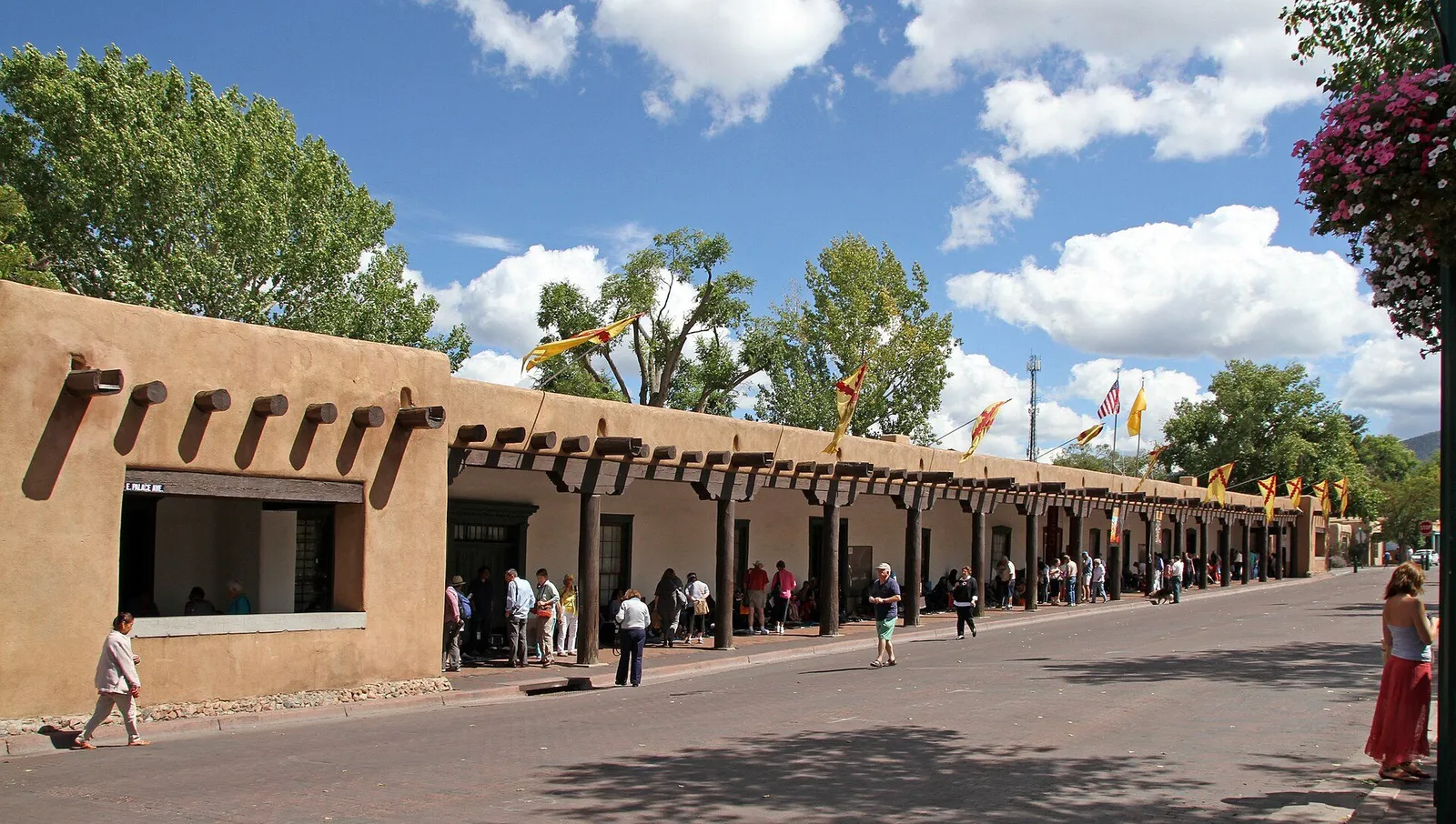
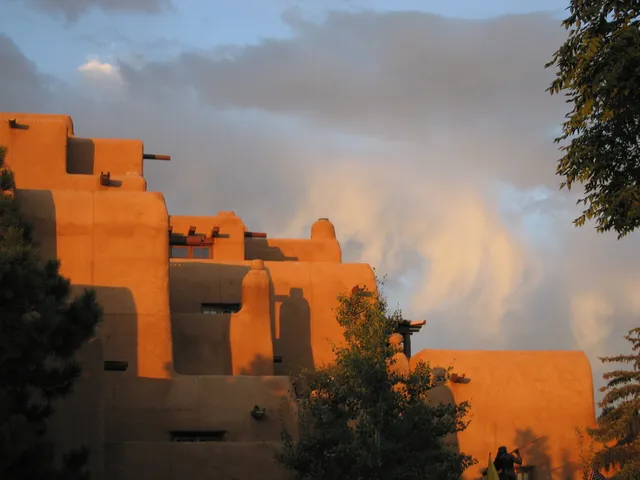
Santa Fe is the oldest capital city in the United States, founded by Spanish colonists in 1610, and the highest, sitting at 7,199 feet at the foot of the Sangre de Cristo Mountains. Its low-slung adobe skyline, half a mile of galleries on Canyon Road, and a serious opera house make it the cultural capital of the Southwest rather than a typical American city. The Plaza, the cathedral, and the pueblos' jewelry vendors cost nothing; the Georgia O'Keeffe Museum, the immersive art maze of Meow Wolf, and the cliff dwellings of Bandelier National Monument an hour away justify their fees. Summer brings open-air opera, and early October overlaps Albuquerque's Balloon Fiesta. Santa Fe suits art lovers, history readers, and food-first travelers more than nightlife seekers, and it pairs naturally with Taos or Albuquerque. Give it three days, arrive with sunscreen and water, and book Meow Wolf and opera tickets well ahead.
Top sights at a glance
Santa Fe Plaza
The National Historic Landmark plaza that Santa Fe has been built around since 1610, framed by adobe blocks, the Palace of the Governors, and the Cathedral Basilica of St. Francis of Assisi a block east. Native American artisans from the region's pueblos sell pottery, silver, and turquoise under the Palace portal most days, a vetted daily program that is itself a 400-year-old trading tradition. The Plaza hosts Indian Market in August and the Fiesta de Santa Fe in early September, and it is the reference point for every walk in the historic core.
Good to know · Free and open at all hours; the Native Artisans Program under the Palace portal runs most daylight hours, cash and cards both fine. Park once in a city garage nearby, because the Plaza, Canyon Road, and the Railyard are all walkable from it. Evenings bring live music and a lit-up cathedral worth the second visit.
Canyon Road
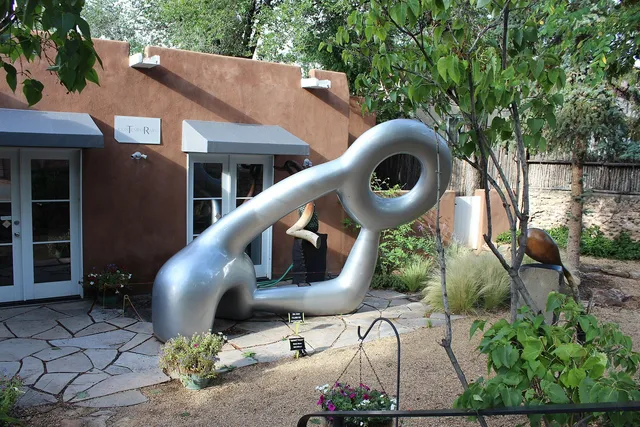
A half-mile adobe lane southeast of the Plaza holding more than 80 galleries, studios, and sculpture gardens, widely considered one of the largest art markets in the United States by sales. Historic homes, some 300 years old, show painting, sculpture, jewelry, and Native work, and the gardens in back of the older properties are as good as the art. Walking costs nothing, no one pressures you to buy, and Friday evenings bring openings with wine and the town's best people-watching.
Good to know · Free to wander, roughly a 15-minute walk from the Plaza up East Palace Avenue. Go late afternoon on a Friday for exhibition openings, or weekday mornings for empty galleries and unhurried talk with dealers. Ask before photographing specific works; most galleries allow it without flash.
Georgia O'Keeffe Museum
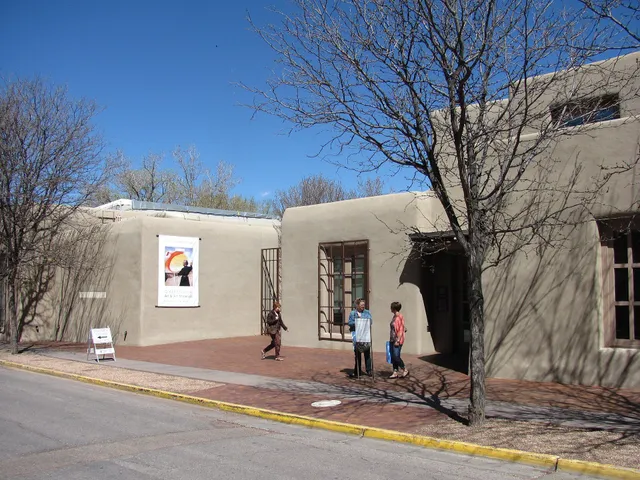
A compact downtown museum holding the world's largest collection of Georgia O'Keeffe's work, from her New York abstractions to the bone-and-flower paintings made at Ghost Ranch north of town. O'Keeffe arrived in New Mexico in 1929 and spent the last four decades of her life here, and the museum tells that story alongside the art. It is small enough to see properly in 60 to 90 minutes, which makes it an easy pairing with lunch and the Plaza rather than a half-day commitment.
Good to know · Open daily 10 a.m. to 5 p.m. per okeeffemuseum.org; adult admission runs roughly US$18-22 as of October 2026, so confirm current pricing when you book timed tickets on the museum site, as the galleries require an entry slot. The separate Abiquiu Home and Studio tour, 90 minutes north, runs seasonally and books out months ahead; reserve early if it matters to you.
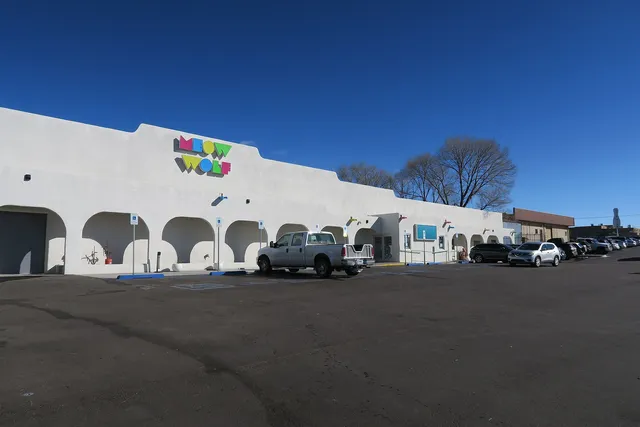
Meow Wolf
House of Eternal Return, a 20,000-square-foot walk-through art installation built inside a former bowling alley by a Santa Fe art collective with help from local author George R. R. Martin. The framing story is a vanished family and their Victorian house, but the real experience is 70-plus rooms of portals, neon caves, musical ham bones, and secret passages that reward travelers who open every refrigerator and crawl into every fireplace. It is the most fun anyone in your group, ages 8 to 80, will have indoors in New Mexico.
Good to know · Timed-entry tickets start around $33 for adults and $26 for kids and rise with demand; flexible anytime-entry tickets start around $54, as of October 2026 at tickets.meowwolf.com. Book a weekday morning slot several days ahead. Allow two to four hours, wear comfortable clothes for crawling, and note it is at 1352 Rufina Circle, a 10-minute drive or short rideshare from the Plaza, not downtown.
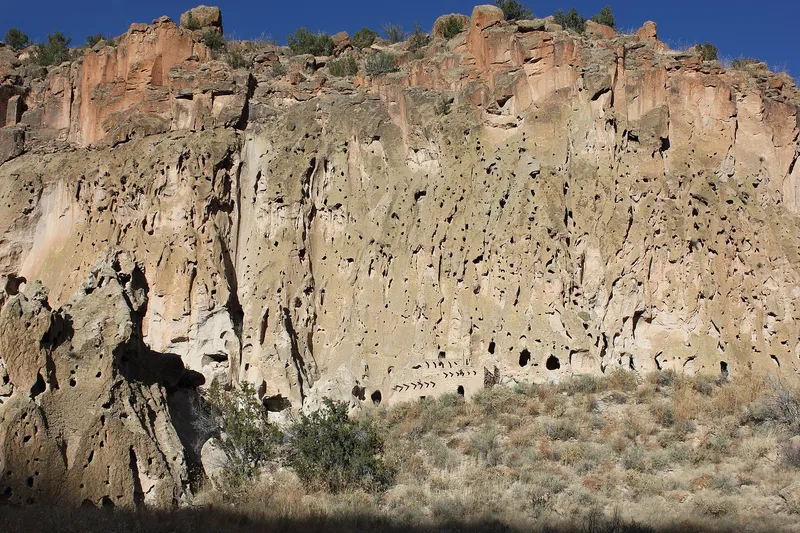
Bandelier National Monument
Ancestral Puebloan cliff dwellings an hour northwest of Santa Fe, where Frijoles Canyon holds the stone ruins of Tyuonyi village and dwellings carved into soft volcanic tuff that you reach by ladder. The Main Loop Trail is 1.4 easy miles past the ruins, with an optional spur climbing four ladders 140 feet up to Alcove House, a cliff kiva with a view. The people who lived here until the 1500s are ancestors of today's Rio Grande pueblos, and the site is managed with those descendant communities.
Good to know · Entry is $25 per private vehicle for seven days, the park is cashless, and a free in-park shuttle runs from overflow lots when the canyon fills, typically mid-morning to afternoon in the busy season (nps.gov/band). Unlike the 11 flagship national parks, Bandelier does not charge the new 2026 $100 nonresident surcharge. Bring two liters of water per person and sun protection; the canyon floor is hotter and drier than Santa Fe, and medical costs without insurance are punishing, so see /guides/health-insurance-safety/ before any hike day.
Santa Fe answers the question of what America looked like before the English showed up. Founded in 1610 by Spanish colonists on a high desert plateau at the foot of the Sangre de Cristo Mountains, it has been a capital continuously for more than four centuries, longer than any other American city, and it sits at 7,199 feet, higher than any other state capital, nearly 2,000 feet above Denver. The building code still mandates adobe curves, so the skyline is the same color as the earth. What brings travelers is a combination that exists nowhere else: a walkable historic core, one of the largest art markets in the country, opera under open sky, food built around green chile, and Ancestral Puebloan cliff dwellings an hour away. It is quiet by American standards, expensive by New Mexico standards, and worth both.
A Bit of History
Santa Fe began in 1610 as the capital of Spain’s Province of New Mexico, named Villa Real de la Santa Fe de San Francisco de Asis, the terminus of the Camino Real that linked Mexico City to the northern frontier. The Palace of the Governors, built that same decade on the north side of the Plaza, is the oldest public building in continuous use in the United States. The Spanish occupation was interrupted in 1680, when the Pueblo peoples coordinated the most successful Indigenous uprising in North American history, expelled the colonists, and held the city for 12 years until the Spanish returned in 1692, this time with a tolerance for Pueblo religion that shaped the mixed culture you see today.
The next sovereignty change came by trade rather than arms. When Mexico won independence from Spain in 1821, the Santa Fe Trail opened, and American merchants began hauling goods 800 miles from Missouri to the Plaza. The United States took the territory in 1846 without a battle in Santa Fe, the railroad arrived in 1880, and New Mexico became a state in 1912.
The 20th century belongs to two migrations. Artists came first, drawn by the light: painters in the 1910s, then Georgia O’Keeffe in 1929, and a 1957 city ordinance that legally required the Pueblo Revival and Territorial styles downtown, locking in the look forever. Scientists came second: the Manhattan Project built the secret city of Los Alamos 30 minutes away, and the laboratories there still drive a large slice of the local economy. Modern Santa Fe runs on government, science, art, and tourism, home to roughly 90,000 people in a state capital whose oldest building predates the country by 166 years.
Culture & Daily Life
Santa Fe’s daily culture is tri-cultural by design: Hispanic, Native American, and Anglo traditions share the calendar rather than blending into mush. The Native presence is not museum-distant. Eight northern pueblos sit within day-trip range, their artisans sell under the Palace portal most days, and the pueblos themselves open to visitors for feast days and tours, though rules matter: many pueblos restrict photography, ceremonies are not performances, and the respectful move is to check each pueblo’s own visitor guidance before you go, a topic we cover at /guides/native-american-cultures/. August’s Santa Fe Indian Market is the largest juried Native art market in the world and books every bed within 100 miles.
The altitude is the fact that most affects visitors. At 7,199 feet you are breathing roughly a quarter less oxygen than at sea level, higher than most Alpine ski resorts. Expect to tire on stairs your first day, feel alcohol faster, and wake up thirsty in the dry air. The fix is boring and effective: water constantly, lighter meals, easy pace for 24 hours, and moisturizer for the desert air. Persistent headache or nausea that will not ease is altitude illness, a real reason to descend and, if needed, seek care; travel insurance matters here, and the mechanics are at /guides/health-insurance-safety/.
Practical notes. New Mexico’s version of sales tax is a gross receipts tax that appears on receipts like any sales tax; combined state and local rates in Santa Fe run roughly 8 to 9 percent as of October 2026, per the Tax Foundation and Avalara state tables. Tipping follows national norms: 18 to 22 percent at tables, $1-2 per bar drink, the arithmetic at /guides/tipping-and-sales-tax/. Recreational cannabis is legal in New Mexico for adults 21 and over, but consumption is limited to private property and licensed spaces, never on the street, the Plaza, or in a car, federal land included.
Nature & the Outdoors
Santa Fe sits in piñon-juniper high desert at the southern end of the Rockies, and the outdoors here is quiet, dry, and vertical. The Dale Ball Trail system starts practically in town and threads 25 miles through the foothills; the Aspen Vista trail climbs toward the Santa Fe Ski Basin, 16 miles up Hyde Park Road, which tops out above 10,000 feet among aspen that turn gold in late September and early October. Summer runs a monsoon pattern: clear mornings, thunderheads building at noon, hard rain at 2 p.m., sun again by 5; plan hikes for before noon and you will almost never be caught out.
The headline outdoor destinations ring the Jemez Mountains to the northwest. Bandelier National Monument holds the region’s most accessible Ancestral Puebloan ruins; its separate Tsankawi unit, off the road to Los Alamos, gets a fraction of the visitors. Farther afield, Valles Caldera National Preserve protects a million-year-old collapsed volcano ringed by elk herds, and the Rio Grande carves a gorge north toward Taos, 90 minutes away.
Two health notes worth repeating: the sun at this elevation burns faster than at sea level in every season, and the desert dehydrates you before you notice. Carry more water than seems reasonable and keep exertion modest your first 36 hours at altitude.
Food & Drink
New Mexican food is its own cuisine, not Tex-Mex and not Mexican: built on local chile, blue-corn tortillas, and Spanish-colonial cooking that predates the American period. The central question in any Santa Fe kitchen is red or green, meaning which chile sauce goes on your plate, and the local answer is Christmas, both. Order it that way and you will be treated as a competent adult. Beyond the sauce, the checklist is short and achievable: carne adovada (pork marinated in red chile), posole, tamales, sopaipillas that arrive puffy and get filled with honey, stacked blue-corn enchiladas with a fried egg on top, and a green chile cheeseburger, which New Mexicans consider their signature invention and order at diners, not fancy restaurants.
Price reality, as of October 2026: breakfast with chile runs $12-18, a Plaza-area lunch $15-25, and dinner entrees $22-42. The expensive rooms sit downtown; the equally good food often does not, so follow the locals up Cerrillos Road and out to the Railyard. New Mexico also makes drinkable local wine (Spanish missionaries planted here in the 1600s), cider from the northern orchards, and a growing craft beer scene.
Kitchens close early by big-city standards, many at 8:30 or 9 p.m., and reservations matter Thursday to Sunday. Tipping is standard American at 18 to 22 percent, and the tax line on your bill will read gross receipts, not sales tax; both are explained at /guides/tipping-and-sales-tax/, and the total-cost math is at /tools/real-price-calculator/.
Top Sights
Santa Fe Plaza
The Plaza is both the geographic center and the reason the city exists: a rectangular park of grass, benches, and cottonwoods where the Spanish laid out their capital in 1610, with the Palace of the Governors along the north side, adobe commercial blocks around, and the Cathedral Basilica of St. Francis of Assisi rising a block east. Every street in the historic core measures itself by walking distance from here, and the city’s two big festivals, Indian Market in August and the Fiesta de Santa Fe in early September, use it as their stage.
The Plaza’s best daily institution costs nothing: the Native Artisans Program under the Palace portal, where pueblo artists screened by the state museum system sell jewelry, pottery, and drums directly, without gallery markup, and answer questions happily. Buying under the portal is the cleanest way to purchase authentic Native work with provenance. Give the Plaza an unhurried hour at day’s end, when the adobe walls go pink and the cathedral lights come on.
Canyon Road
Canyon Road is the reason Santa Fe ranks among the largest art markets in the United States: a half-mile lane of historic adobes holding more than 80 galleries, along with studios and restaurants, a 15-minute walk southeast of the Plaza. The buildings themselves are the exhibit; some date to the 1700s, when this was a farming road, and the sculpture gardens tucked behind the older houses are free to wander whether or not anyone is selling.
The etiquette is simple and liberating: galleries are free, wandering is expected, and nobody will pressure you. Do not photograph art without asking; do ask dealers about the work, because the conversation is the point of a gallery town. Friday evenings bring exhibition openings with wine, and December’s Canyon Road Farolito Walk, when the walls are lined with paper lanterns, is the most beautiful night of the Santa Fe year. Budget two hours and wear museum-marathon shoes.
Georgia O’Keeffe Museum
The O’Keeffe is the one museum in Santa Fe that first-time visitors should not skip, because it explains the landscape you are standing in. Georgia O’Keeffe, already famous for her New York abstractions, took a train to New Mexico in 1929 and spent every summer after at Ghost Ranch north of Abiquiu until she moved permanently in 1949, painting the red hills, animal bones, and desert flowers that made her the most collected American woman painter. The downtown museum holds the largest collection of her work anywhere and rotates it through compact galleries with her tools, letters, and the famous black-rock collection from her studio.
Practicalities: the museum, on Johnson Street three blocks from the Plaza, is open daily 10 a.m. to 5 p.m., per okeeffemuseum.org, and adult admission has been running roughly US$18-22 as of October 2026; check the exact price when booking, since timed-entry tickets are issued for arrival slots and the small building sells out on holiday weekends. An hour to 90 minutes suffices. If O’Keeffe is your reason for coming, the museum also runs seasonal tours of her Abiquiu home and studio 90 minutes north; they are limited and book out months ahead, so reserve the day you book flights.
Meow Wolf
Meow Wolf’s House of Eternal Return is Santa Fe’s strangest contribution to American culture and its best rainy-day, jet-lagged, or traveling-with-teens afternoon. A local art collective, bankrolled in part by Santa Fe resident George R. R. Martin buying a defunct bowling alley, opened it in 2016: a two-story Victorian house where a family has vanished through a refrigerator, and behind the walls 70-plus rooms of immersive art, crawl passages, neon forests, and playable musical bones. There is a plot, told through letters and documents you can piece together, but the house rewards pure exploration, opening every door and pushing every button.
Tickets are timed-entry and start around $33 for adults and $26 for kids, rising with demand, with flexible anytime-entry from about $54, as of October 2026 at tickets.meowwolf.com; New Mexico residents get discounts with ID. Book several days ahead for weekends and school holidays. The venue sits at 1352 Rufina Circle in the Railyard district, a 10-minute drive or short rideshare from the Plaza. Wear clothes you can crawl in, and go with the mindset of a seven-year-old: touch everything unless a docent says otherwise.
Bandelier National Monument
Bandelier is the day trip that connects Santa Fe to the deep history of the plateau. An hour northwest through the Pajarito Plateau, Frijoles Canyon holds the ruins of a civilization: Tyuonyi, a circular pueblo that housed hundreds in its 1400s peak, cave rooms carved into the soft volcanic tuff, and stone ladders fixed to the cliff letting you climb into the alcoves themselves. The Main Loop Trail is 1.4 miles and mostly flat, with the optional Alcove House spur adding four long ladders and 140 feet of climbing to a cliff kiva that empties of crowds by mid-afternoon.
Practicalities as of October 2026: entry costs $25 per private vehicle for seven days (nps.gov/band), the park is cashless, and when the canyon lots fill, a free shuttle cycles from overflow parking, typically mid-morning to late afternoon in the busy season; the shuttle also runs intermittently into mid-October, so check the park’s current conditions page the day before. One fee note that works in your favor: the new 2026 national-park nonresident surcharge, $100 per person for foreign visitors 16 and over, applies only to 11 flagship parks like Grand Canyon, Zion, and Yellowstone; Bandelier is not on that list, so foreign visitors pay only the standard vehicle fee, unlike at those bigger parks. Carry two liters of water per person even in cool weather, start before noon in summer to beat both heat and afternoon thunderstorms, and see /guides/health-insurance-safety/ about insurance before any hiking trip; a helicopter evac from a canyon is a five-figure bill without it.
Getting There & Around
Most visitors fly into Albuquerque International Sunport (ABQ), 65 miles and about one hour south, because Santa Fe Regional (SAF) offers only a handful of daily flights from a few western hubs. From the Sunport, pre-booked door-to-door shuttles run to Santa Fe hotels in about 90 minutes, rental cars are on-site, and the New Mexico Rail Runner Express commuter train connects downtown Albuquerque to Santa Fe in roughly two hours, though its schedule is built around commuters, with thinner service evenings and weekends, so check riometro.org against your arrival time.
Santa Fe’s historic core is genuinely walkable: Plaza, Canyon Road, the Railyard, and the O’Keeffe sit within 30 minutes on foot of one another, and the city bus covers the rest cheaply. A rental car earns its cost for three trips: Bandelier, the High Road to Taos, and O’Keeffe country around Abiquiu; rent for those days only, because Plaza-area hotels charge for parking and street parking downtown is metered and tight. Driving here is calm by American standards, mountain roads excepted: the road up to the Ski Basin and the descent into Frijoles Canyon both reward slow speeds and full tanks.
Where to Stay
Stay in the Historic Downtown around the Plaza on a first visit: adobe inns, courtyard hotels, and B&Bs within a 10-minute walk of the Plaza, Canyon Road, and the cathedral, which is the entire point of Santa Fe and priced accordingly. The Railyard and Guadalupe district, south of the river tracks, is the contemporary alternative: galleries, the farmers market, Meow Wolf, and lower rates, a 20-minute walk or 5-minute rideshare to the Plaza. Cerrillos Road, the long commercial strip southwest of downtown, holds the budget motels and chains; it is car-oriented and charmless, but it puts you 10 minutes from everywhere at the lowest prices in town.
Budget honestly: New Mexico’s gross receipts tax plus a lodger’s tax adds roughly 13 to 15 percent to quoted room rates in Santa Fe, and the resort-style inns quote parking separately, so read the itemized total with /tools/real-price-calculator/. Book months ahead for three windows: Indian Market in late August, the Fiesta and opera weeks in late summer, and the first full week of October, when the Albuquerque Balloon Fiesta (October 3-11 in 2026, per balloonfiesta.com) fills every room within an hour’s drive of Albuquerque, Santa Fe included.
Sources & verification (14)
- https://www.nps.gov/band/planyourvisit/fees.htm
- https://www.nps.gov/band/planyourvisit/directions.htm
- https://www.nps.gov/aboutus/nonresident-fees.htm
- https://meowwolf.com/visit/santa-fe
- https://tickets.meowwolf.com/santa-fe/
- https://www.okeeffemuseum.org/visit/
- https://balloonfiesta.com/
- https://santafeopera.org/
- https://taxfoundation.org/location/new-mexico/
- https://www.avalara.com/taxrates/en/state-rates/new-mexico.html
- https://en.wikipedia.org/wiki/Santa_Fe,_New_Mexico
- https://santafenm.gov/
- https://www.canyonroad.com/
- https://en.wikipedia.org/wiki/New_Mexico