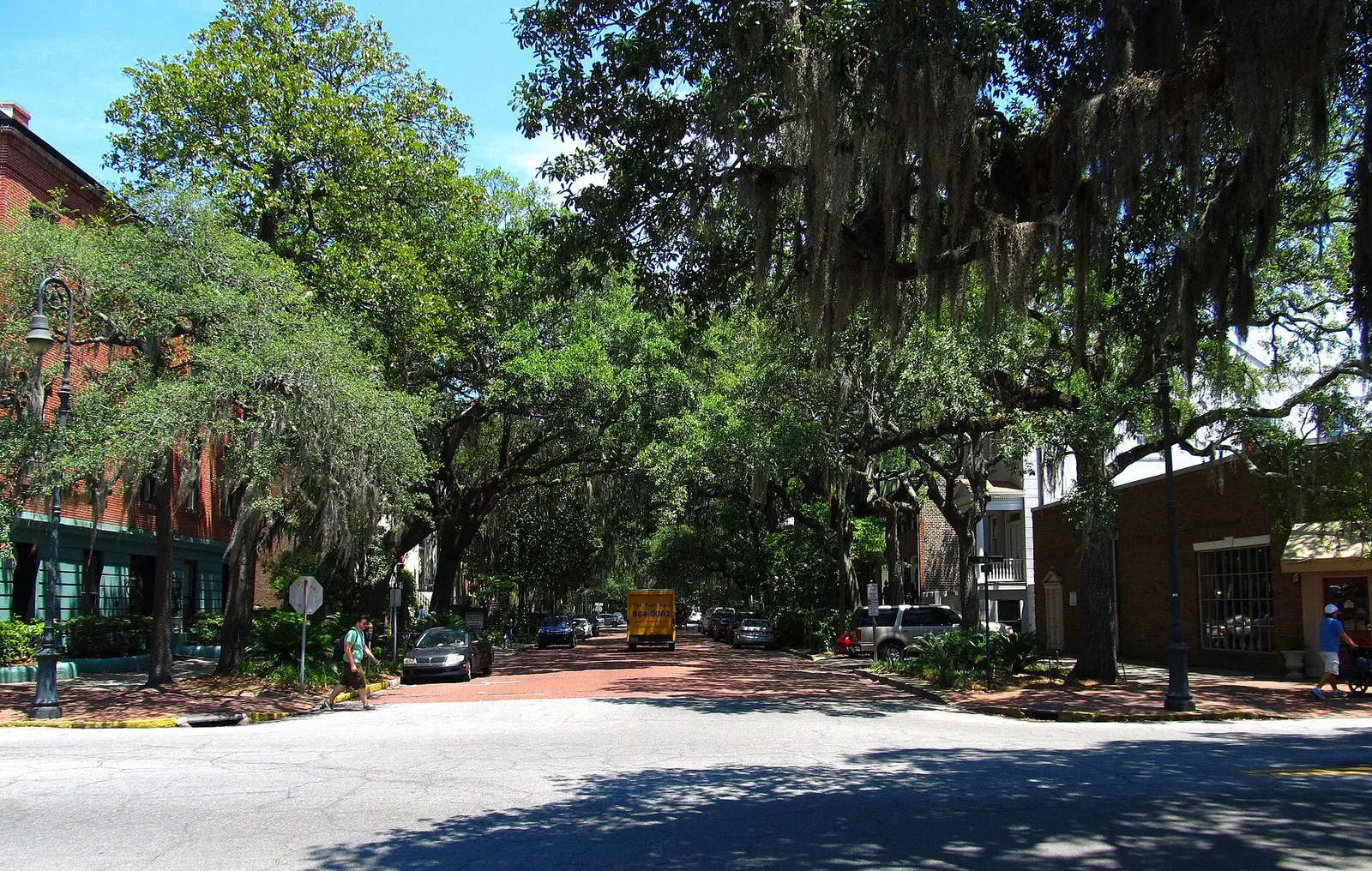
Savannah is Georgia's first city, founded in 1733 on a bluff above the Savannah River and laid out as a grid of public squares that still anchors one of the largest National Historic Landmark districts in the United States. The core experiences are free: wandering square after live-oak square, the fountain and canopy of Forsyth Park, the cobblestones and old cotton warehouses of River Street, and the Victorian strange-beauty of Bonaventure Cemetery. The paid highlights run from the colonial ruins and oak avenue of Wormsloe to a ghost tour industry the city licenses. Savannah suits slow travelers, couples, and design and history people more than nightlife seekers, pairs naturally with Charleston two hours away, and works entirely on foot. Give it two full days, add Tybee Island for a beach half-day, and come in spring or fall; summer is theatrical humidity.
Top sights at a glance
Savannah Historic District
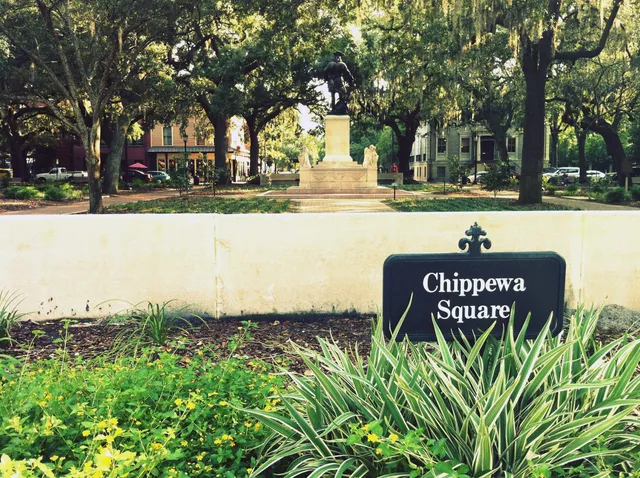
The 2.2-square-mile district Oglethorpe planned in 1733: a grid of wards each centered on a public square, 22 of them built and 21 surviving, strung with live oaks, azaleas, ironwork, and 18th and 19th-century houses from modest clapboard to the Isaiah Davenport masterpiece. Walking square to square, Johnson with its fountain and philosophical sundial, Chippewa where a certain Forrest Gump bench once sat (the film location; the prop itself lives in the history museum), Monterey with its war memorials, is the city's essential activity and costs nothing but shoe leather.
Good to know · Free and walkable end to end in a long morning; start at Johnson Square, the oldest, and work south square by square to Forsyth Park. The visitor center on Martin Luther King Jr. Boulevard sells guided walking and trolley tours, and the city licenses its ghost guides, so the evening tours skew genuinely informative rather than pure camp. Park the car in a garage and forget it; the district's one-way streets are not worth driving.
Forsyth Park
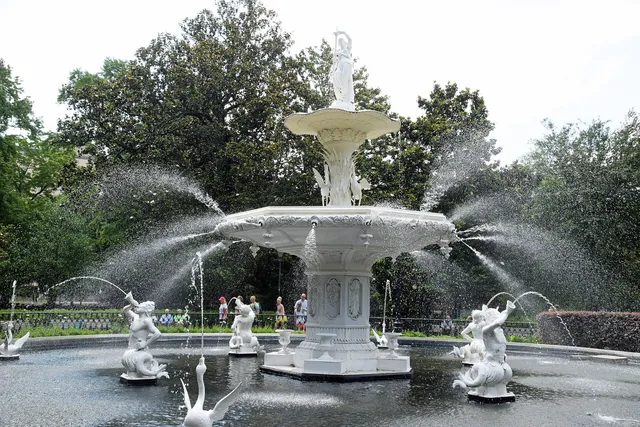
The 30-acre southern anchor of the historic district, laid out in the 1840s and anchored by the 1858 Forsyth Fountain, a tiered cast-iron fantasy of cherubs and tritons that has become the single most photographed object in Georgia. Under a canopy of live oaks and Spanish moss, the park holds a fragrant garden for the blind, a Confederate-era monument terrace, tennis courts, and a Saturday farmers market that doubles as the city's social register. It is the district's front yard, and every walk south ends here.
Good to know · Free and open dawn to dusk; the fountain photographs best in morning light with fewer people in frame. The farmers market runs Saturday mornings on the south end, and the café kiosk by the garden makes the park a breakfast destination. After dark the park edges get quiet, so keep evening walks to the better-lit square streets north.
River Street
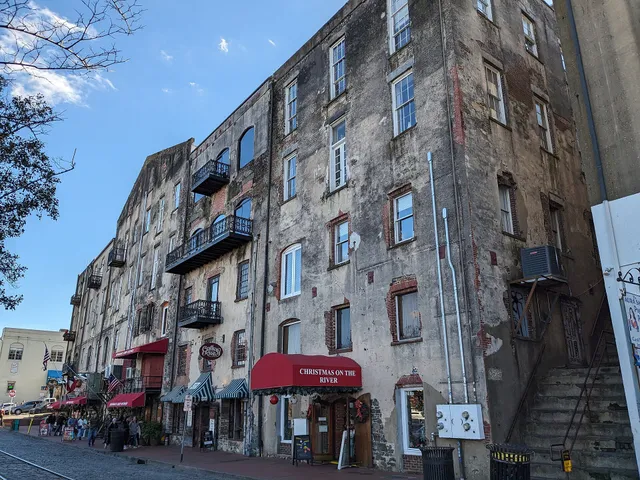
The cobblestone quay below the city's 40-foot bluff, where 19th-century cotton warehouses now hold shops, galleries, candy kitchens pulling taffy in the window, and bars with river views, all facing the working Savannah River and the big container ships and paddlewheel boats that still use it. The stone-and-ballast cobblestones themselves are ship ballast from two centuries of trade, and the iron bridges and ramps connecting the bluff (Bay Street level) to the river are called the Factors Walk walks. Sunset with a ship passing is the moment.
Good to know · Free to stroll; the walk down from Bay Street via the steep ramps or the modern elevator by City Hall. The street is liveliest late afternoon through evening, and quietest, best, at 8 a.m. Watch your step on the cobblestones and the train tracks of the old factors' line. The free Belles Ferry crosses the river to the inn-and-restaurant row of Hutchinson Island if you want the skyline view back.
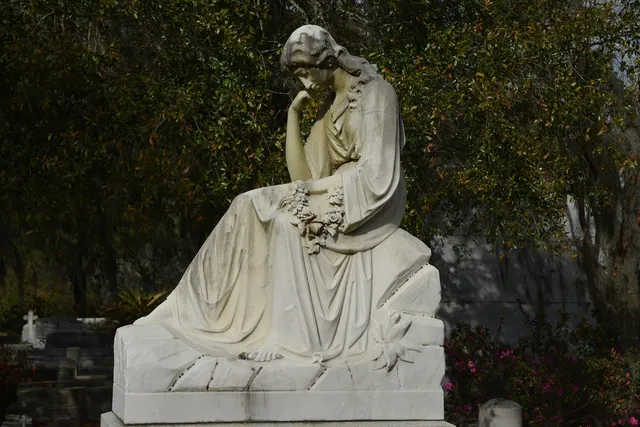
Bonaventure Cemetery
The 160-acre Victorian cemetery on the Wilmington River, east of downtown, made famous by Midnight in the Garden of Good and Evil, whose cover statue, the Bird Girl, has moved to a museum downtown but whose moss-hung avenues of family plots remain the city's most atmospheric hour. Statuary angels and broken columns, azaleas in March, the riverside section's live oaks, and the graves of poet Conrad Aiken and lyricist Johnny Mercer give it a strange serenity that justifies the pilgrimage. It is still an active city cemetery, which keeps the tone respectful.
Good to know · Free to enter; open daily during daylight hours (the city posts current times with its cemeteries information at savannahga.gov). It sits about 10 minutes east of downtown by car or rideshare, with parking inside; stop at the visitor center at the entrance for a map, since the famous graves are spread out. The historical society runs periodic guided tours; check its calendar if you want interpretation rather than wandering.
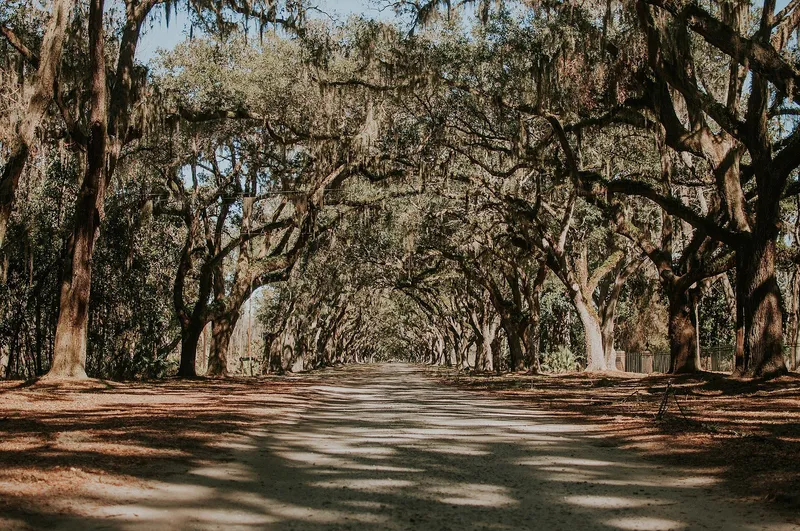
Wormsloe Historic Site
The colonial estate of Noble Jones, one of Savannah's original 1733 settlers, whose tabby ruin, a kind of oyster-shell concrete, is the oldest standing structure in Savannah, and whose entrance avenue is the photograph you have already seen: a mile-and-a-half corridor of live oaks planted in the 1890s, arched over and ghost-pale with Spanish moss. The state historic site adds a small museum, a nature trail along the marsh, and costumed interpretation of the 1730s colonial life at the fortified house site.
Good to know · Open daily 9 a.m. to 4:45 p.m. except Thanksgiving and Christmas; admission is $12 for adults (18-61), $9 for seniors 62+, $5.75 for youth 6-17, plus tax, per gastateparks.org/Wormsloe. It is 20 minutes southeast of downtown; go at opening for the empty avenue, since by 10 a.m. the arches have a photo line. The oak avenue itself is a public road, so drivers pass through the frame; shoot from the sides and mind the cars.
Savannah is the city that America’s usual rules forgot to spoil. General Sherman ended his March to the Sea here in December 1864 and, the story goes, found it too beautiful to burn, handing it to Lincoln as a Christmas present instead. Whether or not the sentiment was that tidy, the outcome was: a 1733 city plan of public squares survived intact, and today those 21 squares, strung like moss-draped rooms along a walkable grid, hold one of the largest historic districts in the country. The city around it runs on ghosts, art students, and the river trade: the Savannah College of Art and Design reupholstered the warehouses, the licensed ghost-tour industry monetizes the cemeteries, and container ships the length of three football fields slide past the tourist bars on River Street. Two days is enough to fall for it; most people plan a return.
A Bit of History
James Oglethorpe founded Savannah as the capital of the new colony of Georgia, Britain’s buffer against Spanish Florida and a debtors’-haven social experiment, laying out a town plan of wards, trust lots, and tything lots around central squares that urban planners still study. Cotton made the city rich after Eli Whitney’s cotton gin, invented near Savannah, made upland short-staple cotton profitable; the warehouses of River Street and the mansions round the squares date from that antebellum apex. The Civil War arrived gently by siege’s end, two devastating fires in 1796 and 1820 and yellow-fever years did more damage than Sherman did, and the twentieth century brought decline, then one of America’s great preservation stories: the Historic Savannah Foundation, founded in 1955, saved square after square of houses that other cities would have bulldozed for parking.
Modern Savannah holds about 150,000 people, a major port, and a tourism economy layered with SCAD’s design-world energy. The city’s St. Patrick’s Day celebration, dyed-green fountain included, is among the largest in America, and it books the town solid a week ahead.
Culture & Daily Life
Savannah’s daily texture is its slowness. The squares do the socializing, benches and shade and wedding photos, and the day runs early: morning light through the oaks is the local religion, and the serious photographers are out by 7 a.m. Two practical notes shape a visit. First, the to-go cup: Savannah allows open alcoholic drinks through much of the Historic District, a plastic-cup culture that surprises visitors, and the ordinance is specific: plastic only, 16 ounces or less, no glass bottles or aluminum cans, consumed only within the district’s posted boundaries (the city publishes the boundary map at savannahga.gov); step outside the line with a drink and it is a citation. Second, the ghost economy is licensed: the city tests and licenses its ghost tour guides, which sounds like a joke until you take one and realize the history is real, the haunting is optional belief, and the storytelling is genuinely excellent. Either way, book evening tours ahead in spring and fall.
The art-school presence means galleries, film locations, and a young population that keeps the coffee and bar scene lively without turning the town into a party capital, Tybee Island does that on summer weekends. Guns, a topic some first-time visitors ask about: Georgia’s rules are ordinary American; the practical Savannah reality is a walkable downtown where the risks are heat, cobblestones, and overpriced parking, not firearms.
Nature & the Outdoors
Savannah sits on coastal plain, flat and shaded, with the Savannah River on one side and salt marsh on the other. The city’s own canopy is the outdoor headline: live oaks older than the republic, planted in deliberate allées, hung with Spanish moss (which is an air plant, not a parasite, and does not hurt the trees). Forsyth Park, the 30-acre south anchor, is the green room; the offsets are the Savannah-Ogeechee Canal trail and the marsh boardwalks at Wormsloe. Twenty minutes east, Tybee Island gives the visit its beach: a real barrier-island town with a lighthouse you can climb, a fishing pier, and dolphin-watching boats. The North Beach end, by the lighthouse, is the quiet one.
Wildlife is lowcountry standard: herons, egrets, the odd alligator in freshwater lagoons (admire at distance; do not feed, ever), and the Atlantic’s sea turtles nesting on Tybee in summer. The heat is the real outdoor risk from June through September, when the humidity turns midday walks into endurance events; carry water, wear a hat, and treat the sun seriously, and for any trip, sort medical insurance at /guides/health-insurance-safety/ because an American ER visit without coverage is a five-figure education.
Food & Drink
Savannah eats lowcountry: shrimp and grits, she-crab soup, fried green tomatoes, oysters in the R months, and pralines cooling on marble slabs in the candy kitchens of River Street, whose owners hand out samples with the recklessness of people who know the second piece sells the pound. The dining map runs from the historic inn dining rooms and riverside decks of the district to the lunch counters and family kitchens of the south side; a century-old ice cream parlor on Broughton Street still draws a line in every season, and the Starland District, south of Forsyth, holds the young kitchens and natural-wine bars. Expect US$15-30 casual, US$60-100 with drinks at the historic rooms, and Sunday brunch waits on weekends.
Drinks culture leans Southern: bourbon lists, mint juleps in the tourist belt, and a growing Georgia wine and cider presence. Tipping is standard, 18-22 percent at tables and $1-2 per drink at bars, arithmetic at /guides/tipping-and-sales-tax/. Chatham County’s combined sales tax runs about 7 percent, added at the register, so the sticker is never the total.
Top Sights
Savannah Historic District
Start with the grid Oglethorpe drew and work it square to square. The classic line runs from Johnson Square, the oldest and the financial district’s lunch spot, through Wright and Chippewa, where the Forrest Gump bench scene was filmed (the bench itself was a prop; the square is real), to Monterey and Calhoun on the southern march toward Forsyth Park. Between squares, the house museums punctuate the walk: the Davenport House, the preservation movement’s first save in 1955, the Owens-Thomas House with its rare urban slave quarters interpretation, and the Mercer Williams House of Midnight fame. You cannot do all of them; pick one or two and walk the rest.
Practicalities: the district is free and best on foot, with guided walking tours from the visitor center adding the stories the plaques don’t. The one-way streets and cobblestones punish driving, so garage the car once. In March and April the azaleas bloom and every square photographs like a set; in October the light goes long and gold. The squares’ benches are public; sit awhile, that is not a suggestion, it is the activity.
Forsyth Park
Every walk in Savannah ends at Forsyth, the 30-acre green that closes the historic grid. The 1858 fountain, cast-iron and Paris-inspired, anchors the north end in a spray of tritons and cherubs that the city dyes green each St. Patrick’s Day; the fragrant garden, planted for the blind with rosemary and gardenia and labeled in braille, sits on the east side; the Confederate monument terrace and the bandshell hold the middle; and the south end holds the courts, the cafe, and the Saturday farmers market that runs most of the year. The canopy overhead, live oaks with resurrection ferns that green up after every rain, is the show.
Go early or go late: the fountain photographs best before 10 a.m., the park socializes from late afternoon, and the farmers market sets up Saturday mornings from spring through fall. It is free, it is open, and the surrounding mansions, along the park’s Bull Street axis especially, are the reason preservation tourists make the walk south in the first place.
River Street
The bluff drops 40 feet from Bay Street to the river, and the cobblestone ramp-streets between, the Factors Walk, thread through 19th-century cotton warehouses threaded with iron bridges, down to the quay where Savannah actually made its money. River Street today is the tourist version of that: a mile of shops, galleries, restaurants, and bars in the old warehouses, taffy and praline kitchens working in the windows, paddle-wheel riverboats boarding at the dock, and the working river itself still carrying container ships that dwarf everything, sliding past close enough to feel the wake.
Time it twice. Once at 8 a.m., when the cobblestones are empty, the coffee is fresh, and the light comes up the river; once at dusk, when the bars fill and the ships’ lights double in the water. The free Belles Ferry crosses to Hutchinson Island for the skyline view back. Mind the cobblestones and the rails, they are uneven in the specific way that rolls ankles, and keep the to-go cup inside the district rules.
Bonaventure Cemetery
Bonaventure, on a bluff over the Wilmington River ten minutes east of downtown, is what happens when a Victorian cemetery, a hardwood swamp, and a moss canopy age together for 170 years. The avenues are named for trees and lined with family plots, angels, and obelisks; the grave of songwriter Johnny Mercer, whose epitaphs quote his own lyrics, draws music pilgrims, and poet Conrad Aiken’s bench grave, ordered so visitors could sit and share a drink, draws everyone else. The Bird Girl statue on the Midnight in the Garden of Good and Evil cover stood here until the crowds got serious; she now lives safely in the Telfair Academy downtown, and the avenue she made famous is quiet again.
Free and open in daylight; pick up the map at the entrance visitor center, since the famous graves are a fifteen-minute walk apart, and drive or bike the big avenues rather than walking the whole acreage in summer heat. The historical society offers periodic guided walks that add the stories; March, when the azaleas bloom against the moss, is the peak season for it.
Wormsloe Historic Site
The oak avenue is the most photographed corridor in Georgia, a mile and a half of live oaks planted in the 1890s over a sandy road that narrows to a vanishing point of green gloom, and it leads to one of the oldest English settlements’ remains in the state: Noble Jones’ fortified house, built of tabby, burned shell-and-lime concrete, of which the standing section is the oldest ruin in Savannah. Jones arrived with Oglethorpe in 1733; his descendants kept the estate, and the state historic site now interprets the colonial period with a museum, a short film, a nature trail to the marsh, and, on program days, costumed demonstrations of 1730s life.
Admission runs $12 for adults, $9 seniors, $5.75 youth, plus tax, and the gates open daily at 9 a.m. and close at 4:45 p.m., Thanksgiving and Christmas excepted. The two rules that matter: come at opening, both for the empty avenue and before the tour buses, and shoot from the avenue’s edge, because the road under the oaks is a real road with real cars. An hour and a half covers the museum, the ruins, and the photos; longer if the colonial program is running or the marsh trail calls.
Getting There & Around
Savannah/Hilton Head International (SAV) is 20 minutes from downtown, with nonstops up and down the East Coast; Amtrak’s Silver Meteor and Palmetto call at the Savannah station three miles west of the historic district, an easy rideshare hop. I-95 passes 10 miles west, making Savannah the natural overnight on any East Coast drive, and I-16 dead-ends downtown from Atlanta, a 3.5-3.75 hour drive.
Once parked, walk: the historic district is 15 minutes end to end, and the DOT runs a free shuttle around downtown, plus the river ferry. Cars matter for three things only: Wormsloe, Bonaventure, and Tybee Island, all within 25 minutes. March through May and October, the parking garages fill by mid-morning on weekends; arrive with a garage plan rather than a street-parking dream.
Where to Stay
Stay inside the Historic District on a first visit: the inn-and-B&B stock around the squares, Oglethorpe to Forsyth, puts the entire town under your feet, at rates that peak with the azaleas in April and the St. Patrick’s week in March, when the city books out entirely. The Victorian District, immediately south, trades a 10-minute walk for noticeably lower rates and gorgeous rehabilitated houses, with the standard city-fringe caution at night. Pooler, out by I-95 and the airport, is the chain-hotel value play for drivers passing through. Resort and parking fees are real at the bigger properties; run the itemized total through /tools/real-price-calculator/ before you book, and remember the March and October windows need 2-3 months’ lead.