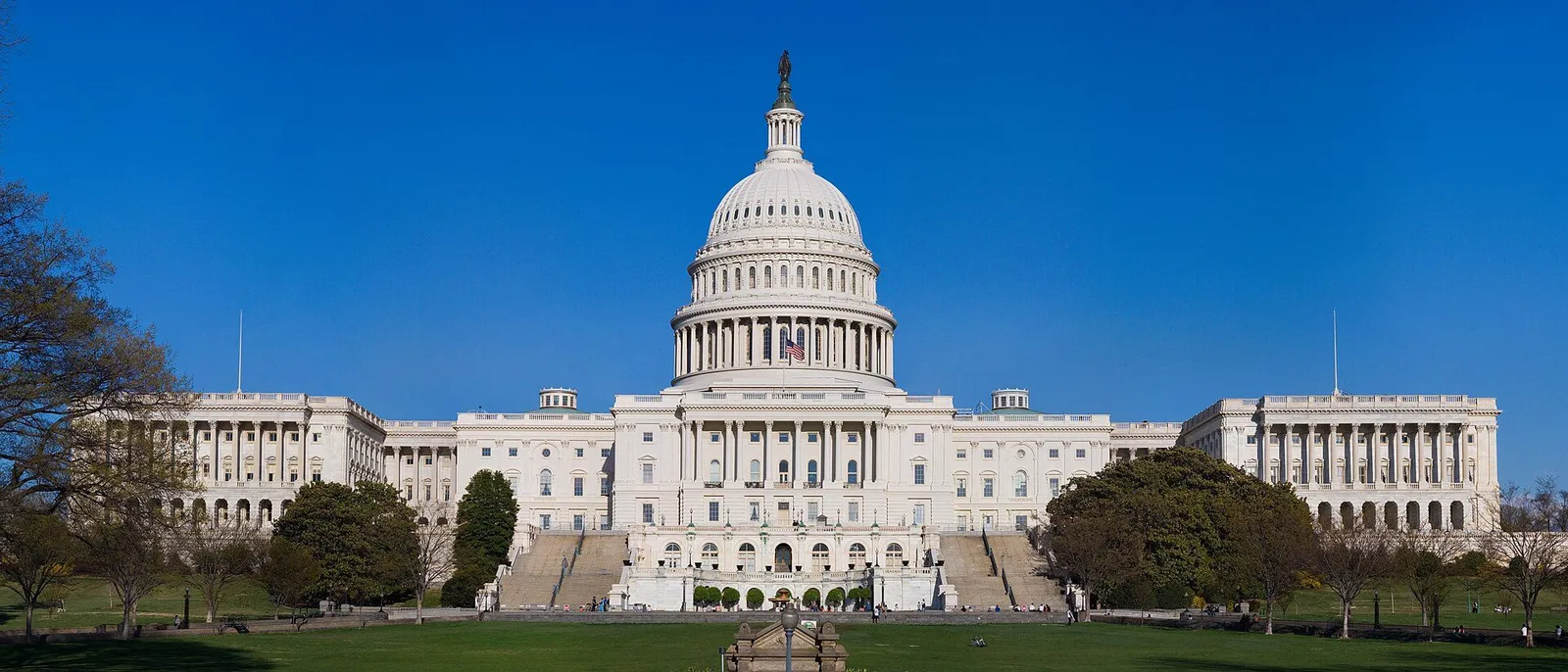
Washington, DC is the American capital and the rare world capital whose headline experiences cost nothing: the Smithsonian museums, the monuments on the National Mall, the Capitol tour, even the White House if you plan far enough ahead. The city reads like a textbook brought outside, but it is also a real town of 700,000, with rowhouse neighborhoods, a serious food scene shaped by half a century of global arrivals, and the best-run metro system of any US city. First-timers should walk the Mall in one long day, split the museums across two more, and save an evening for the monuments after dark, when the crowds thin and the marble glows. Give it three to four days. It pairs naturally with New York and Boston by train, and it suits travelers who like their sightseeing substantive and their budget intact.
Top sights at a glance
National Mall
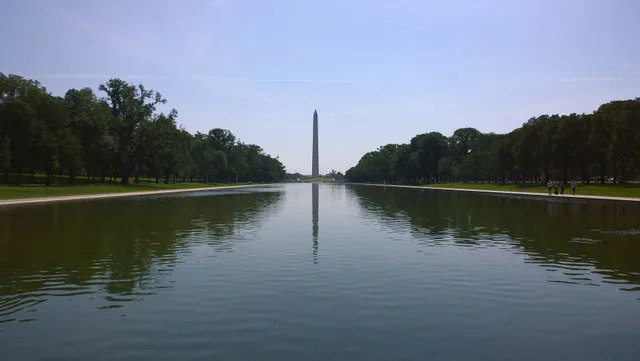
The National Mall is the two-mile green corridor between the Capitol and the Lincoln Memorial, and it is the single most symbolic walk in the United States. The Washington Monument rises at its center, the White House sits a few blocks north, and the World War II, Vietnam, Korea, and Lincoln memorials line the route west. Every one of them is free, open late, and best seen both by day and after dark.
Good to know · There is no ticket and no gate; arrive by Metro at Smithsonian or Federal Triangle stations. Walking the full length takes about 90 minutes plus stops. Ride the DC Circulator-style buses if feet fail, and come back after 9 p.m., when the memorials are lit and nearly empty.
White House
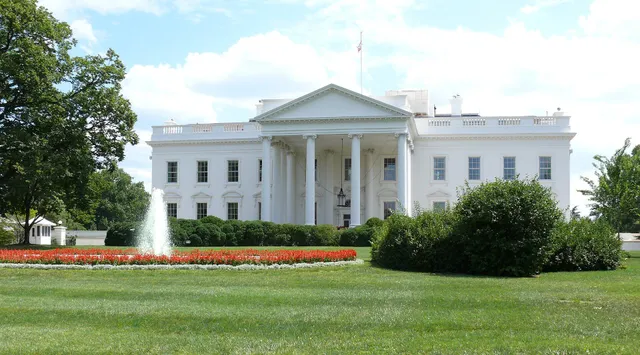
The White House is the working home of the American president and the most photographed fence in the world. Even without a tour ticket, the view from Pennsylvania Avenue and the South Lawn viewpoint in Lafayette Square justify the walk. Inside, the public tour runs through the State Floor rooms, an East Wing-to-State-Dining-Room route where the Secret Service answers questions as you go.
Good to know · Tours are free but must be requested through a member of Congress (for US citizens) or your country's embassy, 7 to 90 days ahead, as of October 2026. Apply the day your dates are fixed; approval is never guaranteed. Photos without a ticket: Lafayette Square, north side, mornings.
Smithsonian Museums
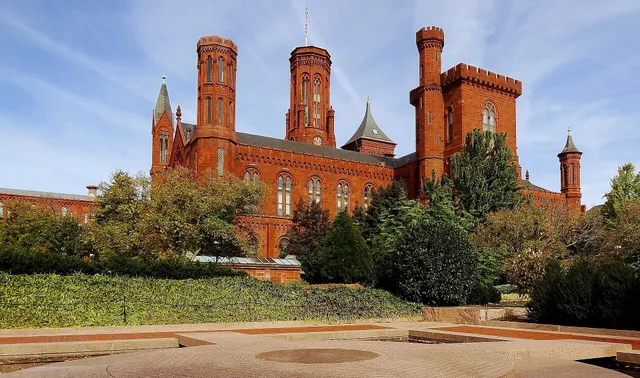
The Smithsonian is the world's largest museum complex, and its Washington flagships are free: the Air and Space Museum, the Natural History Museum (the Hope Diamond), the American History Museum, the National Gallery of Art next door, and more than a dozen others. This is the argument for three days in Washington: you can walk into the best museums in the country on a whim, stay as long as your legs hold out, and pay nothing.
Good to know · Free, no tickets for general entry; most museums run 10 a.m. to 5:30 p.m. (check si.edu, since hours vary). Do one museum per morning and one per afternoon; museum fatigue is real by hour three. The Air and Space Museum's long renovation was slated to finish by mid-2026, so verify gallery openings at airandspace.si.edu.
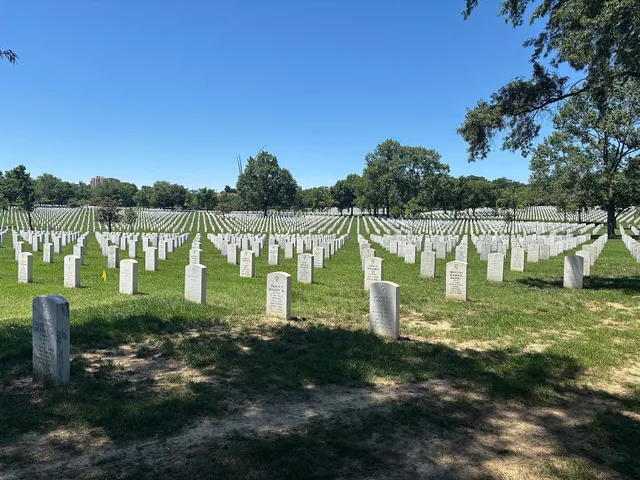
Arlington National Cemetery
Across the Potomac, 400,000 American service members rest on the hillsides of the old Lee plantation, in rows of white headstones that stop conversation. The centerpiece is the Tomb of the Unknown Soldier, guarded around the clock since 1937, where the Changing of the Guard runs with geometric precision, and John F. Kennedy's eternal flame overlooks the capital he served. It is the most moving hour available in Washington.
Good to know · Entry is free via the Welcome Center (all visitors pass security screening; keep bags light). The cemetery opens daily, roughly 8 a.m. to closing depending on season. The Changing of the Guard runs hourly in winter and every half hour in summer; check the schedule at arlingtoncemetery.mil and arrive ten minutes early.
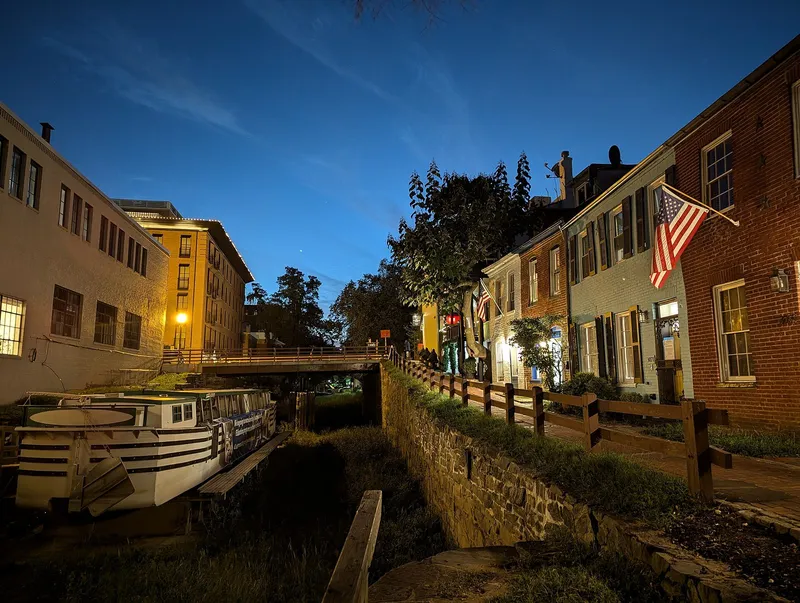
Georgetown
Georgetown is the city's oldest neighborhood, a pocket of 18th-century streets, rowhouses, and the brick towpath of the C&O Canal, which once hauled coal from the Appalachians. Today it is where Washington walks: M Street's shops, the university's ivy-quadrangle campus, waterfront parks where the Potomac widens, and the cupcake-and-coffee trail of 2000s television fame. No Metro stop reaches it, which is exactly why it feels like a town apart.
Good to know · Free to explore; take the bus or a 20-minute walk from Foggy Bottom station. Walk the C&O Canal towpath and cross the Key Bridge into Virginia for the classic river view back at the neighborhood. Weekends pack M Street; go Sunday morning for quiet streets and open cafes.
See it in motion
Some places earn a moving picture
Stills can't show how this place moves: the drift, the light show, the crowd flow. We picked a recent, high-quality walkthrough rather than a promotional cut.
Washington DC National Mall Walk: Lincoln Memorial to the US Capitol
EMan Walks Travel Videos · YouTube · plays on click
Embedded via YouTube's official player (privacy-enhanced mode). Video: Washington DC National Mall Walk: Lincoln Memorial to the US Capitol by EMan Walks Travel Videos. Not affiliated with Wide Open America; screened for quality and accuracy on 2026-10-15.
Washington, DC is the only capital on earth that hands a visitor its entire monumental core for free: the Smithsonian museums, the monuments, the Capitol tour, and even the White House, if you write early enough. The city was drawn on a map in 1791 for exactly this purpose, and it shows: a vast green axis, white marble at each end, museums in a row like books on a shelf. What surprises first-timers is the other Washington, the one past the Mall’s edge: leafy rowhouse neighborhoods, a first-rate food scene, cyclists crossing the Potomac at dawn, and a skyline that politely stays out of the way. DC is compact, honest about its own history, and easy on a budget, because its best rooms cost nothing. Give it three or four days, walk more than you ride, and book the two things that need booking (the Washington Monument elevator, the White House if you can) before leaving home.
A Bit of History
The capital was a compromise written into the 1790 debt deal between Hamilton and Jefferson: the federal government would assume the states’ war debts, and the new nation’s capital would sit on the Potomac, between North and South. George Washington picked the exact site, and Pierre L’Enfant, a French-born engineer who had fought in the Revolution, drew a baroque plan of grand avenues, diagonal boulevards, and ceremonial squares overlaid on a grid. L’Enfant was fired before the mud dried, but his plan is the city you walk: Pennsylvania Avenue still runs diagonally from Capitol to White House, and Dupont Circle still sits in its circle.
The 19th-century city was a part-built swamp of ambition: the Capitol and White House rose slowly (the British burned both in 1814), enslaved people built much of what survived, and the C&O Canal and later the railroads made Georgetown and then the whole region rich on trade. The Civil War turned Washington into an armed camp, and its aftermath made it the symbolic stage of the country: the Lincoln Memorial (1922) faces the Capitol exactly where Martin Luther King Jr. would stand in 1963.
The 20th century filled in the monuments and, less glamorously, created the region’s lasting inequality: until home rule arrived in 1973, Congress governed the city directly, and DC residents could not vote for president until 1961. The city became majority-Black for much of the 20th century, home to a celebrated Black middle class centered on the U Street corridor (Duke Ellington’s neighborhood), and its license plates still carry the protest line “Taxation Without Representation.” The September 11 attacks and the January 6, 2021 Capitol riot both left marks you can see: new security screening everywhere, and repaired damage in the Capitol itself, honestly labeled on the tour.
Culture & Daily Life
Washington runs on two calendars: the federal government’s and the university year. Roughly one in four workers here holds a federal job or contract, which gives the city its polite, briefcase-carrying tempo and its obsessive local news habit. Politics is the local sport, and taxi drivers will give you better analysis than most cable panels. But DC is also a majority-Black city with deep Southern roots (it sits below the Mason-Dixon line), a huge Salvadoran community in Columbia Heights, the largest Ethiopian community in the United States, and a young, highly educated renter class that turns Adams Morgan and the Wharf loud on weekends.
The cultural arithmetic surprises visitors: this is the most educated big city in America, and it behaves like it. Free museums mean locals actually use them, every neighborhood has a library worth sitting in, and the conversation at the next table is more likely to be about appropriations bills than celebrity gossip.
Practical notes. Tipping follows the national standard: 18 to 22 percent for table service, $1 to 2 per bar drink, and sales tax sits at 6 percent in the district, the lowest of the three cities on the Northeast corridor (our /guides/tipping-and-sales-tax/ page has the full picture). The tourist core is heavily patrolled and safe by US standards; some residential wards east of the Anacostia River see gun violence that never touches visitors. If the news shows debates about National Guard deployments, the traveler’s reality is unchanged: venues ban weapons, and staff instructions cover every situation.
Nature & the Outdoors
Washington is a green city by design, and its best free pleasure is the network of water and woods threading through it. Rock Creek Park, a 1,754-acre forest valley running the length of Northwest DC, has been a park since 1890, older than the national park system itself, with hiking trails, horse paths, and picnic groves. The C&O Canal towpath starts in Georgetown and runs 184.5 miles along the Potomac to Cumberland, Maryland; most visitors walk the first mile and rent kayaks at the boathouse under Key Bridge.
The Potomac is the city’s summer living room. Kayak and paddleboard rentals operate from the Georgetown waterfront; the Mount Vernon Trail, a paved 18-mile path on the Virginia side, carries cyclists past the airport with the monuments across the river. East Potomac Park’s Hains Point is the local long-run loop, nearly flat, water on three sides.
The National Arboretum (free; check usna.usda.gov) is the sleeper pick: 446 acres of bonsai collections, ruined Capitol columns lying in a meadow, and almost no tourists. One safety note, the same one that applies across America: if you need medical care, go to urgent care, not the ER, unless it is a true emergency, because US hospital bills without insurance are punishing. We explain at /guides/health-insurance-safety/.
Food & Drink
Washington’s food scene spent decades as a joke (power lunches and hotel restaurants) and then, over the past twenty-five years, became one of the best in the country, built on the city’s immigrant communities and the wealth of the federal economy. The local essentials: a half-smoke (the city’s own spiced sausage, best at Ben’s Chili Bowl on U Street, an institution since 1958), Ethiopian platters of injera and wat eaten with your hands (U Street and Adams Morgan), Salvadoran pupusas in Columbia Heights, and Chesapeake Bay crab cakes, because the Bay is next door.
Price reality, as of October 2026: lunch from a food truck runs $12 to 18, a solid neighborhood dinner without drinks $30 to 55, and steakhouses near K Street clear $100 a head. Sales tax is 6 percent, and restaurant tipping is the national 18 to 22 percent; bar drinks run $9 to 16. The /tools/real-price-calculator/ handles the arithmetic.
Neighborhoods beat the Mall for eating: the Wharf, the rebuilt Southwest waterfront, packs dockside restaurants and a fish market that has operated since 1805; Union Market in Northeast is a food hall with global stalls; H Street NE is the local bar corridor; and the U Street corridor carries both history (jazz clubs where Ellington played) and the best late-night food. The Michelin Guide awards more stars per capita here than anywhere in the US, and lunch at a starred restaurant often costs a third of dinner, so if you want one big meal, book it at noon. Carry a water bottle, because Mall fountains are seasonal.
Top Sights
National Mall
The Mall is the reason Washington exists as a tourist city: two miles of lawn and elm allées stretching from the Capitol’s dome west to the Lincoln Memorial, anchored midway by the 555-foot Washington Monument. Around its edges sit a dozen free museums; at its western end the memorials stack up in sequence: the World War II memorial’s fountains and pillars, the black granite wall of the Vietnam Veterans Memorial carrying 58,000 names, the Korean War memorial’s steel patrol frozen in a field, and finally Lincoln himself, 19 feet of white marble looking east toward the dome where it all starts.
Walk it once in daylight and once after dark; the monuments stay lit and open all night, and the 9 p.m. version, when the crowds thin and the marble glows, is the one people remember. Everything is free and ungated. Practical moves: enter by Metro at Smithsonian station, hydrate (the reflecting pool stretch has no shade), and use the restrooms in the museums or the WWII memorial. For the Washington Monument elevator, grab a timed-entry ticket on recreation.gov about 30 days out, or claim one of the same-day tickets handed out at the monument lodge at 8:45 a.m.; free, with a small online booking fee (about $1) per ticket, as of October 2026.
White House
The White House has been the president’s house since John Adams moved in, unfinished, in 1800, and its image is so universal that seeing the real thing through the fence produces a strange double-take: it is smaller, older, and closer than you expect. The public viewpoint is Lafayette Square on the north side, or the South Lawn fountain visible from the Ellipse; both are free, always open, and best in morning light.
Going inside requires two things Americans themselves rarely manage: patience and a contact. Tours are free, run Tuesday through Saturday mornings as of October 2026, and must be requested 7 to 90 days ahead through a member of Congress for US citizens, or through your country’s embassy in Washington for international visitors (whitehouse.gov has the request details). Approval is never guaranteed, so treat it as a bonus, not a plan. Do not confuse this with the White House Visitor Center (free, downtown), which is a museum, not the house.
Smithsonian Museums
The Smithsonian is a bequest turned world treasure: an English scientist’s 1826 gift to the United States, now the largest museum complex on earth, with the Washington flagships lined along the Mall, every one free to enter. The essential four for a first visit: the National Air and Space Museum (the Wright brothers’ Flyer, the Apollo 11 command module; its multi-year renovation was slated to finish by mid-2026, so check gallery openings at airandspace.si.edu), the National Museum of Natural History (the Hope Diamond, the dinosaur hall), the National Museum of American History (the Star-Spangled Banner that inspired the anthem), and the National Gallery of Art, technically a separate institution but equally free, with the only Leonardo da Vinci painting in the Americas.
Hours run roughly 10 a.m. to 5:30 p.m. daily (verify at si.edu; hours vary, and peak days may require timed passes). Strategy matters more than stamina: one museum per morning, lunch, one more after lunch, done. The sleeper pick is the National Museum of African American History and Culture, the Smithsonian’s newest and most powerful; it uses free timed-entry passes released online in batches, so reserve ahead. The Air and Space Museum’s second building, the Udvar-Hazy Center near Dulles airport (free entry, parking fee, Space Shuttle Discovery inside), is worth it if you fly out of IAD anyway.
Arlington National Cemetery
Cross the Memorial Bridge from the Lincoln Memorial and you arrive at Arlington, 639 acres of hillside where 400,000 veterans and their families lie in rows of white stone so regular they read as a landscape art form. The estate belonged to Robert E. Lee before the Civil War; the Union buried its dead in his garden on purpose, and the house still stands above the river. The visit’s center is the Tomb of the Unknown Soldier, where an Army sentinel has walked a black mat, twenty-one steps each way, around the clock since 1937. The Changing of the Guard, with its inspected relief and folded-flag precision, runs hourly in winter and every half hour in summer; time your arrival for it. Kennedy’s grave and eternal flame sit on the slope below Arlington House.
Entry is free through the Welcome Center, where all visitors pass security screening (travel light; the rules mirror airport security). The cemetery opens daily, with seasonal hours listed at arlingtoncemetery.mil. The tram tour costs a few dollars and saves legs that the hillside will otherwise tax. Bring the same quiet you would bring to a cathedral, and give the funerals you may pass the respect of stopping.
Georgetown
Georgetown predates the capital itself by nearly a century: a tobacco port chartered in 1751, folded into Washington in 1871, and spared the office towers, so its grid of brick rowhouses, gas lamps, and 18th-century facades survives intact. The canal that made it rich, the Chesapeake and Ohio, now runs as a national historical park: a mule-towed barge era remembered by a lockhouse, a towpath you can walk or run, and lower locks you can watch operate. M Street and Wisconsin Avenue carry the shopping; the waterfront parks at the bottom of the hill hold the kayaks, the river views, and the sunset crowd.
There is no Metro station (neighborhood lobbying killed the tunnel in the 1960s), which is part of the charm and the practical challenge: take the bus or walk 20 minutes from Foggy Bottom. The classic loop: the canal towpath east from 31st Street, up Wisconsin’s boutiques, a coffee stop, down to the waterfront at sunset, then across the Key Bridge for the full postcard view back at the neighborhood’s steeples and chimneys. Free throughout, unless the shops get you; weekends bring crowds, so Sunday morning is the connoisseur’s slot.
Getting There & Around
Three airports serve Washington. Reagan National (DCA) is the convenient one, ten minutes by Metro’s Blue/Yellow lines from downtown; Dulles (IAD) sits 45 minutes west, connected by the Silver Line; BWI serves Baltimore and the northeast. From New York (about 3.5 hours) or Boston (about 7.5), Amtrak and its cheaper partner trains run the Northeast Corridor hourly; book ahead at amtrak.com, where fares are dynamic, and note that DC’s Union Station lands you downtown without an airport transfer.
Inside the city, skip the car entirely: parking at hotels runs $50 to 70 a night, and the Mall is mostly car-free anyway. The Metro is the best subway system of any US city for visitors: clean, safe, and signed in plain English, with fares by distance from $2.25 to $6.75 (weekday daytimes are priciest, evenings and weekends cap near $2.50), and buses at a flat $2.25, as of October 2026 per wmata.com. Tap a contactless credit card or phone straight at the faregates; no card purchase needed. The monuments themselves are best reached on foot: Smithsonian station drops you at the Mall’s door, and the full Mall walk is flatter than it looks.
Where to Stay
Penn Quarter and downtown, between the Mall and Chinatown, is the first-timer’s base: you walk to the museums, the Metro’s five lines converge here, and restaurants run the gamut, though hotels add the usual US “destination fees,” so check the total rate before booking.
Dupont Circle and Logan Circle are the character picks: rowhouse streets, independent cafes and bookshops, and a 15-to-25-minute Metro or walk commute to the Mall. Dupont suits museum marathoners; Logan and 14th Street suit night-owl eaters.
Capitol Hill (east) and the Wharf or Foggy Bottom (west) split the difference: Capitol Hill for morning runs past Eastern Market and a residential tone, the Wharf for waterfront dining with a Metro stop attached. Budget pickers should look at Arlington’s Rosslyn, one Metro stop across the river, where chains undercut DC prices for the same skyline view. Line items to check: DC room taxes add about 15 percent to the quoted rate, and parking runs $50 to 70 nightly. Spring cherry season (late March into mid-April) books out months ahead; so do major DC weekends, of which there are many, since protests and graduations fill rooms without warning.
Sources & verification (9)
- https://www.whitehouse.gov/visit-the-white-house/
- https://www.visitthecapitol.gov/plan-a-visit
- https://www.nps.gov/wamo/planyourvisit/index.htm
- https://www.recreation.gov/timed-entry-tickets/washington-monument
- https://www.si.edu/
- https://airandspace.si.edu/
- https://www.arlingtoncemetery.mil/Visit/Visitor-Information
- https://wmata.com/fares/index.cfm
- https://en.wikipedia.org/wiki/National_Air_and_Space_Museum