The Colorado Rockies Loop: Denver to Aspen and Back
An 8-day circle through Colorado's high country: Denver's Union Station start, two nights in Rocky Mountain National Park's alpine terrain, the Maroon Bells' twin fourteeners reflected in a lake, Great Sand Dunes' unlikely Sahara, and Colorado Springs' red-rock garden under Pikes Peak. The loop is about 900 miles of driving at altitude, sequenced to climb gradually (sleep low the first nights if you can), and it stacks four entirely different Colorado landscapes into one week. Timed-entry rules for Rocky Mountain's core corridor and the reservation-only Maroon Bells shuttle are the two logistics that make or break it; everything else is booking a car and pointing it at mountains.
Route: Denver Estes Park Rocky Mountain National Park Aspen Great Sand Dunes Colorado Springs
Colorado is the American mountain state in its purest form, and this loop samples all of it: a national park strung across the Continental Divide, the most-photographed peaks in North America, a dune field against a wall of mountains, and a garden of red rocks below a fourteen-thousand-foot summit, launched from and returning to Denver. Eight days is honest for the driving and the altitude; the loop runs about 900 miles, much of it above 8,000 feet, so build in the slow mornings, drink absurd amounts of water, and let the first day’s mild headache be the trip’s only drama.
Day 1: Denver
Arrive at DEN, take the A Line train to Union Station (see /destinations/denver/ for the city’s full brief), and spend the afternoon at altitude-moderate pace: LoDo’s blocks, the station’s Great Hall, and an early dinner. Sleep in Denver (5,280 feet), the lowest bed of the trip; the acclimatization logic pays for itself by Day 3.
Day 2: Drive to Estes Park, Rocky Mountain NP
Pick up the rental car in the morning (keep the A Line out of day one; the rental counters cluster downtown and at the airport) and drive the 1.5 hours to Estes Park. With your timed-entry reservation for the Bear Lake Road corridor (the corridor version is required even in early morning; see the park’s system on recreation.gov), spend the afternoon at Bear Lake and the Dream/Emerald Lakes walk, the park’s most photogenic three miles. Overnight in Estes Park, the park’s cowboy-flavored gateway.
Day 3: Rocky Mountain National Park, Full Day
The big day, and the altitude’s first test: drive Trail Ridge Road, the highest continuous paved road in America, over 12,183 feet past the Alpine Visitor Center, with tundra, elk, and the Continental Divide’s viewpoint stops strung along it. Return via the west side’s Kawuneeche Valley (moose odds) or backtrack for Old Fall River Road if it’s open and your brakes are brave. The fee math: $30 per vehicle entry plus the timed-entry reservation, and non-US visitors 16+ pay the 2026 $100 per-person nonresident surcharge at this park, see /destinations/denver/ for the full rules. Evening: Estes Park’s riverwalk dinner.
Day 4: Estes Park to Aspen
The transition day, 4-4.5 hours depending on route: I-70 west through the Eisenhower Tunnel, then either the standard route to Glenwood Springs and up the Roaring Fork valley, or, in summer, the spectacular alternative over Independence Pass (open roughly late May to October, closed to vehicles over 35 feet), Colorado’s highest paved pass crossing. Stop in Leadville, America’s highest city, for lunch at 10,000 feet. Arrive Aspen by evening; walk the pedestrian malls and eat in a town that mistakes itself for a European capital, charmingly.
Day 5: Maroon Bells
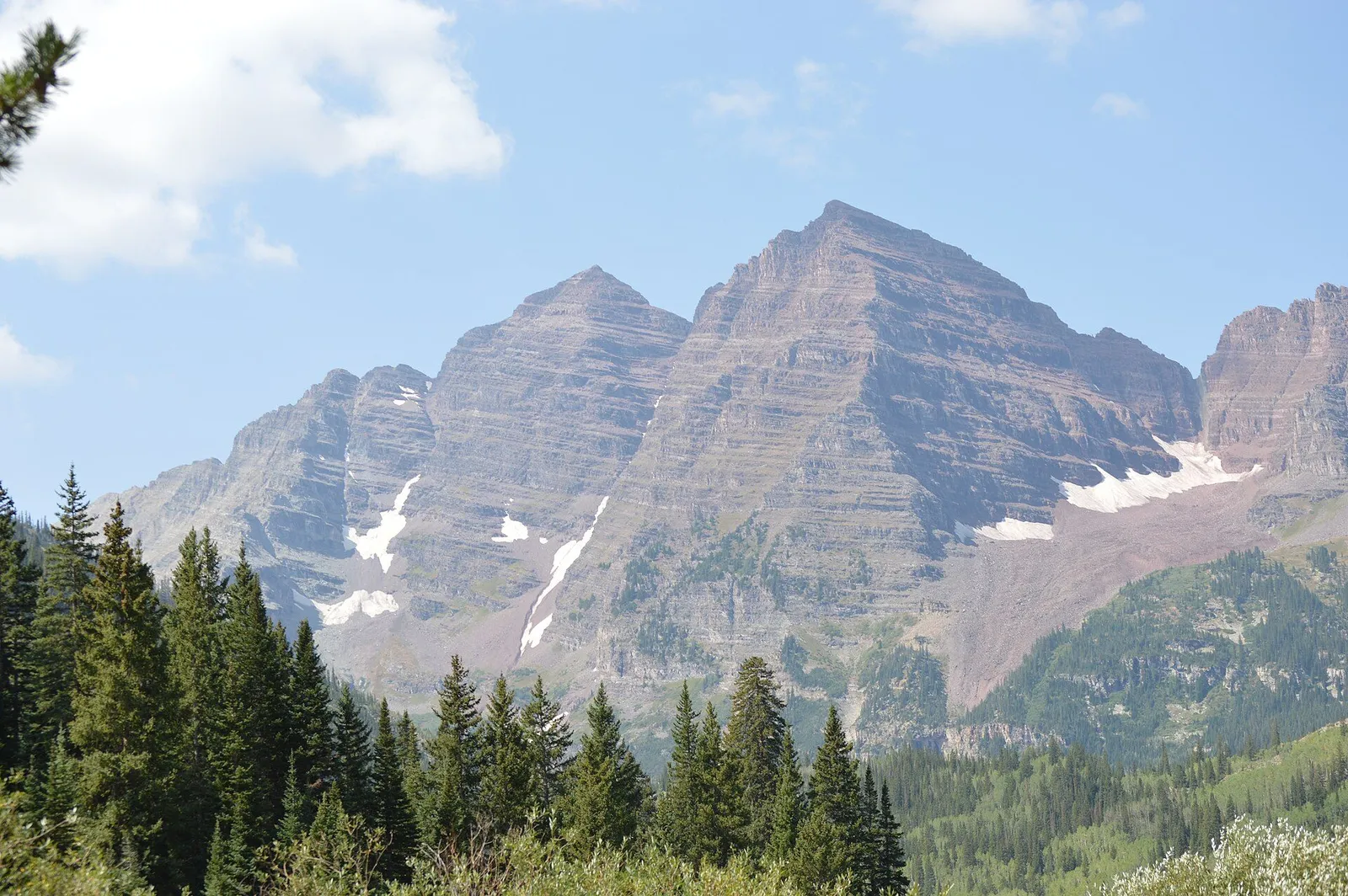
The reservation you made weeks ago pays off: the RFTA shuttle from Aspen Highlands (or the rare pre-dawn parking permit) up to Maroon Lake, where the Maroon Bells’ twin 14,000-foot pyramids stand reflected in still water, the single most famous mountain view in Colorado and a genuinely great one. Hike the Crater Lake trail, 1.8 miles each way into the bells’ amphitheater, and be back before the afternoon thunderheads build. The rest of the day: Aspen’s town, or the pass drive you skipped, or the John Denver Sanctuary’s quiet corners. Overnight Aspen again; tomorrow is the long leg.
Day 6: Aspen to Great Sand Dunes
The day’s drive, 3.5-4 hours south on US-24 and US-285 past Salida’s Arkansas valley, ends in Colorado’s strangest sight: 750-foot dunes, the tallest in North America, piled against the Sangre de Cristo range. Entry to Great Sand Dunes National Park runs $25 per vehicle. Time your arrival for late afternoon, when the sand cools and the light rakes the ridges, and climb the first High Dune for the sunset panorama; sand boards and sleds rent in the gateway. If it’s May or June, Medano Creek’s beach runs along the base, an alpine beach party the kids will not believe.
Day 7: Dunes to Colorado Springs
A morning walk on the dunes while the sand is still cool, then the 2.5-hour drive north to Colorado Springs. The afternoon belongs to Garden of the Gods, the free city park of towering red sandstone fins against Pikes Peak’s backdrop, drive the loop road and walk the Central Garden’s paved trail at golden hour. Overnight in Colorado Springs, positioned for the summit in the morning.
Day 8: Pikes Peak, Return to Denver
Summit morning, two ways: the Broadmoor Manitou and Pikes Peak Cog Railway’s 3.5-hour round trip, adult fares from $67 booked online (walk-up costs more; book ahead at cograilway.com), or the 19-mile Pikes Peak Highway by car, $18 per adult 16-plus, $8 per child 6-15, carload rates for full vehicles, plus a $2 per-vehicle timed-entry reservation when the reservation system runs in the May-November season (the highway’s own site posts current rules). At 14,115 feet, the summit’s donut shop and the view that inspired America the Beautiful deliver the trip’s coda. Then drive the 1.25 hours back to Denver for an evening flight, or overnight and fly in the morning, returning the car with the mountains still in the mirror.
Practical Notes
Transport: A standard rental car covers the loop; an SUV’s higher clearance is nice for peace of mind but the route is paved throughout. Reserve the Bear Lake corridor timed entry (recreation.gov) and Maroon Bells shuttle the same evening you book hotels; both are capacity-limited in summer. Independence Pass’s seasonal opening and Trail Ridge’s snow status are the two road checks to run the week you travel (the park’s road status page is updated live). Fuel is available in every town on the loop, and Denver’s DEN airport rental returns can add 40 minutes at peak; leave margin.
Budget: Entry fees run $30 Rocky Mountain (plus timed-entry fee, plus the $100 nonresident surcharge per person for non-US visitors 16+ at that park), $25 Great Sand Dunes, Garden of the Gods free, and Pikes Peak $67-plus by rail or the per-person highway fee, roughly $180-250 per vehicle plus the surcharge math for a non-US couple. Lodging swings hardest: Aspen peaks among America’s priciest small towns in summer, Estes Park and Salida run half its rates, so the two Aspen nights are the budget’s fulcrum. Estimate US$220-380 per person per day mid-range including hotels; the ski-town tax and resort-fee notes at /guides/where-to-stay/ apply, and the Real Price Calculator (/tools/real-price-calculator/) sorts the tax math.
Timing: Late June through September for the full loop (Trail Ridge Road and Independence Pass both open seasonally; Trail Ridge typically late May to mid-October); mid-September adds the aspen golds that make this Colorado’s prettiest fortnight, and books out a year ahead in the mountain towns. July-August afternoons build thunderstorms daily, do your high walks before noon, standard Rockies discipline. For altitude, the medical notes at /guides/health-insurance-safety/ are worth the read before a trip that spends four days above 8,000 feet.