Georgia and the Carolinas: Savannah, Charleston and the Smokies
A 9-day Southern loop from Atlanta through the two most atmospheric old cities in America and up into the Blue Ridge: Savannah's moss-draped squares, Charleston's pastel antebellum streets, Asheville's mountain-arts cool, and the most-visited national park in the country. The drives are short and gentle (never more than four hours), the food runs from Lowcountry shrimp and grits to Appalachian barbecue, and the whole route peaks in spring azaleas or October's blue-wall fall color. It is the ideal second trip for travelers who have done the Northeast, or a first trip for romantics.
Route: Atlanta Savannah Charleston Asheville Great Smoky Mountains
The American South rewards the traveler who slows down, and this loop is built to force exactly that: two colonial-era port cities an easy two hours apart, a mountain arts town above them, and the fog-washed national park that caps the drive. Atlanta anchors the flights (Delta’s mega-hub keeps fares competitive), and from there the route runs southeast to Savannah, northeast to Charleston, northwest to Asheville, and over the mountains before the interstate delivers you back. The cities carry the history, Blackbeard’s and cotton’s and the Civil War’s, and the food carries the rest; the park at the end recalibrates the whole trip in green.
Day 1: Arrive in Atlanta
Pick up the rental car and spend the first afternoon on the city’s essentials: the Martin Luther King Jr. National Historical Park in Sweet Auburn (free, the Ebenezer Baptist Church where he preached is the core), then Ponce City Market’s food hall in the old Sears building, and an evening walk on the BeltLine’s Eastside Trail. Sleep in Midtown; the drive east starts clean in the morning.
Day 2: Drive to Savannah
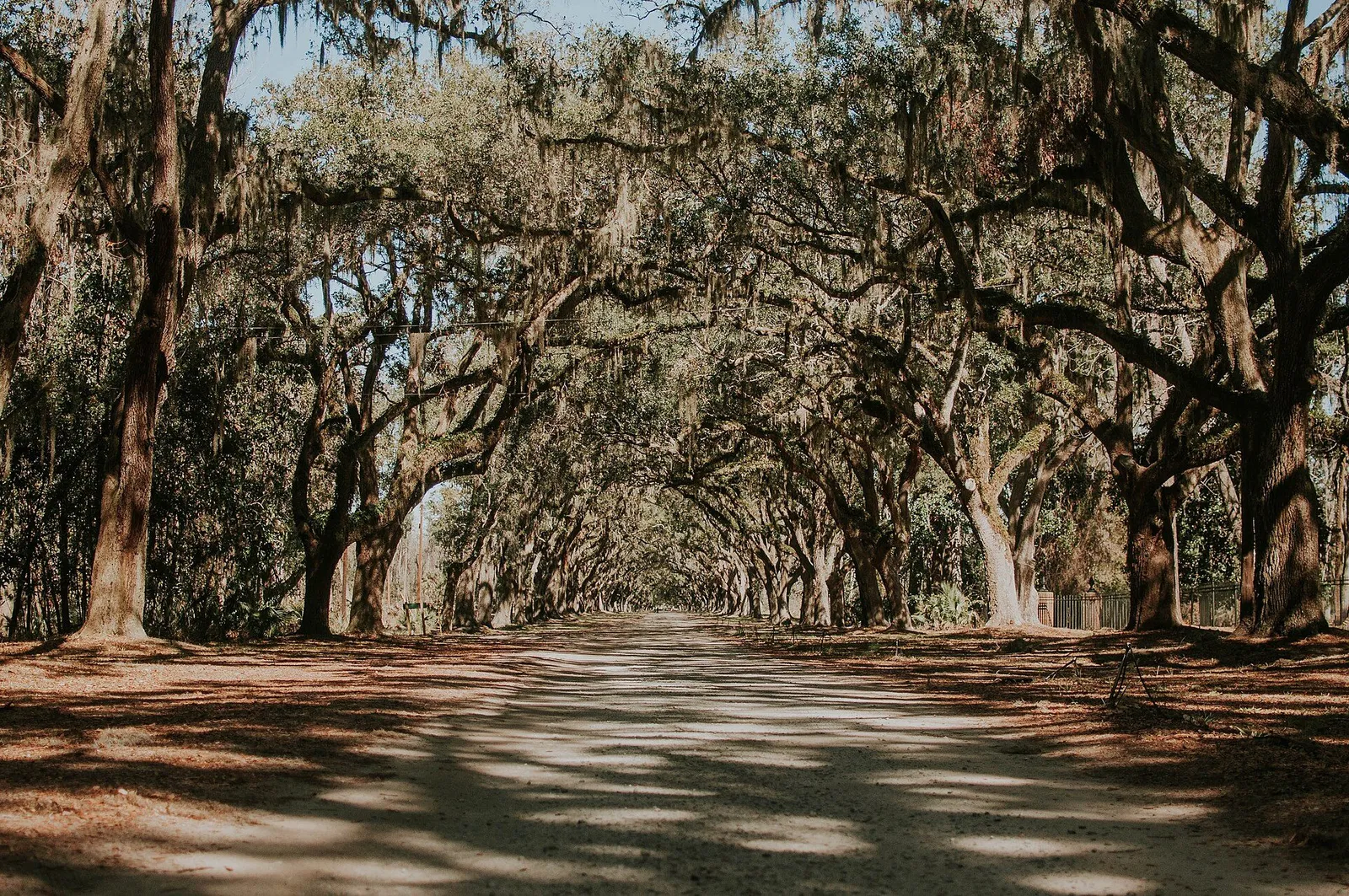
Atlanta to Savannah is 3.5-4 hours on I-16 and I-75/I-85 out of town, an easy morning’s drive; arrive by lunch. Spend the afternoon on the intro walk: Johnson Square to Chippewa to Monterey, Forsyth Park’s fountain by late afternoon, and dinner in the historic district, to-go cup rules permitting. The full Savannah briefing, squares, cemeteries, Wormsloe’s oak avenue, is at /destinations/savannah/.
Day 3: Savannah, Full Day
Morning at Wormsloe Historic Site for the oak avenue before the tour buses ($12 entry, opens 9 a.m.), then Bonaventure Cemetery’s riverside statues, and the afternoon back in the district, the Owens-Thomas House or Davenport House museum, River Street’s cobblestones at dusk, and a licensed ghost tour after dark. The practical note: Savannah’s District is walkable end to end, so park once at the hotel and leave the car until tomorrow.
Day 4: Drive to Charleston
A short 2-hour run up I-95 and US-17, crossing South Carolina’s lowcountry marshes; arrive by lunch. The afternoon belongs to the Charleston peninsula: Rainbow Row and the Battery’s mansions, the historic district’s single houses with their side piazzas, and dinner on a rooftop overlooking the church spires. The city’s full brief is at /destinations/charleston/.
Day 5: Charleston, Full Day
Morning at one of the Ashley River plantations, Magnolia or Middleton Place, gardens and slave-history interpretation together, which is the honest version of the lowcountry story; afternoon at Fort Sumter’s boat from the harbor or the Exchange and Provost Dungeon downtown, then King Street’s shops and one of America’s great restaurant towns at dinner. Book the plantation tickets and your dinner reservations ahead; Charleston does not improvise well in season.
Day 6: Drive to Asheville
The longest leg: Charleston to Asheville is about 4-4.5 hours on I-26, climbing from the coastal plain into the Blue Ridge by afternoon. Break it in Columbia or leave early and lunch in Asheville’s downtown. Check in, walk the River Arts District’s studios, and eat well; this town punches absurdly above its food weight. Sleep in downtown or Biltmore Village.
Day 7: Biltmore Estate, Blue Ridge Evening
The full day at Biltmore, George Vanderbilt’s 8,000-acre chateau, the largest private home in America, with date-priced day tickets starting at $110 for adults in 2026 and rising with demand, so book timed entry at biltmore.com before you leave home. The house takes half a day, the gardens and conservatory the rest, and the estate winery’s tasting is included with admission. Evening option: the Blue Ridge Parkway’s entrance north of town for sunset over the ridges, or downtown’s breweries.
Day 8: Into the Great Smokies
Asheville to the park’s Cherokee entrance is about 1.5 hours up US-19/US-441, or to the Tennessee side (Gatlinburg) about 2.5 hours around the park’s west shoulder; choose your base and do the spine either way: Newfound Gap’s state-line view, the Kuwohi road and its tower (seasonal road, check status), and Cades Cove’s 11-mile loop if you are on the Tennessee side, done at opening for the wildlife. Buy the $5 parking tag at a visitor center or on recreation.gov; the park itself is free. Sleep in Gatlinburg or Cherokee; see /destinations/great-smoky-mountains/ for the full park logic.
Day 9: Smokies Morning, Drive to Atlanta
One last mountain walk before the drive: Alum Cave Trail’s bluff (4.4 miles round trip) from the Newfound Gap side, or the Roaring Fork Motor Nature Trail if you are leaving from Gatlinburg, then descend to the interstate. Gatlinburg to Atlanta is 3.5-4 hours; Cherokee to Atlanta is about 3. Return the car and fly out, or overnight in Atlanta if the flight is early. The fall-color version of this day, mid-October, is the trip’s crescendo; leave the whole morning free.
Practical Notes
Transport: Total driving is about 900 miles over 9 days, all interstate or good two-lane, the gentlest way to meet America’s distances. A standard rental covers it; no SUV needed unless it’s winter, when the park’s higher roads want caution. Atlanta’s airport rental center is efficient; see /guides/car-rental-driving/ for insurance basics.
Budget: The cities are the cost, especially Charleston’s hotels, and the parks are the relief: the Smokies cost $5 a day to park and nothing to enter. Biltmore is the single big ticket; plantation admissions run US$20-30 each; Savannah’s core is free. Estimate US$170-300 per person per day mid-range including lodging, with October and April at the top of the band. Sales taxes run 7-9.5 percent across the three states; the register math is at /guides/tipping-and-sales-tax/.
Timing: March-May delivers azaleas in Savannah and Charleston and wildflowers in the mountains; October delivers the Smokies’ famous color wall, and books out months ahead in Gatlinburg and Asheville. Summer is hot and humid below 1,000 feet but workable on the coast’s breeze; December adds Charleston’s and Savannah’s house tours and the park’s quiet, frosty beauty. For the shoulder-season logic, see /guides/best-time-to-visit/.