Utah's Mighty 5: An 8-Day National Parks Road Trip
All five of Utah's national parks in one loop, Las Vegas to Salt Lake City: Zion's shuttle-and-wade canyon, Bryce's hoodoo amphitheaters, Capitol Reef's hidden waterpocket fold, and Arches and Canyonlands from a Moab base. Eight days is the honest minimum for the drive between them plus the flagship hike in each, and this itinerary sequences them to put sunrise and sunset light where it counts. The 2026 fee math favors planning: vehicle entry runs $20-35 per park, the flagship-park nonresident surcharge applies at some of them, and the $250 nonresident annual pass pays for itself on this loop.
Route: Las Vegas Zion Bryce Canyon Capitol Reef Moab Salt Lake City
Utah packs five national parks into one corner of the Colorado Plateau, and the Mighty 5 loop is the classic way to see them: red-rock slots and hoodoos, one 50-mile per-day driving rhythm, and sunrise photographs that justify the alarm. The southwest parks route (/itineraries/southwest-parks-road-trip/) covers Zion, Bryce, and the Grand Canyon from Las Vegas; this itinerary is the completionist version, all five Utah parks, entering through Las Vegas (the cheapest flights) and exiting from Salt Lake City to keep the drives short and the loop open-jaw. It suits confident drivers and reasonably fit hikers; every flagship walk here is under five miles round trip.
Day 1: Land in Las Vegas, Drive to Springdale
Fly into Las Vegas, take the rental shuttle (see /guides/car-rental-driving/ for the insurance traps), and drive 160 miles northeast through St. George to Springdale, the gateway town at Zion’s mouth, in about 2.5-3 hours. Arrive by late afternoon to pick up canyon gear rentals (shoes, neoprene socks, walking pole) for the Narrows, and walk Springdale’s strip for dinner. The practical tip: buy your America the Beautiful or park entry logistics tonight (recreation.gov and the park pages), not in tomorrow’s shuttle line.
Day 2: Zion Canyon
First shuttle of the day up the canyon (the road is shuttle-only most of the year, see /destinations/zion/ for the full rules). The day’s backbone: Riverside Walk and wading into the Narrows bottom-up as far as feels good, or, with a permit won in the Angels Landing lottery, the chained climb (apply the day before at recreation.gov, 12:01 a.m. to 3 p.m. MT). Afternoon: Emerald Pools loop and the lodge lawn, or the Canyon Overlook drive-by on the way out. Eat in Springdale; the canyon has one kitchen.
Day 3: Zion to Bryce Canyon
Morning in Zion (Pa’rus Trail or a final shuttle run), then drive east through the park’s Mt. Carmel Tunnel and up US-89 to Bryce Canyon City, about 2 hours. Check in, then drive the 18-mile rim road to its far end and work back: Rainbow and Yovimpa Points first, Natural Bridge, then Sunset, Sunrise, and Inspiration Points along the rim as the light drops. The tip that matters: Bryce is 8,000-9,000 feet, 20 degrees cooler than Zion and snowing sometimes into May; the hoodie you didn’t need yesterday is tonight’s uniform.
Day 4: Bryce Hoodoos, Then Scenic Byway 12
Do the classic: sunrise at Sunrise Point (the amphitheater glows east to west), then the Queen’s Garden-Navajo Loop combination, 2.9 miles through the hoodoos themselves, before the tour buses land. Mid-morning, take Scenic Byway 12, one of America’s great drives, over Boulder Mountain to Torrey, 2.5 hours with stops that will stretch it. Lunch in Escalante or Boulder; the slot canyons and overlooks along the way (Kiva Koffeehouse viewpoint pullouts, Head of the Rocks) are the drive’s free shows. Sleep in Torrey, Capitol Reef’s gateway.
Day 5: Capitol Reef
The park most visitors skip, quietly excellent: the Scenic Drive past the Wingate walls, the Hickman Bridge trail (2 miles round trip), the petroglyphs on Highway 24, and the historic Fruita orchards where the park’s farmhouse bakery sells its famous pies seasonally. Entry here is $20 per vehicle, the cheapest of the five. Keep the afternoon loose for the Cathedral Valley detour if you have a high-clearance vehicle, or the Highway 24 pullouts; either way, gas up in Torrey tonight, the next stretch is empty country.
Day 6: Torrey to Moab, Canyonlands at Sunset
Drive Torrey to Moab via Hanksville, about 2.5 hours, crossing the San Rafael Swell and the Colorado River. Check in, then continue 40 minutes to Canyonlands’ Island in the Sky district: Mesa Arch for late-afternoon light (its famous glow is sunrise, noted for tomorrow’s alternative), Grand View Point’s 270-degree cliff bend, and Dead Horse Point State Park’s gooseneck overlook for sunset, one of the finest views in the Southwest (state park entry is separate from your NPS passes). Dinner back in Moab, which has the trip’s best food town by a mile.
Day 7: Arches
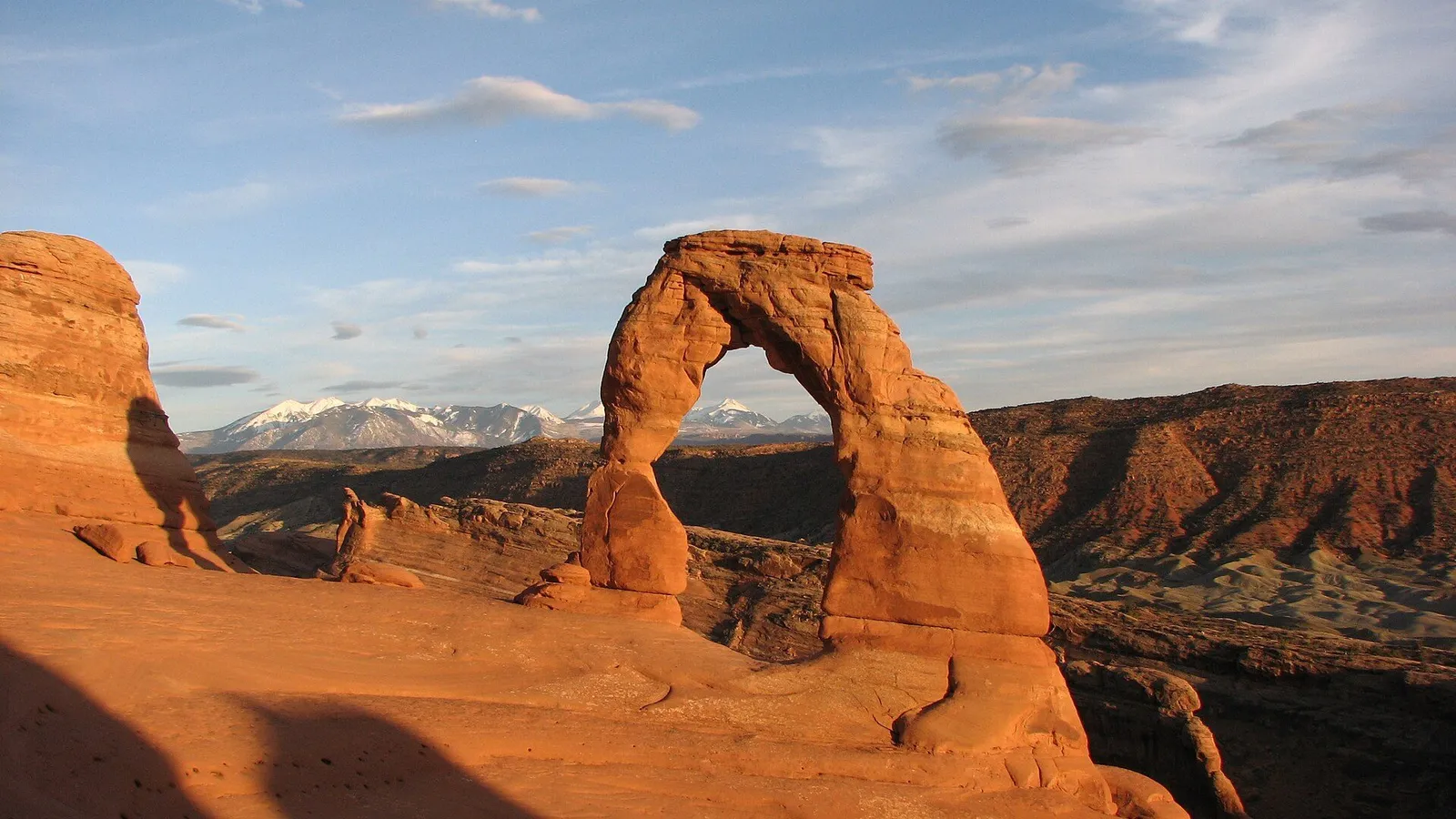
Early start; Arches ran timed-entry reservations in recent years, and the current rules sit on nps.gov/arch, so check the week you travel and enter before 8 a.m. regardless, which beats both any reservation line and the heat. The day’s walk: Devils Garden to Landscape Arch (2 miles round trip, extend to Double O), the Windows and Turret Arch loop, Balanced Rock, and, timed for the light, the 3-mile round trip to Delicate Arch for sunset, the state’s icon. Carry double the water you think you need; there is no water in the park beyond the entrance area.
Day 8: Moab to Salt Lake City
Drive Moab to Salt Lake City, 3.5 hours up US-191 and I-70/US-6, or back to Las Vegas in 4.5-5 if your flights dictate. If SLC is the exit and the flight is evening, the quick Capitol Reef shortcut this is not; instead consider the Utah State Capitol’s free rotunda or Temple Square’s reopened plazas (see /destinations/salt-lake-city/) before the airport train from downtown. Return the car with a full tank; the rental companies’ fuel charges are the trip’s last tourist trap.
Practical Notes
Transport: A rental car is the trip; there is no bus or train between the parks. Total driving is roughly 700 miles, all on good paved roads; the only warning is I-70’s emptiness (fill the tank at Green River) and summer heat on unshaded trails. Open-jaw flights (into Las Vegas, out of Salt Lake City) avoid 8 backtracking hours; one-way drop fees are usually less than a night’s lodging.
The fee math (2026): Vehicle entry runs $35 Zion, $35 Bryce, $20 Capitol Reef, $30 Arches, $30 Canyonlands, about $150 total, per vehicle, 7 days each. Non-US visitors 16+ additionally pay the $100 per-person nonresident surcharge at the flagship parks that charge it, Zion and Bryce’s fee pages list it explicitly, so check each park’s fees page before budgeting, and the $250 nonresident America the Beautiful annual pass covers entry at all five (and most other federal lands for a year), which this loop alone can justify. Dead Horse Point adds a Utah state park fee.
Seasons: April-May and September-October are ideal; summer delivers 100-degree Moab afternoons and monsoon flash-flood risk in the slots (check forecasts daily, never enter a slot with storms in the drainage); winter closes the high terrain at Bryce and keeps the lower parks quiet and cold. Book Springdale and Moab lodging 3-6 months ahead for spring and fall, and make Angels Landing lottery entries and Zion-area campsites part of the same evening’s admin. For the full parks rulebook, see /guides/national-parks-guide/.