Southern Sounds: 8 Days of Music and Food from New Orleans to Nashville
Eight days up the Mississippi on the only route where the music history and the food are the same story: New Orleans for jazz and gumbo, Memphis for blues, barbecue and Sun Studio, Nashville for country and hot chicken. Three cities, one rental car, and an honest 390-mile first leg with the Delta blues country in between. Every stop lists what it costs and what needs booking ahead (Sun Studio needs nothing, Graceland and the Grand Ole Opry need weeks), plus the details that make the nights work: which venues are free with a tip for the band, where the locals actually eat on Beale and Broadway, and why Tuesday afternoons in Memphis belong in a museum plan.
Route: New Orleans Memphis Nashville
Three cities, one river, and a straight line of American music: jazz was born in New Orleans, the blues crystallized in Memphis, and country came of age in Nashville, with the cooking changing dialect at every state line. This itinerary runs in reverse, New Orleans up to Memphis and on to Nashville, because that order ends on Broadway, the loudest farewell in America. It is an easy drive by American standards: two legs of roughly six hours and three hours, cities compact enough to park once and walk. Nights are the main event, so the plan front-loads driving and keeps every evening free for live music, which is the entire point (see New Orleans).
Day 1: Arrive in New Orleans
Land, ride the streetcar or a rideshare to wherever you are staying (French Quarter or Marigny for this trip), and go stand in Jackson Square by late afternoon. Eat your first gumbo where the line is locals, not where the menu has photos. At night, walk Frenchmen Street, two blocks up from the Quarter, where the clubs post their covers at the door and the bands start around 8. Skip Bourbon Street for now; it is still there on night three if you need it.
Practical tip: Pay-as-you-ride transit: tap the RTA Le Pass app or US$1.25 cash for streetcars and buses, or buy a 1-day Jazzy Pass for US$3 if you will ride more than twice, per norta.com; and bring earplugs, because the horn sections in this town run at full volume six inches from your table.
Day 2: New Orleans Music Day: Treme, Bywater, Preservation Hall
Morning in Treme, one of the oldest Black neighborhoods in America and the cradle of jazz: Congo Square in Armstrong Park, where the music began, then lunch on po-boys in the Marigny. Afternoon: catch a second-line or just wander Bywater’s murals. The night belongs to Preservation Hall, the 1961 room where acoustic jazz runs seven nights a week (shows nightly, book ahead at preservationhall.com, roughly US$25-50 depending on seating and show).
Practical tip: Preservation Hall seats about a hundred people on wooden benches with no bar and no amplification, so book the earlier set if you are eating late, and tip the band on the way out, which is how this room has stayed alive since 1961.
Day 3: The WWII Museum and the Garden District
Spend the morning indoors at the National WWII Museum (US$37 adults, open daily 9 a.m. to 5 p.m.), the best history museum in the South and a startling fraction of the reason modern music tours through Europe in old footage. Afternoon: ride the St. Charles streetcar under the live oaks to the Garden District’s mansions and Lafayette Cemetery No. 1. Final New Orleans dinner: charge hard at a neighborhood crab house, because tomorrow is a driving day. One last beignet run at Cafe du Monde, open late, cash-friendly.
Practical tip: Tip 18 to 22 percent on every restaurant check (see our tipping and sales tax guide), round up the street performers who make your night, and remember sales tax lands on top of every listed price in Louisiana.
Day 4: The Delta Drive: New Orleans to Memphis
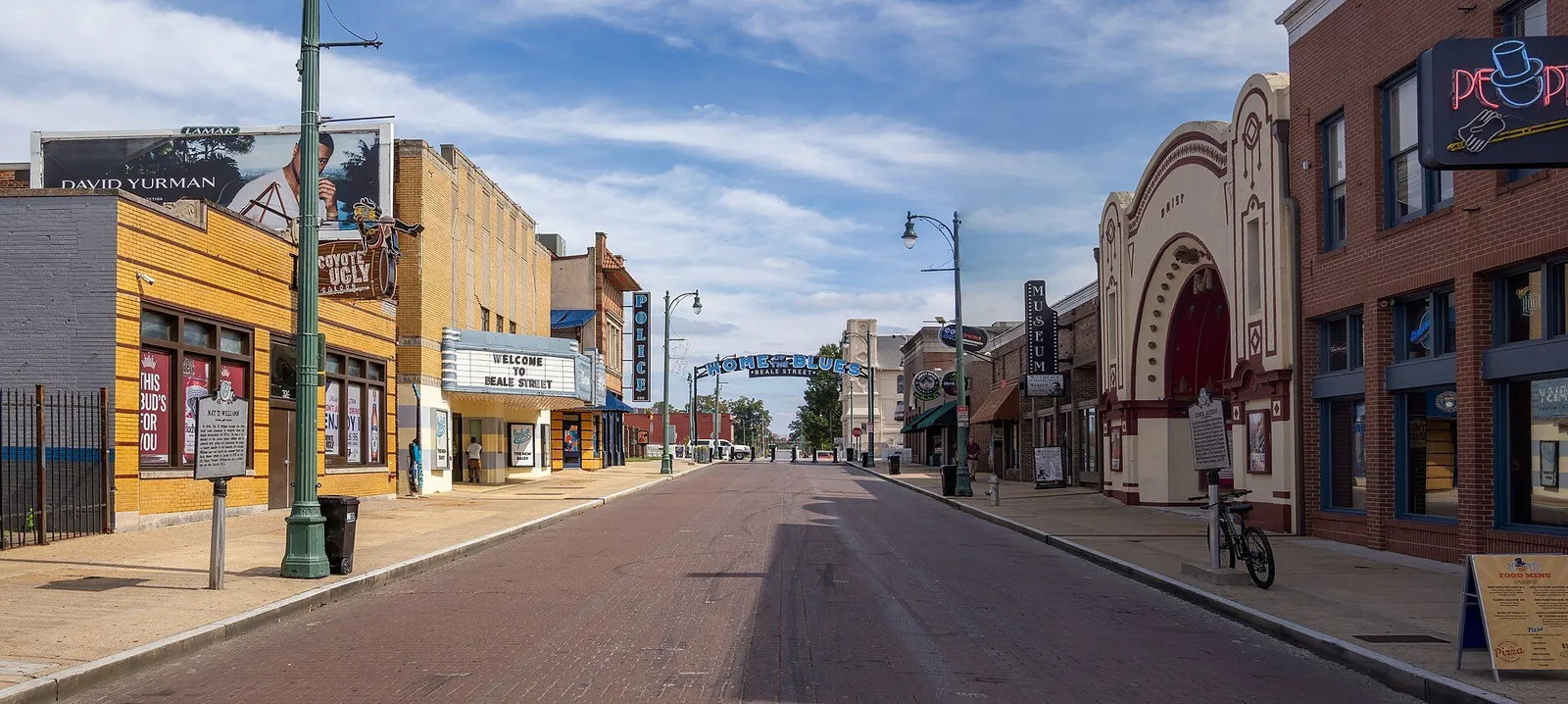
The longest drive of the trip: about 390 miles and five and a half to six hours on I-55, crossing Lake Pontchartrain and the Delta’s flat green maze. Add one detour that makes the drive worth it: Clarksdale, Mississippi (about 30 minutes off-route), home of the Delta Blues Museum and the crossroads where Robert Johnson allegedly traded his soul. Arrive in Memphis by evening, walk Beale Street when the neon comes on, and eat barbecue until reasonable people would have gone to bed. Overnight downtown Memphis.
Practical tip: Book the one-way rental with a New Orleans pickup and either a Memphis or Nashville drop-off when you first fly in; a drop fee (often US$100-300) is cheaper than doubling back, and downtown Memphis hotels charge less for parking than the Strip-facing ones near Beale.
Day 5: Memphis Music Day: Sun Studio and Graceland
Morning: Sun Studio at 706 Union Avenue, where a tour costs US$20, runs on the hour and half-hour starting 10:30 a.m., needs no reservation and takes about 45 minutes; you stand where Elvis cut “That’s All Right” in 1954. Midday: Graceland (the Mansion tour starts around US$80; book weeks ahead at graceland.com, and the shuttle leaves from the visitor center across the highway). Evening: Beale Street again, or the riverfront if your ears need a break.
Practical tip: Sequence matters: do Sun Studio first thing, Graceland after lunch, because Graceland’s timed entries sell out early on weekends and the two ends of town are a 20-minute drive apart (our driving guide covers US road rules if this is your first American rental).
Day 6: Memphis History, then On to Nashville
Morning at the National Civil Rights Museum at the Lorraine Motel, where Dr. King was shot in 1968 (US$25 adults; note the museum closes Tuesdays, so plan around it). Catch the Peabody hotel’s marching ducks at 11 a.m. (free, arrive early for a rail spot), grab a last barbecue lunch, then drive east on I-40 to Nashville: about 210 miles and three hours. Check in downtown or the Gulch, and walk straight to Broadway, where the honky-tonks run free entry and live music from late morning to 3 a.m.
Practical tip: Broadway bands play for tips: drop US$5-10 in the bucket per set you enjoy, that is the local contract; and if Tuesday is your museum day, flip it, because the Civil Rights Museum’s dark day catches travelers out every single week.
Day 7: Nashville Country Day: Hall of Fame, Ryman, Opry
Morning: the Country Music Hall of Fame and Museum (adult tickets have run around US$30 in recent years; check countrymusichalloffame.org) and, if you add the RCA Studio B package, the room where Nashville Sound was invented. Afternoon: self-guided tour of the Ryman Auditorium, the Mother Church, US$25 plus tax (guided and backstage tiers cost more, per ryman.com). Night: the Grand Ole Opry, country’s weekly flagship radio show since 1925 (tickets from around US$45 depending on the bill; book weeks ahead at opry.com).
Practical tip: The Opry plays most Friday and Saturday nights year-round but midweek schedules flex with the season, so match your dates on opry.com before fixing the rest of the week, and take the backstage tour add-on only if you care who stood in that circle.
Day 8: Hot Chicken, History, and Home
Final morning: hot chicken at a Prince’s-style counter (the original Nashville invention; order “medium” unless you mean it), then the Johnny Cash Museum or a slow walk through 12South’s murals before collecting bags. Nashville International (BNA) sits ten miles from downtown, an easy final rideshare. If the trip has converted you, the encore is obvious: Highway 61 south to Clarksdale and the Delta, or Muscle Shoals, Alabama, where the Rolling Stones and Aretha cut their records.
Practical tip: Flying out of BNA on a Sunday or Monday morning means airport security peaks; arrive two hours early for domestic, and check your ESTA status before the airport if you connected through the US on this trip (our entry guide covers it).
Practical Notes
Intercity transport (rental car, one-way drop)
| Leg | Distance | Drive time | Notes |
|---|---|---|---|
| New Orleans to Memphis | ~390 mi | 5.5-6h | Add 30 min for the Clarksdale stop |
| Memphis to Nashville | ~210 mi | ~3h | I-40 the whole way |
| Downtown to Beale Street / Broadway | 0 mi | 0 | Walk; park the car at the hotel |
Distances and times are map-based approximations; add 20 percent for holiday weekends. You need the car for exactly 2 of the 8 days; the rest is walking and streetcars.
What costs what (as of October 2026)
- Sun Studio: US$20 adults, US$15 children 5-11, daily 10 a.m.-5:15 p.m., tours every hour on the half hour, no reservations, first come first served (per sunstudio.com)
- Graceland: Mansion tour from around US$80, timed entry, book ahead at graceland.com
- National Civil Rights Museum: US$25 adults; closed Tuesdays (per civilrightsmuseum.org)
- Ryman Auditorium: US$25 plus tax self-guided, guided and backstage tiers from about US$42 (per ryman.com)
- Country Music Hall of Fame: around US$30 adults, check current prices
- Grand Ole Opry: from around US$45 depending on date and seating, book ahead at opry.com
- Preservation Hall: roughly US$25-50 a seat, book ahead at preservationhall.com
- National WWII Museum: US$37 adults, daily 9 a.m.-5 p.m. (per the museum)
- Beale Street and Broadway: free to walk, most venues free entry, band tips US$5-10 a set are the custom
Budget estimate (per person, 8 days, excluding flights, assuming two share car and fuel)
- Backpacker: US$1,200-1,700. Motels just off the nightlife streets, counter-service barbecue and hot chicken, free honky-tonk nights
- Mid-range: US$2,200-3,200. Downtown or Marigny hotels, every museum and tour listed, one nice dinner a day
- Comfort: US$3,500-5,500. Peabody- and Graduate-tier rooms, Opry front rows, Preservation Hall VIP seats, a swamp or plantation tour day
Restaurant checks expect 18 to 22 percent tips, and Louisiana, Mississippi and Tennessee tax lands on top of listed prices (run totals through our Real Price Calculator before you budget).
Car vs train vs plane verdict
Drive it. Amtrak’s City of New Orleans does run north from New Orleans, but it passes Memphis in the middle of the night in both directions, which is poetic and useless. Flights between these three cities do not exist in any useful form; the drive is the region. Rent one-way (New Orleans pickup, Nashville drop) and accept the drop fee. Inside each city, walk or streetcar: Beale, Broadway and the French Quarter are parking-free zones in every sense that matters. One practical note on the road: rural Mississippi has long stretches with thin cell coverage and few fuel stops, so fill up before Clarksdale, and carry real travel medical insurance, because American ER care without coverage is a budget-breaking event (our health and safety guide covers the basics).
Sources & verification (12)
- https://www.sunstudio.com/
- https://www.graceland.com/visit/ticket-information
- https://www.civilrightsmuseum.org/visit
- https://ryman.com/tours/
- https://countrymusichalloffame.org/plan-your-visit
- https://www.opry.com/tickets
- https://www.nationalww2museum.org/visit/plan-your-visit
- https://www.norta.com/ride-with-us/how-to-pay/fares
- https://www.preservationhall.com/
- https://www.peabodymemphis.com/
- https://www.memphistravel.com/
- https://www.visitmusiccity.com/