Camping and RV Trips in the USA: Sites, Bookings and Gear
Camping is the cheapest and often the only way to sleep inside America's national parks, and an RV rental is the classic road-trip machine, but both run on reservation systems that punish the unprepared. This guide explains how recreation.gov camping bookings actually work, what campgrounds and RV rentals really cost in 2026, the food-storage and fire rules that rangers enforce, and the free dispersed-camping option most foreign visitors never hear about. Use it with the national parks guide to lock the trip's backbone before you fly.
The short version
- Book popular park campgrounds on recreation.gov as soon as your window opens, commonly 6 months ahead, summer weekends go in minutes
- Camping fees do not include park entry, and the 2026 $100 nonresident NPS surcharge applies at the gate, not the campground
- RV rentals look cheap per night until mileage, insurance, and one-way fees land; budget US$150-400 a day all-in
- Store all food and scented items in the bear locker or your vehicle; it is the rule rangers enforce hardest
- Free dispersed camping on BLM and Forest Service land is legal, vast, and the best-kept budget secret
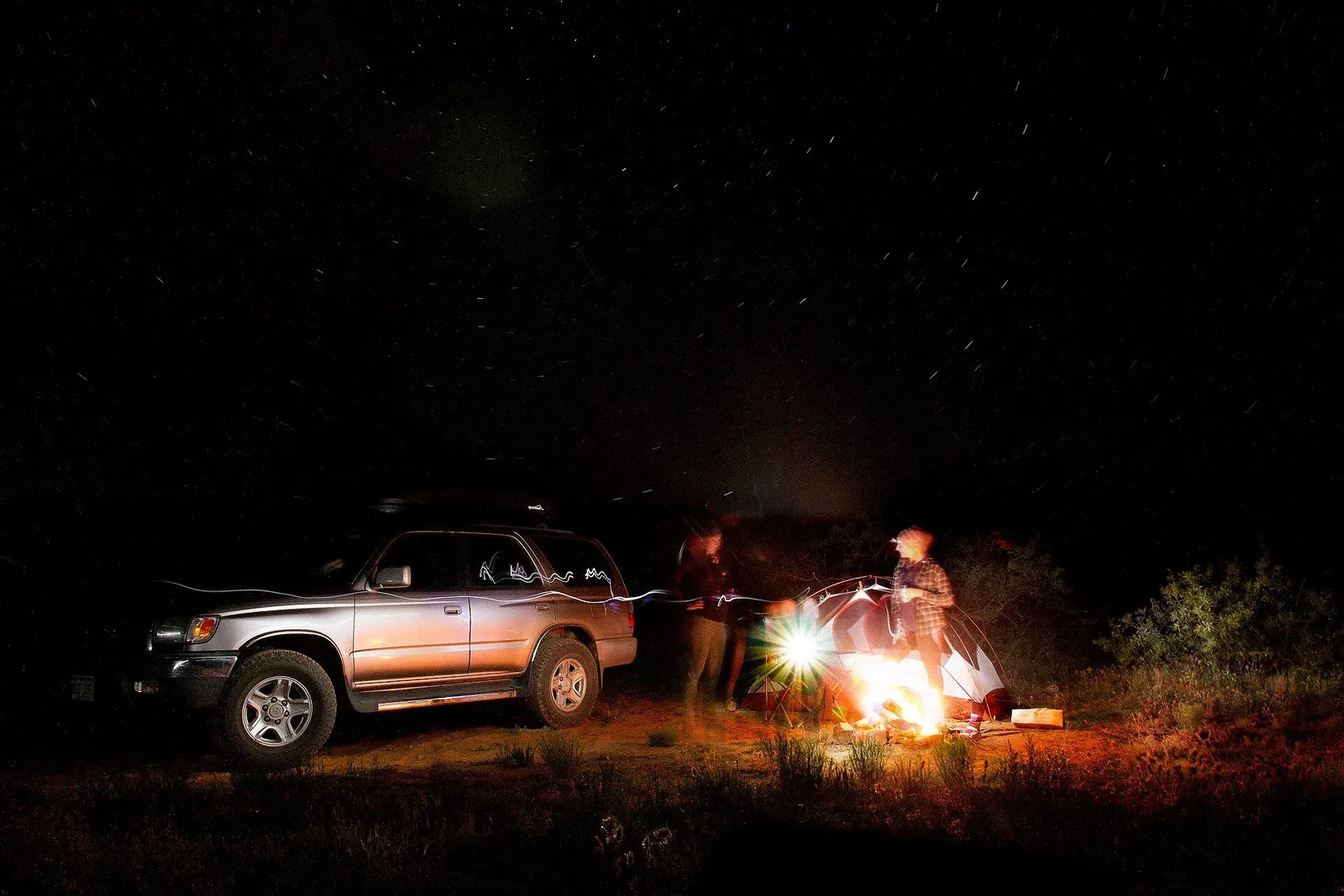
America invented the national park campground, and a night under pines with an elk walking through camp is still the best-value lodging in the country, US$20-40 a night in the parks versus US$250 for the lodge down the road. The catch is mechanical: the good sites run through a federal booking site with rolling windows, summer weekends disappear within minutes of opening, and the rules on food storage, fires, and quiet hours are enforced by people in flat hats. This guide covers tent camping and the RV version, the rolling hotel that Americans rent for the classic parks loop, and how to do either without losing a night.
Tent, RV, or Cabin: Choosing Your Version
Tent camping wins on cost and access, walk-in sites in the great parks put you where tour buses cannot go, and modern gear makes three seasons comfortable. An RV wins for distance and family logistics: beds and a fridge move with you, national forest and BLM land open up for free overnights, and nobody packs a car at 7 a.m. The price is the machine itself (see below) and the fact that America’s most spectacular roads were not built for 25-foot vehicles. A middle path many foreign travelers prefer: car camping with a rooftop or ground tent, or booking the park’s tent cabins and historic lodges for a splurge night, reserving your own bed while keeping the campground evenings.
How Campground Booking Actually Works
The national parks and most federal campgrounds book through recreation.gov. The critical fact is the booking window: each facility opens reservations a fixed time ahead, most commonly six months on a rolling basis (some parks use shorter or season-based windows, and a few release inventory in batches), and the window’s opening minute is a land rush for Yosemite, Glacier, Zion, and Yellowstone summer dates. The action to take now: create your recreation.gov account, log in before the release time with your dates and party size, save searches for target campgrounds, and have payment ready; the site holds a cart only briefly. Same-day and cancellations do reappear, the site’s availability calendar is worth refreshing, but never bet a July itinerary on it.
A share of sites in many parks remain first-come, first-served, which in practice means arriving by mid-morning for a summer night. State parks book separately (most through reserveamerica.com or state systems) and private campgrounds, KOA and independents, book their own sites, cost more (US$40-90), and add showers, laundry, and hookups the federal sites often lack. Fees everywhere are per site per night, cash is disappearing (bring a card), and the America the Beautiful pass discounts federal site fees only sometimes, read each campground’s page.
Two fee notes for 2026. First, camping fees are separate from park entry, you pay both. Second, the new $100 per-person nonresident surcharge applies to entry at the charging parks (the national parks guide has the full rules and the $250 nonresident annual pass math), it is not a camping fee, but it is part of your same budget; run it all through /tools/real-price-calculator/.
Renting an RV: What It Really Costs
The advertised nightly rate is the start of the math. A drivable Class C motorhome runs roughly US$150-300 a night in shoulder season and more for summer; camper vans run a bit less; trailers require a tow vehicle you may not have. On top: mileage charges beyond a daily allowance (or unlimited-mileage premiums), a preparation/service fee, insurance that your foreign car policy almost certainly does not cover (budget US$20-40 a day), kitchen and bedding kits, and one-way drop fees that can exceed US$500 on popular routes like Las Vegas to Salt Lake City. All-in, US$150-400 per day is honest planning math; the budgeting guide’s framework applies (/guides/budgeting-your-trip/).
Book 6-12 months ahead for June-August, and read the age policy (many renters require 25, some 21) and the international-license terms; the car rental guide (/guides/car-rental-driving/) covers the insurance traps that apply double to RVs. Then plan the RV-specific logistics: campgrounds with full or partial hookups if you want showers and air conditioning, dump stations every few days, propane, and the fact that oversized vehicles are banned from certain park roads (Glacier’s Going-to-the-Sun Road and Zion’s Mt. Carmel Tunnel have hard limits, see those park pages). Overnight parking is not free-range: Walmart’s famous tolerance is store-by-store and fading, truck stops work in a pinch, and the legal free option is below.
Campground Rules That Actually Get Enforced
Quiet hours, typically 10 p.m. to 6 a.m., mean generators off and voices down, and rangers do walk the loops. Food storage is the big one in bear country: everything scented, food, toiletries, cooler drinks, goes in the bear locker provided or a hard-sided vehicle, never in a tent, and a citation is the gentle outcome compared to a fed bear’s fate. Fires burn only in provided rings, often under seasonal bans (check the fire-danger board at the entrance), and deadwood gathering is usually prohibited; buy bundles locally. Pets stay leashed and are banned from most park trails. Pack out what definitions of “trash” you doubt; the vault toilets take nothing they did not issue.
Arrival logistics matter more than visitors expect: check-in windows are real, sites hold until a stated time (often the following morning) before release, and arriving after dark at 8,000 feet with a tent you have never pitched is a comedy you can avoid by practicing once at home. Weather is a safety system here, not a comfort note: afternoon thunderstorms above treeline, flash-flood risk in desert campgrounds, and cold that can freeze any month at altitude. If any of that sounds like your trip, the health and insurance guide (/guides/health-insurance-safety/) is prerequisite reading; rescue in a park is not a free service in America.
Free Camping: BLM and Forest Service Land
The Bureau of Land Management and the U.S. Forest Service together administer hundreds of millions of acres where dispersed camping, parking outside developed campgrounds and camping for free, is generally allowed, most often up to 14 days per spot, within a set distance of roads, with existing fire rings preferred and a motor-vehicle use map defining where driving off-road is legal. This is how American vanlifers spend US$0 on lodging across Utah, Arizona, and the Mountain West: pull up the agencies’ online maps (blm.gov’s recreation pages, the Forest Service’s visitor maps) or a mapping app showing land ownership, aim for a spur road with tire tracks, and leave no trace, pack out everything, bury nothing near water, and know the fire rules, which in the dry Southwest are frequently total bans.
The honest caveats: no water, toilet, or trash service, so carry it all; cell coverage is the exception; and dispersed land around the famous parks is a 30-90 minute drive from the entrances, which trades dawn trailhead starts for free nights. For a first trip, mix it: two campground nights inside the park, then dispersed or private-campground nights on transfer days. The land is a genuine public treasure; the etiquette is what keeps it open.
Common Mistakes
- Assuming you can book a park campground a month out in summer. You generally cannot. Set the recreation.gov window reminder the day you book flights; see /guides/best-time-to-visit/ for the shoulder-season windows where pressure drops.
- Budgeting the RV nightly rate only. Mileage, insurance, kits, and one-way fees routinely double it.
- Ignoring the entrance fee math. Camping fees plus $35-per-vehicle entry plus the 2026 nonresident surcharge is real money for a family; the $250 nonresident annual pass can win in one road trip (/guides/national-parks-guide/).
- Sleeping with snacks in the tent. In bear country it is the fastest way to meet a ranger, and the fine is secondary to teaching a bear bad habits.
- Arriving Friday at 7 p.m. hoping for first-come sites in July. That window closed by noon.
- Planning RV routes like a car. Mountain switchbacks, tunnel limits, and park-road bans need checking per road, not assumed.
- Bringing a campfire plan without checking fire restrictions. Half the Southwest summer, the answer is no fires at all.
Sources & verification (6)
- https://www.recreation.gov/
- https://www.recreation.gov/articles/list/tips-for-making-campsite-reservations-at-popular-locations/281
- https://www.nps.gov/subjects/camping/index.htm
- https://www.nps.gov/subjects/camping/campground.htm
- https://www.blm.gov/programs/recreation/camping
- https://www.fs.usda.gov/visit/know-before-you-go