Money and Payments in the US: Cards, Cash and Fees
The United States runs on cards: the Federal Reserve's own diary data shows credit and debit cards make up two-thirds of American consumer payments, tap-to-pay works at nearly every counter, and even the New York subway takes contactless. But cash has not disappeared (Americans still average six cash payments a month), out-of-network ATMs bite with $3-5 fees, and the payment terminal's 'pay in your own currency?' question is the most expensive trap in retail travel. This guide covers exactly which cards work where, the handful of moments you still need banknotes, how to withdraw cash without feeding the fee machine, why you should always choose the local currency, and how to set up your cards before you fly. Data from official Federal Reserve and CBP sources as of October 2026.
The short version
- Cards win: debit and credit make up two-thirds of US consumer payments, and tap-to-pay is near-universal in stores, cafes and transit
- Still carry some cash: Americans average six cash payments a month, and food trucks, corner bars and tips are the classic cash moments
- Withdraw from bank-branch ATMs, not standalone machines: expect roughly $3-5 in operator fees per out-of-network withdrawal on top of your own bank's charges (conservative estimate)
- When a terminal or ATM offers to charge you in your home currency, always choose US dollars: dynamic currency conversion adds a markup for nothing
- Bringing more than US$10,000 into or out of the country (as a family, combined) requires declaring it to CBP on FinCEN Form 105
Foreign visitors consistently over-prepare cash for the United States and under-prepare for the fee traps. The reality is friendlier than the pre-trip anxiety suggests, and it is close to home for Brits and Australians: tap your card everywhere, keep a modest stash of notes for tips and food trucks, and refuse one specific screen you will be shown. Everything below reflects how Americans actually paid in 2026, drawn from the Federal Reserve’s own consumer payments research. Here is the whole picture.
Cards Rule: What Works Where
Start with the official numbers: in the Federal Reserve’s 2026 Diary of Consumer Payment Choice, credit and debit cards together accounted for two-thirds of all US consumer payments (an average month held 16 credit card payments and 15 debit card payments per consumer, against just 6 in cash). In practice that means your card, not your wallet, is the default instrument: cafes, bars, drugstores, big-box stores, taxis, rideshares, parking garages and vending machines all take cards, and nearly every reader built in the last decade accepts contactless taps or phone wallets (Apple Pay, Google Pay).
Two mechanics to know before you tap:
- US credit cards are chip-and-signature, not chip-and-PIN. Counter staff hand you the terminal and the payment simply goes through; nobody asks for a PIN on a credit card, and many US-issued cards have none. Your foreign PIN-enabled card works fine, but do not be surprised when a waiter takes the terminal away or a kiosk skips the PIN step entirely.
- Unmanned kiosks are the exception. Train ticket machines, gas-station pumps and parking terminals sometimes ask a US cardholder for a ZIP code or a PIN. With a foreign card, inserting the chip usually bypasses the ZIP check, and the transaction processes normally. If a pump rejects your card at the machine, pay inside the station instead.
Transit is fully tap-native in the big cities: New York’s subway and bus system completed its contactless (OMNY) reader rollout at the end of 2020 and applies automatic fare capping, and similar tap-to-pay exists on systems in Chicago, Portland, Vancouver-style networks and most airport links. For city transit, your regular contactless card or phone wallet is usually the easiest ticket; see our getting around guide for the driving side of that equation.
When You Still Need Cash
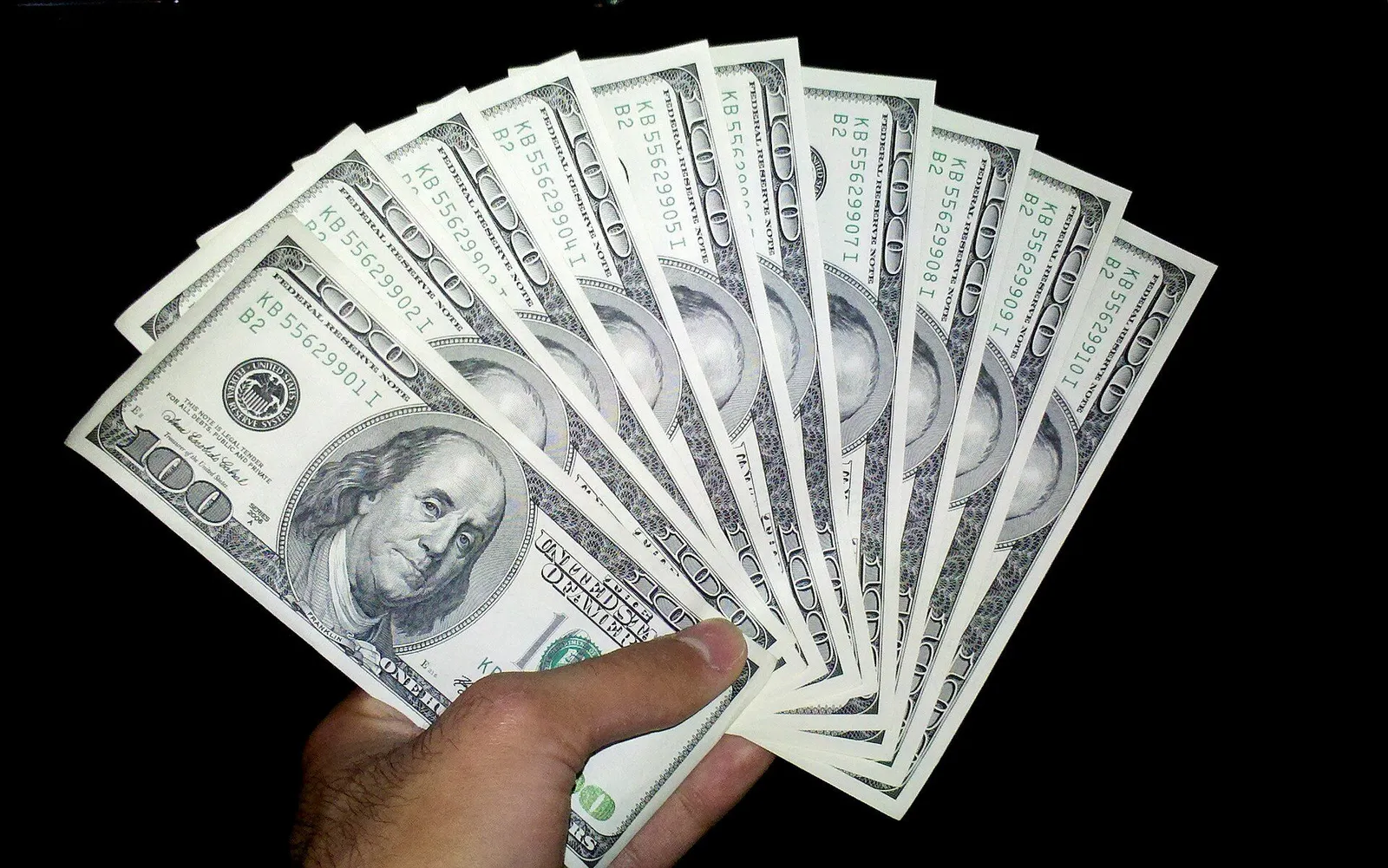
Cash is not dead, it is demoted. The Fed’s diary data (both the 2025 and 2026 editions) shows Americans averaging six to seven cash payments a month, stable for years, and roughly 80% of consumers carrying some cash as a backup. The visitor’s cash moments:
- Cash-only businesses: food trucks, some corner bars, small ethnic restaurants, laundromats and a handful of famous cash-only diners still exist, and a “CASH ONLY” sign is usually honest, not a scam.
- Tips in cash: hotel housekeeping, tour guides, valets and bellhops are all but impossible to tip by card. Our tipping guide assumes you have small bills for exactly this reason.
- Small transactions where card minimums apply: some bars and bodegas impose a $10 card minimum (legal in most states now, but common).
Carry $40-80 in small notes, especially $1 bills (Americans tip and trade in singles constantly; your home country’s habit of never touching $1-equivalents will feel strange until day two). One legal note for big spenders: if you bring more than US$10,000 in cash or monetary instruments into or out of the country, CBP requires you to declare it on FinCEN Form 105, and for families the threshold counts the combined total, not each person’s share. Declaring is free and painless; failing to declare is how travelers lose their money.
Getting Cash Without Feeding the Fee Machine
US ATMs are plentiful (banks, pharmacies, supermarkets, convenience stores) but unregulated in what they can charge:
- Use a bank-branch ATM. Chase, Bank of America, Wells Fargo and their peers operate thousands of branches; their machines charge predictable fees and are guarded by a functioning bank.
- Expect roughly $3-5 per withdrawal in operator fees from an out-of-network or standalone machine, on top of whatever your own bank charges (many charge a flat fee plus a foreign transaction percentage; check your card’s schedule before you fly).
- Avoid the standalone machines in bars, casinos, convenience stores and airport halls at all costs: their fees stack to $6-10 or worse per withdrawal.
- Decline the ATM’s “guaranteed rate” in your home currency. Same trap as at card terminals (below). Always withdraw in US dollars.
- Withdraw larger amounts less often ($200-300 at a time) so flat fees matter less, and do it at a bank during business hours if anything jams.
Dynamic Currency Conversion: Always Choose US Dollars
Somewhere on day two, a terminal or ATM will offer to charge you in British pounds or euros “so you can see the cost in your own currency”. That service is called dynamic currency conversion (DCC), and it is offered because it is lucrative for the merchant and the conversion company, not because it is good for you: the exchange rate is marked up several percent beyond the real rate, and you give up your card network’s wholesale rate (which your own bank applies at roughly 1-3% in foreign transaction fees, or zero on travel cards) in exchange for a worse one.
The rule is absolute: when asked which currency to pay in, always choose US dollars (USD). Read the screen, because the “pay in your own currency” option is pre-selected on plenty of terminals. The one-line sanity check: if the terminal shows your home-currency amount with an exchange rate printed under it, you are on the DCC path; press the button for the USD amount instead.
Set Your Cards Up Before You Fly
- Carry two cards from different networks (a Visa and a Mastercard, or a card plus a phone wallet on a different account) stored separately, so a single declined card or lost wallet does not strand you.
- Check foreign transaction fees. Many UK, Irish and Australian banks and digital banks charge 0%; traditional cards commonly charge 2-3% per transaction. On a $3,000 trip that is a $60-90 difference, which buys a lot of dinners.
- Skip the phone call to “notify your bank.” Modern fraud detection rarely needs it, but if your bank still operates that way, two minutes online beats a frozen card in a Nevada diner.
- Know your PIN. Even in signature country, a PIN sometimes saves a kiosk transaction, and cash advances at a bank counter always need one (though cash advances are expensive; treat them as emergencies only).
Common Mistakes
- Exchanging cash at the airport on arrival. Airport exchange counters carry the worst rates in the Western world. Land, pay by card, and use a bank ATM when you actually need notes.
- Accepting the “pay in your own currency” screen. It feels helpful and costs you several percent every single time. Choose USD, always, at both terminals and ATMs.
- Using standalone ATMs in bars, casinos and bodegas. The fee stacking is brutal. Bank-branch machines charge a fraction.
- Bringing travelers cheques or a wad of foreign cash to exchange. Neither is needed; the US carded up a decade ago. Cash to bring: one or two hundred dollars max, sourced from your own bank before departure at its normal rate.
- Forgetting the $10,000 declaration. Family cash pooled over US$10,000 crossing the border must be declared to CBP. Undeclared currency can be seized.
- Assuming every kiosk takes a signature. Gas pumps and parking machines sometimes need a PIN or ZIP workaround; have a card that can do both, and pay inside as a fallback.
- Tipping in coins. Nobody wants a fistful of change; keep $1 and $5 bills for tips (see the tipping guide for amounts).
Sources & verification (8)
- https://www.frbservices.org/news/research/2026-diary-consumer-payment-choice/
- https://www.frbservices.org/news/research/2025-diary-of-consumer-payment-choice/
- https://www.frbservices.org/news/research/2024-diary-of-consumer-payment-choice/
- https://www.cbp.gov/travel/international-visitors/money-monetary-instruments
- https://en.wikipedia.org/wiki/Contactless_payment
- https://en.wikipedia.org/wiki/EMV
- https://en.wikipedia.org/wiki/Dynamic_currency_conversion
- https://en.wikipedia.org/wiki/OMNY