Native American Cultures: A Respectful Visitor's Guide to Tribal Lands, Sites and Art
There are 575 federally recognized tribal nations in the United States, and several of the country's greatest sights sit on their sovereign land: Mesa Verde's cliff palaces, Chaco Canyon's great houses, Canyon de Chelly, Monument Valley and Antelope Canyon. This guide explains what tribal sovereignty means for a visitor, where permits and local guides are required, how to visit Mesa Verde and Chaco in practice, which museums treat Native cultures as living rather than past (the Smithsonian's free National Museum of the American Indian), how the Indian Arts and Crafts Act protects you from fake souvenirs, and the short etiquette list that keeps you a welcome guest. Checked against NPS, BIA and tribal sources as of October 2026.
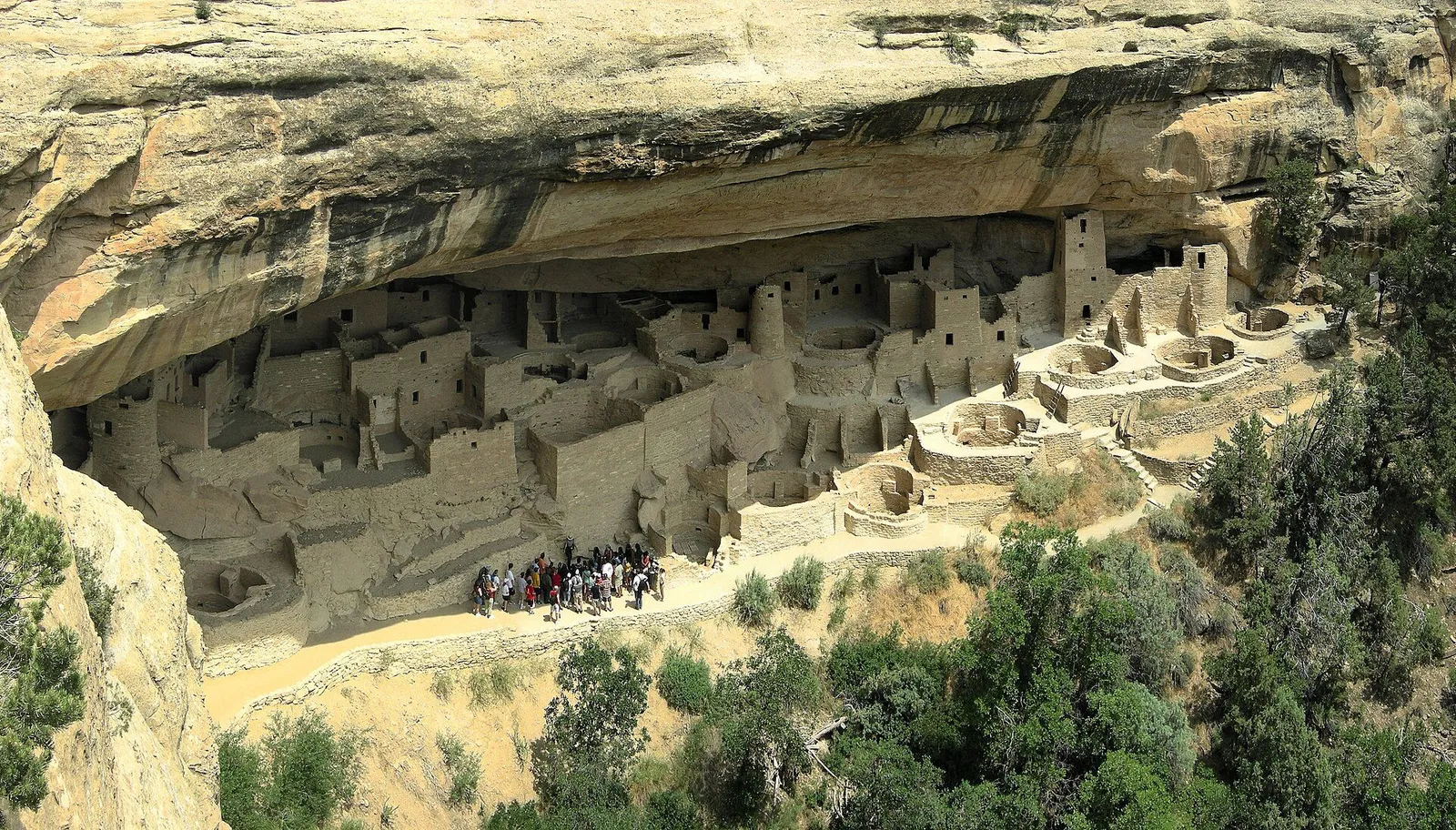
The short version
- The US has 575 federally recognized tribal nations; reservations are sovereign land with their own governments, laws and entry rules, not public parkland
- Some of the most famous sites sit on tribal land and need tribal permits or guides: Canyon de Chelly's canyon floor, Monument Valley, Antelope Canyon and Taos Pueblo
- Mesa Verde cliff dwellings require ranger-led tour reservations on recreation.gov, released 14 days ahead; Chaco is reached by dirt roads only, so check the park's directions page before you go
- The National Museum of the American Indian in Washington and New York is free, and its Mitsitam cafe is the easiest way to eat Native food traditions
- The Indian Arts and Crafts Act makes it illegal to sell fake Indian-made art; buy directly from enrolled artists and tribal enterprises, and keep receipts
Some of the most powerful travel experiences in the United States are not theme parks or skylines but thousand-year-old villages: cliff houses under a sandstone ledge, great houses aligned to the sun, a canyon where families still farm the floor their ancestors worked. These places belong to living Native nations, several of them as sovereign governments, and visiting them well takes a little more care than ordinary sightseeing. This guide gives you the practical rules, the best sites and museums, and the etiquette that makes you a welcome guest rather than a problem.
Tribal Nations Today: Sovereignty Is the Starting Point
The basics first, because everything else follows from them. The Bureau of Indian Affairs currently lists 575 federally recognized tribes, and federal law recognizes these nations as holding “inherent rights of self-government”, what is usually called tribal sovereignty: a government-to-government relationship with the United States. A tribal nation is not a club or a historical reenactment society; it is a government with its own laws, courts, police and land-use rules.
For you as a traveler, sovereignty produces two practical consequences. First, reservations and tribal lands are not public land: rules about access, camping, photography, drones, alcohol and pets are set by each nation and can differ sharply from the state around them, so a rule that surprises you may simply be another government’s law. Second, tribal attractions charge tribal fees: Monument Valley, Four Corners Monument, the Lake Powell shoreline parks and Antelope Canyon are run by the Navajo Nation Parks and Recreation department (established by tribal council in 1957), which sets entry fees, backcountry permits and licensed guided tours through navajonationparks.org. The money you pay there stays in the tribal economy.
The rules genuinely differ in small ways, so check assumptions at the door: the Navajo Nation observes daylight saving time from March to November while the rest of Arizona does not, a fact the National Park Service prints in its own Canyon de Chelly materials because visitors miss tours over it.
Visiting Tribal Land: The Rules of Entry
The pattern is consistent everywhere, so learn it once:
- Identify the nation whose land you plan to visit. Most destinations name them clearly; national parks sit next to named reservations and the park’s own pages say so.
- Find that nation’s official tourism or parks site (for the Navajo Nation,
navajonationparks.org) and read the entry, permit and photography rules for the specific area. - Book the permits or licensed guides the nation requires; many canyon and canyon-floor areas are guide-only, and unlicensed entry can be fined or prosecuted under tribal law.
- Assume closures are real. Tribal communities close areas for ceremonies, funerals and private life without notice, and Taos Pueblo warns visitors outright that unexpected closures happen for religious activities.
- Hire Native guides where offered. You will see more, and the guide requirement exists partly to keep tourism revenue inside the community.
Canyon de Chelly shows how the layers fit together. The national monument in Chinle, Arizona is a National Park Service unit, but it sits entirely on Navajo tribal land, with Navajo families living in the canyon. Entry is free. Two rim drives with ten overlooks and the White House Trail down from White House Overlook are open to walk-in visitors on their own; the canyon floor beyond that requires a tour with an authorized Navajo guide, booked through private operators or the tribe’s own Tseyi Dine Heritage Area, which also runs the fee-charging Cottonwood Campground. The structure is the rule, not the exception: public access where the nation allows it, tribal permitting everywhere else.
The Great Ancestral Sites: Mesa Verde, Chaco and the Ancestral Pueblo World
The archaeological heart of the US Southwest belongs to the Ancestral Pueblo people, ancestors of today’s Pueblo communities. Three parks cover most itineraries:
| Site | What it is | How to visit (as of October 2026) |
|---|---|---|
| Mesa Verde NP, Colorado | Cliff Palace and five centuries of Ancestral Pueblo cliff dwellings; Cliff Palace is the largest known cliff dwelling in North America, built 1190-1280 CE | $30 per vehicle May 1 to October 22, $20 the rest of the year, 7 days, cashless park; every cliff dwelling requires a ranger-led tour reservation except Step House; 2026 tour season May 4 to October 21; tours release on recreation.gov 14 days ahead at 8 a.m. MDT and fill fast |
| Chaco Culture NHP, New Mexico | Monumental great houses, roads and astronomy alignments in a remote canyon | $25 per vehicle, 7 days, cashless; reached by dirt roads only, so read the park’s directions page before you go: since September 30, 2026 storm damage has closed the north road and the south road is the only entry |
| Canyon de Chelly, Arizona | A lived-in canyon with Ancestral Pueblo ruins beneath modern Navajo farms | Free entry; rim drives and White House Trail self-guided; canyon floor with an authorized Navajo guide only |
Three rules apply at every archaeological site. Climb nothing: walls that look walkable are thousand-year-old masonry, and staying on trails is how they survive. Leave every artifact exactly where it lies: collecting pottery shards, arrowheads or anything else from federal or tribal land is a crime under federal law, not a souvenir. And remember that some sites remain sacred to descendant communities, so behave as you would in a church and follow posted restrictions even when they are not explained to you.
Museums: Start With the Ones That Show Living Cultures
If your trip includes a big city before the Southwest, the Smithsonian’s National Museum of the American Indian is the single best orientation: free, like every Smithsonian museum on the National Mall, with its main building at Fourth Street and Independence Avenue SW in Washington (opened 2004) and the George Gustav Heye Center in the old US Custom House near Battery Park in New York (opened 1994). Its galleries treat Native nations as contemporary societies with present-tense art, law and politics, not as a closed chapter of history; the grounds include the National Native American Veterans Memorial, and the Mitsitam Native Foods Cafe serves regional Native cuisine, which is worth planning a lunch around.
Two habits make any museum visit better. Start with the contemporary art floors before the historical ones, so your mental picture of Native America includes working artists, not only the past. And look for tribal museums on your route: nations run their own cultural centers, and a tribal museum gives you the community’s own account of its own story.
Buying Native Art Without Getting Scammed
The souvenir market around tribal tourism is flooded with fakes, and the US has a specific law for exactly this. The Indian Arts and Crafts Act of 1990 is a truth-in-advertising law: it is illegal to market any product in a way that falsely suggests it was made by a Native American. A first violation can cost an individual up to a $250,000 fine or a five-year prison term, and a business up to $1,000,000. The law covers traditional and contemporary work produced after 1934, and it is enforced by the Indian Arts and Crafts Board, part of the Department of the Interior, which keeps a Source Directory of genuine businesses and takes violation reports at doi.gov/iacb.
That law exists because the fraud is real and damaging, so shop like this:
- Buy from tribal enterprises, the artist’s own stall or gallery, or juried markets, rather than generic gift shops.
- Ask for the maker’s tribal affiliation in writing on the receipt; honest sellers answer easily, and “Native-style” is your cue to walk away.
- Price honestly: hand-coiled pottery or sterling silver work takes days, and impossibly cheap means imitation.
- If you suspect fraud, report it through the IACB’s website; enforcement actions do happen, including federal convictions for counterfeit jewelry.
Etiquette: The Short List
| Situation | What to do |
|---|---|
| Photographing people | Ask first, always, and accept “no” easily; at Taos Pueblo photography of tribal members is by permission only, and photography inside San Geronimo Chapel is flatly banned |
| Photographing sites | Check site rules before raising the camera; ceremonies and gravesites are off-limits full stop |
| Terminology | Use the specific nation’s name when you know it (Navajo Nation, Taos Pueblo, Cherokee); “Native American” and “American Indian” both appear in official usage, and “Indian” survives in legal and institutional names like the Bureau of Indian Affairs |
| Powwows and public events | Go, sit where visitors are seated, and follow the emcee’s instructions; regalia is not a costume, so never touch it or ask someone to pose for photos |
| Sacred objects and sites | Do not touch offerings, enter cemeteries or climb ruins; Taos Pueblo’s cemetery and river, for instance, are closed to visitors outright |
| Assumptions | More than five hundred distinct nations and languages are not one culture; and Native Americans are neighbors and fellow travelers in any town, not exhibits |
Supporting Native Communities With Your Itinerary
The most useful thing you can do is also the simplest: route your money through Native hands. Book Navajo-operated tours in Canyon de Chelly and Antelope Canyon, pay the tribal park fees at Monument Valley and Four Corners, hire licensed guides where required, eat at the Mitsitam cafe or tribally owned restaurants, and buy art directly from enrolled makers under the protections described above. Where a national park partners with tribes, such as Yellowstone’s Tribal Heritage Center at Old Faithful, which hosts tribal members in summer, put it on the itinerary rather than treating it as an optional extra. For general cultural do’s and don’ts, our culture and etiquette guide covers the broader ground, and the national parks guide handles the federal park logistics that pair with these sites.
Common Mistakes
- Treating reservation land as public land. It is sovereign territory with its own governments. Rules on access, photography, drones, pets and alcohol are set locally, and “nobody stopped me” is not a defense.
- Entering canyon country without the required guide. The canyon floor at Canyon de Chelly and spots like Antelope Canyon require authorized guides; going rogue risks fines, trespass on private land, and real danger in flash-flood country.
- Driving to Chaco without checking the roads page. Access is by dirt roads only, GPS routes can be unsafe or private, and storm damage has closed the north entrance outright as of late 2026. The park’s directions page is the only source that matters.
- Showing up at Mesa Verde in summer without tour reservations. Every cliff dwelling except Step House needs a ranger-led tour booked on recreation.gov 14 days out, and midsummer slots go within hours.
- Pocketing a pottery shard. Collecting artifacts on federal or tribal land is a crime. Leave everything in place, and report finds to rangers instead.
- Photographing people or ceremonies without asking. Permission first, always; some places ban photography entirely, and no view is worth the disrespect.
- Buying “Native-style” souvenirs. The label itself is the tell. Unmarked gift-shop “tribal” goods are usually imports, and the real thing is traceable to a named artist and nation.
- Packing the visit as history only. These are living communities with school runs and town councils. Expect closures for ceremonies, greet people normally, and read the contemporary galleries too.
Sources & verification (12)
- https://www.bia.gov/frequently-asked-questions
- https://www.nps.gov/meve/planyourvisit/fees.htm
- https://www.nps.gov/meve/planyourvisit/cliff_dwelling_tours.htm
- https://www.nps.gov/chcu/planyourvisit/fees.htm
- https://www.nps.gov/chcu/planyourvisit/directions.htm
- https://www.nps.gov/cach/planyourvisit/index.htm
- https://www.taospueblo.com/visit/
- https://www.doi.gov/iacb/act
- https://www.doi.gov/iacb
- https://americanindian.si.edu/visit/dc
- https://en.wikipedia.org/wiki/National_Museum_of_the_American_Indian
- https://navajonationparks.org/