Where to Stay in the USA: Real Prices, Resort Fees, and Picking an Area
The advertised room rate and the number you actually pay at an American hotel are often two different figures: resort fees of $30-60 per night are common in Las Vegas and Miami, city parking can add $50-90, and lodging taxes stack on top of everything. This guide explains the full cost stack, defends the American motel as a legitimate and often smart road-trip choice, ranks the hotel chains by tier so you know what a Hampton Inn rate should buy, runs the math on vacation rental cleaning fees, and compares booking direct versus through an OTA. It closes with neighborhood picks for the biggest cities and the national park gateway towns. Fee levels and price bands written conservatively, as of October 2026.
The short version
- Judge every room by its total price: resort fees commonly add $30-60 per night in Las Vegas and Miami Beach, and lodging taxes add roughly 10-20 percent on top
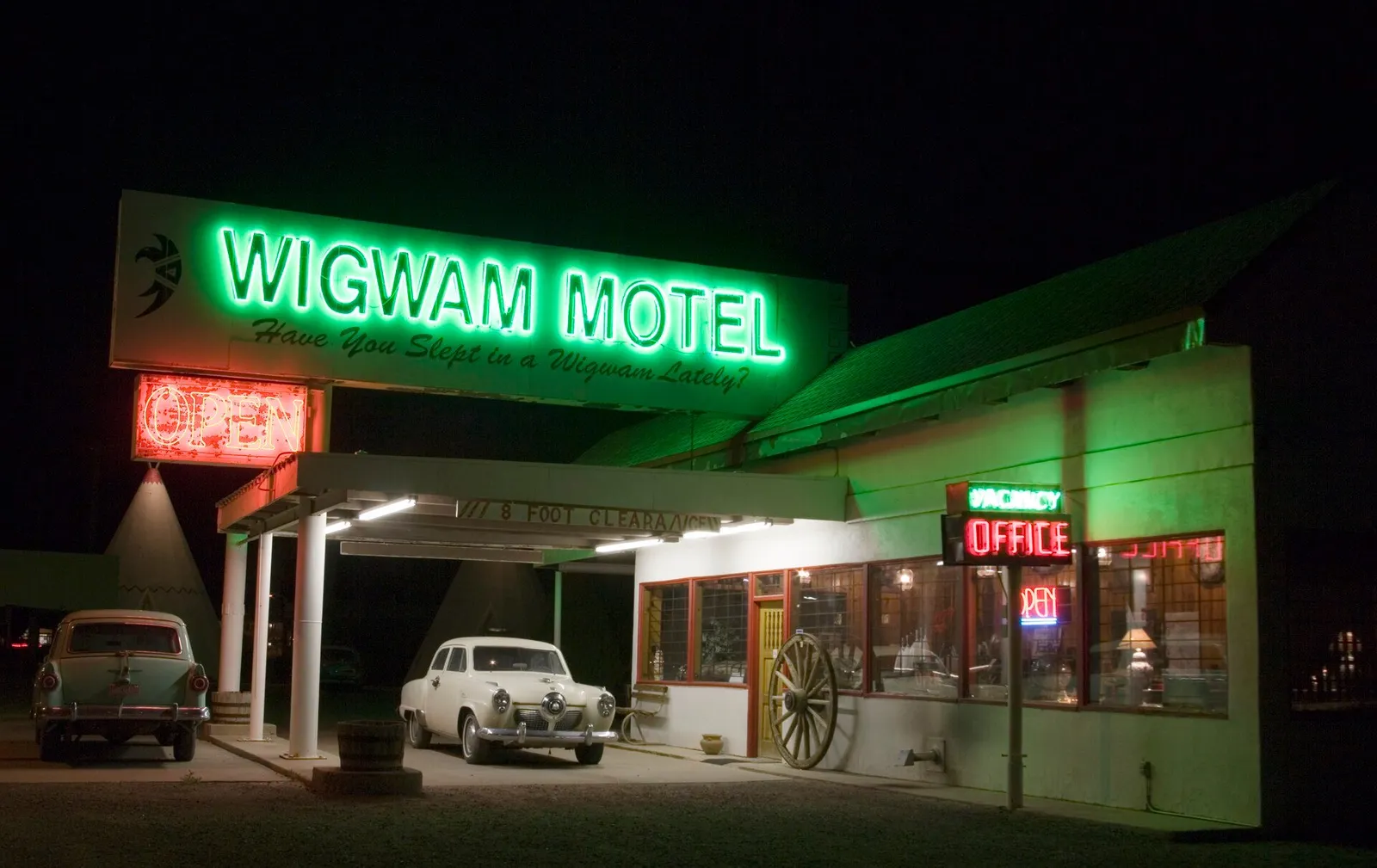
- Motel does not mean sketchy: for road trips, a well-reviewed motel or economy chain with parking at your door is the sensible American choice
- The midscale chain tier (Hampton Inn, Holiday Inn Express and peers) is the reliable sweet spot, usually with free breakfast and free WiFi
- Vacation rental cleaning fees punish short stays: rentals win for families and stays of roughly three nights or more, hotels win for one and two nights
- Pick the neighborhood before the property: walkability and transit decide whether you need a car, and the car decides your real budget
American lodging looks cheap in search results and then grows fees the way a certain kind of restaurant grows the bill. The room rate you saw is rarely the rate you pay: resort fees, parking charges and lodging taxes are added later in the process, at exactly the point where you are tired and want the booking done. This guide gives you the defense first (how to see the real total before you commit), then the good news: the US has a deep, well-run mid-market of motels and chains that travelers from Britain, Ireland and Australia routinely underrate, and a few simple rules make every booking easier to compare.
What a US Room Actually Costs: The Chain Ladder
The US hotel market is dominated by national chains, and the chain name tells you almost everything: the tier, the size of the room, and whether breakfast is included. Bands below are conservative city-of-moderate-cost figures; New York, Miami Beach, San Francisco and peak season can double them (as of October 2026):
| Tier | Example chains | Typical rate per night | What you get |
|---|---|---|---|
| Economy | Motel 6, Super 8, Days Inn | $60-110 | Clean small room, parking at the door, no frills, variable breakfast |
| Midscale | Hampton Inn, Holiday Inn Express, Fairfield Inn, La Quinta | $110-190 | Reliable room, free hot breakfast, free WiFi, pool in most locations |
| Upscale | Marriott, Hilton, Hyatt Regency, Embassy Suites | $190-320 | Bigger rooms, restaurants, gyms, city-center locations |
| Luxury | Ritz-Carlton, Four Seasons, Waldorf Astoria tier | $400 and up | The full service experience |
| Hostel | City hostels in big metros | $30-60 per bed | Dorm or private room; the budget answer for solo travelers in New York, LA and San Francisco |
The midscale tier is the workhorse of American travel: nothing is memorable, nothing is broken, breakfast is handled, and the price is honest relative to what arrives. Use the economy tier for road-trip nights where you only need sleep and a parking space, and pay up in the walkable city cores where location is the product.
The Motel Is Not a Scam
The motel (a motor hotel, built for arrivals by car, per the standard definition) is the original American road-trip lodging, and Motel 6 has been running the format since it was founded in Santa Barbara in 1962. The modern reality: a well-reviewed motel or economy chain property is clean, safe, and functionally superior to a city hotel for driving trips, because you park at your door and load the car in the morning without elevators or valet tickets.
Use them for small towns and highway corridors; choose chains or top-rated independents for the big-city equivalents. The vetting routine: filter for properties scoring roughly 8 of 10 or better with a few hundred recent reviews, prefer rooms that open onto interior spaces in unfamiliar cities, and book refundable when the area is new to you. Extended-stay properties (kitchenettes and weekly rates) fill the same road-trip niche for longer stops.
Resort Fees and Parking: The Second Bill
A resort fee is a mandatory daily charge for amenities (pool, gym, WiFi, “destination marketing”) priced separately from the room rate; it goes by many names, including facility, destination, amenity and urban fee, and it originated in the United States (the practice, naming and its regulatory history are documented in Wikipedia’s resort fee article). US regulators have pushed hotels on all-in pricing for over a decade, including a 2017 FTC report and later rulemaking efforts, but you should not build your budget around how any particular case settles: check the total price yourself, every time.
Where you will meet it: Las Vegas Strip resorts and Miami Beach hotels commonly charge $30-60 per night in this category as of October 2026, sometimes more at luxury properties; resort cities elsewhere (Orlando, Hawaii, Scottsdale) run the same play. City parking is the second head of the same beast: Manhattan hotels commonly ask $50-90 per night to store a car, other big-city hotels $30-60, valet runs higher, and the free-parking default only really survives in suburb and motel country.
The defense, in order:
- Search on an OTA such as Booking.com or Expedia and read the “total price” line, not the nightly rate; OTAs show mandatory property fees in the breakdown.
- On any hotel’s own site, run a dummy booking to the payment step and read the fee summary before the card fields.
- Add the destination’s lodging taxes, roughly 10-20 percent across major cities; run the real number through our real price calculator so the comparison is honest.
- Road trippers: filter for “free parking” and “free cancellation”, and treat a $20/night parking charge as a $140 signal to reconsider the property.
Vacation Rentals and the Cleaning Fee Math
Short-term rentals (Airbnb is the category-defining platform) changed American travel, but the pricing model works against the way first-timers search. A rental that looks half the hotel’s rate often carries a cleaning fee commonly in the $75-250 range plus a service fee, all revealed on the checkout screen. Spread across a week, those fees are noise; attached to a single night, they can double the real rate.
The honest rules of thumb: rentals win for families and groups who need multiple bedrooms and a kitchen, and for stays of roughly three nights or more; hotels win for solo travelers, couples on short city stays, and anyone who values a front desk at 2 a.m. Always search rentals with the site’s total-price display switched on, read the cancellation terms twice (rental hosts are stricter than hotels), and if you are booking in a big city core, check the commute math before assuming the rental is cheaper once you are further from the things you came to see.
Booking Direct or Through an OTA
Both routes work; they are just different tools:
| Book through an OTA | Book direct with the hotel or chain | |
|---|---|---|
| Price | Often identical; total-price display is clearer | Loyalty rates and member perks can undercut; price-match exists at some chains |
| Flexibility | Easy free-cancellation filters across properties | Changes handled by the property, usually fine |
| Perks | None; you are the OTA’s customer | Loyalty status: free WiFi, late checkout, points |
| Support | One platform for a multi-city trip | One phone number per property |
The routine that gets the best of both: search and shortlist on an OTA (comparison is its whole job), then price the same dates and room type on the chain’s own site or app. Book direct if the total matches or beats the OTA (it often does at the midscale chains, and the loyalty perks compound across a trip); book the OTA when it is genuinely cheaper or holds the free-cancellation rate you want. One more mechanical note: US check-in runs 3-4 p.m. and checkout 11 a.m., so a red-eye arrival means either booking the previous night or planning a morning in the city with your bags at the desk.
Picking the Area: Big Cities and Park Towns
In the US, the neighborhood is the decision; the property is a detail. The principle: stay where you will eat dinner and catch transit, not where the map looks central to a driver.
| City | Practical picks | Why |
|---|---|---|
| New York | Midtown for first-timers, Lower Manhattan or the West Side for character, Long Island City for value on the subway | You will not drive here; subway proximity is the whole game, and Midtown puts the walkable sights at your door |
| Los Angeles | Santa Monica or Venice for the beach side, Hollywood or Koreatown for central sightseeing | LA has no center; pick the coast you will watch sunset from and accept that you will drive or rideshare everywhere |
| San Francisco | Union Square or SoMa for centrality, the Wharf area for family ease | Compact and walkable; value is thinner than in other cities, so prioritize location over square footage |
| Las Vegas | The Strip for the full resort experience, Downtown and Fremont Street for a cheaper, older-school base | Strip resort fees are the tax on the experience; off-strip and Downtown rooms cut the bill hard |
| Miami | South Beach for the beach and Art Deco scene, Downtown or Brickell for value | South Beach carries the steepest fees; Brickell is businesslike, closer to the airport, and a rideshare from the sand |
| National park gateways | The gateway town (Jackson for Grand Teton, West Yellowstone for Yellowstone, Tusayan for the Grand Canyon) | Rooms inside the parks are scarce; gateway towns sell out months ahead, so book with the park plan, not after it (see the national parks guide) |
Common Mistakes
- Comparing nightly rates instead of total prices. A $140 room with a $45 resort fee and 15 percent lodging tax costs more than a $175 all-in room next door. Sort by total, every platform, every time.
- Assuming motels are where trouble happens. The sixties cliché does not survive contact with a modern, well-reviewed property. For road trips, the motel is the format, and the parking is at your door.
- Renting an apartment for one night. The cleaning fee math does not work under roughly three nights. Hotels exist precisely for the short stay.
- Forgetting that parking is a line item. In Manhattan, a “cheap” hotel plus $60 parking is not cheap. City trips without a car are cheaper and easier; rent the car when you leave.
- Prepaying nonrefundable rates on road trips. Weather, fires and closed park roads move Western itineraries. The refundable rate costs a few dollars more and is worth it outside the big cities.
- Booking the neighborhood for its daytime look. Judge areas by their 9 p.m. version: where you will walk back from dinner is where you actually live for the trip.
- Treating the advertised resort fee as optional. It is mandatory by design. Complain if you like, but budget for it first; the front desk did not set it and cannot remove it.
Sources & verification (10)
- https://en.wikipedia.org/wiki/Resort_fee
- https://en.wikipedia.org/wiki/Motel
- https://en.wikipedia.org/wiki/Motel_6
- https://en.wikipedia.org/wiki/Super_8_(hotel)
- https://en.wikipedia.org/wiki/Airbnb
- https://en.wikipedia.org/wiki/Online_travel_agency
- https://en.wikipedia.org/wiki/Hostel
- https://en.wikipedia.org/wiki/Extended_stay_hotel
- https://en.wikipedia.org/wiki/Las_Vegas_Strip
- https://en.wikipedia.org/wiki/South_Beach