California Highway 1: 10 Days Driving the Pacific Coast
Ten days, one car, one direction: south. Pick up the rental in San Francisco and do not backtrack, driving the full Pacific Coast line from the Golden Gate through Monterey, Big Sur's cliff-hugging highway, Hearst Castle and Santa Barbara to Los Angeles and San Diego. Each overnight stop breaks the drive into pieces no longer than four hours, leaving mornings for the aquarium, the mission or the beach. The itinerary includes the parts first-time Highway 1 drivers actually worry about: the slide repairs that still funnel traffic to one lane in Big Sur, the electronic Golden Gate toll, which sights need reservations (Hearst Castle, Alcatraz) and what everything costs as of October 2026.
Route: San Francisco Monterey Big Sur Santa Barbara Los Angeles San Diego
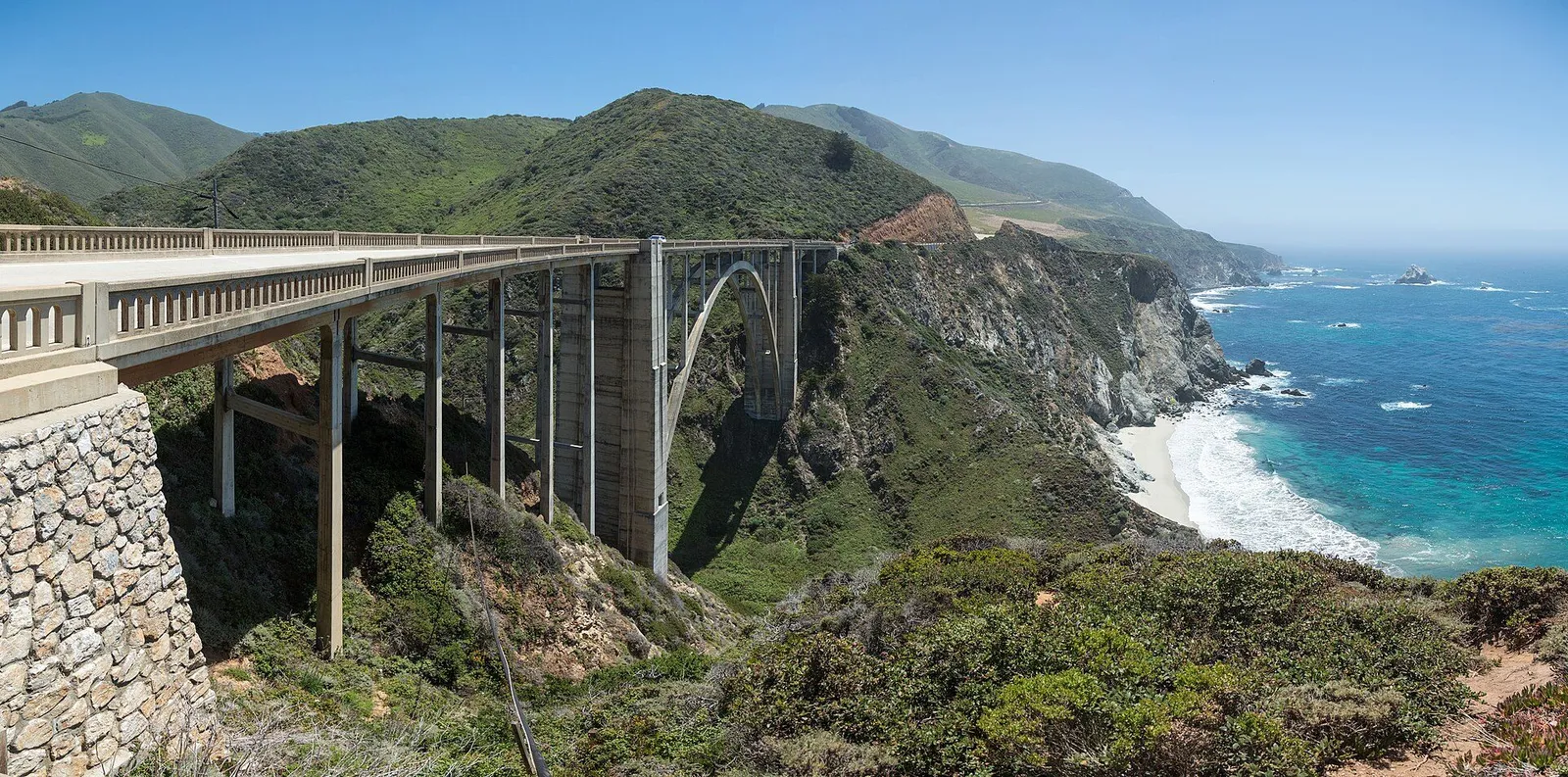
Highway 1 is the rare American drive that deserves the trip built around it, and the way to do it right is painfully simple: one way, southbound, never doubling back. This route spends two days in San Francisco before the car comes into play, then peels off down the coast in comfortable two to four hour stages: Monterey’s aquarium and Carmel’s white-sand beach, two slow days through Big Sur, Hearst Castle, Santa Barbara’s courthouses and beaches, and a finish that pairs Los Angeles with San Diego. Total driving is under 700 miles. Every leg lists its real time, every toll and ticket its current price, and the slide-zone rules that change with the seasons.
Day 1: Arrive in San Francisco
Do not rent a car yet; San Francisco is the one city on this route where a car is a liability (hotel parking runs US$60-70 a night). Ride BART from the airport to downtown in about 30 minutes, check in, and walk the city’s flat parts: the Ferry Building’s food halls, the Embarcadero, and North Beach for an Italian dinner. Save the hills for the cable car tomorrow. If you fly in early, the USS Pampanito submarine at Pier 45 or a bay cruise fills the afternoon.
Practical tip: Book tonight’s tomorrow: Alcatraz tickets (around US$60, official operator Alcatraz City Cruises) sell out days to weeks ahead, so reserve at alcatrazcitycruises.com before you even booked this trip, ideally; if Day 2 is sold out, swap your days around it.
Day 2: Alcatraz, the Golden Gate, and Cable Cars
Morning: the Alcatraz ferry from Pier 33 and the cellhouse audio tour (booked yesterday or weeks ago). Early afternoon: ride or drive to the Golden Gate Bridge; walking across from the Presidio side is free, and crossing north to the Marin Headlands viewpoints costs nothing. Coming back southbound into the city is the tolled direction (US$10.50 one-time payment for a rental, all electronic, no cash booths). Late afternoon: a cable car over Nob Hill and dinner in the Mission.
Practical tip: For rental cars, either pay the bridge toll yourself within 48 hours at bayareafastrak.org’s one-time payment, or decline the rental company’s toll program and watch for the invoice; never do both, that is how tourists get double-billed.
Day 3: Down the Peninsula to Monterey
Pick up the rental this morning (an airport branch or downtown lot works; one-way rental to San Diego is the plan, book weeks ahead). South on Highway 1 with stops at Pacifica’s beach break and Pigeon Point’s lighthouse, about two and a half hours plus stops to Monterey. Afternoon: Cannery Row and the Monterey Bay Aquarium, the best aquarium in North America and worth two hours minimum (adult tickets have run US$60-70 in recent years; check montereybayaquarium.org). Overnight in Monterey or next door in Pacific Grove.
Practical tip: The aquarium’s sea otter feeding and training sessions are the schedule’s stars: check today’s times on the aquarium board when you enter and plan around them, because the exhibit halls empty out during every show.
Day 4: 17-Mile Drive, Carmel, and into Big Sur
Morning loop: 17-Mile Drive through Pebble Beach (about US$12 per car, pay at the gate, cash or card), the Lone Cypress, and lunch in Carmel-by-the-Sea, whose fairytale cottages hide one of California’s best beaches at the end of Ocean Avenue. Early afternoon, the main event begins: Point Lobos’ coves (around US$10 per vehicle), then Bixby Bridge’s arch about 45 minutes south. Stop at whichever pullouts have parked cars, that is the local knowledge. Overnight in Big Sur itself if you booked months ago; otherwise push 90 minutes south to Cambria.
Practical tip: Big Sur lodging is scarce and books up long ahead, so either reserve a Big Sur cabin when you fix dates or plan the Cambria fallback from the start; driving this stretch after dark is wasted scenery and blind curves, so time your day to arrive by sunset.
Day 5: Big Sur South: McWay Falls, Hearst Castle, Morro Bay
Morning: Pfeiffer Big Sur’s redwoods and the boardwalk to McWay Falls, the waterfall that lands on the beach, before the lot fills (the state park charges per vehicle, around US$10). South through the slide zones: as of October 2026 the highway is open but traffic is controlled one-way at Rocky Creek Bridge and Mud Creek, with possible short waits on weekday mornings (check roads.dot.ca.gov, enter “1”, before you drive). Afternoon: Hearst Castle at San Simeon (tours from around US$35, reserved ahead on reservecalifornia.com), then Morro Bay’s sea otters and its 576-foot rock at sunset. Overnight Santa Barbara, two hours south.
Practical tip: Hearst Castle tours sell out and the bus ride up the hill takes half an hour each way, so pick the Grand Rooms tour for a first visit and book the earliest slot your morning allows; the estate sits at 1,600 feet and the evening turns cool, bring a layer.
Day 6: Santa Barbara, then On to Los Angeles
Santa Barbara in the morning: the Old Mission’s church and cemetery grounds (US$17 self-guided, last ticket 4 p.m.), then the free clock tower of the County Courthouse for the best view in town, and lunch on the Funk Zone’s tasting-room blocks near the pier. Drive south to Los Angeles after lunch, about two hours without traffic, two times that at 5 p.m., so leave by 3. Check in near Santa Monica, and spend the evening on the pier and the beach path, where the sunset does the entertaining.
Practical tip: LA traffic is a real cost, not a joke: the 405 south adds an hour at rush hour, so plan tomorrow’s mornings around it and eat dinner within walking distance of your hotel on arrival nights (tipping runs 18-22 percent, see our tipping guide).
Day 7: Los Angeles: Griffith, Hollywood, the Getty
Morning at Griffith Observatory (free, closed Mondays; arrive at the 12 p.m. Tuesday-Friday opening or 10 a.m. weekend opening because the parking fills early). Midday: the Hollywood Walk of Fame for the once-only look, one hour, no more. Afternoon: the Getty Center, free admission with a reserved timed ticket at getty.edu (parking costs extra), where the architecture and the garden compete with the art. Evening: dinner in Westwood or back at the beach.
Practical tip: Reserve the Getty’s free timed ticket online the day before; walk-up entry is not offered, and the tram ride up the hill from the parking structure is part of the experience, so allow 30 minutes of logistics on either side of your slot.
Day 8: Down to San Diego via La Jolla
The last driving day is short: about two and a half hours to San Diego with one essential stop. La Jolla Cove’s sea lions and the sandstone cliffs hold attention for an hour (stay behind the railings; the cliffs are real cliffs). Afternoon in San Diego: the USS Midway aircraft carrier downtown (open daily 10 a.m. to 5 p.m., last admission 4 p.m., adult tickets around US$40 at midway.org) or the free Balboa Park grounds and gardens. Dinner in the Gaslamp Quarter. Overnight San Diego.
Practical tip: Drop the rental car when you check in: San Diego’s Red Trolley, rideshares and the walkable Gaslamp cover the last two days, and airport-area drop-off on departure morning beats paying two more nights of hotel parking.
Day 9: San Diego: Zoo, Coronado, Beaches
Full day, pick your pair: the San Diego Zoo (US$78 adult one-day pass including the guided bus tour and Skyfari tram, no reservation needed) is a full morning by itself; alternatively Coronado Island’s ferry, the Hotel del Coronado’s Victorian porch and the widest beach in the county cost nothing. Sunset at Sunset Cliffs on the ocean side, then a final dinner of Baja-style fish tacos, which San Diego does better than anywhere north of the border.
Practical tip: The zoo sits on a serious hill: wear real shoes, ride the bus tour first to get the layout, and check today’s closing time at sandiegozoo.org, since hours shift seasonally and the canyon exhibits go quiet before the gates do.
Day 10: One Last Morning, then Home
Morning: Point Loma’s Cabrillo National Monument tidepools and lighthouse (the park charges per vehicle, around US$20; check hours, the gate closes in the late afternoon), or a slow breakfast in Little Italy with the Saturday farmers market if it is that day of the week. San Diego International sits minutes from downtown; drop bags, drop any remaining rental paperwork, and fly home from a city you did not want to leave. If the coast bug has bitten, the Oregon and Washington stretch of Highway 101 is the sequel.
Practical tip: Departing international flights from San Diego are limited: most international connections route through San Francisco, Los Angeles or Dallas, so confirm your connection city before booking the first flight, and allow two hours minimum at SAN for security.
Practical Notes
Intercity transport (all by rental car)
| Leg | Distance | Drive time | Notes |
|---|---|---|---|
| SFO airport to downtown San Francisco | 15 mi | 30 min (BART) | Leave the car for day 3 |
| San Francisco to Monterey | 120 mi | ~2.5h with stops | Highway 1 the whole way |
| Monterey to Cambria via Big Sur | 95 mi | 3.5-4h with stops | One-way traffic at slides; daylight only |
| Morro Bay to Santa Barbara | 130 mi | ~2h | US-101, half of it coastal |
| Santa Barbara to Los Angeles | 95 mi | ~2h (1h more at rush hour) | Leave by 3 p.m. |
| Los Angeles to San Diego | 120 mi | ~2.5h with the La Jolla stop | I-405 then I-5 |
Driving distances and times are map-based approximations; add 25 percent for summer weekends and holiday traffic. The Golden Gate Bridge toll (southbound only) is US$10.25-10.50 for cars as of July 2026, all electronic.
Budget estimate (per person, 10 days, excluding flights home, assuming two people share the car and fuel)
- Backpacker: US$1,600-2,200. Motels and hostels, market lunches, two splurge tickets only
- Mid-range: US$3,200-4,600. Three-star inns, the aquarium, Hearst Castle and Alcatraz all included, one sit-down dinner a day
- Comfort: US$6,000-9,000. Big Sur resort nights, Post Ranch-tier splurges, winery lunches in the Funk Zone, private guides
Sticker prices exclude California sales tax, restaurant checks expect 18 to 22 percent tips, and Big Sur fuel runs a dollar a gallon over city prices (fill up in Monterey and Cambria; our Real Price Calculator does the math on any listed price).
Car vs train vs plane verdict
This is a car itinerary, full stop. California’s coastal towns have no rail service between them; Amtrak’s Coast Starlight and Pacific Surfliner cover fragments (Los Angeles to San Diego works by train, and the Surfliner stops in Santa Barbara), but Big Sur, Carmel and Hearst Castle have no transit at all. Rent once in San Francisco, drop once in San Diego, and accept the one-way drop fee, typically US$100-300 between major California cities. San Francisco itself, and the final two days in San Diego, work better without the car. And one safety note that matters on this drive: coastal pullouts have unfenced cliff edges, and American ER care without insurance starts at four figures, so carry real travel medical cover (our health and safety guide explains the basics).
Sources & verification (13)
- https://roads.dot.ca.gov/
- https://www.goldengate.org/bridge/tolls-payment/
- https://hearstcastle.org/tours/
- https://santabarbaramission.org/visit/
- https://zoo.sandiegozoo.org/tickets
- https://midway.org/
- https://www.montereybayaquarium.org/visit
- https://www.pebblebeach.com/17-mile-drive/
- https://www.parks.ca.gov/?page_id=571
- https://www.alcatrazcitycruises.com/
- https://www.getty.edu/visit/
- https://griffithobservatory.lacity.gov/visit/
- https://www.sbcourthouse.org/